The practice of dehydrating kimchi has emerged as a sophisticated method for extending the shelf life of this traditional Korean staple while concentrating its complex flavor profile for various culinary applications. As global interest in fermented foods continues to rise, home preservationists and culinary enthusiasts are increasingly turning to dehydration to manage large quantities of kimchi, ensuring that its probiotic benefits and pungent aromatics are not lost to spoilage. This method transforms a wet, perishable ferment into a shelf-stable ingredient that can be utilized as a snack, a rehydrated garnish, or a potent seasoning powder.
The Cultural and Nutritional Context of Kimchi
Kimchi, a cornerstone of Korean cuisine, is a lacto-fermented dish primarily composed of napa cabbage, radishes, and a variety of seasonings including gochugaru (Korean chili powder), spring onions, garlic, ginger, and jeotgal (salted seafood). Beyond its cultural significance, kimchi is recognized globally as a "superfood" due to its high concentration of vitamins A, B, and C, and its rich supply of lactic acid bacteria, specifically Lactobacillus kimchii.
In recent years, the global kimchi market has seen exponential growth. According to data from the Korea Customs Service, kimchi exports reached record highs in the early 2020s, driven by an increasing awareness of gut health and the "Hallyu" or Korean Wave. However, the high moisture content and active fermentation of fresh kimchi present challenges for long-term storage and transport. Dehydration offers a viable solution to these logistical hurdles, allowing for the preservation of nutrients in a lightweight, compact form.
The Science of Dehydration and Probiotic Retention
The primary challenge in dehydrating kimchi lies in the preservation of its live microbial cultures. Probiotics are sensitive to thermal processing; high temperatures can denature the enzymes and kill the beneficial bacteria that define fermented foods. To maintain the "live" status of kimchi, the dehydration process must be carefully regulated.
Scientific consensus suggests that most probiotic strains begin to perish when exposed to temperatures exceeding 115°F (46°C). Consequently, the dehydration of raw, fermented kimchi requires a low-and-slow approach. By keeping the dehydrator set below 115°F—ideally around 100°F to 105°F—preservationists can ensure that the Lactobacillus colonies remain viable, though dormant, until the product is consumed or rehydrated. Conversely, for commercially jarred kimchi that has already been pasteurized or shelf-stabilized through high-heat canning, higher dehydration temperatures (up to 140°F) may be employed to accelerate the process, as the probiotic benefit has already been neutralized during the initial manufacturing.
Chronological Process for Kimchi Dehydration
The transition from fresh ferment to dried product involves a series of precise steps designed to maximize quality and prevent contamination.
Phase 1: Preparation and Tray Loading
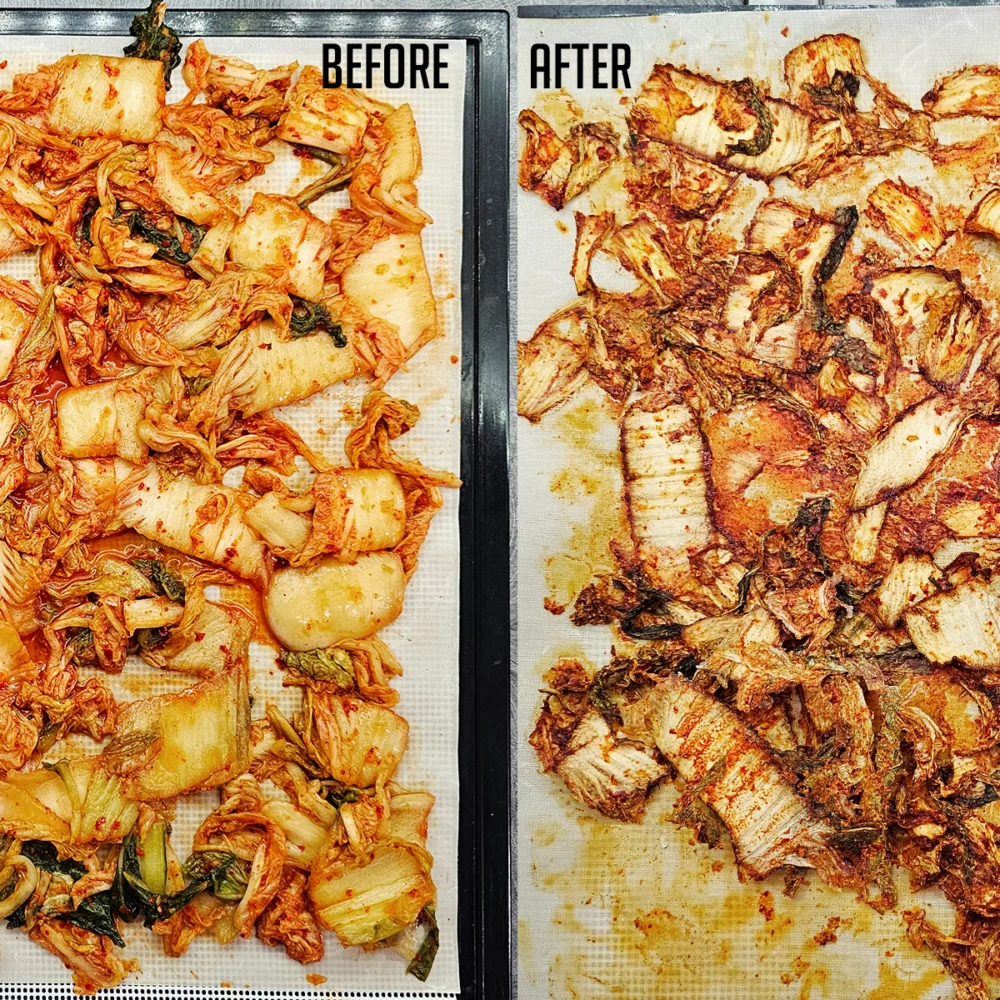
The process begins with the selection of high-quality kimchi. Whether home-fermented or store-bought, the kimchi should be at its peak flavor—typically after it has developed a pleasant tang but before it becomes overly acidic. Because kimchi contains significant amounts of liquid and pigments (such as capsanthin from chili peppers), trays must be lined with parchment paper or silicone fruit leather sheets. This prevents the cabbage from sticking to the mesh and protects the equipment from permanent staining.
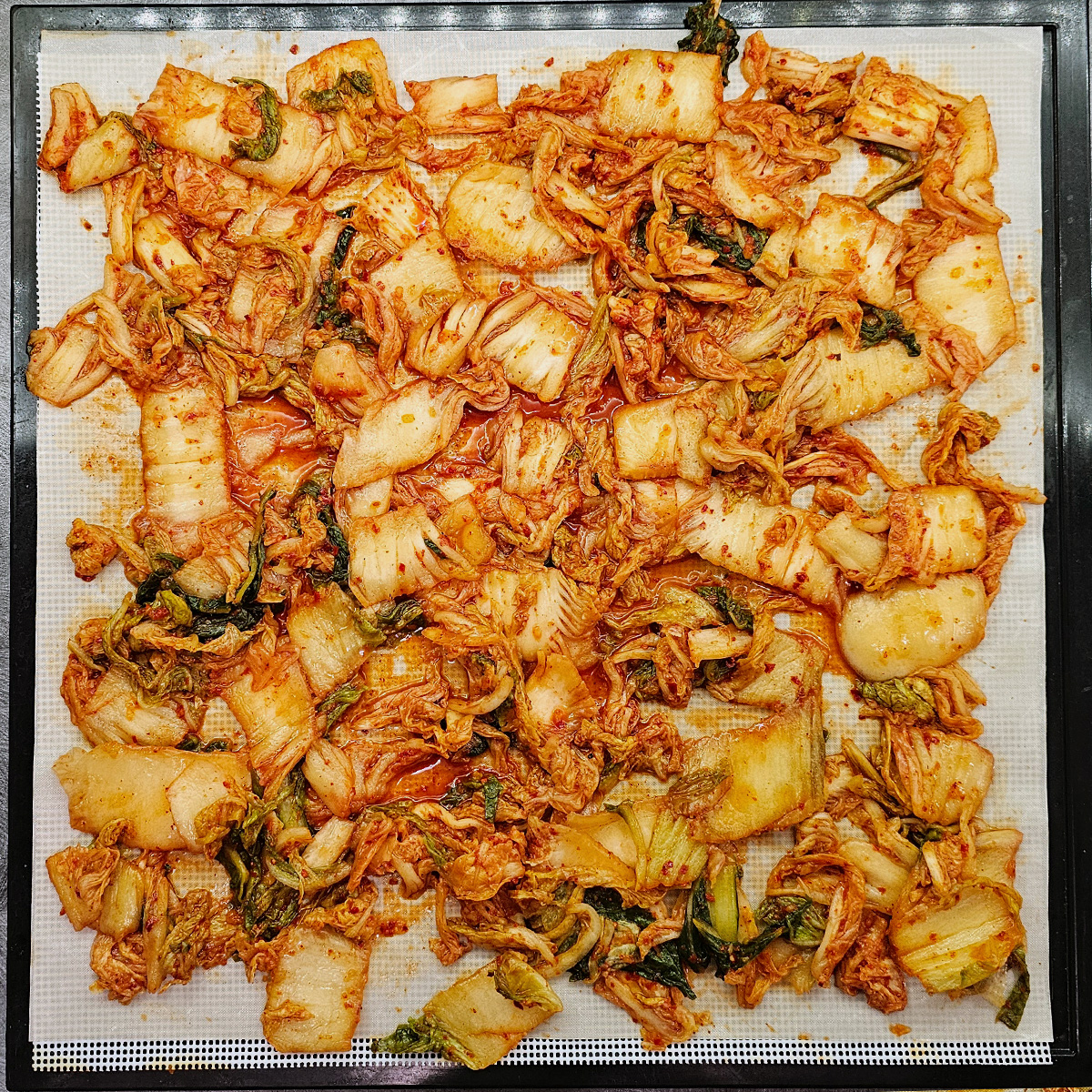
When spreading the kimchi, it is essential to balance density. While the cabbage will shrink significantly as moisture evaporates, over-layering can lead to uneven drying and potential mold growth. The pieces should be spread in a single, somewhat loose layer, ensuring that the thicker ribs of the napa cabbage are given ample space for airflow.
Phase 2: The Dehydration Cycle
Once loaded, the dehydrator is set to the appropriate temperature based on the desired nutritional outcome. For raw, probiotic-rich kimchi, a setting of 110°F is recommended. The duration of this cycle typically spans between 12 and 24 hours. Factors influencing this timeline include the ambient humidity of the room, the specific water content of the cabbage, and the efficiency of the dehydrator’s horizontal or vertical airflow system.
Phase 3: Testing and Sensory Evaluation
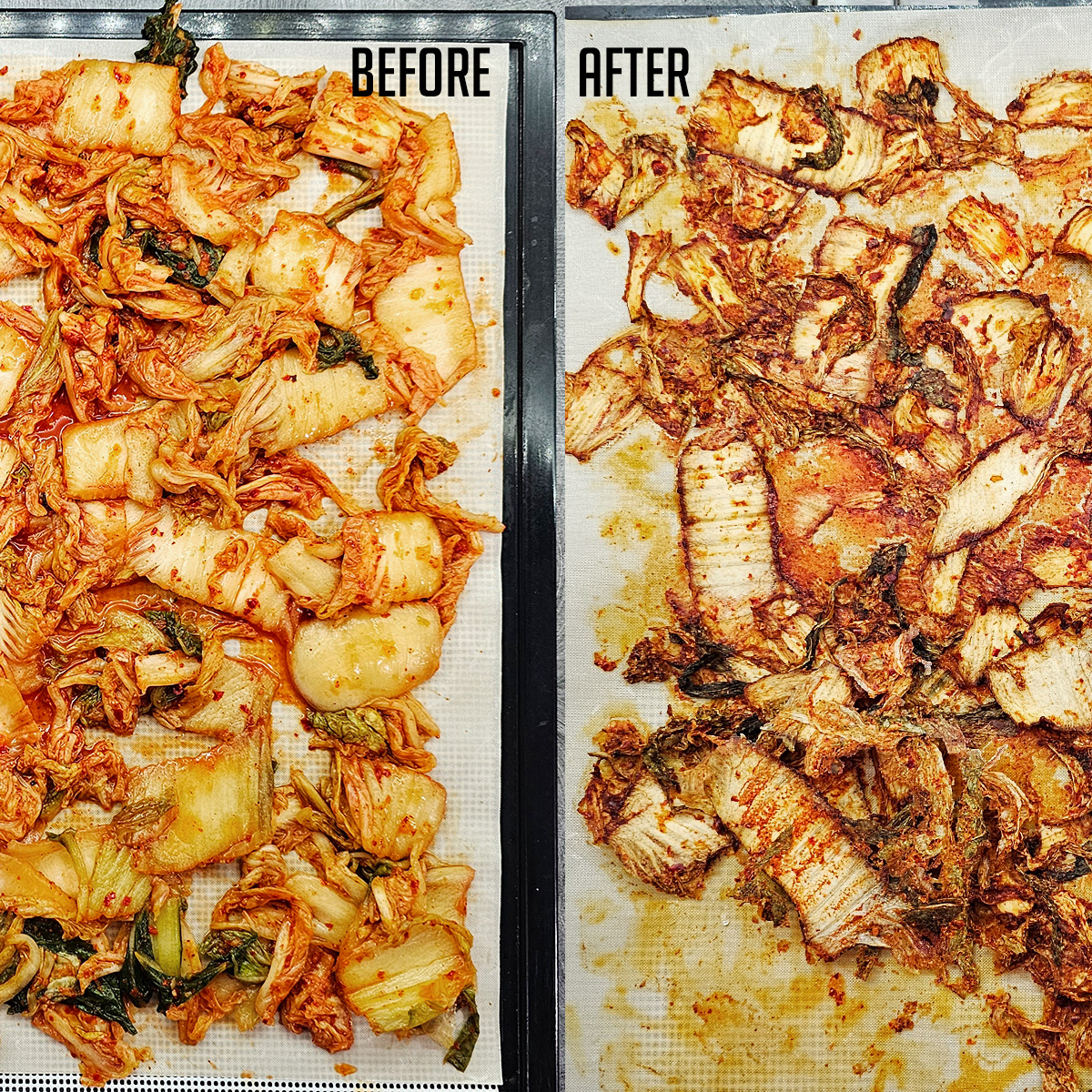
Kimchi is considered fully dehydrated when it reaches a specific textural threshold. Small pieces should be brittle and snap easily, while larger leaves may retain a slight pliability but should show no signs of internal moisture when squeezed. If the ribs of the cabbage feel spongy, additional drying time is required.
Phase 4: Conditioning for Stability
Conditioning is a critical, often overlooked step in the dehydration process. Even if the kimchi appears dry, residual moisture can migrate between pieces once placed in a closed container. To condition, the dried kimchi is placed in a glass jar for five to seven days. The jar is shaken daily and inspected for condensation or clumping. If moisture appears, the batch must be returned to the dehydrator. This phase ensures the product is truly shelf-stable and prevents the development of mold during long-term storage.
Storage Protocols and Longevity
Post-conditioning, dehydrated kimchi should be stored in an airtight environment. Glass canning jars with tight-fitting lids are preferred for home use, while Mylar bags with oxygen absorbers are ideal for long-term emergency preparedness or backpacking. When stored in a cool, dark, and dry location, dehydrated kimchi can maintain its culinary quality for up to two years.
Data from food preservation studies indicate that while some vitamin degradation occurs over time, the mineral content and fiber remain largely intact. The flavor, however, becomes more concentrated, resulting in an intense "umami" profile that evolves during storage.
Culinary Applications and Rehydration
Dehydrated kimchi is a versatile ingredient that serves both as a standalone product and a component in complex recipes.
Rehydration for Traditional Use
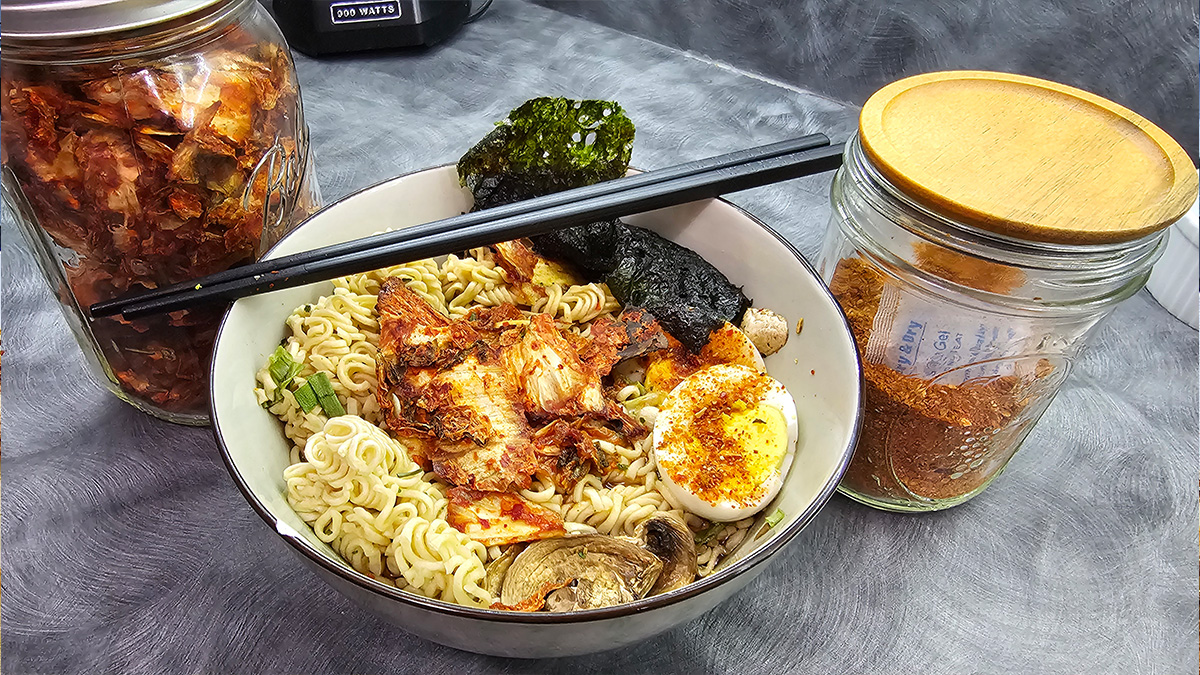
To return the kimchi to a state resembling its original form, it can be soaked in room-temperature water for 15 to 30 minutes. While the texture will not be identical to fresh, crunchy kimchi—it tends to be slightly softer—it is excellent for use in stews (Kimchi-jjigae), fried rice (Kimchi-bokkeumbap), or as a topping for ramen. The soaking liquid itself becomes a flavorful "kimchi broth" that can be used as a base for soups.
Kimchi Powder: The Ultimate Flavor Enhancer
One of the most innovative uses for dried kimchi is the creation of kimchi powder. By grinding the fully dried pieces in a high-speed blender or spice grinder, users create a potent, shelf-stable seasoning. This powder can be used as a dry rub for meats, a popcorn seasoning, or a salt substitute in savory dishes. The concentrated acidity and heat of the powder provide a "brightening" effect similar to lemon juice or vinegar but with the added depth of fermentation.
Economic and Environmental Implications
The move toward dehydrating fermented foods aligns with broader trends in sustainability and food waste reduction. According to the United Nations Food and Agriculture Organization (FAO), approximately one-third of all food produced for human consumption is lost or wasted. For households that purchase bulk quantities of kimchi, dehydration prevents the inevitable "over-fermentation" that occurs in the refrigerator, where the product eventually becomes too sour for raw consumption.
Furthermore, for the outdoor industry, dehydrated kimchi represents a significant advancement in trail nutrition. Backpackers often struggle to find lightweight, nutrient-dense foods that offer flavor profiles beyond standard dehydrated meats and grains. A 100-gram portion of fresh kimchi weighs approximately 10 to 15 grams once dehydrated, providing hikers with a lightweight source of electrolytes, fiber, and probiotics.
Expert Analysis of the Preservation Trend
Food scientists note that the rise of home dehydration reflects a shift in consumer behavior toward "active preservation." Rather than relying solely on industrial freezing or canning, which can significantly alter the chemical structure of food, dehydration offers a middle ground that preserves the essence of the ingredient.
Industry analysts suggest that the "DIY" fermentation and dehydration movement is also a reaction to supply chain instabilities. By converting perishable ferments into shelf-stable pantry staples, consumers are building more resilient domestic food supplies. The versatility of kimchi powder, in particular, has caught the attention of gourmet chefs who utilize it to add fermented complexity to non-traditional dishes, further bridging the gap between traditional Korean preservation techniques and modern global gastronomy.
In conclusion, the dehydration of kimchi is more than a simple storage solution; it is a sophisticated method of culinary transformation. By adhering to strict temperature controls and proper conditioning protocols, individuals can preserve the vital probiotics and vibrant flavors of this ancient ferment, ensuring that its benefits can be enjoyed in any environment, from the modern kitchen to the remote wilderness.