The humble Health Salad, a foundational element of East Coast deli culture, has taken center stage in this month’s Community Canning Challenge, a widespread initiative aimed at educating and engaging home cooks in the art and science of food preservation. Far more than a simple side dish, this quick-pickled sweet and sour cabbage concoction embodies a rich culinary history and serves as a practical example of preserving seasonal produce, specifically brassicas and root vegetables, which are the focus of the current challenge. Organized by "Food in Jars," the ongoing series provides a structured framework for enthusiasts to explore diverse preservation methods, fostering a vibrant online community of learners and practitioners.

The Health Salad, with its characteristic tang and subtle sweetness, has long been a staple on deli tables, often served complimentary alongside other pickled delights as patrons peruse menus. Its presence signifies a specific culinary tradition, rooted deeply in the Ashkenazi Jewish delis that proliferated across major East Coast cities throughout the 20th century. While its name might suggest a strictly health-conscious offering, the dish traditionally features a notable amount of sugar, balancing the sharp acidity of vinegar to create its distinctive flavor profile. This apparent contradiction in nomenclature often sparks conversation, highlighting a historical period when "health" in food could simply imply freshness, digestibility, or perhaps even the invigorating qualities of fermented or pickled foods, rather than a low-calorie or low-sugar profile. The recipe, typically featuring finely shredded cabbage and carrots, often incorporates other vegetables such as bell peppers, cucumbers, or thinly shaved radishes, allowing for variations that reflect regional preferences and seasonal availability.
The Community Canning Challenge, now a well-established platform for home preservation education, dedicates each month to a specific theme, guiding participants through various techniques and ingredient focuses. For the current installment, the spotlight shines brightly on brassicas and root vegetables—a category chosen for its robust nature, nutritional density, and excellent suitability for preservation. Cabbage, a quintessential brassica, along with carrots, exemplifies the versatility of these vegetables in pickling. These ingredients are often readily available, economical, and provide a substantial base for a variety of preserved goods. The challenge aims not only to share recipes but also to cultivate a deeper understanding of the produce itself, encouraging participants to connect with their food sources and develop skills that contribute to food security and sustainability at a household level. Engagement is facilitated through dedicated online channels, including a free Substack newsletter that distributes challenge-related posts and a vibrant Facebook community group where participants share their creations, exchange tips, and troubleshoot challenges.

The process of crafting Health Salad, as presented in the challenge, begins with meticulous vegetable preparation. Utilizing half a green cabbage and a sizable carrot, the recipe calls for fine shredding, a step that can be accomplished either by hand with a sharp knife or efficiently with a food processor, depending on the preparer’s preference for labor versus cleanup. This initial step is crucial, as the uniform thinness of the vegetables allows for optimal absorption of the pickling liquid, ensuring a consistent texture and flavor throughout the salad. The choice between manual and mechanical shredding often sparks lively discussions within the preservation community, with proponents of each method citing reasons ranging from tactile satisfaction to time efficiency.
Following the vegetable preparation, the dressing is carefully formulated to achieve the signature sweet and sour balance. The recipe specifies a combination of ¾ cup white vinegar, ⅓ to ½ cup granulated sugar (adjustable to individual taste and the inherent sweetness of the vegetables), 2 tablespoons neutral oil, 1 tablespoon salt, 1 teaspoon black pepper, and ½ teaspoon celery seed. These ingredients are gently warmed in a small saucepan, with continuous stirring, until the sugar completely dissolves into the vinegar. Emphasized is the instruction to avoid boiling the dressing; the goal is merely to facilitate sugar dissolution without altering the vinegar’s acidity or evaporating its volatile compounds, which contribute significantly to the overall flavor. This controlled heating process ensures that the dressing remains potent and effective in its pickling action while retaining a fresh, bright character.

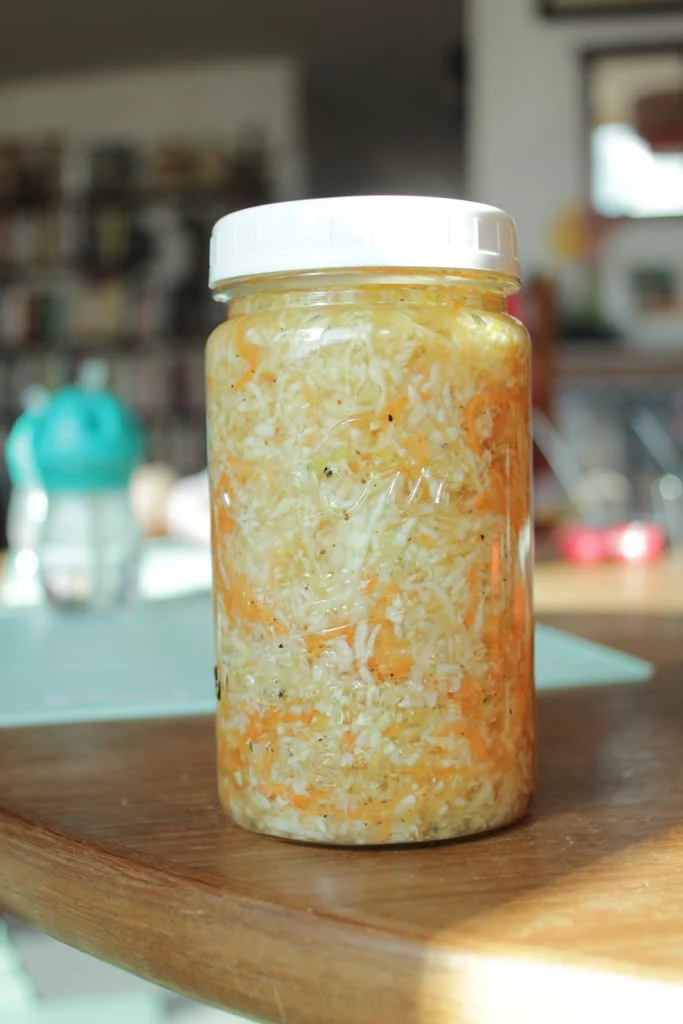
Once the dressing reaches the desired state, it is immediately poured over the prepared shredded vegetables. The mixture is then thoroughly stirred to ensure every strand of cabbage and carrot is coated, initiating the quick-pickling process. The salad is allowed to sit for a period, enabling the flavors to meld and the vegetables to slightly soften and absorb the brine. After this initial marination, the Health Salad is carefully packed into a scrupulously clean jar and refrigerated. Under proper storage conditions, including the use of clean utensils when serving, this "fridge pickle" can maintain its quality and flavor for at least two weeks, offering a convenient and refreshing condiment or side dish. The longevity of fridge pickles, while less than traditionally canned goods, provides a practical solution for enjoying seasonal produce beyond its immediate harvest, without the more complex requirements of pressure canning or water bath canning.
The distinction between quick pickling (or "fridge pickling") and traditional home canning is a critical aspect frequently addressed within the Community Canning Challenge, particularly when discussing recipes like Health Salad. The presented Health Salad recipe, as currently formulated, is explicitly designated as a refrigerator item and not suitable for safe water bath or pressure canning. This cautionary guidance stems from established food safety protocols and the absence of tested, scientifically validated recipes from authoritative sources such as the National Center for Home Food Preservation (NCHFP) or Ball, a leading brand in home canning supplies.

Traditional canning requires specific ratios of acid, sugar, and vegetables, along with precise processing times and temperatures, to ensure the elimination of harmful bacteria and spores, particularly Clostridium botulinum, which thrives in low-acid, anaerobic environments. The NCHFP and Ball develop and disseminate these tested recipes to safeguard public health. While the Health Salad contains vinegar, its specific acid-to-vegetable ratio, sugar content, and the inclusion of oil have not been rigorously tested for shelf-stability at room temperature. The concern lies in the potential for the pH level to be insufficient for long-term preservation outside refrigeration, or for the oil to create an environment conducive to bacterial growth if not processed correctly.
However, the question of whether Health Salad could be safely canned is a recurrent one. Expert analysis suggests that a canning-safe version might be developed, provided that the vegetable-to-vinegar ratios are strictly adhered to, aligning with existing tested recipes for similar pickled items. For instance, the "Spiced Red Cabbage" recipe found in the Ball Complete Book of Home Preserving, which calls for 12 pounds of cabbage and 8 cups of vinegar, offers a potential blueprint. Such a development would necessitate careful adherence to scientific guidelines, including pH testing and potentially adjustments to other ingredients to ensure safety without compromising the salad’s beloved flavor profile. The "Food in Jars" platform acknowledges this interest and suggests that if there is sufficient community demand, developing and testing a shelf-stable Health Salad recipe could become a future project, underscoring the organization’s commitment to both culinary exploration and food safety education.

Statements from inferred experts and the community further illuminate the significance of this challenge. The organizer behind "Food in Jars" would likely emphasize the dual benefits of rediscovering traditional recipes and empowering individuals with practical preservation skills. "Our goal is not just to share recipes, but to foster a community where people feel confident and knowledgeable about preserving food safely," an organizer might state. "Health Salad, with its rich history, is a perfect example of how classic dishes can be adapted for modern kitchens while honoring their roots."
Food historians, observing the renewed interest in such dishes, might comment on the cultural preservation aspect. "Health Salad is more than just a dish; it’s a culinary artifact that tells a story of immigration, community, and the evolution of American comfort food," a historian could infer. "Its enduring popularity in delis speaks to its fundamental appeal, and its inclusion in a canning challenge ensures that this heritage continues to be understood and appreciated by new generations."

From the perspective of food preservation specialists, the emphasis on safety remains paramount. "While we applaud the enthusiasm for home preservation, it is crucial to distinguish between refrigerator pickles and those suitable for shelf-stable canning," an NCHFP representative might advise. "For any recipe intended for long-term, unrefrigerated storage, we strongly recommend using only tested recipes to prevent the risk of foodborne illness. The science behind safe canning is precise, and deviations can have serious consequences." These experts would likely commend the challenge’s clear guidance regarding the Health Salad’s fridge-only status, while also expressing openness to collaborating on developing tested recipes for popular, yet currently uncannable, dishes.
Participants in the Community Canning Challenge consistently voice appreciation for the learning opportunities and the sense of camaraderie. "I’ve always loved Health Salad at delis, but never thought to make it myself, let alone preserve it," one inferred participant might share. "The challenge has demystified the process, and now I have a delicious, homemade version that lasts for weeks in my fridge. It’s incredibly rewarding." Another might add, "Being part of the Facebook group means I can ask questions and see what everyone else is making. It’s inspiring and educational, especially when they explain why certain recipes aren’t safe for canning."

The broader implications of initiatives like the Community Canning Challenge and the renewed interest in dishes like Health Salad extend beyond individual kitchens. They signal a growing societal trend towards greater food literacy, sustainability, and the appreciation of culinary heritage. In an era marked by concerns over food waste and the environmental impact of industrial food systems, home preservation offers a tangible way for individuals to exert control over their food supply, utilize seasonal gluts, and reduce their ecological footprint. The "DIY" food movement, fueled by online communities and accessible information, has transformed home canning from a perceived relic of the past into a vibrant, modern practice.
Moreover, the challenge highlights the ongoing evolution of traditional dishes. As tastes change and scientific understanding of food safety advances, classic recipes are continually re-evaluated and adapted. The discussion around safely canning Health Salad exemplifies this dynamic process, where culinary innovation meets scientific rigor. It suggests a future where beloved cultural staples can find new forms of preservation, making them accessible to even wider audiences and ensuring their longevity for generations to come. The Health Salad, therefore, stands not just as a delicious pickled cabbage dish, but as a symbol of cultural resilience, community engagement, and the ever-present quest for wholesome, well-preserved food.