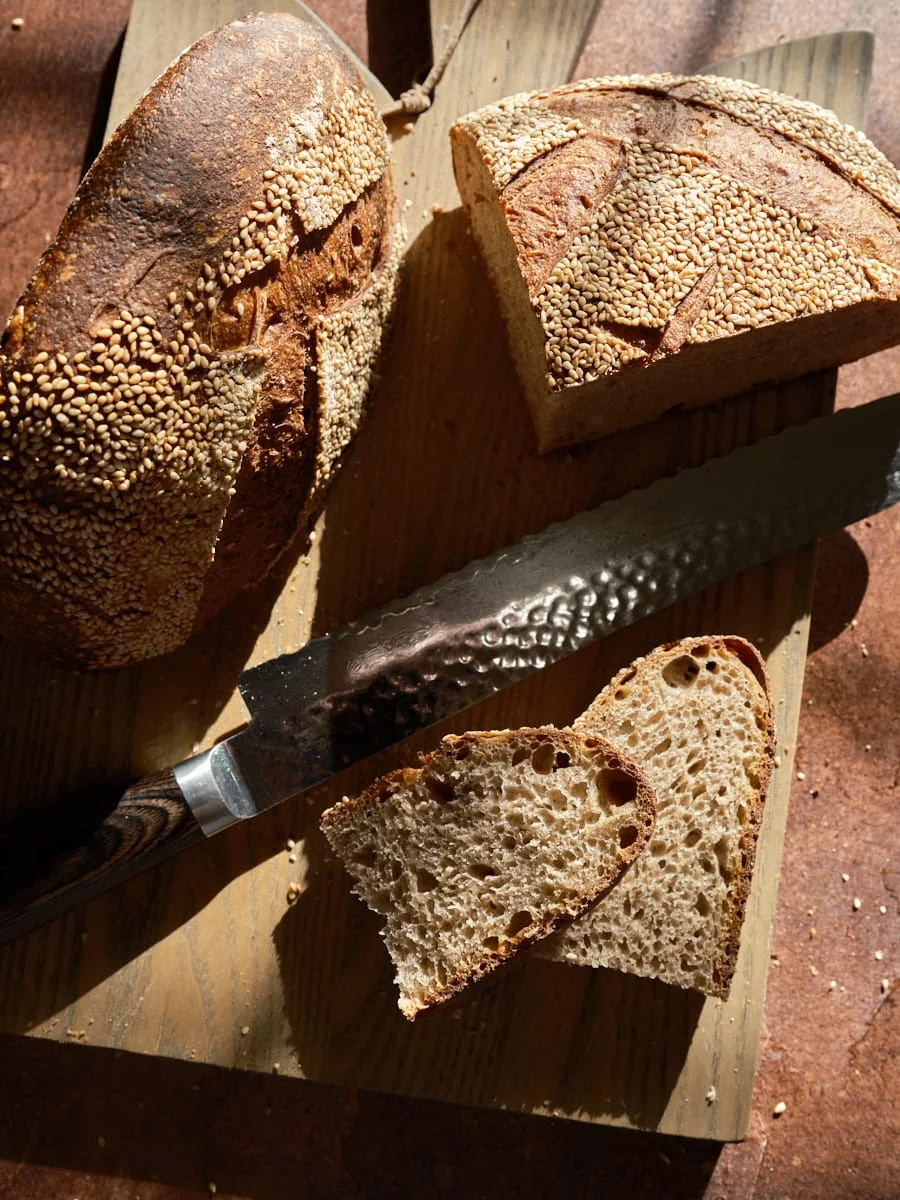
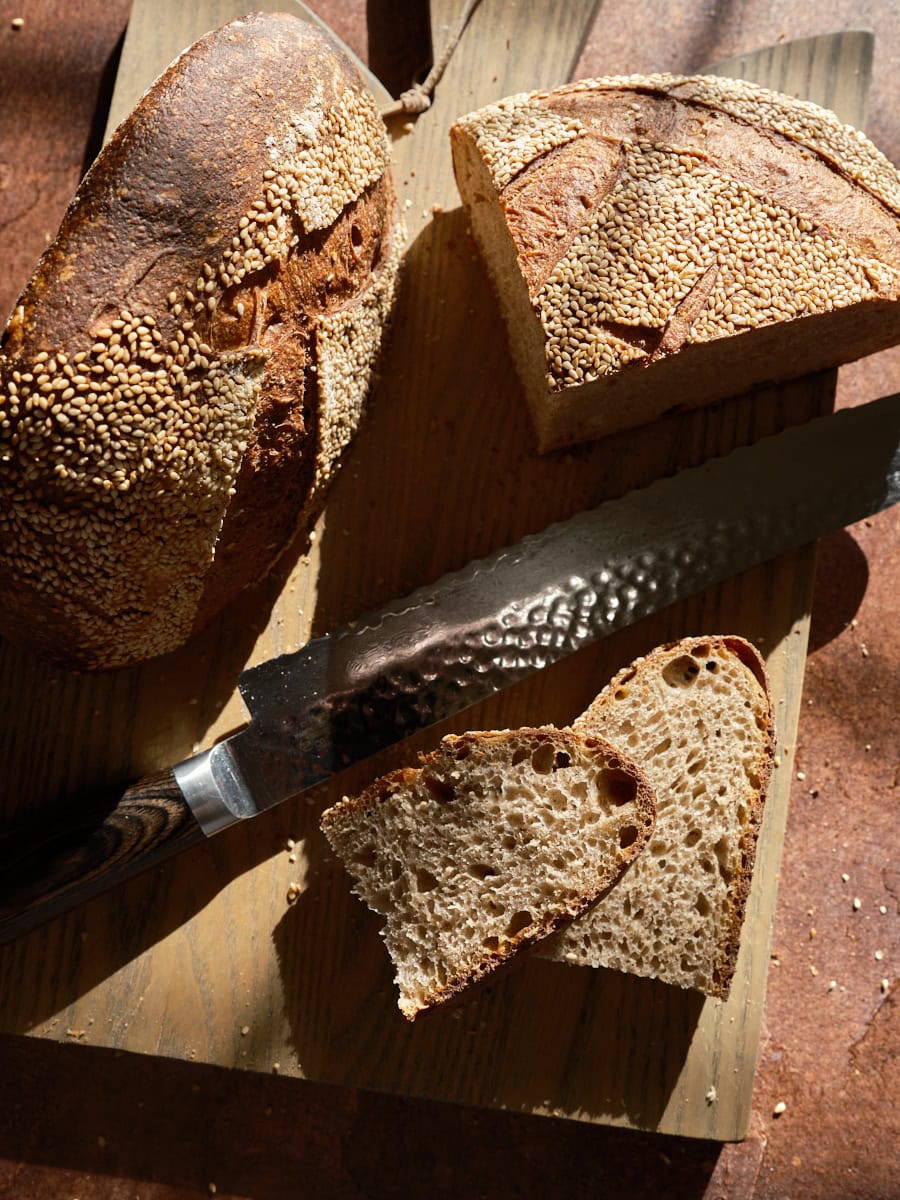
The bread’s distinct character is primarily defined by the prominent inclusion of aniseed, a spice celebrated for its pungent, licorice-sweet aroma. Unlike more subtle aromatics, anise asserts its presence from the moment it is ground, permeating the dough with a captivating fragrance that hints at the depth of flavor to come. This bold spice is meticulously balanced with the earthy, mineral, and subtly tannic notes of buckwheat, resulting in a sophisticated and highly satisfying sourdough. The judicious use of barley malt syrup further enriches the loaf, contributing a sweet, complex richness that harmonizes with the dominant spices. The visual appeal is enhanced by a generous topping of white sesame seeds, which not only complement the internal flavors but also provide a striking textural contrast and a refined finish.
Central to the development of this bread is the strategic application of a flour scald, a technique that significantly elevates both the texture and flavor profile. A scald is created by introducing boiling water to a portion of the flour, typically buckwheat in this recipe, transforming it into a thick, gelatinous paste. This process, akin to the Japanese yudane or Chinese tangzhong methods, initiates starch gelatinization, which has several profound benefits for the final product. Scientifically, the gelatinized starches are better able to trap moisture, leading to a dough that is exceptionally silky and a crumb that remains softer for an extended period. This enhanced moisture retention is crucial for delaying staling, thereby increasing the bread’s shelf life and ensuring a consistently pleasant eating experience. Beyond texture, the scald also intensifies the natural aromas and flavors of the buckwheat, imbuing the bread with an additional layer of aromatic complexity that would otherwise be absent. This technique, while simple to execute, represents a sophisticated approach to dough conditioning, underscoring the baker’s commitment to optimizing every aspect of the bread’s quality.
The selection of flours for this particular sourdough is deliberate, reflecting an intention to craft a loaf that is both hearty and nutritionally dense, ideal for substantial sandwiches and rich meals. The primary flour utilized is a high-extraction (Type 85) wheat flour, specifically Cairnspring’s Trailblazer. This choice is significant because Type 85 flour retains a greater proportion of the wheat berry’s bran and germ compared to standard white flour, offering a more robust flavor profile and enhanced nutritional value without the density sometimes associated with 100% whole wheat. Its "workhorse" reputation in the kitchen stems from its excellent performance in various baking applications, providing a bridge between the refined qualities of white flour and the wholesome characteristics of whole grain.
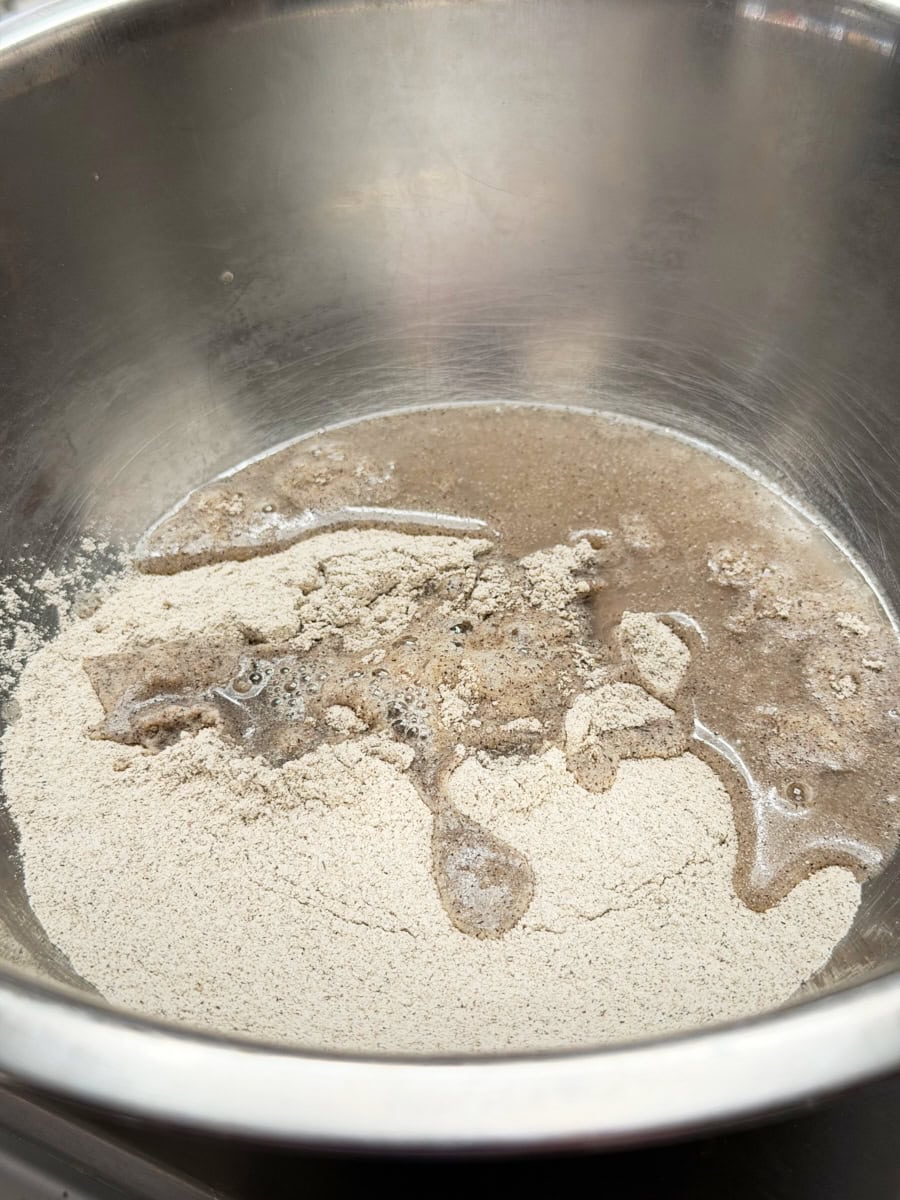
Buckwheat flour, though used in a smaller percentage, plays a pivotal role. Known for its nutty and earthy characteristics, buckwheat contributes a distinctive flavor that pairs exceptionally well with anise. However, its inclusion in wheat-based doughs requires careful consideration, as buckwheat lacks gluten-forming proteins. Even in modest quantities, it tends to "close up" the crumb structure, resulting in a denser interior compared to breads made solely with high-gluten wheat flours. Despite this textural impact, the trade-off is deemed worthwhile for the intense flavor, mineral notes, and the beautiful speckled appearance it imparts to the finished loaf, contributing to its rustic and wholesome appeal. The interplay between the strong gluten network of the high-extraction wheat and the non-gluten characteristics of buckwheat is a finely tuned balance that defines the bread’s unique texture and crumb.

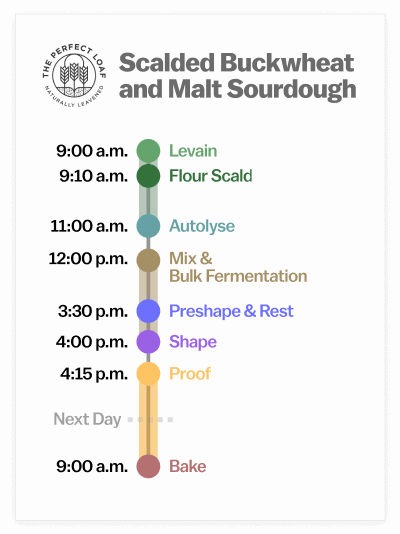
The development of this Scalded Buckwheat and Malt Sourdough Bread follows a carefully orchestrated two-day baking schedule, designed to maximize flavor development and dough strength with minimal active intervention. This methodology is characteristic of artisanal sourdough baking, where time is an essential ingredient. The process begins with the preparation of the levain, the sourdough starter, which is allowed to ripen over approximately three hours at a controlled temperature of 74-76°F (23-24°C). Concurrently, the flour scald is prepared, allowing it ample time to cool before integration into the main dough.
The subsequent autolyse phase is critical for hydration and gluten development. Here, the high-extraction and whole wheat flours, along with the pre-prepared flour scald, are combined with the initial quantity of water. This mixture rests for an hour, allowing the flours to fully hydrate and enzymes to begin breaking down starches, which strengthens the gluten network even before the addition of salt and levain. The target final dough temperature (FDT) of 78°F (26°C) is maintained throughout, a crucial factor in controlling fermentation rates and ensuring consistent results.
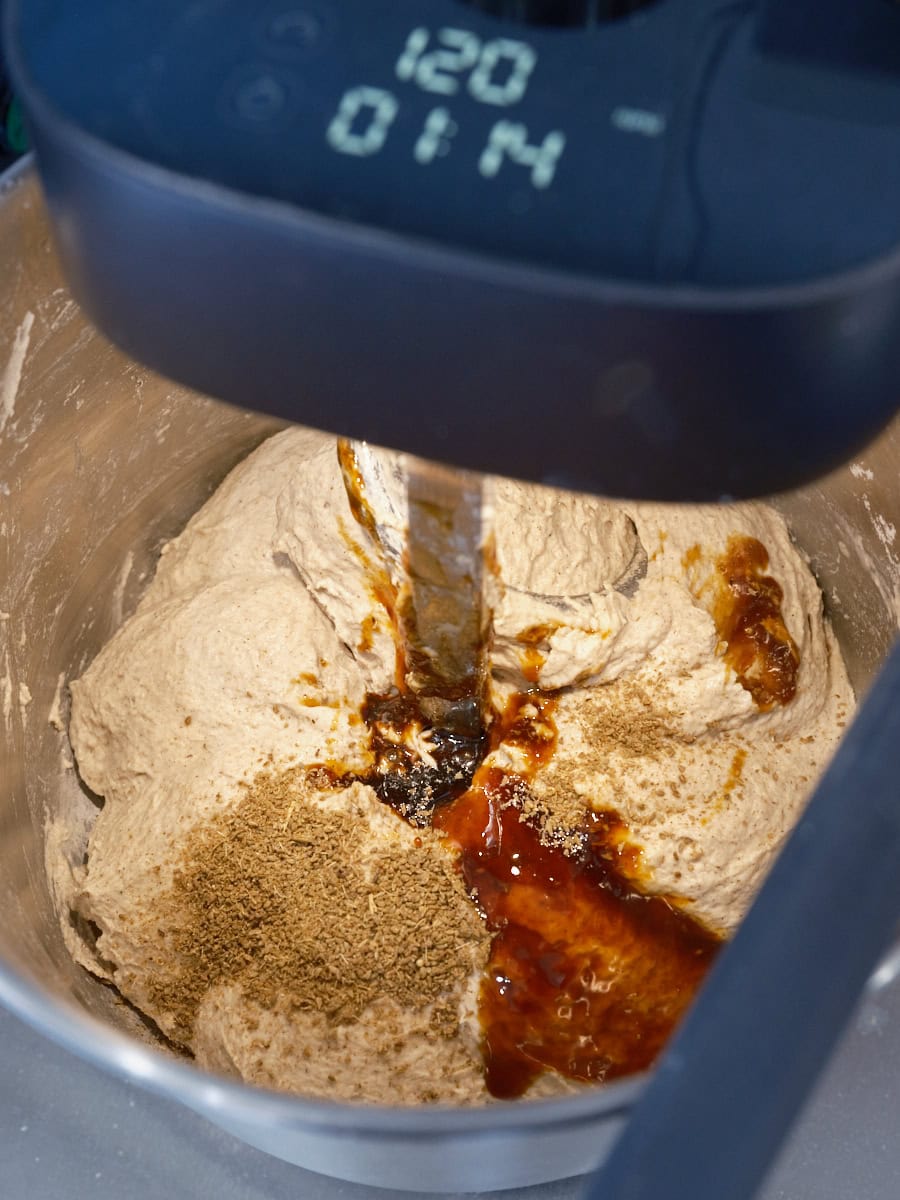
Mixing the dough introduces the ripe levain, barley malt syrup, ground aniseed, and fine sea salt. Given the recipe’s high hydration level (75% overall, reaching 83% when accounting for the water in the scald), a bassinage technique is employed. This involves holding back a portion of the water (Water 2) until after the initial mixing of levain and salt. This allows the baker to assess the dough’s capacity to absorb additional moisture, preventing over-hydration and ensuring optimal dough consistency. Mechanical mixers, such as a spiral mixer, can be used for efficient and thorough incorporation, but the recipe also provides detailed instructions for hand mixing, employing techniques like slap-and-fold to develop gluten and achieve a smooth, cohesive dough.
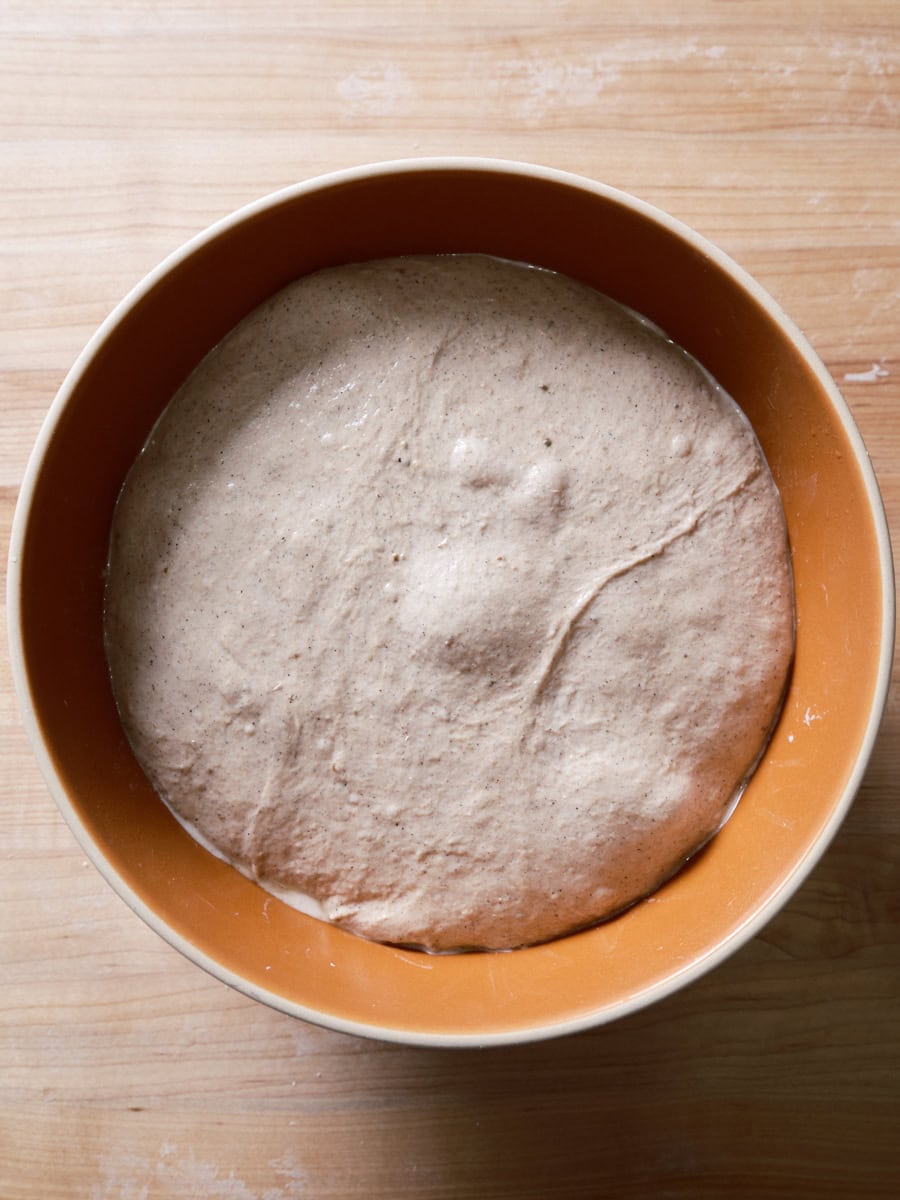
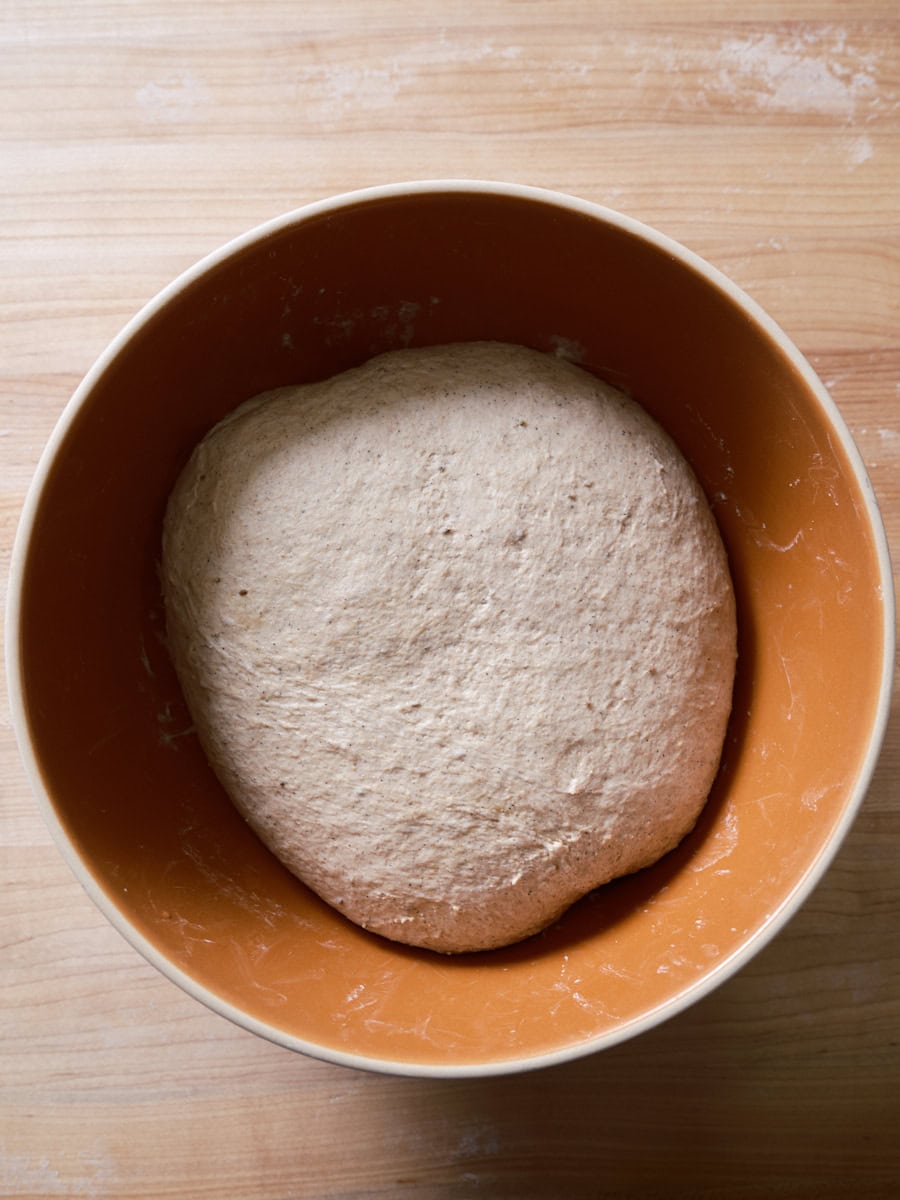
Bulk fermentation, spanning approximately three hours at a warm room temperature of 74-76°F (23-24°C), is a period of significant dough development. During this stage, the dough undergoes two sets of stretches and folds at 30-minute intervals. These manipulations are vital for strengthening the gluten, equalizing dough temperature, and redistributing yeast and bacterial activity, all contributing to the final bread’s structure and rise. By the end of bulk fermentation, the dough is expected to exhibit a noticeable increase in volume, typically around 30%, and possess a visibly smooth and puffy texture.
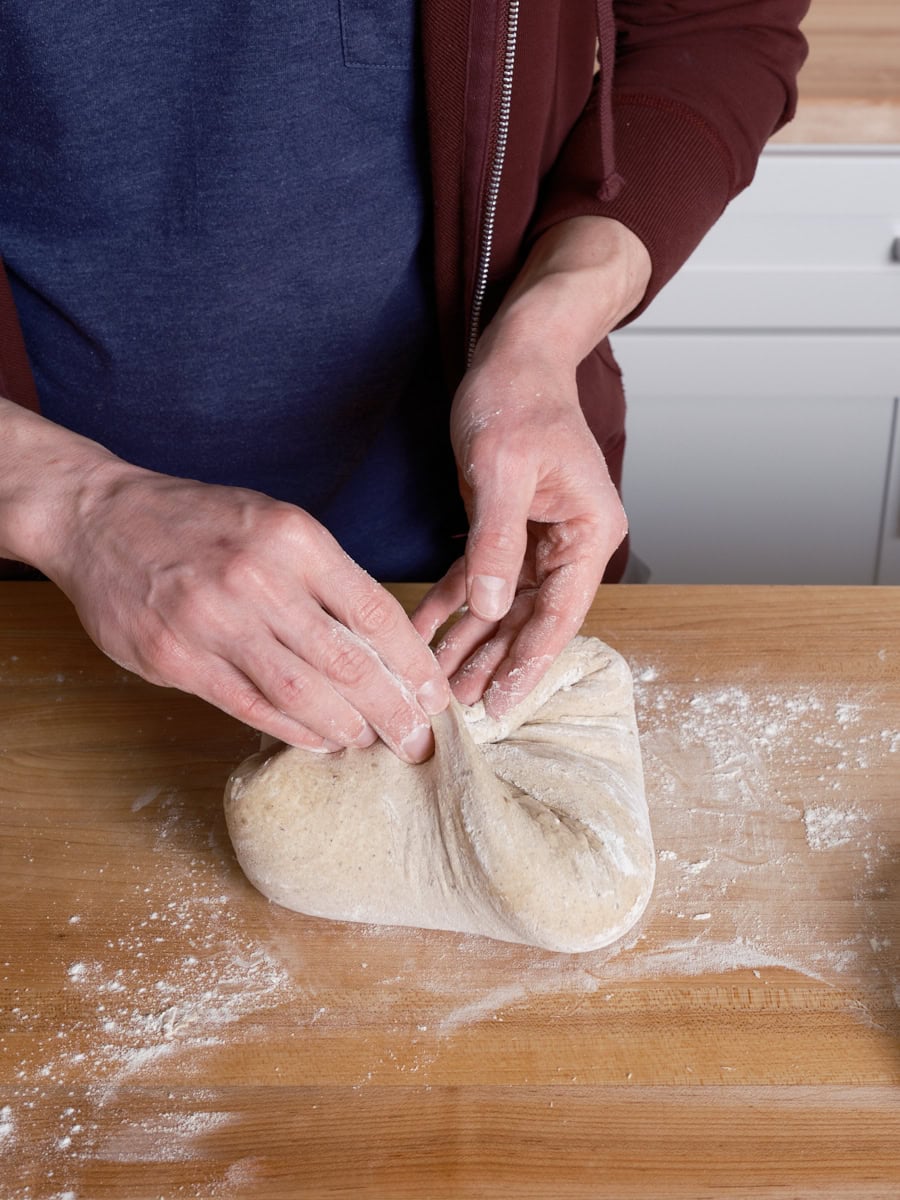
The dough is then gently pre-shaped into loose rounds and allowed to rest for 30 minutes, a crucial step that relaxes the gluten and makes the final shaping process more manageable. For final shaping, a specific "gather up" method is recommended, creating tension on the dough’s surface to ensure a tight, well-formed loaf. Before being transferred to proofing baskets, the shaped dough is inverted onto a bed of white sesame seeds, ensuring an even coating that adheres during baking. The shaped loaves are then subjected to a cold proof overnight in the refrigerator, a technique that slows fermentation, intensifies flavor development, and simplifies the baking schedule by allowing loaves to be baked fresh the following day.

Baking commences in a preheated oven at 450°F (230°C), utilizing a Dutch oven, combo cooker, or a baking steel with a steaming mechanism (such as a Baking Shell or a pan for ice) to create a steamy environment. The initial 20 minutes of baking with steam are critical for achieving maximum oven spring and developing a thin, crisp crust. After this period, the steam is vented (by removing the lid of the Dutch oven or steaming pans), and baking continues for another 30 minutes, allowing the crust to deepen in color and develop its characteristic crackle. The finished loaves are cooled on a wire rack for one to two hours, a necessary step to allow internal starches to set and flavors to fully mature before slicing.

This Scalded Buckwheat and Malt Sourdough Bread represents a thoughtful confluence of traditional baking artistry and modern culinary understanding. Its meticulous methodology, from the precise control of dough temperature to the strategic use of a flour scald, underscores a commitment to producing bread of exceptional quality. The blend of robust flavors—licorice-sweet anise, nutty buckwheat, and rich malt—results in a loaf that is both comforting and adventurous. This bread not only offers a satisfying response to the chill of colder months but also stands as a testament to the ongoing innovation within the artisanal sourdough movement, promising a flavorful and texturally complex experience for those who appreciate the craft of baking.