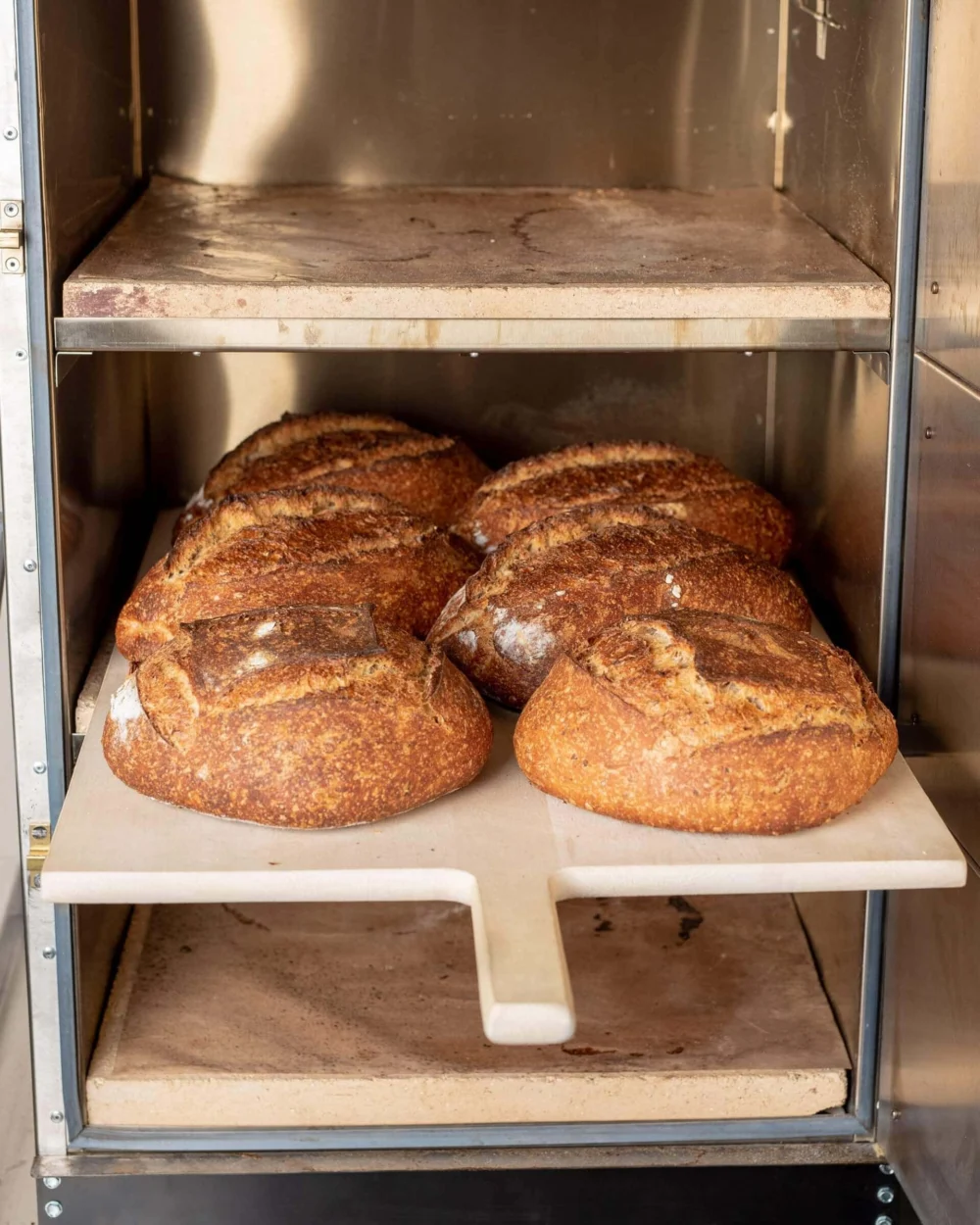
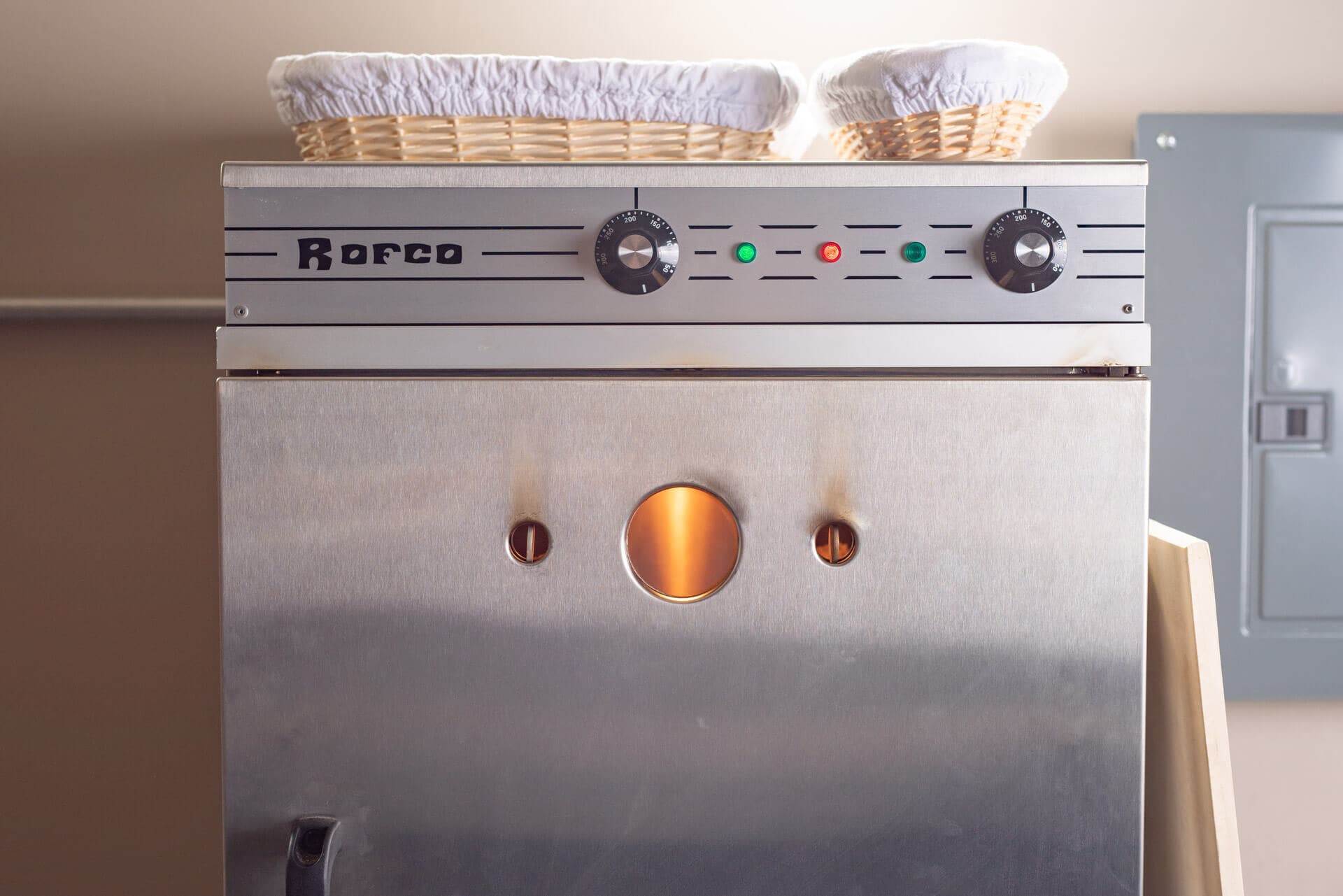
The Rofco B40 electric stone oven has emerged as a pivotal piece of equipment for dedicated home bakers and burgeoning micro-bakeries seeking to elevate their production capacity and achieve professional-grade results. This Belgian-engineered brick oven, renowned for its robust construction and exceptional heat retention, represents a significant step up from conventional home ovens, enabling bakers to efficiently produce larger quantities of artisan bread without compromising quality. Its growing adoption reflects a broader trend within the culinary landscape: the increasing demand for specialized, high-performance tools that bridge the gap between amateur enthusiasm and professional ambition.
The Artisan Baking Renaissance and the "Prosumer" Demand
The past decade has witnessed a remarkable surge in artisan bread making, largely fueled by the global sourdough phenomenon and a renewed appreciation for handcrafted, wholesome foods. What began as a niche hobby for many has evolved into a passion, and for some, a viable home-based business. This burgeoning interest has spurred the development of a "prosumer" market—a segment of consumers willing to invest in professional-grade equipment for personal or small-scale commercial use. These bakers, often driven by a desire for greater efficiency, consistency, and superior crust and crumb development, quickly outgrow the limitations of standard kitchen appliances.
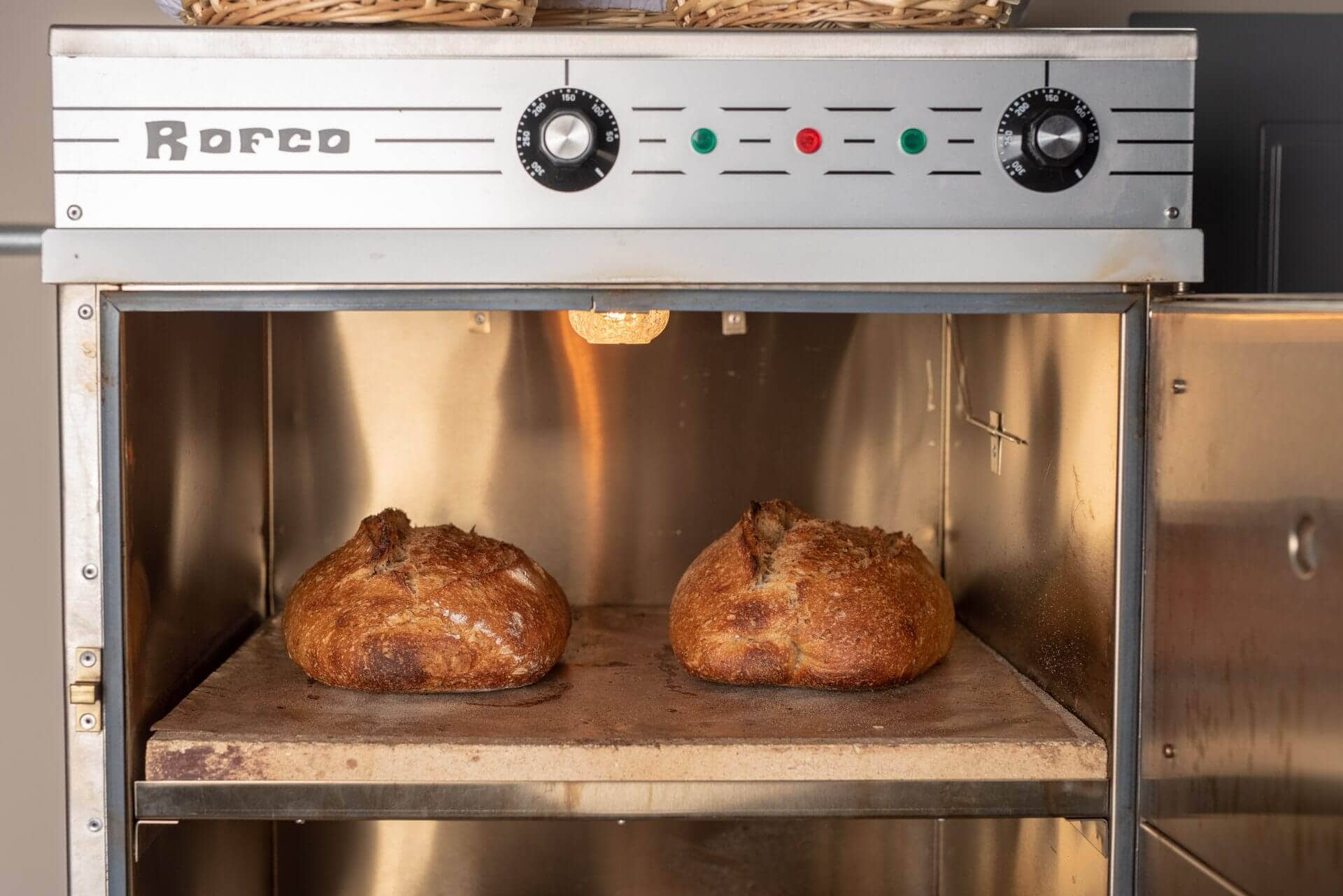
Traditional home ovens, while capable of producing excellent bread in small batches, typically struggle with maintaining consistent heat and generating sufficient steam when baking multiple loaves simultaneously. This often leads to uneven bakes, compromised oven spring, and a lengthy, multi-batch process. For bakers dreaming of producing six or more loaves at a time—a modest output by commercial bakery standards but formidable in a home setting—the need for specialized equipment becomes undeniable. Data from culinary equipment suppliers and online baking communities indicate a steady increase in sales for high-capacity mixers, proofing cabinets, and compact deck ovens, underscoring this shift towards professionalizing the home baking experience. The Rofco oven, particularly the B40 model, has strategically positioned itself within this expanding market, offering a durable, efficient, and relatively compact solution for those ready to scale their baking ambitions.
Rofco: Precision Engineering from Belgium

At its core, the Rofco bread oven is a testament to minimalist, functional design, rooted in Belgian manufacturing precision. The company’s philosophy appears centered on creating a reliable, long-lasting piece of equipment that prioritizes baking performance above all else. Unlike many high-tech commercial ovens, the Rofco eschews complex digital interfaces and automated features in favor of straightforward, durable components. This "no-nonsense" construction contributes to its longevity and ease of maintenance, qualities highly valued by dedicated bakers.
The B40, the largest variant discussed, features three independent baking decks, each measuring approximately 18.9 inches by 18.9 inches. The critical component of these decks is the 1-3/8-inch thick chamotte refractory bricks. These specialized ceramic stones are engineered for exceptional thermal mass and heat retention. During the extensive preheating cycle, the chamotte bricks absorb and store a significant amount of heat energy. This stored energy is crucial for consistent baking. When cold dough is introduced, the bricks rapidly transfer heat to the loaf, initiating the crucial "oven spring" and contributing to a thick, evenly browned crust. Furthermore, the high thermal mass ensures that the oven temperature recovers quickly even after the door is opened for loading or rotating loaves, facilitating back-to-back bakes with minimal downtime. The sealed oven chamber is another key design element; it prevents steam from escaping, which is vital for crust development during the initial phase of baking. The oven operates on a typical 220V AC single-phase power supply, similar to other heavy-duty home appliances in many regions, although it often requires a dedicated circuit and professional electrical installation, a common investment for serious home bakeries.
Optimizing Production: Strategic Dough Management and Oven Utilization
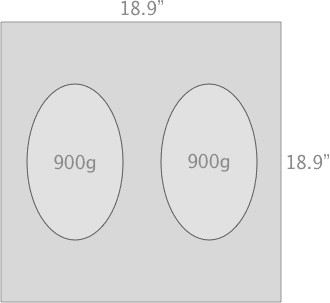
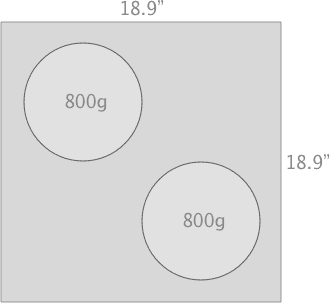
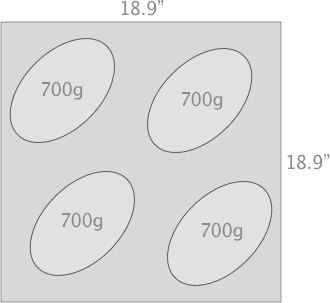
Maximizing the Rofco’s multi-deck capacity requires a strategic approach to dough arrangement, often described by users as a "real-life Tetris" challenge. The goal is to load as many loaves as possible onto each deck without compromising airflow or even heat distribution, which could lead to inconsistent browning or underdeveloped crusts. For the 18.9" x 18.9" decks of the B40, common configurations include two 900g batards per deck, two 800g boules, or four smaller 700g loaves. The design of the oven, with independent heating elements for the top and bottom, allows for precise control over the baking environment, ensuring consistent results across all levels.
Beyond standard loaves, the Rofco’s versatility extends to other baked goods. The inclusion of square steel trays provides a practical solution for baking smaller items like buns, rolls, or even a large square pizza. These trays simplify the transfer of multiple delicate items into and out of the hot oven and help contain any potential spills, making the Rofco a multi-functional asset in a home bakery. Understanding the oven’s heat dynamics—with the back of each deck often being slightly hotter due to heating element placement—allows experienced bakers to strategically position dough or rotate loaves during the bake for perfectly uniform results.
The Art of Steam: Crafting the Perfect Crust and Crumb
One of the most critical elements in artisan bread baking is the introduction of steam during the initial phase of baking. Steam gelatinizes the starch on the surface of the dough, allowing the crust to remain pliable longer, thereby maximizing "oven spring" (the final burst of expansion before the crust sets). It also contributes to a thinner, crispier crust and a rich, glossy finish. While professional commercial ovens often feature integrated steam injection systems, the Rofco, in its pursuit of simplicity and durability, opts for manual steam generation. This design choice, while requiring a hands-on approach, allows bakers to control the amount and timing of steam application with precision.
The most widely adopted method for manual steaming in the Rofco involves a commercial-grade pressure sprayer. Set to a fine mist, the sprayer allows for a controlled and even application of water within the sealed oven chamber. Bakers typically spray liberally around and between the loaves on each deck immediately after loading, often performing a second, quick spray just before sealing the door. A crucial tip is to avoid spraying directly onto the glass light fixture within the oven, as thermal shock from cold water can cause it to crack—a lesson learned by many Rofco users. An alternative, though less space-efficient, method involves using optional rectangular steel "steam pods." These pods are preheated within the oven, and water or ice cubes are poured into them upon loading the dough, instantly generating a burst of steam. While effective, these pods occupy valuable deck space, leading many high-volume bakers to prefer the sprayer method. After the initial steam phase, usually 10-20 minutes, the oven’s front vents are opened, and the door briefly cracked to release the accumulated steam, allowing the crust to dry and crisp.

Mastering the Bake: A Structured Process
Developing a consistent baking process for a new oven, especially one with the unique characteristics of a Rofco, is an iterative journey of experimentation and refinement. While specific formulas may necessitate minor adjustments, a well-established baseline process provides a framework for success. The reported go-to process for the Rofco B40 exemplifies this structured approach:

- Thorough Preheat (1 hour 30 minutes at 240°C): This extended preheat is paramount. The chamotte bricks require significant time to fully absorb and stabilize at the target temperature. This ensures maximum thermal energy is stored, which is essential for consistent baking across multiple loaves and decks, and for rapid heat recovery after loading. The oven should be empty during preheating, with the door and vents closed to optimize heat retention. The Rofco’s independent top and bottom heating elements, controlled by separate knobs, allow for precise heat management, ensuring even heating throughout the large brick mass.
- Initial Bake with Steam (20 minutes at 150°C): Once the dough is loaded onto silicone sheets using a large wooden peel, the oven temperature is typically reduced to 150°C. This phase, combined with the manual steam injection, is crucial for oven spring and initial crust development. The lower temperature prevents premature scorching while allowing the internal structure of the bread to expand.
- Venting Steam and Continued Bake (10 minutes at 220°C): After the initial steam phase, the oven door is carefully opened briefly to allow accumulated steam to escape (bakers are advised to stand clear of the rush of hot steam). The circular vents on the door are then swiveled open, and the temperature is increased to 220°C. This higher temperature facilitates the Maillard reaction, developing the crust’s color and flavor.
- Final Bake and Crust Development (20-30 minutes at 150°C): The temperature is again lowered to 150°C for the final stage of baking. During this period, bakers may reshuffle loaves between decks or rotate them to ensure uniform browning, particularly if slight temperature variations exist across the large deck surfaces. This phase focuses on thoroughly cooking the interior of the bread and achieving the desired deep golden-brown crust.
Upon completion, the loaves are removed with the peel and transferred to wire racks for cooling, a critical step that allows internal moisture to redistribute and the crust to crisp. The oven is then either turned off or reset to 240°C for subsequent batches, capitalizing on the excellent heat retention of the chamotte bricks for multiple bakes.
Essential Ancillary Equipment for the Rofco Baker
Beyond the oven itself, several specialized tools significantly enhance the Rofco baking experience, improving efficiency, safety, and ergonomic comfort.
- Commercial Strength Sprayer: The evolution from a hand-pump sprayer to an electric spray bottle highlights the pursuit of greater convenience and effectiveness. The Electric Spray Bottle, a compact yet powerful device, delivers a consistent, fine mist at the touch of a button, ensuring optimal steam saturation without the physical effort of manual pumping. This is particularly advantageous when dealing with a hot, multi-deck oven.
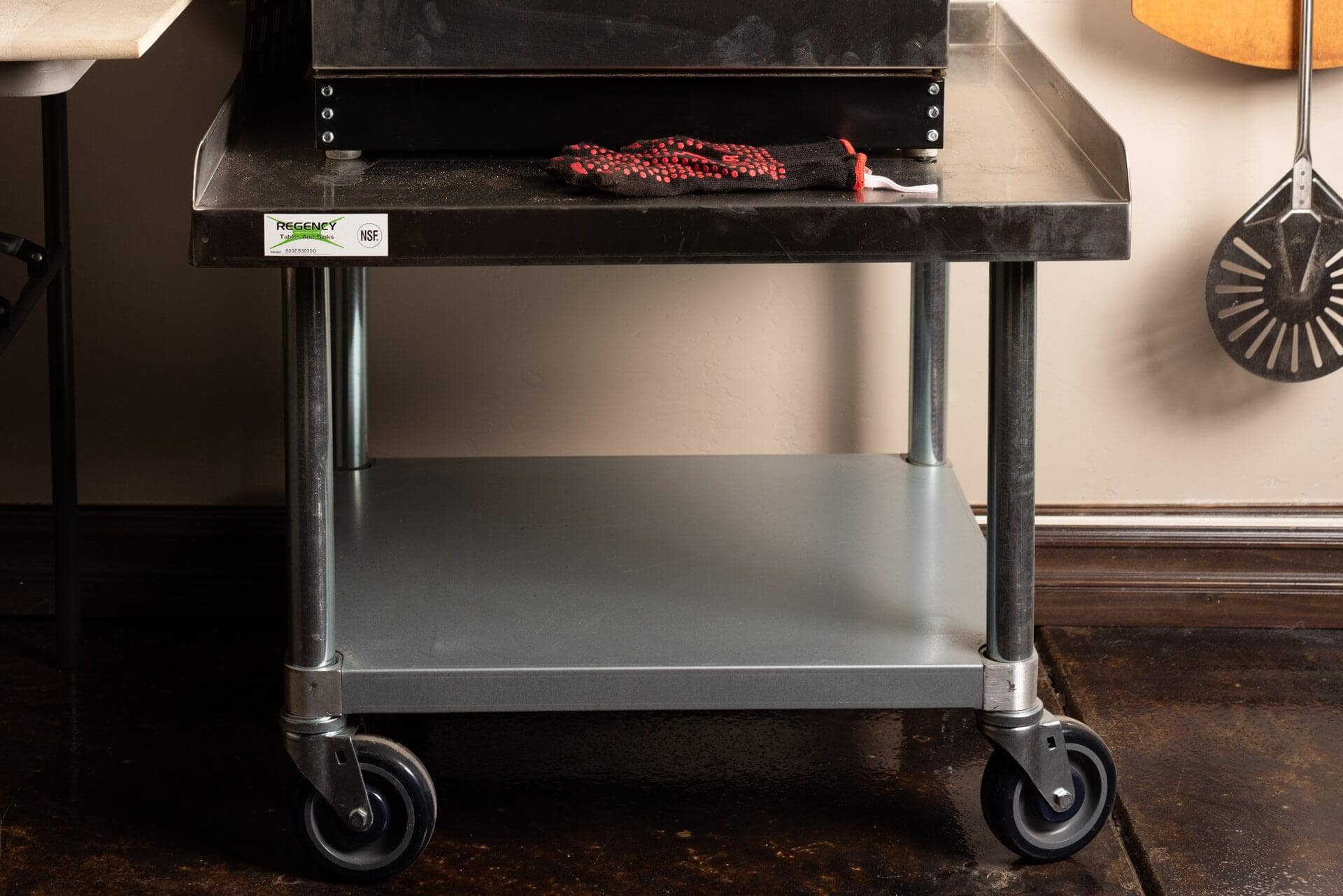
- Oven Equipment Stand: The Rofco B40, while compact for its capacity, is a substantial piece of equipment. Elevating it to an ergonomic working height is crucial for comfortable and safe loading and unloading. A custom-cut stainless steel equipment stand, such as the Regency 30" x 30" 16-Gauge Stand from suppliers like WebstaurantStore, provides the necessary stability and durability. Customizing the leg height (e.g., to 18 inches) ensures the top deck is at an ideal level for bakers. While casters offer mobility, some bakers opt for fixed legs to maximize structural rigidity, especially when repeatedly handling heavy dough.
- Large Wooden Peel: The transition from inverted steel baking trays to a dedicated large wooden pizza peel dramatically streamlines the loading process. A peel with dimensions closely matching the Rofco’s deck width, such as