
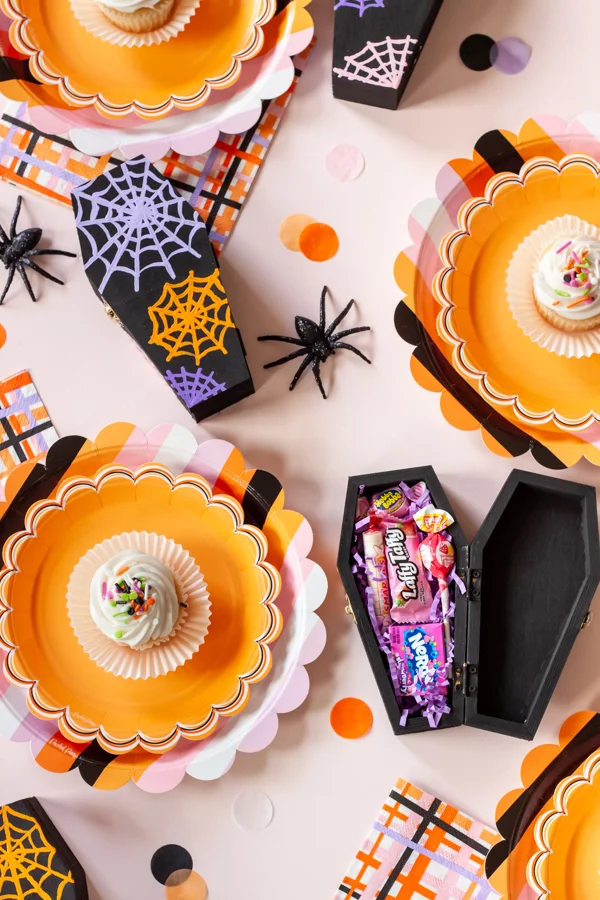
The autumn season has traditionally served as a catalyst for increased consumer activity within the craft and home décor sectors, driven by a growing interest in personalized, "boutique-style" celebrations. As families seek to blend traditional festivities like pumpkin carving and bonfires with modern aesthetic trends, the demand for versatile, multi-purpose DIY projects has surged. One such project gaining traction in the lead-up to the October holiday involves the transformation of miniature wooden coffin boxes into dual-purpose party favors and place settings. These items, currently popularized through retail partnerships and digital crafting tutorials, represent a broader shift toward interactive holiday experiences where guests, particularly children, are invited to participate in the creation of the event’s atmosphere.
The Rise of DIY Halloween Decor and the Experience Economy
The contemporary landscape of holiday celebration is increasingly defined by the "experience economy," a concept where the value of an event is derived not just from the goods consumed but from the memories and activities shared. According to data from the National Retail Federation (NRF), Halloween spending in the United States has seen a steady upward trajectory, with a significant portion of that budget allocated to home decorations and party supplies. However, a notable sub-sector of consumers is moving away from mass-produced, "out-of-the-box" decorations in favor of semi-customized DIY projects.
The use of unfinished wood products, such as the six-inch coffin boxes available at major retailers like Walmart, allows for a high degree of personalization. This trend aligns with the rise of social media platforms like Pinterest and TikTok, where "creepy-cute" aesthetics—balancing the macabre with whimsical or vibrant elements—have become a dominant visual language for the season. By utilizing accessible materials such as acrylic paints and alphabet stickers, hosts can create professional-grade table landscapes that serve both functional and decorative roles.
Chronological Methodology for Crafting Custom Candy Coffins
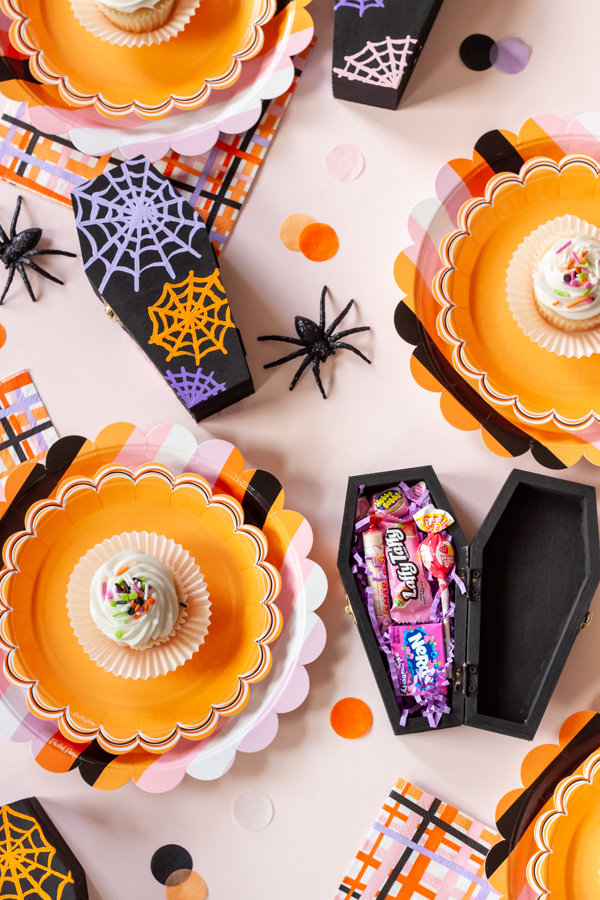
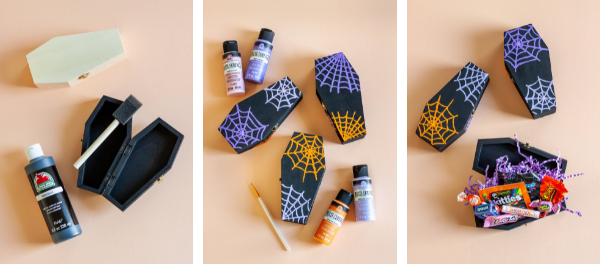
The production of these seasonal favors follows a specific three-step technical process designed to maximize visual impact while remaining accessible to amateur crafters and children. The methodology prioritizes the "creepy cobweb vibe," a design choice that utilizes high-contrast colors to ensure the items stand out in low-light party environments.
Phase 1: Priming and Base Application
The initial stage of the project involves the preparation of the unfinished wooden surface. Using foam sponge brushes, a layer of black acrylic craft paint is applied to the entirety of the coffin box, including the lid and the interior edges. This serves as a primer, providing a dark, matte background that allows subsequent neon or bright colors to appear more vivid. Professional crafters recommend allowing a minimum of 30 to 45 minutes for the base coat to dry completely, depending on the humidity of the environment, to prevent the "bleeding" of colors in the second phase.
Phase 2: Technical Detailing and Geometric Patterns
The secondary phase requires the use of a fine-tipped, skinny paintbrush to execute the cobweb design. The process begins with the painting of "spokes"—straight lines extending from a central focal point on the lid toward the outer edges of the coffin. This geometric foundation is then layered with "scallops," or curved lines, that connect the spokes in concentric circles. By leaving the ends of the spokes extending slightly beyond the final layer of scallops, the artist creates a more realistic, "tattered" web effect. This stage is critical for developing fine motor skills in younger participants, as it requires steady hand-motion and spatial awareness.
Phase 3: Assembly and Utility Integration
Once the decorative elements are dry, the coffins transition from art pieces to functional party tools. The interior of the lid can be customized using alphabet stickers to denote guest names, effectively turning the favor into a personalized place card. The final step involves the "filling" of the coffin. Standard seasonal confectionery—such as Kinder eggs, candy corn, and Dum Dums lollipops—are common choices, though some hosts opt for non-edible "surprises" like plastic spiders to enhance the thematic experience.
Material Analysis: The Role of Specialized Craft Supplies
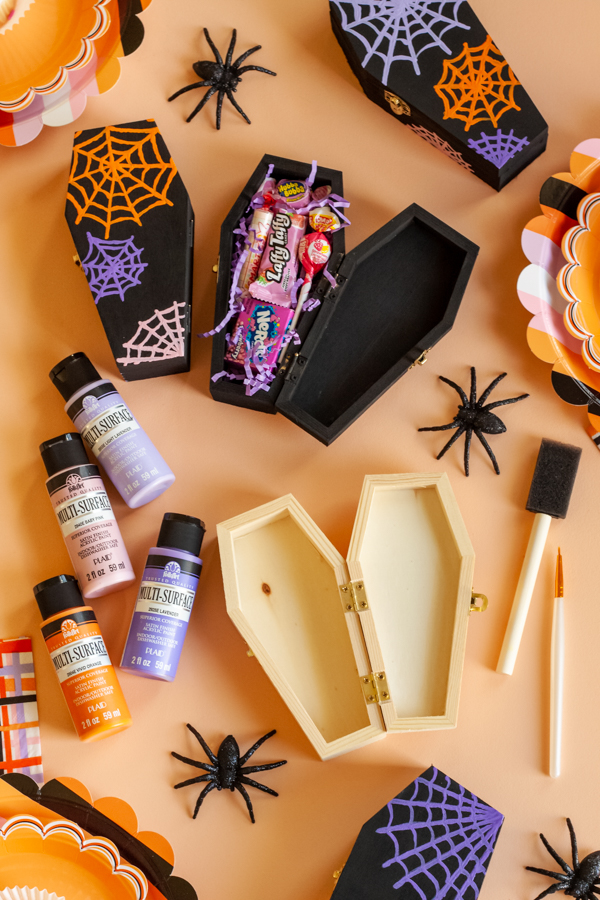
The success of the DIY candy coffin project is largely dependent on the quality and type of materials used. Retailers have responded to this by bundling specific items to facilitate ease of purchase for the consumer.
- Acrylic Craft Paint: Unlike oil-based paints, acrylics are water-soluble, fast-drying, and generally non-toxic, making them the industry standard for family-oriented crafting. The use of "bright" or neon sets against a black background is a strategic choice intended to mimic the "glow-in-the-dark" or "blacklight" aesthetics popular in haunted house attractions.
- Foam Sponge Brushes: These tools are preferred for base coats because they hold a significant amount of pigment and minimize the appearance of brush strokes on porous wood surfaces.
- Six-Inch Coffin Boxes: The dimensions of the wooden boxes are specific; at six inches, they are large enough to hold a variety of treats but small enough to fit comfortably within a standard table setting without crowding the dinnerware.
Socio-Economic Context and Retail Strategy
The promotion of such projects by major retailers like Walmart is a calculated move within the seasonal retail cycle. By positioning themselves as a "one-stop shop" for both the craft components (paint, brushes, wood) and the fillers (candy, party supplies), retailers can capture a larger share of the Halloween market. This "project-based marketing" encourages consumers to purchase multiple related items rather than a single standalone product.
Furthermore, the inclusion of brand-name candies like Kinder and Dum Dums within these tutorials highlights a symbiotic relationship between craft suppliers and the confectionery industry. During the third and fourth quarters, candy manufacturers rely heavily on seasonal packaging and "treat-giving" occasions to drive volume. The DIY coffin project provides a novel "vessel" for these products, elevating the act of giving candy from a simple hand-off to a curated gift experience.
Child Development and Creative Expression
From a developmental perspective, engaging children in the creation of holiday décor provides several cognitive benefits. Educators note that following a multi-step "tutorial" style project helps children practice sequencing and instructional following. The ability to "decorate in their own style," as suggested by the project guidelines, fosters a sense of agency and creative confidence. In an era dominated by digital entertainment, tactile activities like painting and sticker-application provide necessary sensory engagement.
Moreover, involving children in the "party planning" aspect of a holiday teaches social etiquette and the value of hospitality. By creating place cards for their guests, children learn to consider the comfort and recognition of others within a social setting, reinforcing the "host" mindset from an early age.
Broader Implications for the Holiday Industry
The trend of the "Candy Coffin" is indicative of a larger movement toward "Micro-Holidays"—the practice of turning every aspect of a seasonal event into a curated, shareable moment. As the boundaries between professional event planning and home-hosting continue to blur, the reliance on DIY guides and retail-sponsored content is expected to grow.
This shift has long-term implications for the manufacturing of holiday goods. We are seeing a move toward "blanks"—unfinished items like the wooden coffins—that allow the consumer to act as the final designer. This reduces the risk for manufacturers, as a plain wooden box can be marketed for Halloween as a coffin, or with different styling, for other gothic or theatrical purposes throughout the year.
Conclusion
The DIY Halloween candy coffin project is more than a simple craft; it is a reflection of current consumer desires for personalization, affordability, and experiential celebration. By combining the accessibility of mass retail with the charm of handmade artistry, families are able to create unique holiday traditions that stand out in an increasingly digitized world. As the autumn season progresses, the sight of these neon-webbed coffins at dinner tables across the country will serve as a testament to the enduring appeal of the "spooky" season and the creative spirit of the modern host. Through the strategic use of paint, wood, and confectionery, the simple act of "trick-or-treating" is being reimagined as a sophisticated, sit-down affair that honors both the macabre and the communal.


