
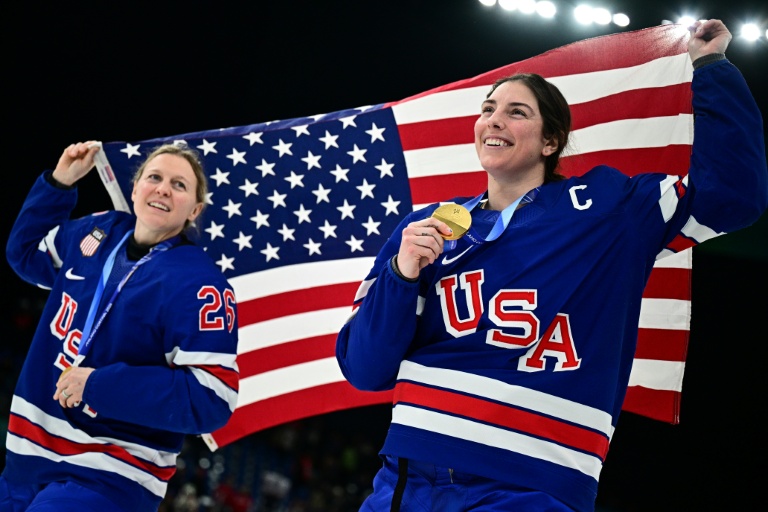
The triumphant roar of the US women’s Olympic ice hockey team’s gold medal victory in Milan was met with an unexpected and unwelcome shadow, cast by a congratulatory phone call from President Donald Trump to the men’s team. Captain Hilary Knight, a decorated five-time Olympian and a pivotal figure in the women’s historic win, expressed her disappointment that the President’s remarks, which she characterized as a "distasteful joke," had detracted from the significant achievements of female athletes representing the United States on the global stage. The incident, which unfolded on February 20, 2026, following the men’s dramatic gold medal triumph over arch-rival Canada, has ignited a broader conversation about the recognition and respect afforded to women in sports and public life.
The Presidential Call and the "Distasteful Joke"
The controversy began when President Trump, in a widely reported phone call to the victorious US men’s ice hockey team, extended his congratulations on their hard-fought victory. During the call, broadcast live and witnessed by many, President Trump extended an invitation to the team to attend his upcoming State of the Union address. In a remark that has since drawn significant criticism, he added, "I’m going to have to ask the women’s team as well, or I’m going to be impeached." This statement, intended by the President perhaps as levity, was perceived by many, including Captain Knight, as dismissive and undermining of the women’s team’s own monumental achievement just days earlier.
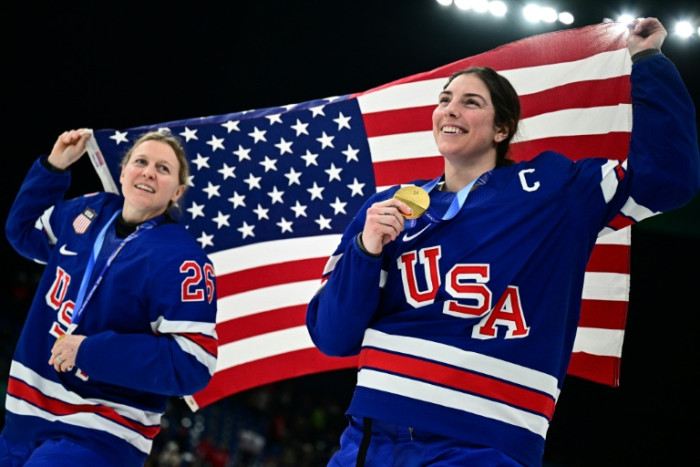
The US women’s team had secured their own Olympic gold medal on February 19, 2026, defeating Canada in a thrilling overtime final. Their victory marked a significant moment for women’s hockey, underscoring years of dedication, training, and advocacy. The juxtaposition of the President’s congratulatory remarks to the men’s team with the perceived slight towards the women’s team immediately sparked debate online and in sports media.
Knight’s Perspective: Overcoming the Shadow
Speaking on ESPN’s SportsCenter, Hilary Knight articulated the frustration felt by many within the women’s team and their supporters. "I thought it was sort of a distasteful joke, and unfortunately that is overshadowing a lot of the success, the success of just women at the Olympics carrying for Team USA and having amazing gold medal feats," Knight stated. As a seasoned Olympian with numerous accolades, including holding the record for the most Olympic goals by any US hockey player (male or female) with 15, Knight’s perspective carries significant weight. Her words highlighted the broader implications of the President’s comment, extending beyond the immediate context of the congratulatory call to encompass the ongoing struggle for gender equality and equitable recognition in all sectors.
Knight, however, was careful to distinguish the President’s remarks from the camaraderie she perceives between the men’s and women’s national hockey teams. "I think there’s a genuine level of support there and respect," she emphasized. "I think that’s being overshadowed by a quick lapse." She further elaborated on the challenging position the men’s team found themselves in, stating, "I think the guys were in a tough spot, so I think it’s a shame this storyline and narrative has kind of blown up and (is) overshadowing that connection and genuine interest in one another and cheering each other on." This nuanced perspective underscores the complexity of the situation, acknowledging the potential for the President’s words to create unintended divisions.
The Women’s Team Declines Invitation
Following the President’s remarks, the US women’s ice hockey team formally declined an invitation to attend the State of the Union address, scheduled for Tuesday night of that week. USA Hockey, the national governing body for the sport, cited "prior commitments" as the reason for their absence, a statement that was widely interpreted as a subtle but firm response to the President’s controversial comment.
Men’s Team Recognition and Dissent
The men’s ice hockey team, having accepted the President’s invitation, was honored at the White House. They were feted in the Oval Office and subsequently acknowledged during the President’s address to a joint session of Congress. A highlight of their visit was President Trump presenting goaltender Connor Hellebuyck with the Presidential Medal of Freedom, the nation’s highest civilian honor.
However, not all members of the men’s team were present for these accolades. Reports from US media indicated that a handful of players opted not to attend the White House events and the Congressional address. These players reportedly stated their intention to return to their respective National Hockey League (NHL) teams to resume training and to spend time with their families. While no explicit connection was made between their absence and the President’s comments regarding the women’s team, the timing and the broader public discourse surrounding the incident invited speculation.
Timeline of Key Events: Milan-Cortina 2026 Olympic Ice Hockey
- February 19, 2026: The US women’s Olympic ice hockey team defeats Canada in overtime to win the gold medal at the Milan-Cortina Games. Hilary Knight scores the crucial game-tying goal in the final minutes of regulation, and Megan Keller nets the overtime winner.
- February 20, 2026: The US men’s Olympic ice hockey team defeats Canada to win the gold medal.
- February 20, 2026 (evening): President Donald Trump calls the men’s team to offer congratulations. During the call, he invites the men’s team to the State of the Union address and makes a remark about potentially being "impeached" if he doesn’t invite the women’s team as well.
- February 21, 2026: Captain Hilary Knight of the US women’s team addresses the controversy on ESPN’s SportsCenter, calling the President’s remark "distasteful."
- February 23, 2026 (Tuesday night): The US women’s team declines an invitation to attend the State of the Union address, citing prior commitments.
- February 23, 2026 (Tuesday): Members of the US men’s team attend the State of the Union address and are honored at the White House. Goaltender Connor Hellebuyck receives the Presidential Medal of Freedom.
Supporting Data and Context: The Landscape of Women’s Sports
The controversy surrounding President Trump’s remarks arrives at a time when women’s sports are experiencing a surge in popularity and visibility. Data from various sports analytics firms indicate a significant increase in viewership and engagement for women’s professional and Olympic events. For instance, the final game of the women’s ice hockey tournament in Milan-Cortina reportedly garnered record-breaking television ratings for a women’s hockey event, reflecting a growing audience eager to celebrate the athletic prowess of female athletes.
Despite this progress, disparities in media coverage, sponsorship opportunities, and prize money persist between men’s and women’s sports. The incident serves as a stark reminder of the ongoing challenges in achieving full parity and equitable recognition. The US women’s ice hockey team, in particular, has been at the forefront of advocacy for better treatment and compensation, including a well-publicized boycott in 2017 that led to significant improvements in their support structure. Hilary Knight’s leadership on and off the ice has been instrumental in these efforts.
Broader Implications and Analysis
The implications of this controversy extend beyond the immediate realm of sports. Captain Knight’s call for a broader societal shift in how women are discussed and valued is particularly resonant. "Women aren’t less than, and their achievements shouldn’t be overshadowed by anything else other than how great they are," she asserted. This sentiment highlights the critical need for public figures, especially those in positions of leadership, to use their platforms to uplift and empower all individuals, regardless of gender.
The incident raises questions about the responsibility of political leaders in promoting inclusivity and respect. The power of presidential rhetoric to shape public perception and influence societal attitudes is undeniable. When remarks, even those intended as jests, can be interpreted as demeaning or dismissive of the achievements of women, they risk perpetuating harmful stereotypes and undermining progress.
Furthermore, the reaction of the men’s team players, both those who laughed and those who declined to attend events, offers a glimpse into the complex dynamics faced by athletes in such situations. While the women’s team expressed understanding for their male counterparts’ predicament, the incident underscores the importance of allies in championing gender equality.
The episode also serves as a potential "learning point," as Knight suggested, for how conversations about women, in both sports and broader industries, are conducted. It underscores the persistent need for conscious effort to ensure that women’s accomplishments are recognized and celebrated on their own merits, free from condescension or comparison. The enduring legacy of the Milan-Cortina Games for the US women’s ice hockey team, and indeed for women in sports globally, should be one of triumph and groundbreaking achievement, not one tainted by a politically charged and, as many believe, unnecessarily gendered remark. The focus, as Knight passionately argued, must remain on celebrating their "amazing gold medal feats."