The transition into the autumnal season traditionally signals a significant shift in consumer behavior, characterized by an increased demand for seasonal staples such as pumpkin spice products, outdoor bonfire equipment, and festive home decor. As the Halloween season approaches, a growing segment of the population is pivoting away from mass-produced, ready-made decorations in favor of DIY (do-it-yourself) projects that allow for greater personalization and family engagement. A prominent example of this trend is the emergence of multi-functional crafting projects, such as the creation of personalized "candy coffins," which serve as both interactive activities for children and sophisticated table-setting elements for adult-hosted events. These projects, often supported by major retailers like Walmart, highlight a strategic intersection between the retail sector and the creative economy, providing consumers with accessible materials to execute professional-grade aesthetics at home.
The Economic Context of Seasonal Crafting
The surge in DIY Halloween projects is not merely a localized phenomenon but is reflected in broader economic data. According to reports from the National Retail Federation (NRF), annual spending on Halloween has consistently seen upward trajectories, frequently surpassing $10 billion in the United States alone. Within this expenditure, decorations and candy represent the two largest categories after costumes. The shift toward "home-based" celebrations has intensified the focus on table-scapes and party favors. Retailers have responded by stocking versatile, unfinished wooden or papier-mâché items—such as the six-inch coffin boxes found at Walmart—which act as a canvas for consumer creativity.
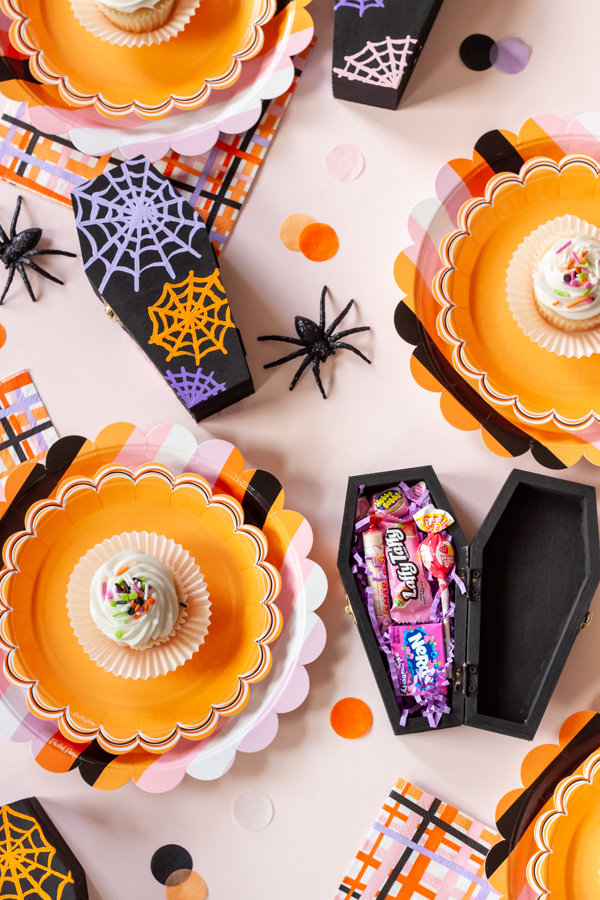
Market analysts suggest that the "experience economy" is driving this trend. Parents are increasingly seeking "high-engagement" activities that distract from digital screens and foster fine motor skills in children. By involving children in the party-planning process—specifically in the creation of guest favors—families are able to transform a simple purchase into a lasting memory. This psychological value adds a layer of "emotional ROI" (return on investment) that pre-packaged goods cannot provide.
Project Methodology: The Construction of Personalized Candy Coffins
The execution of the "creepy cobweb" coffin project requires a specific set of materials and a structured chronological approach to ensure a professional finish. The methodology relies on accessible art supplies, emphasizing that high-quality results do not necessarily require specialized training.
Required Materials and Sourcing
The primary component of this project is the 6-inch unfinished coffin box, which provides a sturdy, three-dimensional base for various artistic techniques. Supporting materials include:
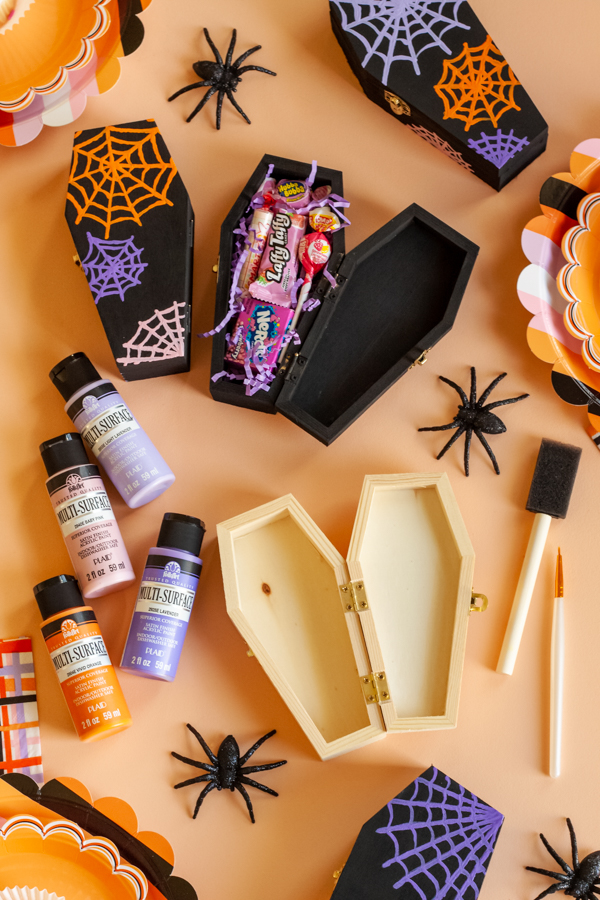
- Pigment and Application: Acrylic craft paint sets (specifically bright colors for accents and matte black for the base) are utilized for their fast-drying properties and opaque coverage. Foam sponge brushes are recommended for the base coat to minimize streak marks, while fine-tipped paintbrushes are necessary for detailed linework.
- Personalization Tools: Alphabet stickers are employed to transform the interior lid of the coffin into a functional place card, a detail that elevates the item from a simple toy to a sophisticated event favor.
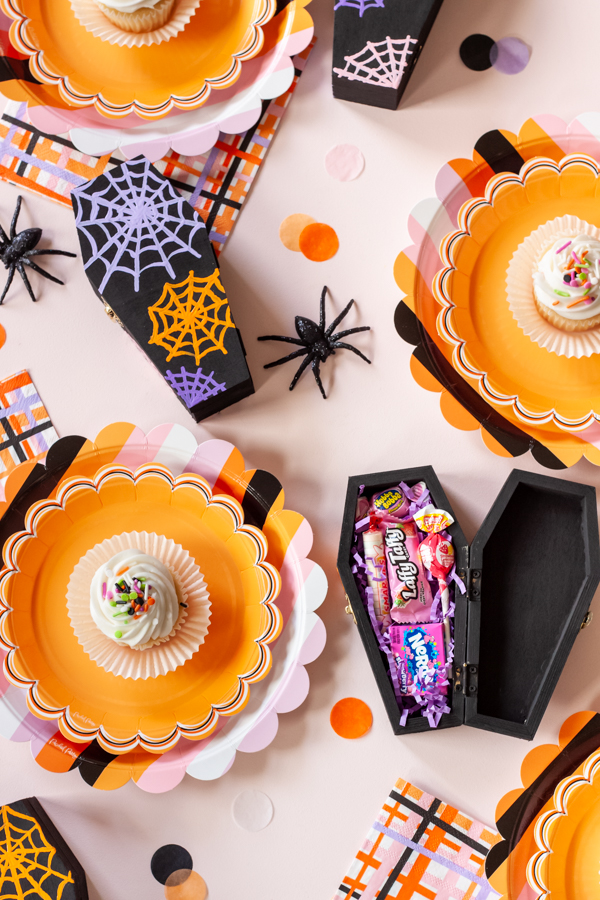
- Confectionery Fillers: The utility of the coffin is realized through the inclusion of seasonal candies, such as Kinder eggs, candy corn, and Dum Dums lollipops, alongside small novelty items like plastic spiders.
Step-by-Step Chronology
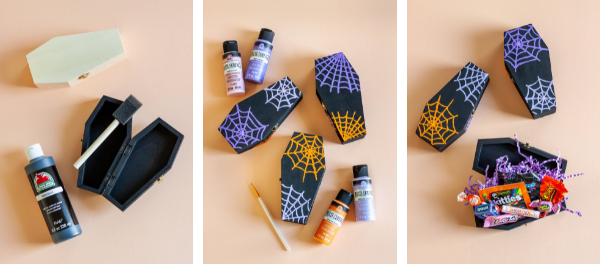
The production process follows a logical three-step progression designed to maximize efficiency and aesthetic appeal:
- Base Application: The initial phase involves the application of black acrylic paint to the entire exterior and interior of the unfinished wood. The use of a sponge brush allows for a uniform distribution of pigment, ensuring that the natural wood grain is fully obscured. This stage requires a mandatory drying period to prevent the smearing of subsequent layers.
- Geometric Detail: Once the base is cured, a "spoke and scallop" technique is applied to the lid. Using a thin brush, artists paint linear "spokes" radiating from a central point to the edges. Transverse "scallops" or curved lines are then drawn to connect these spokes, mimicking the architectural integrity of a spider web. Extending the ends of the spokes beyond the final layer of scallops adds a level of realism to the "creepy" aesthetic.
- Assembly and Integration: The final stage involves the logistical preparation of the favor. If the item is intended for a seated dinner, alphabet stickers are applied to the inner lid to designate guest seating. The coffin is then filled with a curated selection of sweets and placed at individual table settings.
The Role of Retailers in the Creative Ecosystem
The sponsorship of such projects by major retail entities like Walmart underscores a shift in marketing strategy. Rather than simply selling a product, retailers are now providing the "solution" or the "inspiration" for the consumer’s holiday experience. By linking specific SKUs (Stock Keeping Units)—such as specific paint brands or candy varieties—directly to a project tutorial, retailers streamline the consumer journey from inspiration to purchase.
Industry experts note that this "content-to-commerce" model is highly effective during the autumn months. As consumers prepare for the "Golden Quarter" (the final three months of the fiscal year), they are more likely to engage with brands that offer added value in the form of instructional content. This project, while simple, serves as a gateway for consumers to explore more complex DIY endeavors, potentially increasing long-term loyalty to the providing retailer.
Psychological and Social Implications of Family Crafting
From a developmental perspective, the inclusion of children in seasonal preparation has documented benefits. Educational psychologists point out that following a multi-step tutorial, such as the one required for the candy coffins, enhances a child’s ability to follow complex instructions and improves spatial awareness. Furthermore, the act of "giving" a handmade favor fosters social-emotional growth, as children take pride in the items they have created for their guests.
Socially, the DIY trend is heavily influenced by the "Pinterest-perfect" aesthetic. In an era where holiday celebrations are frequently documented on social media platforms, the visual appeal of a table-scape is of paramount importance to many hosts. The "creepy cobweb" design offers a balance between "spooky" and "chic," fitting into the popular "Boho-Halloween" or "Modern Gothic" decor trends that have dominated digital platforms in recent years.
Analysis of Broader Impacts on the Crafting Industry
The popularity of projects like the candy coffin has broader implications for the global crafting industry, which is projected to reach a valuation of over $50 billion by 2024. The demand for "blank" wooden crafts and acrylic mediums is a stable driver of this growth. Additionally, the trend highlights a move toward "upcyclable" or "reusable" decor. Unlike plastic decorations that may be discarded after a single use, wooden craft items are often kept as keepsakes or reused in subsequent years, aligning with a growing consumer interest in sustainability—even within the context of seasonal celebrations.
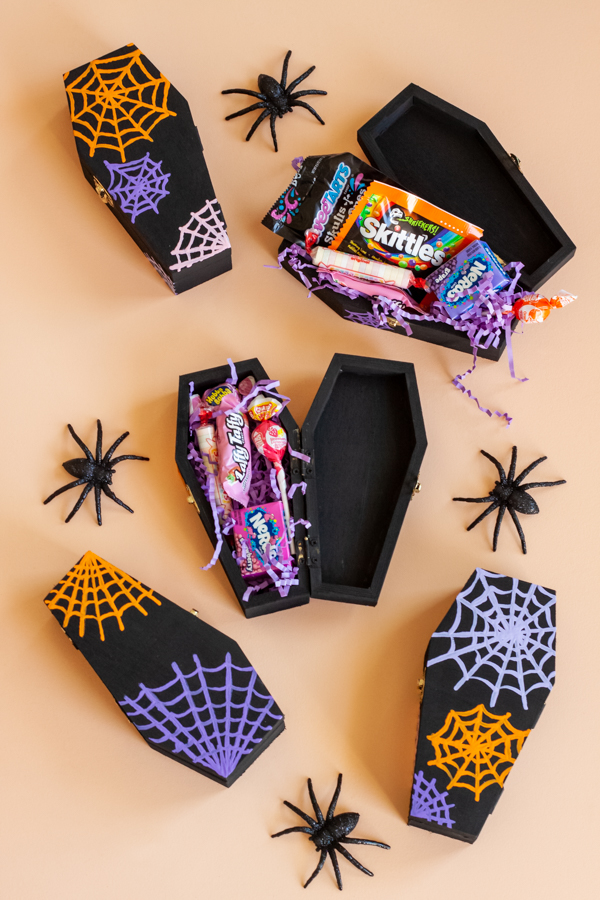
The integration of candy brands into these projects also provides a unique marketing lift for the confectionery industry. By positioning candy as a "component" of a craft rather than just a snack, brands like Kinder and Dum Dums are able to secure a more prominent place in the consumer’s holiday planning.
Conclusion and Future Outlook
As the boundaries between retail, content creation, and home life continue to blur, the DIY movement is expected to remain a cornerstone of the holiday season. The "candy coffin" project is a microcosm of a larger cultural shift toward intentionality and personalization in celebrations. By providing a structured yet creative outlet for families, retailers like Walmart are not just selling supplies; they are facilitating a cultural ritual that defines the modern American Halloween experience.
Looking forward, it is likely that we will see an increase in "kit-based" offerings, where all materials for such projects are bundled for consumer convenience. However, the core appeal of the DIY approach—the ability to take a simple, unfinished object and transform it into a personalized piece of art—will continue to resonate with a public that values authenticity and hands-on engagement in an increasingly automated world. The success of the "creepy cobweb" coffin serves as a testament to the enduring power of the handmade, ensuring that even in the spookiest of seasons, the human touch remains the most vital ingredient.