
The practice of home food preservation has undergone a significant resurgence in the 21st century, driven by a dual focus on reducing household food waste and increasing food security. Among the various methods available to the modern consumer, dehydration remains one of the most accessible and energy-efficient techniques for extending the shelf life of seasonal produce. While common fruits such as apples, bananas, and grapes have long been staples of the dried fruit market, recent innovations in home preservation—pioneered by experts such as Darcy Baldwin of The Purposeful Pantry—have expanded the repertoire to include high-moisture melons. Specifically, the dehydration of honeydew melon (Cucumis melo inodorus) has emerged as a viable strategy for converting a highly perishable summer fruit into a shelf-stable, nutrient-dense snack capable of lasting up to one year.
The Socio-Economic Context of Food Preservation
The shift toward home dehydration is situated within a broader global context of food waste management. According to data from the Food and Agriculture Organization (FAO) of the United Nations, approximately one-third of all food produced for human consumption is lost or wasted globally, amounting to roughly 1.3 billion tons per year. Fruits and vegetables have the highest wastage rates of any food group. Melons, due to their high water content (often exceeding 90%) and susceptibility to bruising and rapid fermentation, are particularly prone to spoilage.
By utilizing dehydration technology, households can effectively "lock in" the nutritional value of produce at its peak ripeness. This not only mitigates the economic loss associated with discarded food but also reduces the carbon footprint related to the disposal of organic waste in landfills, where it produces methane—a potent greenhouse gas. The market for home food dehydrators has reflected this trend, showing a steady compound annual growth rate (CAGR) as consumers seek more control over their food supply chains and additive-free snacking options.
Technical Specifications for Honeydew Dehydration
Dehydrating honeydew melon requires a precise adherence to temperature and airflow parameters to ensure the removal of moisture without compromising the structural integrity or flavor profile of the fruit. Unlike hardier fruits, the high sugar and water content of the honeydew necessitate a controlled environment to prevent "case hardening," a condition where the exterior of the fruit dries too quickly, trapping moisture inside and leading to mold growth.
Preparation and Pre-Processing
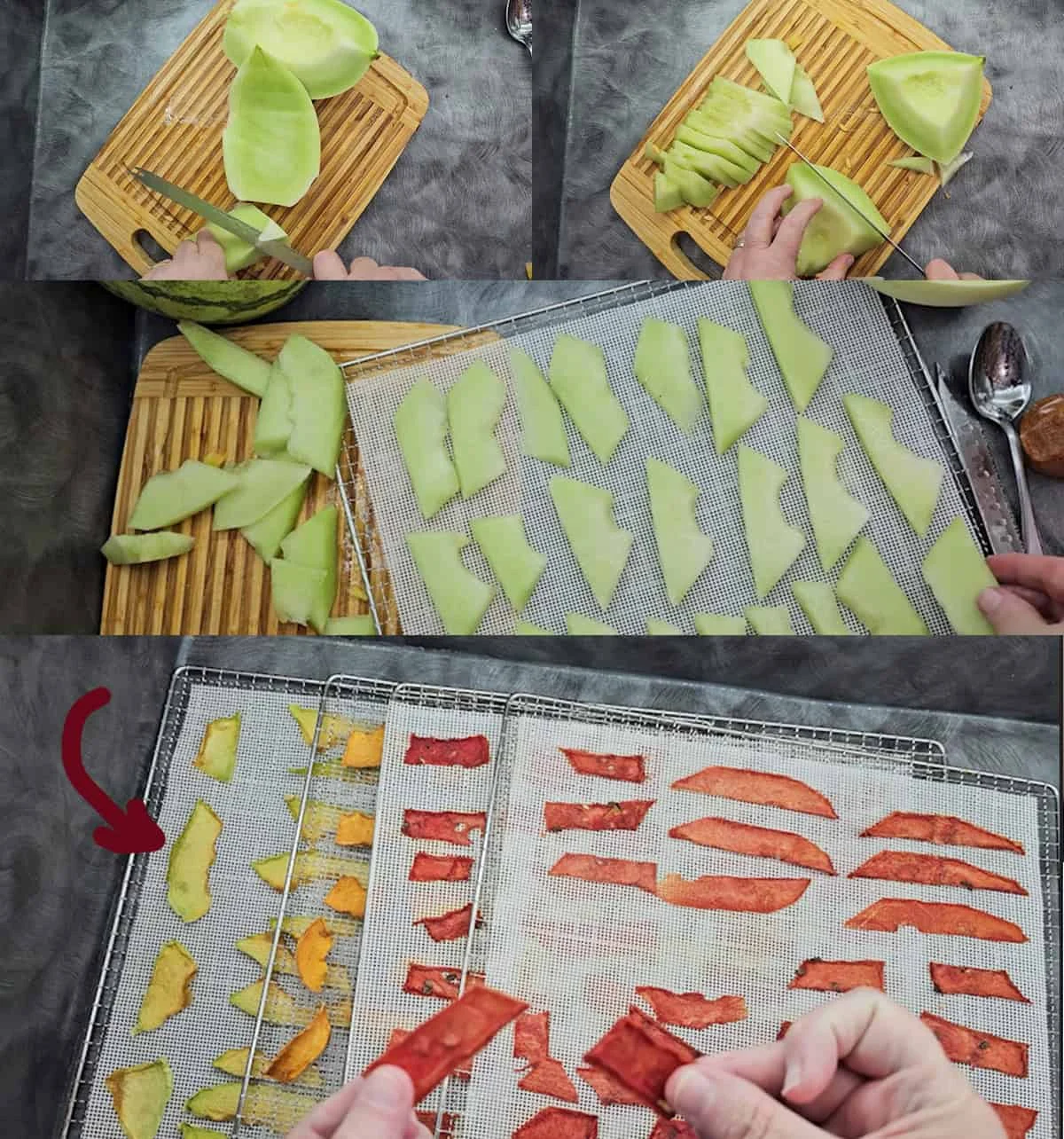
The process begins with the selection of a ripe specimen. A honeydew at peak maturity will exhibit a creamy white or pale yellow rind and a slight floral aroma. The fruit must be thoroughly washed to remove surface pathogens, then halved and deseeded. For optimal results, the melon is sliced into uniform 1/4-inch (approximately 6.35 mm) thicknesses. Uniformity is critical in professional-grade dehydration to ensure that all pieces reach the desired water activity level simultaneously.
Thermal Parameters and Duration
The standard operating procedure for honeydew dehydration involves a constant temperature of 135°F (57°C). This specific temperature is high enough to inhibit enzymatic activity and microbial growth while low enough to preserve the volatile flavor compounds and vitamins, such as Vitamin C and Potassium, which are sensitive to extreme heat.
The duration of the process typically ranges between 10 and 14 hours. The endpoint is determined by the texture of the fruit; it should be "leathery" and "dry to the touch," with no visible moisture beads when pressed. In professional dehydration circles, this is often verified through a "tear test," where the fruit is bent to check for internal moisture pockets.
Comparative Analysis of Melon Dehydration
Honeydew melon belongs to the same family as watermelon and cantaloupe, yet each presents unique challenges during the dehydration process.
- Watermelon: Known for its extremely high water content, watermelon undergoes a significant reduction in volume during dehydration. The resulting product often takes on a "taffy-like" consistency due to the concentration of fructose.
- Cantaloupe: With a slightly denser flesh than watermelon, cantaloupe retains a more robust structure and a distinct musky sweetness that intensifies when dried.
- Honeydew: Honeydew occupies a middle ground. Its flavor profile is more subtle and "clean" compared to cantaloupe. When dried, it offers a sophisticated sweetness that is less overwhelming than watermelon, making it a versatile ingredient for both direct consumption and culinary applications.
Post-Processing: Conditioning and Storage
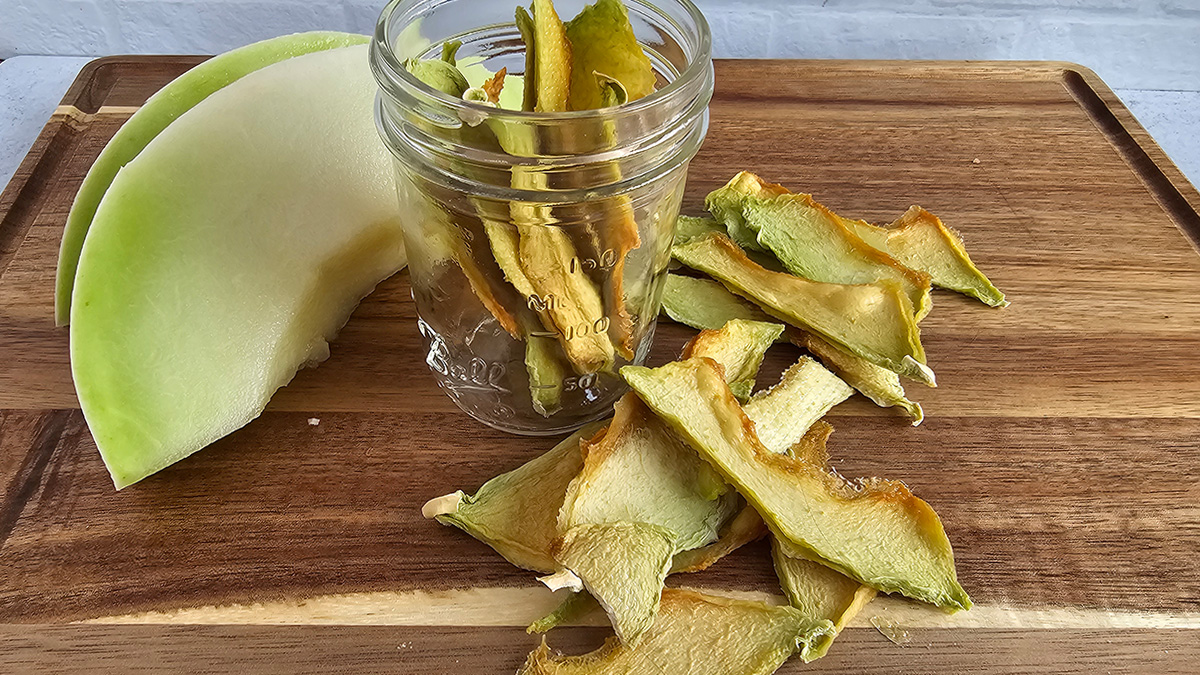
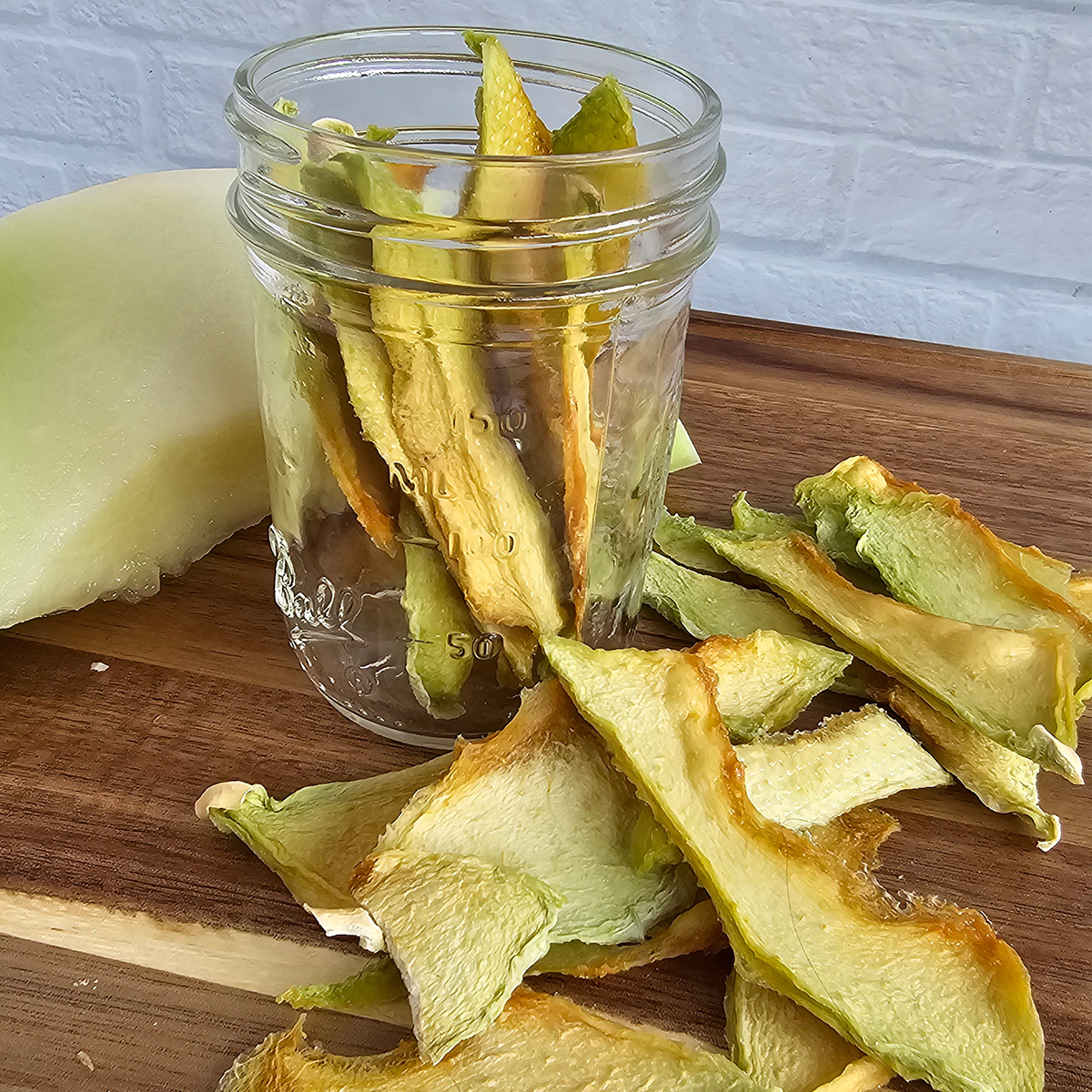
A critical step often overlooked by novice practitioners is the "conditioning" phase. Once the dehydration cycle is complete, the fruit must be allowed to cool to room temperature. It is then placed in a clear, airtight glass jar for a period of seven to ten days. During this time, the jar is shaken daily. This allows any residual moisture to redistribute evenly among the pieces. If condensation appears on the walls of the jar, the fruit must be returned to the dehydrator for further processing.
Long-Term Stability
For long-term storage, the environmental conditions must be strictly controlled. The primary enemy of dehydrated fruit is humidity. Honeydew, being hygroscopic (moisture-attracting) due to its sugar content, will absorb water from the air if left exposed.
Professional storage recommendations include:

- Airtight Containers: Glass canning jars or vacuum-sealed bags are preferred.
- Desiccants: The inclusion of food-grade silica gel packets can provide an extra layer of protection against ambient humidity.
- Physical Barriers: Wrapping individual pieces or batches in parchment paper can prevent the pieces from sticking together, a common issue with high-sugar melons.
- Environment: Containers should be stored in a cool, dark, and dry location. Under these conditions, dehydrated honeydew remains viable for 12 months.
Nutritional and Culinary Implications
The dehydration process results in a significant concentration of nutrients per gram of weight. For instance, a standard serving of fresh honeydew (approximately one cup) contains roughly 60 calories and 15 grams of sugar. When dehydrated, the volume reduces by approximately 75%, meaning that a quarter-cup of dried honeydew provides the same caloric and sugar density as a full cup of fresh fruit.
From a culinary perspective, dehydrated honeydew serves as more than just a snack. It can be pulverized into a fruit powder to flavor frostings and smoothies, or rehydrated in liquids to be used in compotes and desserts. The intensification of flavor allows it to act as a natural sweetener, reducing the need for processed sugars in various recipes.
Industry Response and Expert Analysis
The rise of home preservation has prompted a response from both the appliance industry and the culinary education sector. Companies such as Excalibur and Cosori have developed increasingly sophisticated dehydrators featuring digital timers, adjustable thermostats, and horizontal airflow systems that mimic industrial-scale drying.

Educational platforms like The Purposeful Pantry have filled a vital information gap, providing data-driven instructions that move beyond traditional "common sense" cooking. Darcy Baldwin’s work emphasizes the "science of the pantry," treating food preservation as a systematic discipline rather than a casual hobby. This professionalization of home preservation is seen by experts as a key component of the "modern homesteading" movement, which seeks to decouple household nutrition from the vulnerabilities of the global "just-in-time" supply chain.
Conclusion and Future Outlook
The dehydration of honeydew melon represents a microcosm of a larger shift in consumer behavior. As the global community grapples with the realities of food inflation, supply chain instability, and environmental degradation, the ability to preserve fresh produce becomes an essential skill.
The technical feasibility of drying high-moisture fruits like honeydew proves that with the right equipment and knowledge, the "shelf life" of the harvest can be extended far beyond its natural limits. Looking forward, we can expect further integration of smart technology in home preservation, allowing for even more precise control over the dehydration process. For now, the humble dehydrated honeydew stands as a testament to the power of traditional methods refined by modern science—a sweet, stable, and sustainable solution to the problem of seasonal abundance.


