
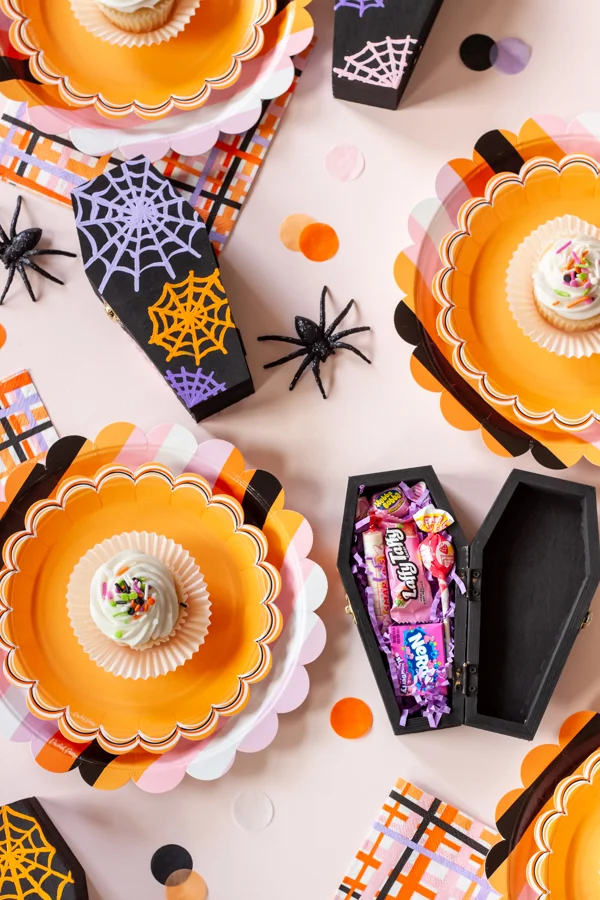
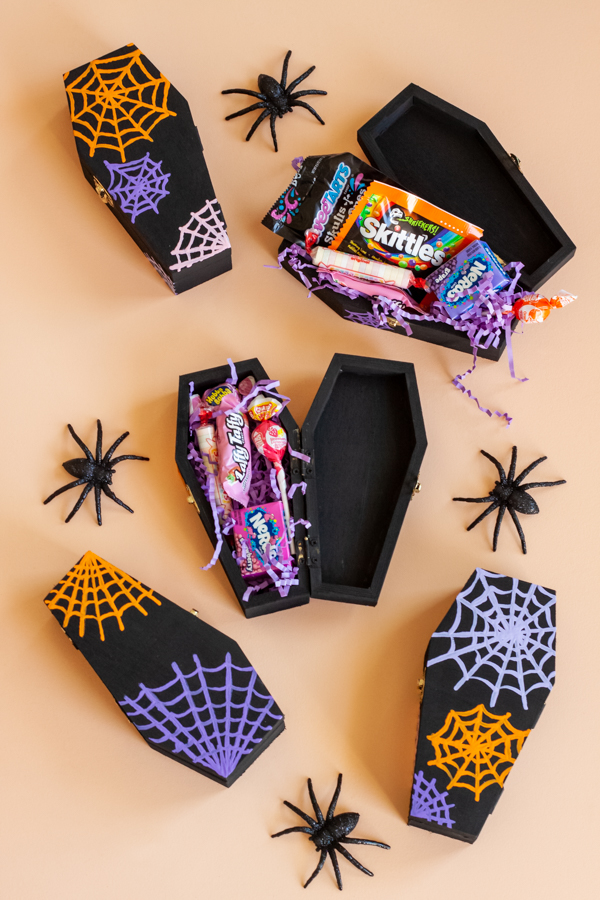
The landscape of seasonal festivities has undergone a significant transformation over the past decade, shifting from purely commercial acquisitions toward a hybrid model of retail-supported "Do-It-Yourself" (DIY) engagement. As the autumn season approaches, consumers are increasingly seeking ways to integrate personalized, hand-crafted elements into their social gatherings, a trend that is currently epitomized by the rise of customized Halloween party favors. Central to this movement is the collaboration between major retailers and content creators, designed to provide accessible creative outlets for families. A primary example of this synergy is found in the development of "Candy Coffins"—a versatile craft project that utilizes affordable wooden structures, specialized acrylic pigments, and thematic confectionery to enhance the aesthetic and functional value of Halloween events.
The shift toward personalized event decor is not merely a localized phenomenon but a reflection of a broader "Maker Movement" that has permeated the domestic sphere. By utilizing six-inch wooden coffin boxes as a foundational medium, organizers are able to bridge the gap between mass-produced party supplies and artisanal craftsmanship. These items serve a dual-purpose role in event logistics: they function as atmospheric table decor during the meal and transition into personalized party favors for guests to take home. This dual utility aligns with modern consumer preferences for efficiency and value-added experiences.
Historical Context and the Evolution of Seasonal Decor
Historically, Halloween decorations were largely restricted to ephemeral items such as carved gourds or paper-based window hangings. However, the late 20th and early 21st centuries saw an influx of plastic, mass-produced ornaments that, while durable, often lacked a personal touch. The current resurgence of wooden and paint-based crafts marks a return to more tactile, permanent forms of celebration. Retailers like Walmart have recognized this shift, positioning themselves as suppliers of raw materials rather than just finished goods.
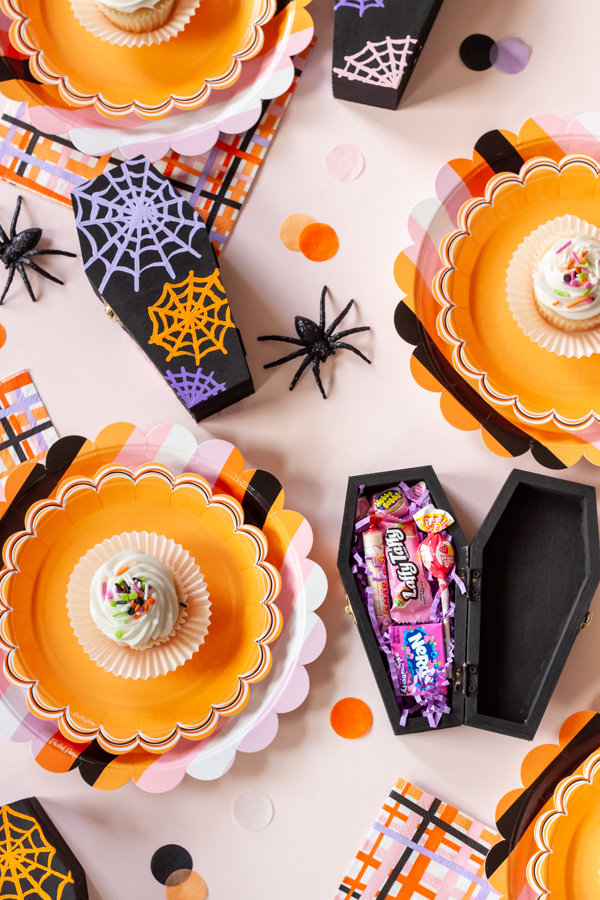
The "Candy Coffin" project represents a strategic intersection of tradition and modern convenience. By providing the primary components—unfinished wood, acrylic paints, and alphabet stickers—retailers empower the consumer to take on the role of the designer. This empowerment is particularly effective when applied to family-oriented activities. Engaging children in the planning and execution of a party fosters a sense of agency and contribution, which developmental psychologists suggest is vital for cognitive and social growth.
Technical Analysis of the Crafting Process
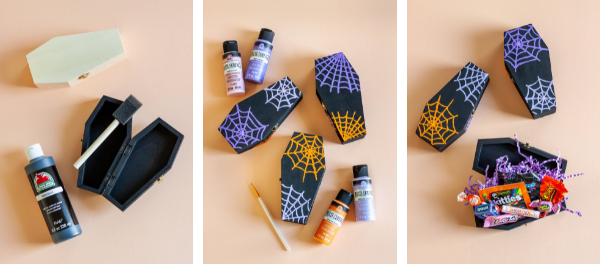
The execution of the Candy Coffin project follows a structured, three-step methodology designed for both simplicity and visual impact. From a technical standpoint, the choice of materials is critical to the longevity and appearance of the final product.
The first phase involves the application of a base coat using black acrylic craft paint. The use of foam sponge brushes is recommended over traditional bristle brushes for this stage, as the sponge allows for a more even distribution of pigment across the porous surface of the unfinished wood. This foundational layer serves as the "negative space" for the subsequent design, creating a high-contrast background that is essential for the "creepy cobweb" aesthetic.
The second phase is the most detail-oriented, requiring the use of a fine-tipped paintbrush to execute the cobweb pattern. This involves a geometric approach: painting "spokes" that radiate from a central point toward the edges of the coffin lid. The web is then constructed through a series of "scallops" or concentric arcs that connect the spokes. This repetitive, rhythmic process is not only aesthetically pleasing but also serves as an introductory lesson in symmetry and pattern recognition for younger participants.
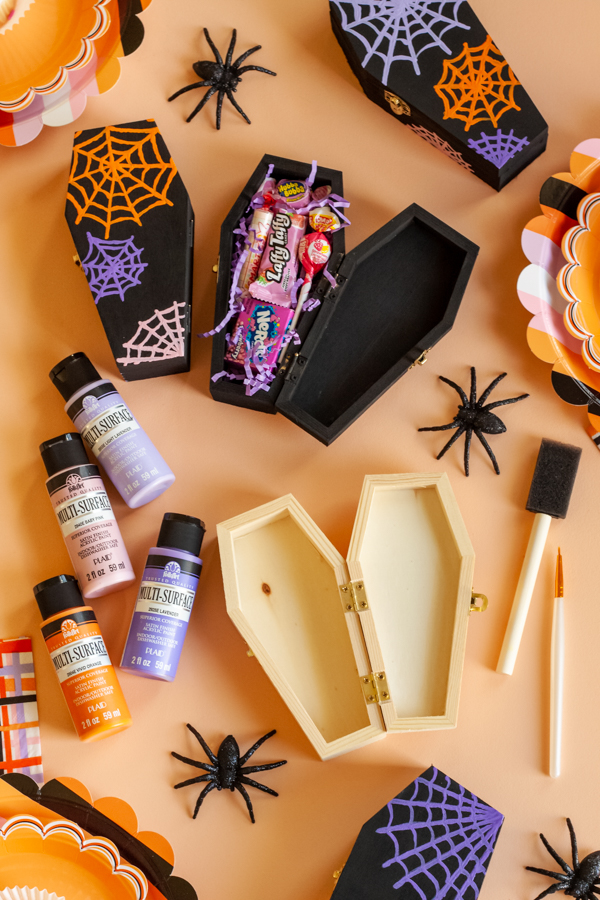
The final phase focuses on personalization and utility. Once the paint has cured, the interior of the coffin is utilized for both storage and identification. The application of alphabet stickers to the interior of the lid transforms the object into a place card, a sophisticated touch for formal or semi-formal Halloween dinners. The inclusion of diverse confectionery—ranging from traditional candy corn to more contemporary items like Kinder eggs and Dum Dums lollipops—ensures that the favor appeals to a wide demographic of guests.
Economic Data and Market Implications
The significance of these DIY projects is underscored by the economic scale of the Halloween season. According to the National Retail Federation (NRF), annual spending on Halloween in the United States consistently reaches billions of dollars, with a significant portion allocated to decorations and candy. In recent years, there has been a notable increase in "experience-based" spending, where consumers invest in materials that facilitate a shared activity or a unique social atmosphere.
The retail strategy employed by Walmart in sponsoring such content is a response to the growing influence of digital tutorials on purchasing habits. By providing direct links to materials—such as specific acrylic paint sets and party supplies—the retailer reduces the "friction" between the inspiration phase and the acquisition phase of the consumer journey. This data-driven approach to marketing ensures that inventory levels for specific craft items are aligned with the trends being promoted through content channels.
Furthermore, the DIY model offers a cost-effective alternative to high-end boutique decorations. A set of wooden coffins and a shared kit of acrylic paints provide a lower per-unit cost than pre-decorated favors, making the "Candy Coffin" concept accessible to a broader socioeconomic range of consumers. This democratization of "Instagrammable" decor is a key driver of the project’s popularity.
Chronology of Seasonal Preparation
The lifecycle of a Halloween DIY project typically follows a standard chronology that mirrors the retail calendar.
- Late August to Early September (The Planning Phase): Retailers begin stocking unfinished wood crafts and seasonal paint palettes. Early adopters and event planners begin scouting for themes, often looking to digital platforms for inspiration.
- Late September (The Acquisition Phase): This is the peak period for material procurement. Consumers purchase the bulk of their supplies, including the coffin boxes and base paints.
- Early to Mid-October (The Execution Phase): Families and organizers engage in the actual crafting process. This timing allows for the paint to fully cure and for any adjustments to be made before the event date.
- Late October (The Event Phase): The finished products are deployed as part of the festive environment. The "Candy Coffins" are filled with fresh candy and set in place for the celebration.
Stakeholder Perspectives and Sociological Impact
Industry analysts suggest that the success of projects like the Candy Coffin is rooted in a desire for "meaningful consumption." Rather than purchasing a disposable item, the consumer invests time and effort into creating something. This sentiment is echoed by parent groups, who often highlight the value of these activities in creating lasting holiday memories that transcend the mere act of trick-or-treating.
From a sociological perspective, the personalization of Halloween favors reflects a shift in how domestic spaces are used for social signaling. A well-curated table setting, featuring hand-painted items and personalized place cards, signals a high level of hospitality and attention to detail. It transforms a standard meal into a curated "event," which is a highly valued commodity in the modern social landscape.
Retailers, meanwhile, view these projects as a way to build brand loyalty. By positioning themselves as a partner in the creative process, companies like Walmart move beyond a transactional relationship with the customer and become a fixture in the customer’s lifestyle and holiday traditions.
Broader Implications for the Crafting Industry
The continued popularity of DIY Halloween projects has long-term implications for the crafting and hobby industry. It drives innovation in non-toxic, fast-drying paint formulas and encourages the production of sustainably sourced wooden blanks. Additionally, it fosters a "multi-generational" crafting culture, where skills are passed down from parents to children in a digital age where manual dexterity is often overlooked.
The "creepy cobweb" aesthetic, while specific to Halloween, also points to a larger trend in "dark academia" and "gothic chic" decor that has seen year-round popularity among certain demographics. The techniques learned through this simple project—such as using sponge brushes for base coats and fine brushes for detail—are transferable to a wide range of other home improvement and artistic endeavors.
In conclusion, the Candy Coffin project is more than a simple holiday craft; it is a manifestation of current retail strategies, economic trends, and sociological shifts. By combining the accessibility of mass-market retail with the personal touch of DIY artistry, it provides a blueprint for modern seasonal celebration. As consumers continue to prioritize personalized experiences, the role of the "retail-enabled maker" is set to become a permanent fixture of the holiday landscape, ensuring that the spirit of Halloween remains as much about the process of creation as it is about the celebration itself.


