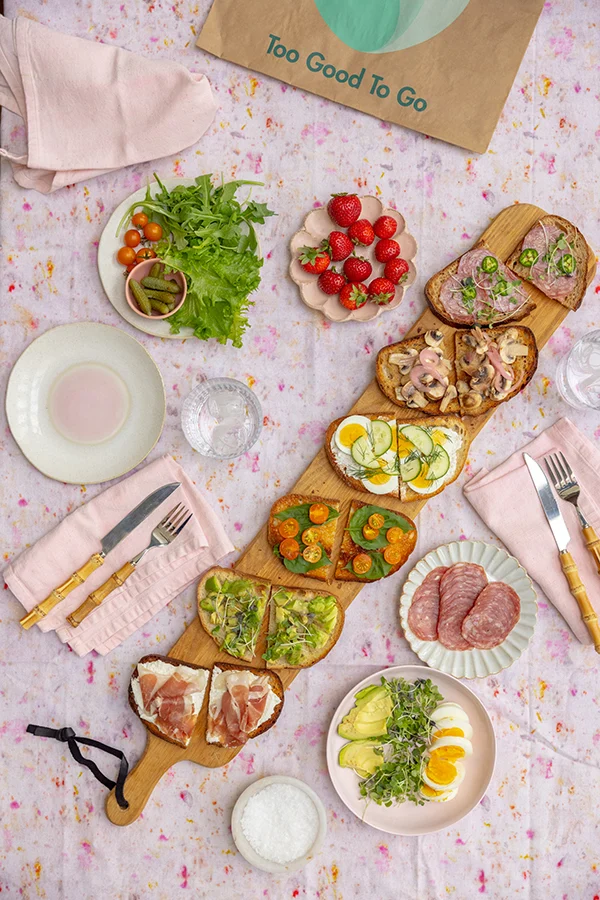
The global effort to mitigate the environmental impact of food systems has found a new catalyst in the intersection of mobile technology and community-based sustainability initiatives. A recent collaboration between lifestyle advocates and the surplus food recovery platform Too Good To Go has highlighted the practical feasibility of hosting high-quality, zero-waste social gatherings. By utilizing the "Surprise Bag" model—a system where consumers purchase unsold inventory from local vendors at a significant discount—organizers are demonstrating that the fight against global food waste can be integrated into everyday hospitality. This initiative addresses a critical environmental challenge, as food waste is currently estimated to contribute to approximately 10% of all global greenhouse gas emissions.

The Logistics of Surplus Food Recovery
Too Good To Go operates as a bridge between the retail food sector and the eco-conscious consumer. The platform allows users to browse local bakeries, gourmet grocery stores, and cafes that have surplus stock at the end of the business day. In this specific case study, organizers selected a high-end gourmet grocery store and a specialized juice shop to procure ingredients for a social event. By purchasing "Surprise Bags" at one-third of the standard retail price, the hosts were able to acquire a diverse array of premium ingredients that would otherwise have been discarded.
The "Surprise Bag" concept introduces an element of culinary improvisation. Because the exact contents are unknown until the point of pickup, the preparation process requires a flexible approach to menu planning. For this gathering, the bags yielded a variety of artisanal breads and fresh produce. To maximize the utility of these items, the hosts implemented a strategy of batch-toasting the bread in a single oven cycle, creating a versatile base for an assortment of toppings. This method not only reduces energy consumption but also provides a structured yet customizable dining experience for guests.

The Environmental and Economic Context of Food Waste
To understand the significance of such initiatives, one must look at the broader statistical landscape of global food systems. According to data from the United Nations Environment Programme (UNEP), approximately one-third of all food produced for human consumption is lost or wasted globally. This amounts to roughly 1.3 billion tons of food annually, valued at nearly $1 trillion. When food is disposed of in landfills, it undergoes anaerobic decomposition, releasing methane—a greenhouse gas significantly more potent than carbon dioxide in the short term.
The partnership with Too Good To Go serves as a micro-level intervention in this macro-level crisis. By diverting food from landfills, the platform helps reduce the carbon footprint associated with food production, transportation, and disposal. For the individual consumer, the economic incentive is clear: access to high-quality, often organic or gourmet, food items at a fraction of the cost. For the retailer, the platform provides a way to recoup some production costs on items that are perfectly edible but no longer meet "shelf-life" aesthetic standards or are nearing their sell-by dates.

Chronology of the Zero-Waste Movement in the Digital Age
The evolution of food waste mitigation has shifted from traditional charitable donations to sophisticated, tech-driven marketplaces.
- 2015 – The Foundation: Too Good To Go was founded in Copenhagen, Denmark, by a group of entrepreneurs who witnessed the massive amount of food discarded at a buffet.
- 2016-2019 – European Expansion: The app quickly expanded across Europe, entering markets in the UK, France, and Germany. During this period, the "Surprise Bag" became a recognized symbol of sustainable consumption.
- 2020 – North American Launch: Despite the challenges of the global pandemic, the platform launched in major North American cities, including New York and Boston, tapping into a growing consumer desire for sustainability and cost-saving measures.
- 2021 – Mainstream Integration: The platform reached a milestone of saving over 100 million meals globally. Partnerships with major retailers and influencers began to normalize the consumption of surplus food as a lifestyle choice rather than a necessity.
- Present Day: The focus has shifted toward "Zero Waste Hosting," where the principles of the circular economy are applied to private events and social gatherings.
Culinary Creative Solutions for Surplus Ingredients
The success of a zero-waste gathering depends heavily on the "pantry-first" philosophy. In the event documented through this partnership, the hosts supplemented their Surprise Bag finds with items already present in their kitchen and garden. This approach ensures that the "new" surplus food does not lead to the waste of "old" staples.
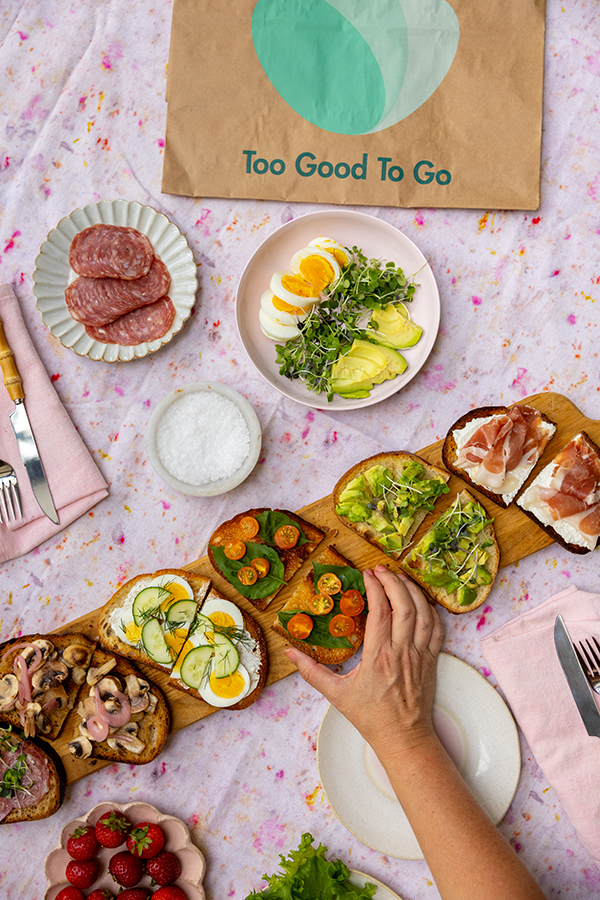
The centerpiece of the menu was a series of bruschettas and toasts, utilizing the surplus artisanal bread. By using fresh basil and tomatoes from a home garden alongside fridge staples like ricotta and eggs, the hosts created a gourmet spread. The following topping combinations were utilized as a blueprint for creative food recovery:
- Protein-Rich Savory: Ricotta cheese paired with prosciutto and a drizzle of hot honey.
- Plant-Based Staples: Smashed avocado with lemon, salt, and nutrient-dense sprouts.
- Garden-Fresh Classic: Diced tomatoes with fresh basil, sea salt, and extra virgin olive oil.
- The Nordic Style: Mayonnaise, sliced hard-boiled eggs, cucumbers, and fresh dill.
- Earth-Toned Warmth: Melted cheese topped with mushrooms sautéed in butter.
- Bold Heat: Sliced soppressata with fresh jalapeños.
This "make-your-own" station format not only reduces the labor required for the host but also ensures that guests only take what they intend to eat, further minimizing plate waste.

Corporate and Consumer Reactions
The response to the integration of food-saving apps into social hosting has been largely positive, though it reflects a shift in consumer psychology. Retailers participating in the program report that it helps them meet their Corporate Social Responsibility (CSR) goals while engaging with a younger, more environmentally conscious demographic.
Market analysts suggest that the "gamification" of food waste—where the "surprise" element of the bag adds a layer of excitement—has been instrumental in its adoption. "It turns a chore or a guilt-driven action into a treasure hunt," notes one retail consultant. "Consumers feel they are winning twice: once on the price and once on the environmental impact."

However, some critics point out that while apps like Too Good To Go are excellent for retail surplus, they do not address the systemic issues of overproduction at the farm and manufacturing levels. Nonetheless, for the average household, these tools represent the most accessible way to participate in the circular economy.
Broader Implications for Sustainable Hospitality
As the zero-waste movement gains momentum, the definition of a "successful" gathering is being redefined. Traditionally, hospitality was measured by an abundance of food—often leading to excessive leftovers that were eventually discarded. The new paradigm, as demonstrated by the Too Good To Go partnership, emphasizes resourcefulness, quality over quantity, and environmental stewardship.
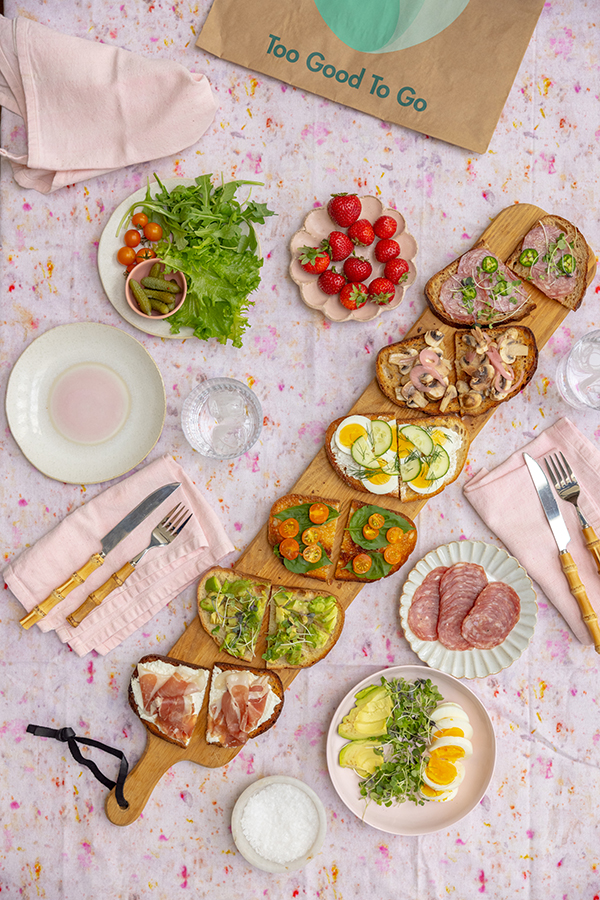
To host a truly waste-free gathering, experts suggest several key strategies that go beyond the menu:
- Digital Invitations: Reducing paper waste by using digital platforms for RSVPs and communication.
- Reusable Tableware: Eliminating single-use plastics and paper plates in favor of cloth napkins and glass or ceramic dishware.
- Composting Stations: Providing a designated area for any unavoidable organic waste (such as fruit peels or eggshells) to ensure it is returned to the soil rather than sent to a landfill.
- The "Leftover Kit": Encouraging guests to bring their own containers to take home any remaining food, ensuring that the meal serves a purpose long after the event has ended.
Conclusion: The Future of Surplus Consumption
The collaboration between lifestyle creators and Too Good To Go serves as a practical blueprint for the future of domestic sustainability. By proving that surplus food can be transformed into a gourmet experience, the initiative challenges the stigma often associated with "leftovers" or "unsold goods."

As global food prices continue to fluctuate and the urgency of the climate crisis intensifies, the adoption of surplus food recovery tools is likely to move from a niche trend to a standard household practice. The success of these initiatives suggests that the most effective way to drive environmental change is to make it convenient, affordable, and culturally appealing. Through the simple act of picking up a "Surprise Bag" and sharing its contents with friends, consumers are participating in a global movement that values resources, supports local businesses, and significantly reduces the carbon footprint of the modern diet.