
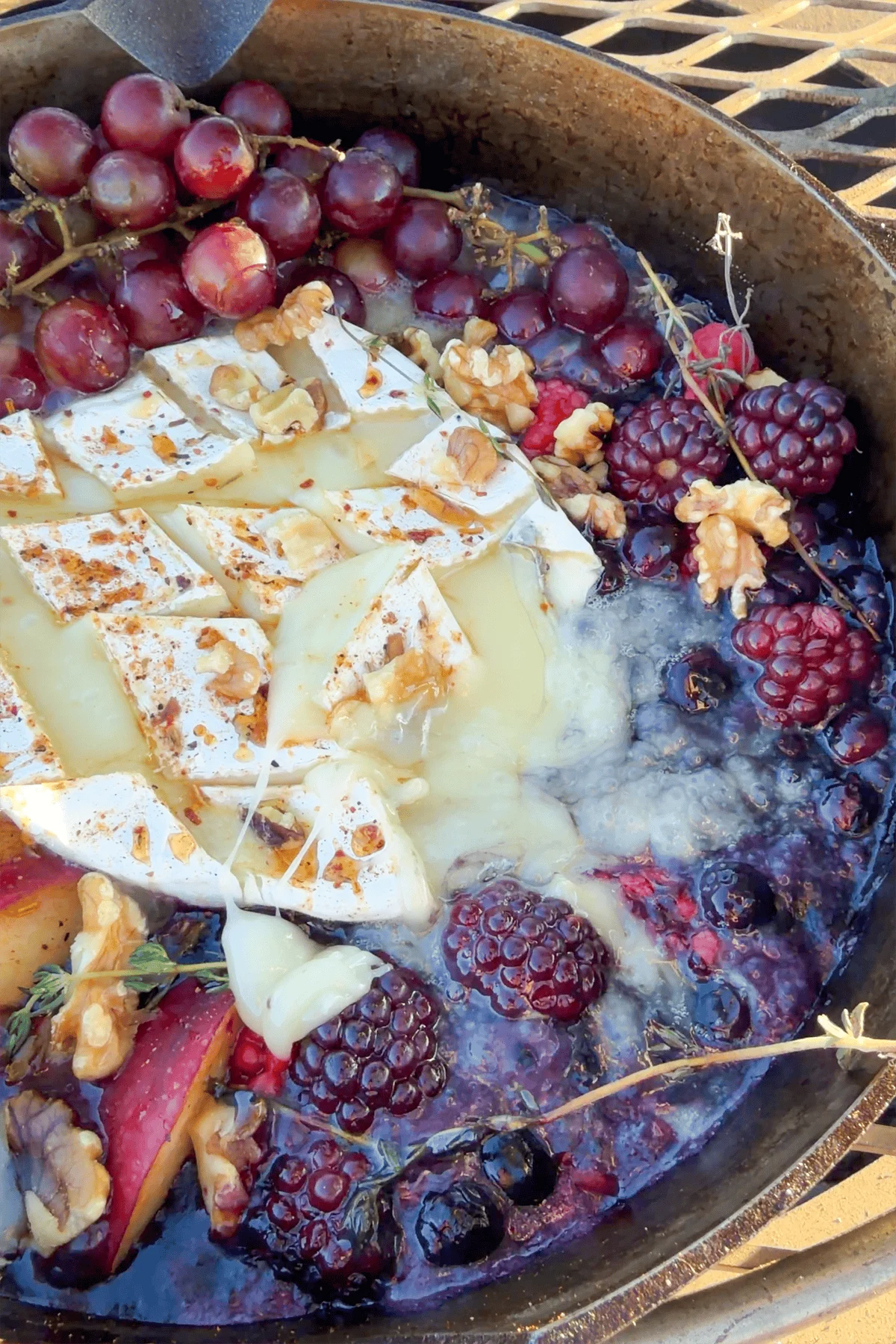
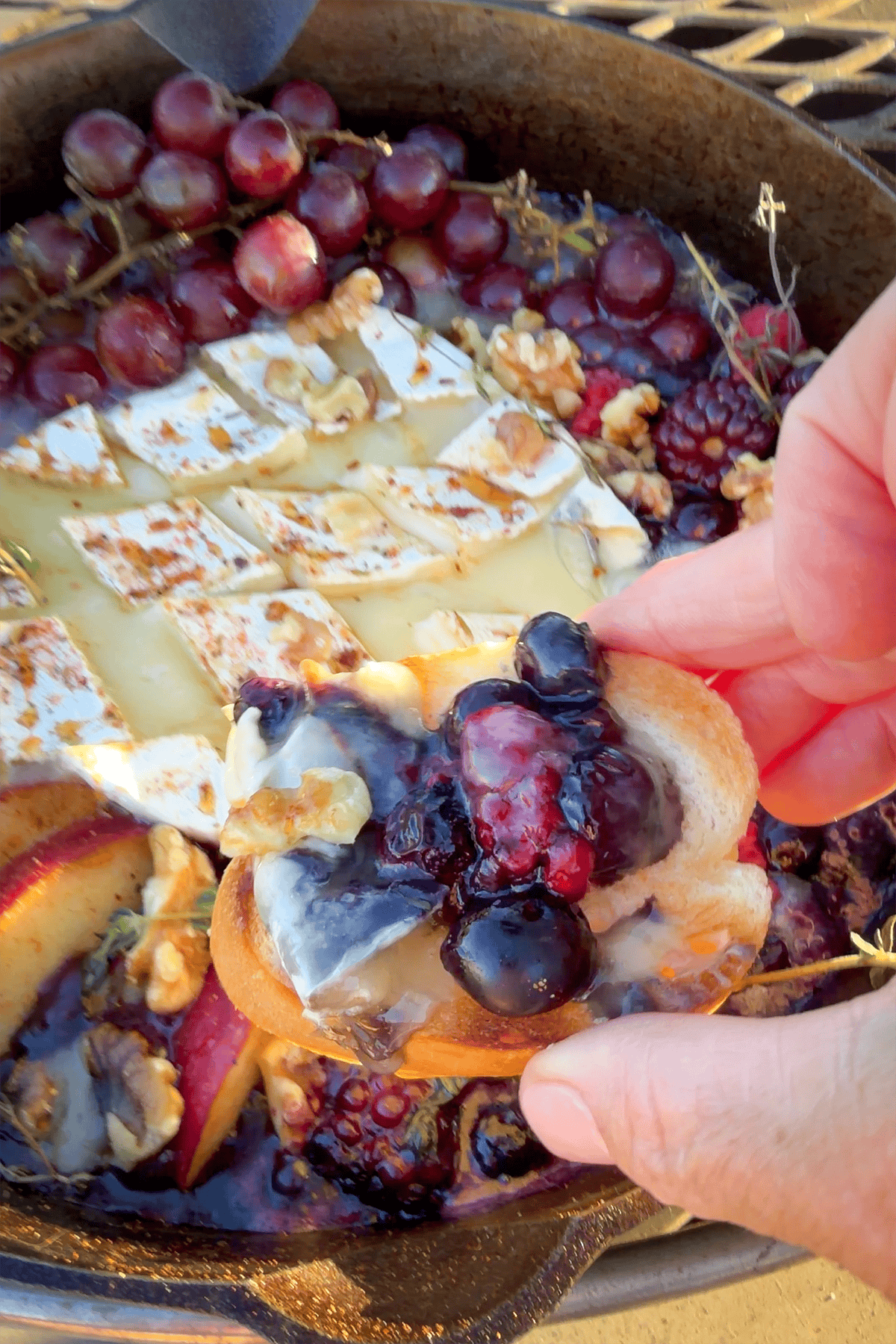
For those who have yet to experience the transformative magic of melting an entire wheel of brie over an open flame, a truly accessible and remarkably impressive outdoor culinary adventure awaits. This campfire brie dip, a testament to the power of simple ingredients and live-fire cooking, comes together in under 20 minutes, offering a symphony of flavors and textures that can elevate any gathering. The rich, gooey cheese, complemented by the subtle char of sizzling fruit, a sweet and spicy drizzle of hot honey, and perfectly grilled bread for dipping, creates an experience akin to edible heaven, all presented in a humble cast iron skillet. It is the quintessential appetizer that artfully conveys a significant effort, far exceeding the actual time and expertise required for its creation.
The journey to mastering this dish was not without its initial stumbles. Through a process of trial and error, a refined understanding of what works and what does not has emerged. This has solidified its place as a go-to recipe for moments when a fire is already alight and the desire is for a dish that commands attention and halts conversation, a true showstopper that requires minimal fuss.
At a Glance: Essential Preparations for Your Campfire Brie Dip
Before igniting the coals or tending the flames, a clear understanding of the few crucial elements will ensure a seamless and successful preparation. This dish hinges on the quality of its core components and the technique employed in its live-fire application.
The Genesis of Campfire Brie Dip: A Fusion of Tradition and Simplicity
Campfire brie dip is fundamentally a whole wheel of high-quality brie cheese, its rind intact, gently melted within the confines of a cast iron skillet positioned directly over an open fire or a bed of hot charcoal. The natural integrity of the brie’s rind serves as an ingenious vessel, containing the molten cheese within as its interior transforms into a luxuriously creamy, flowing consistency. Surrounding the cheese, a medley of fruits, a generous drizzle of honey, aromatic fresh herbs, and the satisfying crunch of toasted nuts are introduced. These elements absorb the ambient heat, undergoing a subtle caramelization that deepens their flavors and melds them harmoniously with the cheese.
It is important to distinguish this dish from other cheese preparations. It is neither a fondue, which typically involves a double boiler and a more controlled melting process, nor a baked brie en croute, which enrobes the cheese in pastry. Campfire brie dip is distinguished by its profound simplicity, its rustic charm, and its direct connection to the primal allure of cooking with fire. It is a dish inherently designed for communal enjoyment, served directly from the skillet, fostering a sense of shared experience.

The underlying philosophy of this recipe is deeply rooted in the principles of live-fire cooking, where the enduring utility of cast iron cookware and a minimalist approach to preparation achieve remarkable results. While a traditional campfire provides an idyllic setting, the recipe is equally adaptable to a charcoal grill, which offers a controlled and consistent heat source. Nevertheless, there remains an undeniable enhancement to the flavor profile and the overall dining experience when this dish is prepared outdoors, imbuing it with a distinct character that cannot be replicated indoors.
Understanding the Core Components: What Goes into Campfire Brie Dip
The magic of campfire brie dip lies in its straightforward ingredient list, which allows the quality of each component to shine. The primary element is, of course, a whole wheel of brie cheese. Its soft, bloomy rind is essential, acting as a natural containment for the melting cheese.
Key Ingredients:
- Brie Cheese: A whole wheel (typically 8-16 ounces) is ideal. The rind is crucial for structure during cooking.
- Olive Oil: A light drizzle to coat the skillet and prevent sticking.
- Fresh Fruit: Berries (blueberries, raspberries, blackberries), sliced peaches, or seedless grapes (removed from the vine) are excellent choices. Their natural sugars caramelize beautifully.
- Hot Honey: Provides a sweet heat that cuts through the richness of the cheese.
- Savory Rub: A blend of herbs and spices adds a crucial counterpoint to the sweet and creamy elements. A well-balanced chicken rub often works effectively.
- Fresh Herbs: Delicate leaves like thyme or rosemary (stems removed) offer aromatic complexity.
- Nuts: Toasted walnuts or pecans add a delightful textural contrast.
- Baguette or Crusty Bread: Sliced and grilled to serve as the perfect vehicle for scooping.
Substitutions and Variations:
The beauty of this recipe lies in its inherent flexibility. Experimentation with different fruits, herbs, and nuts is encouraged. For instance, in autumn, thinly sliced apples or pears could be substituted for berries. A touch of fig jam could replace hot honey for a different kind of sweetness. For those who prefer a more herbaceous profile, fresh sage or chives could be incorporated. The key is to maintain a balance of sweet, savory, and creamy elements.
The Live-Fire Technique: Mastering the Art of the Grill
The process of cooking campfire brie dip is designed for efficiency and minimal intervention, allowing the heat of the fire to perform the primary culinary work.
Step 1: Preparing the Brie for the Heat
Begin by preheating your charcoal grill or preparing your campfire to achieve a medium, consistent heat. It is crucial to avoid excessively high temperatures, as this can lead to the scorching of the skillet’s bottom before the cheese has an adequate opportunity to melt through. A steady, even heat is paramount.
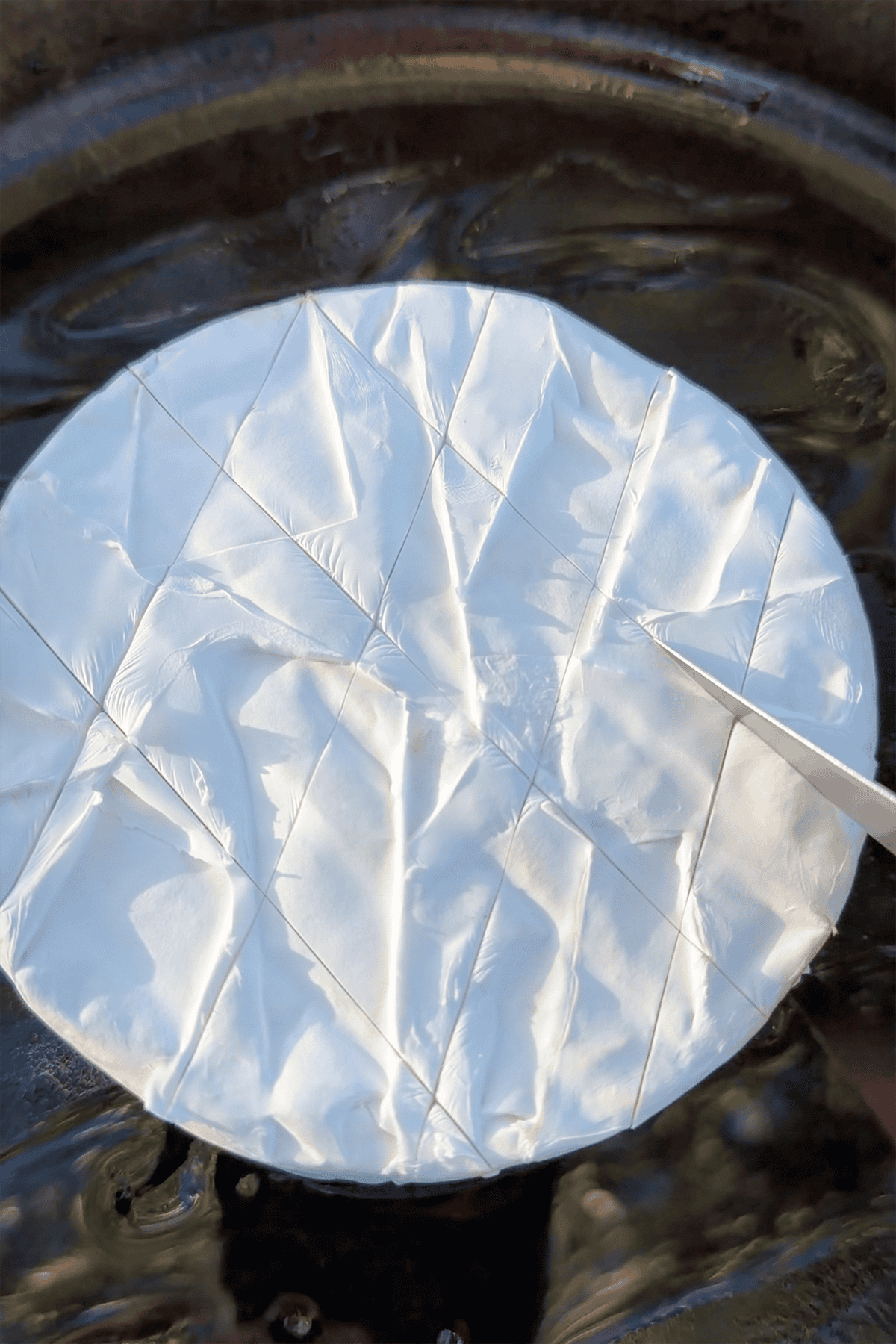
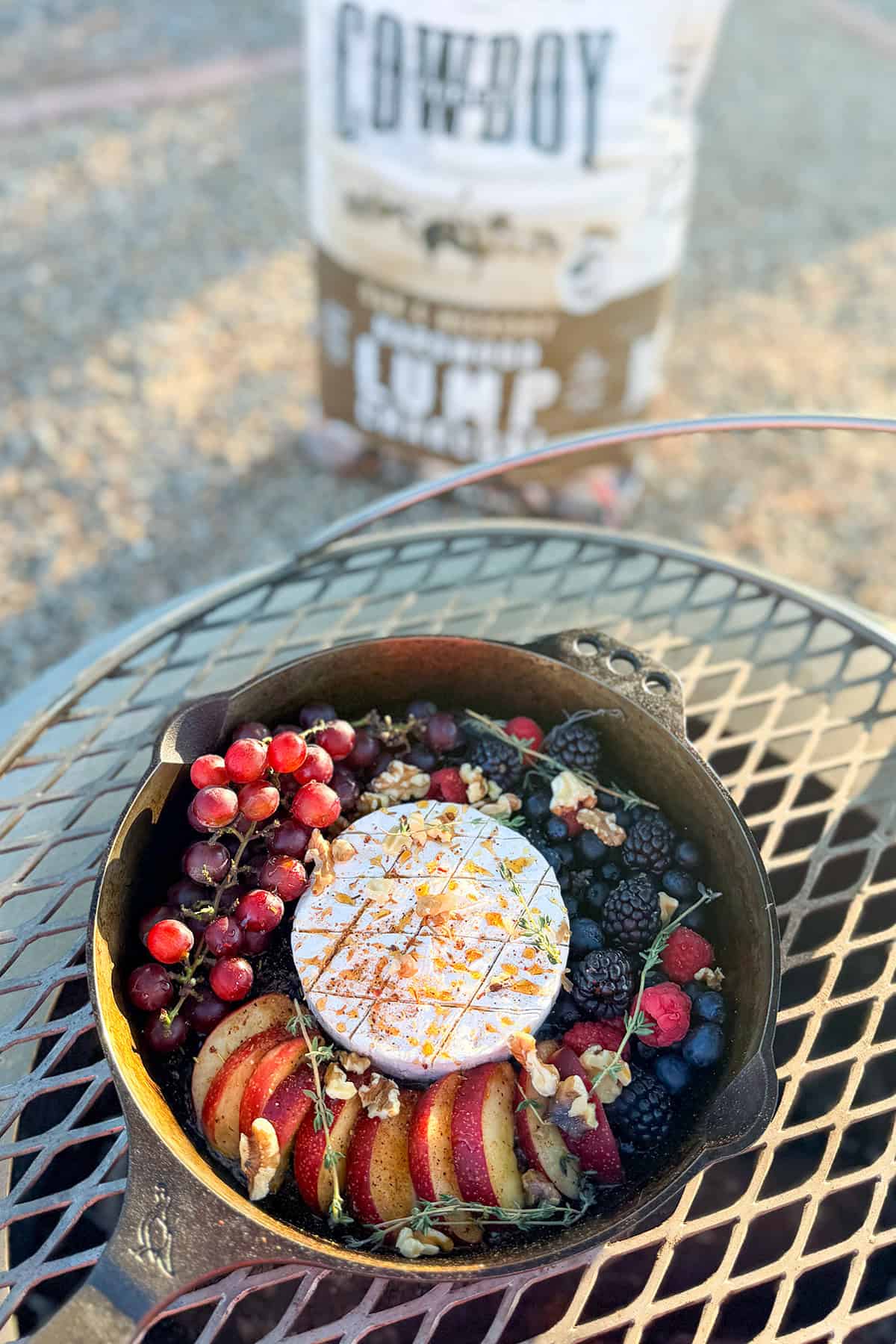
Once the heat is established, lightly coat the inside of your cast iron skillet with a drizzle of olive oil. Place the entire wheel of brie cheese in the center of the skillet. Using a sharp knife, carefully score the top rind of the brie in a diamond pattern. The depth of these scores is critical; they must penetrate through the rind to allow the cheese to ooze. A shallow score will merely scratch the surface, preventing the cheese from opening up and achieving its characteristic molten flow. The intention is for these scored sections to separate and reveal the creamy interior as the cheese heats.
Step 2: Assembling the Skillet Ensemble
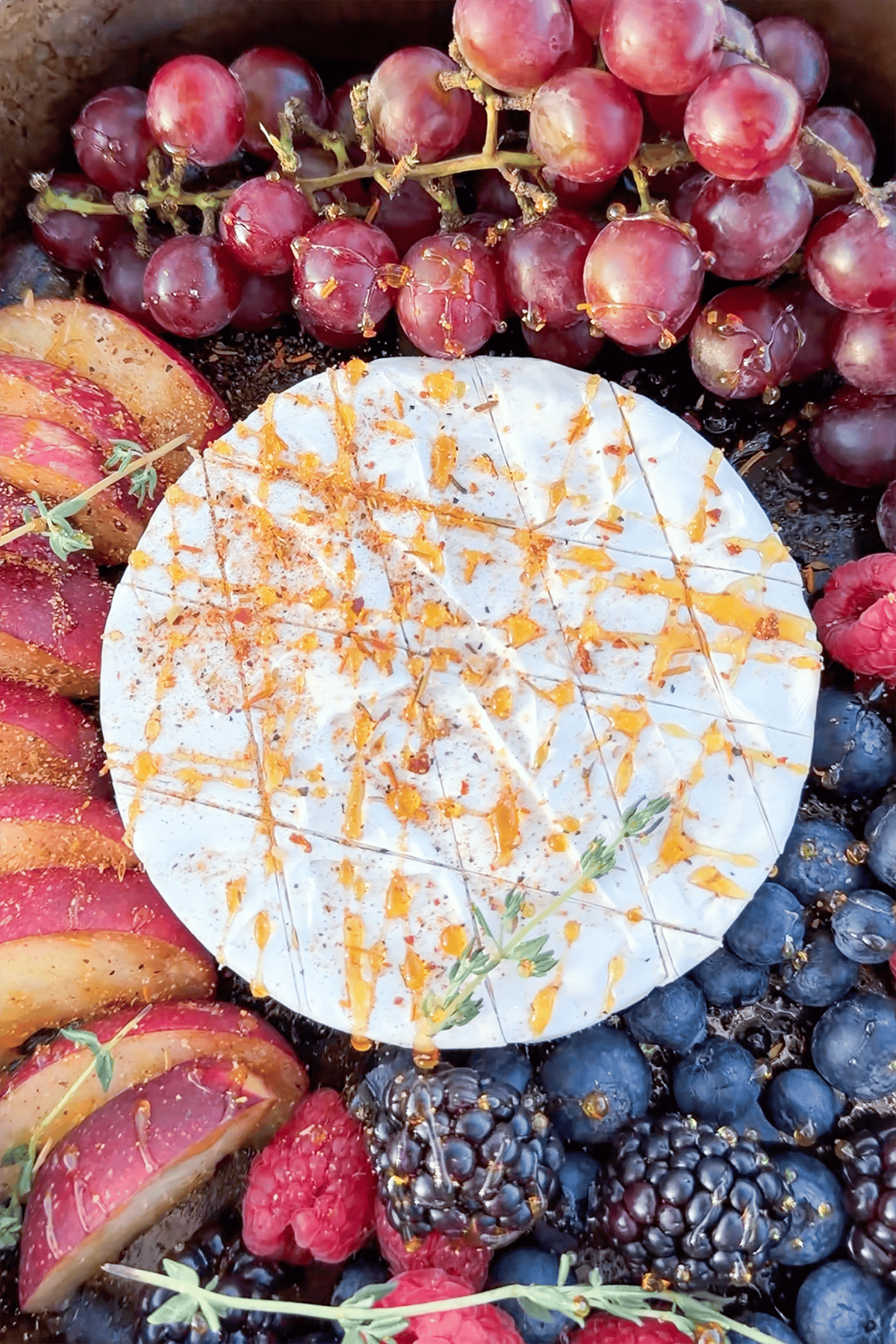
With the brie scored and in place, artfully arrange your chosen fresh fruits around the cheese in the skillet. A common pitfall is leaving grapes on the vine; while visually appealing, they present a significant challenge for guests attempting to dip. It is advisable to detach each grape from its stem prior to placing them in the skillet.
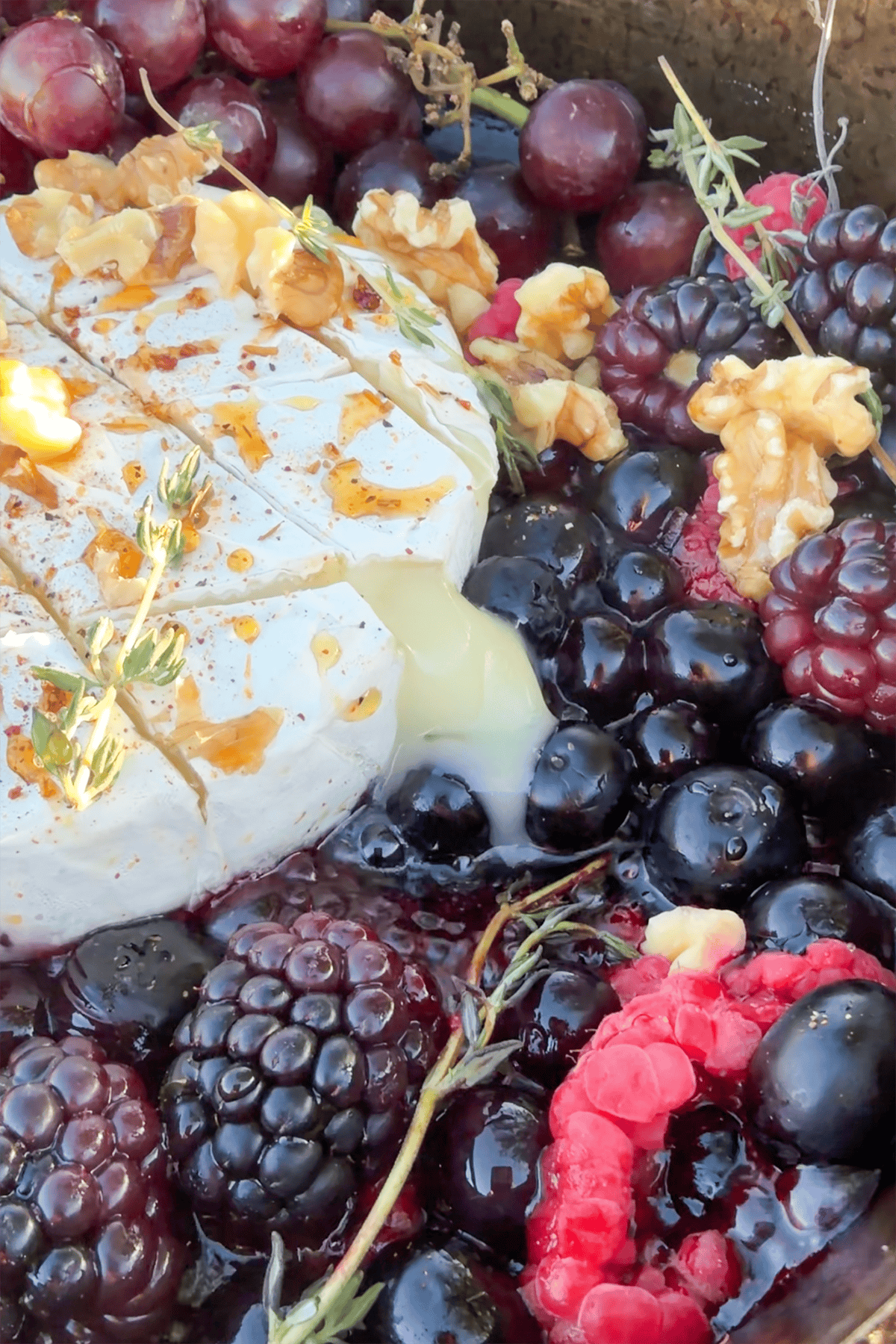
Next, generously drizzle hot honey over both the brie and the surrounding fruit. Follow this with a liberal application of your chosen savory rub. This seasoning layer is vital, as the mild flavor of brie benefits greatly from the added complexity and depth provided by the rub. Finally, scatter the fresh herb leaves (ensuring they are stripped from their woody stems, as these can be unpleasant to encounter during dipping) and toasted nuts over the entire ensemble.
Step 3: The Dance with Fire
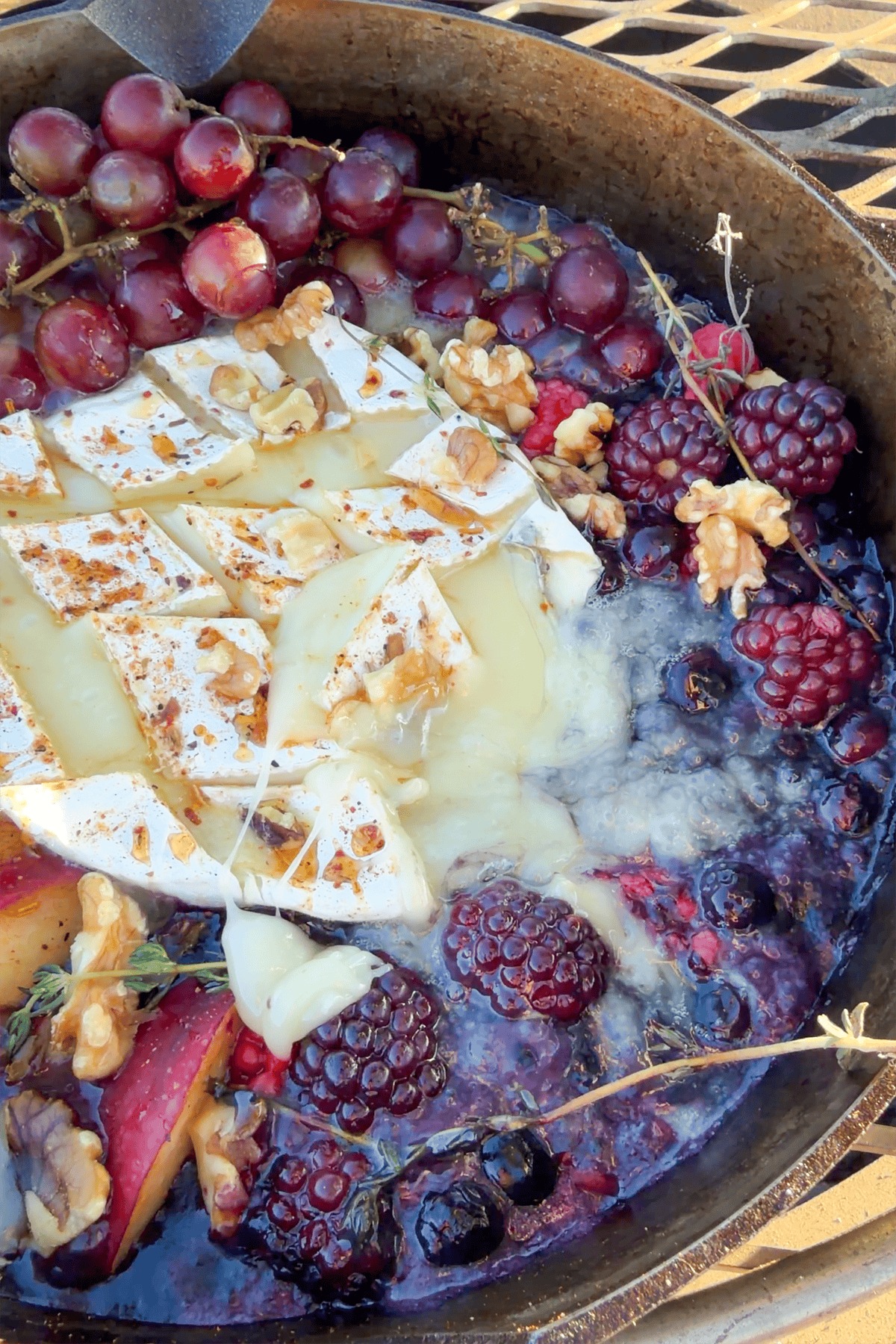
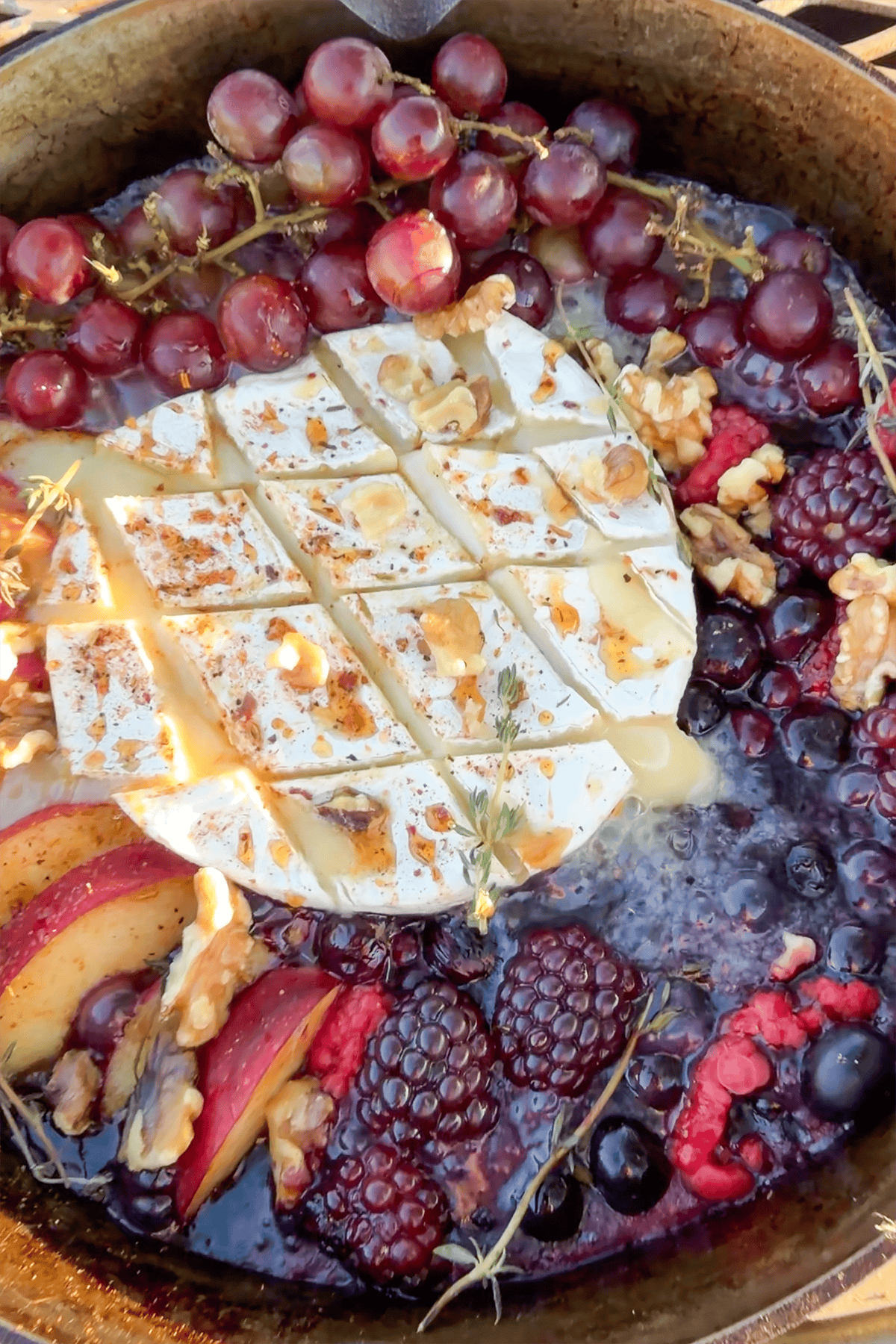
Carefully place the assembled cast iron skillet directly onto the grill grates. There is no need to cover the skillet; the open heat is what facilitates the desired outcome. Observe the brie closely. The rind will begin to crack along the scored lines, and the cheese will start to glisten and ooze. Simultaneously, the fruits will begin to sizzle around the edges, releasing their sweet juices. This stage typically takes between 12 to 15 minutes, depending on the intensity of your heat source. The visual cue for readiness is the cheese becoming glossy and fully melted, with the fruits showing signs of gentle caramelization.
Step 4: Toasting the Perfect Accompaniment
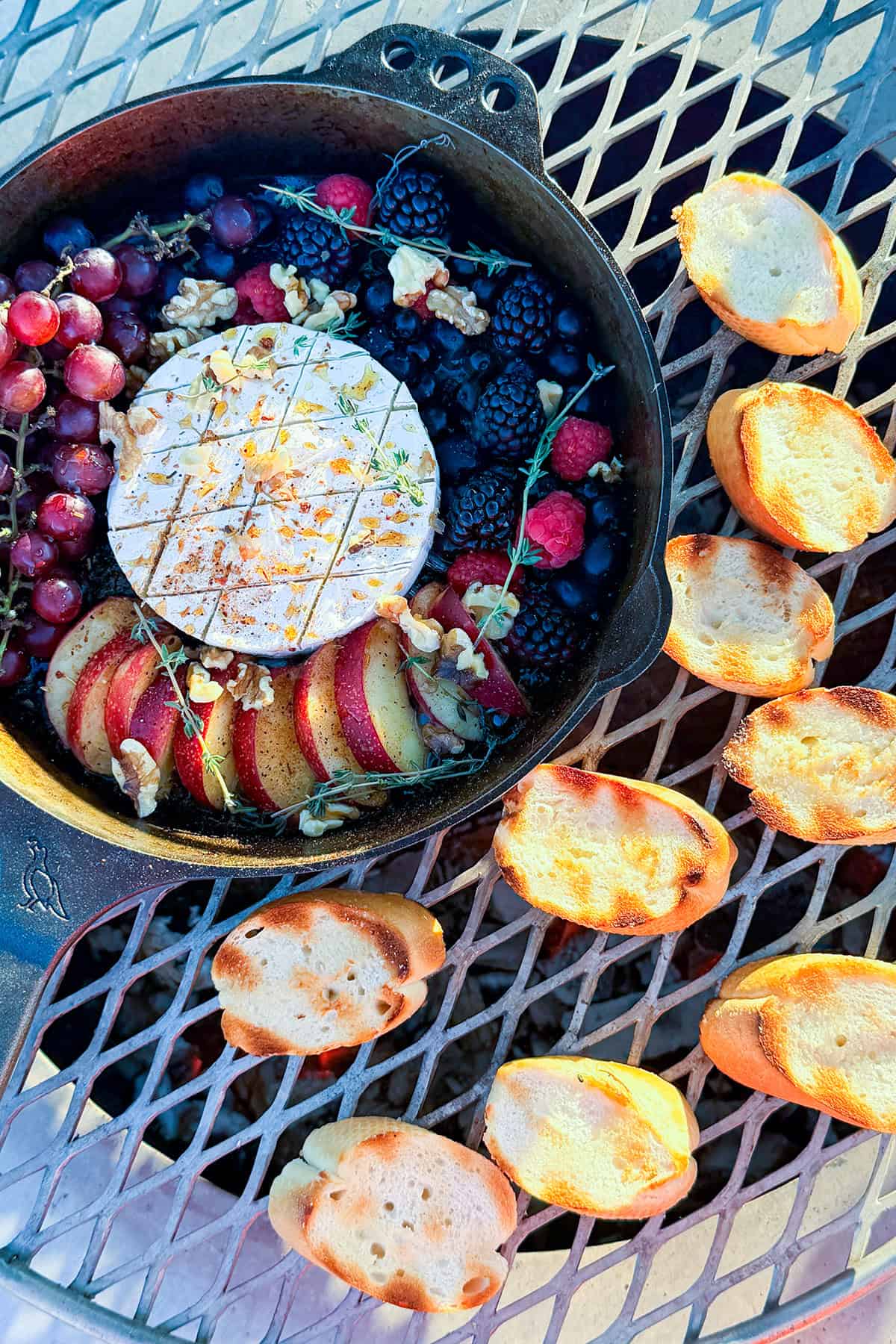
While the brie is undergoing its transformation over the heat, turn your attention to preparing the bread. Brush both sides of your sliced baguette or crusty bread with olive oil. Place these slices directly onto the grill grates alongside the skillet. Grill for approximately 30 to 60 seconds per side, until they achieve a golden-brown hue. A final touch of flaky sea salt enhances their flavor.
Serving and Enjoyment: A Communal Culinary Celebration
The presentation of campfire brie dip is as integral to the experience as its preparation. Bring the hot cast iron skillet directly to the table, allowing guests to serve themselves. The ideal method of consumption is to spoon the warm, melted cheese and fruit mixture onto the grilled bread slices, or to directly dip the bread into the skillet.
It is imperative to consume this dish immediately after it comes off the grill. As the cheese cools, it will naturally firm up, losing that coveted silky, oozy texture that defines its appeal. While refrigeration and reheating are possible, the quality and consistency of the dip are undeniably superior when enjoyed fresh from the fire.
Addressing Common Missteps: Lessons Learned from Experience
Through the initial attempts at crafting this dish, several key learning points emerged that significantly improve the final outcome:
- Grape Management: As mentioned, leaving grapes on the vine is a common visual trap. Removing them individually ensures a smoother dipping experience for all.
- The Art of Scoring: A hesitant approach to scoring the brie rind can lead to insufficient melting. Confidence in cutting through the rind is essential. If the cheese does not appear to be opening up during cooking, a simple re-score with the knife can often rectify the situation.
- Herb Stem Removal: While aesthetically pleasing, herb stems can be cumbersome during eating. Stripping the leaves from woody stems ensures a cleaner and more enjoyable consumption.
Storage and Reheating: Preserving the Flavors
While campfire brie dip is best enjoyed fresh, any potential leftovers can be stored. Transfer any remaining dip to an airtight container and refrigerate for up to two days. To reheat, a microwave can be used until the cheese melts sufficiently. It is important to note that the texture may not be identical to the freshly prepared version, but it remains a delightful option, particularly spread on toast or incorporated into breakfast sandwiches.
Frequently Asked Questions: Clarifying the Campfire Brie Experience
Can campfire brie dip be prepared in the oven?
Indeed, the oven provides a viable alternative for preparing this dish when a grill or campfire is not accessible. Preheat your oven to 375°F (190°C). Assemble the brie and accompanying ingredients in the cast iron skillet as you would for outdoor cooking. Bake for approximately 15 to 18 minutes, or until the rind begins to crack and the cheese is visibly melted and gooey. For the bread, instead of grilling, you can broil oiled baguette slices for 1 to 2 minutes per side until golden brown.
What types of fruit are most suitable for campfire brie dip?
A wide array of fresh fruits that can withstand moderate heat are well-suited for this recipe. Berries, such as blueberries, raspberries, and blackberries, are highly recommended due to their tendency to soften quickly and release juices that beautifully integrate with the melted cheese. Sliced stone fruits like peaches are excellent during the summer months. Grapes are also a good option, provided they are removed from the vine. It is generally advisable to avoid overly watery fruits or citrus, as they can dilute the dip, resulting in a soupy consistency rather than a rich sauce.
Is the rind of brie cheese edible?
Yes, the rind of brie cheese is edible. While some individuals may choose not to consume it, it softens considerably during the cooking process, making it palatable for most. When dipping bread into the melted cheese, the rind often softens to a point where it is consumed without conscious notice. If the texture is not to your preference, it can be gently pushed aside as you scoop the cheese. However, it is crucial not to remove the rind before cooking, as it provides essential structural support to the melting cheese.
Broader Culinary Implications and Trends
The resurgence of interest in live-fire cooking and simple, ingredient-focused recipes highlights a broader culinary trend towards embracing outdoor cooking and the primal satisfaction it offers. The campfire brie dip embodies this trend by transforming a common cheese into a spectacular centerpiece with minimal effort. Its accessibility and impressive results make it an ideal entry point for novice outdoor cooks and a reliable crowd-pleaser for seasoned pitmasters. The adaptability of the recipe also speaks to the growing desire for personalized culinary experiences, where classic dishes are reinterpreted with individual flair and seasonal ingredients. As consumers increasingly seek authentic and engaging food experiences, dishes like campfire brie dip, which connect us to both nature and tradition, are poised to remain popular.


