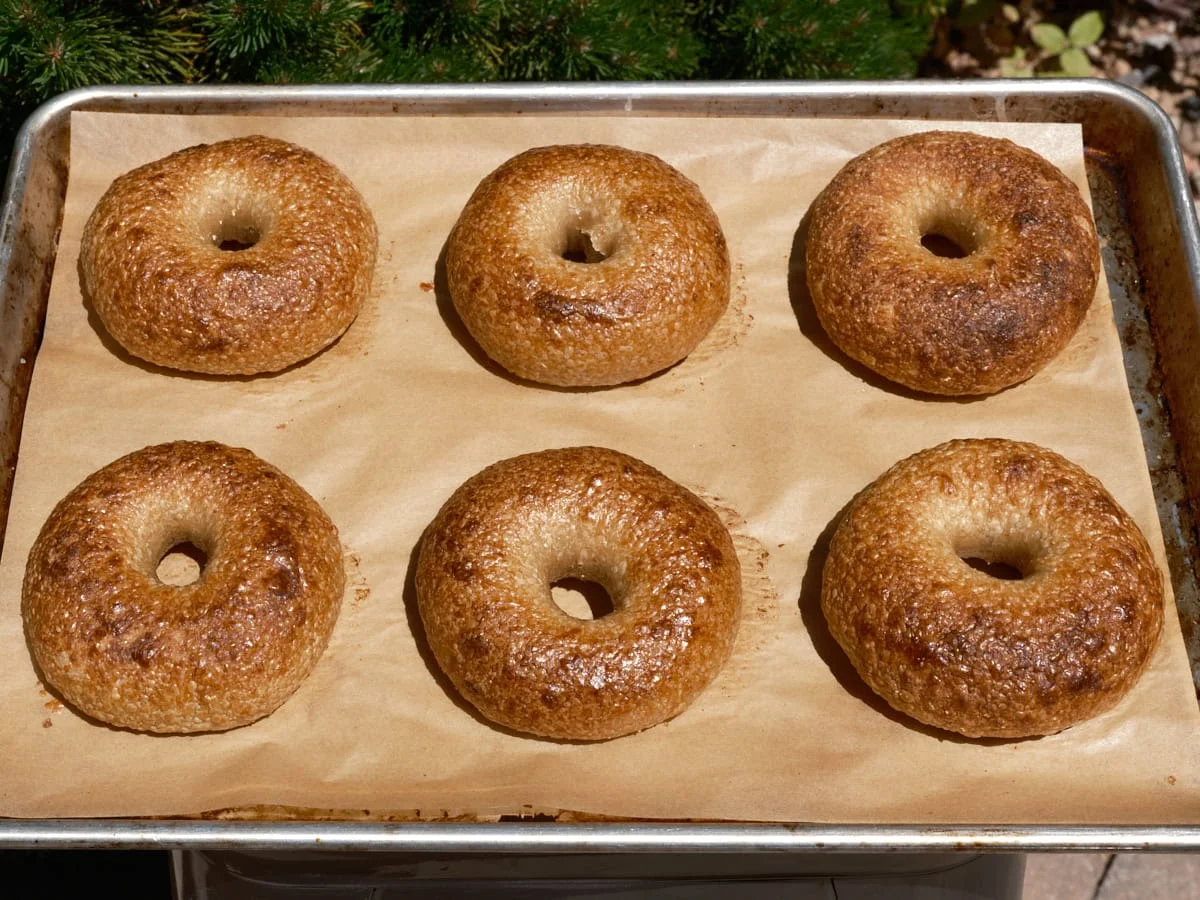
A new, meticulously refined sourdough bagel recipe has been introduced, challenging traditional bagel paradigms by focusing on a lighter texture, a glossy, blistered crust, and a more open crumb. This "new wave" approach, developed through a process of iterative refinement, aims to elevate the home baking experience, offering a distinct alternative to the classic New York-style bagel. The recipe integrates a complex flour blend, a specially prepared levain, and specific techniques for shaping, boiling, and baking to achieve its unique characteristics.
The Evolution of a Staple: From Traditional to "New Wave" Bagels
The bagel, a staple in many cultures, has a rich history rooted in Eastern European Jewish communities, eventually becoming an iconic food in North America, particularly in cities like New York and Montreal. Traditional New York-style bagels are renowned for their dense, chewy interior and a thick, robust crust, typically achieved through specific flour types, a long cold fermentation, and a precise boiling and baking process. This established archetype has long defined expectations for what a "good" bagel should be.
However, culinary trends are constantly evolving, and a "new wave" of bagel artistry has emerged, exemplified by establishments such as Courage Bagels in Los Angeles. These modern interpretations lean towards a lighter, airier profile, often featuring a more irregular shape, a crispier, blistered exterior, and a less dense, more open crumb. The newly introduced sourdough bagel recipe aligns precisely with this contemporary movement, aiming to replicate and refine these desirable qualities for the home baker. It represents a deliberate departure from the developer’s own prior, more traditional sourdough bagel recipe, which emphasized the classic chewy, closed-crumb characteristics. The goal was not a radical overhaul but a sharpening of existing principles to achieve a specific, refined outcome.
The Iterative Journey of Recipe Development
The creation of this "new wave" sourdough bagel was not a sudden revelation but the result of a methodical, variable-by-variable development process. The recipe developer systematically questioned established norms, exploring how subtle adjustments could collectively yield a significantly different product. This iterative approach focused on several key components, each contributing to the final bagel’s distinct texture and flavor profile.
-
Flour Blend Refinement: The initial focus was on the flour composition. Moving beyond a single flour type, the new recipe incorporates a sophisticated blend designed to achieve specific textural and flavor outcomes. It utilizes high-protein white flour (12-14% protein) for foundational chew and structure, comprising nearly half of the total flour. Medium-protein white flour (around 11% protein, like Central Milling Artisan Bakers Craft) contributes to tenderness and openness. Crucially, whole wheat and whole rye flours, making up 15% of the blend, were introduced not for their health benefits but for their profound impact on flavor. Whole wheat imparts a warm, nutty depth, while whole rye adds subtle earthiness, aids fermentation activity, and enhances crust color, contributing complexity without making the bagel heavy.
-
Sweetened Levain Innovation: The levain, or sourdough starter, received particular attention. To mitigate the sourness often associated with sourdough and encourage yeast-dominant activity for maximum rise, a "sweet levain" was developed. This involves incorporating a small amount of superfine (caster) sugar directly into the levain build. This strategy shifts the microbial balance, promoting a yeast-heavy culture that yields a less acidic final product, allowing the other nuanced flavors of the flour blend and malt to shine through. The developer noted the importance of ensuring the starter is not overly ripe when preparing the levain to further control sourness.
-
Simplified Shaping via the Poke Method: Traditional bagel shaping often involves rolling a rope of dough and joining the ends, a technique that can be challenging, especially with higher-hydration doughs prone to coming apart during boiling. The new recipe champions the "poke method," where a hole is simply pressed through the center of a balled piece of dough and then gently stretched. This method is praised for its simplicity, forgiveness, and ability to create a more even ring, adapting better to the slightly higher hydration characteristic of this particular dough.
-
Overnight Cold Retardation: A significant change involved introducing an overnight cold retard (proofing in the refrigerator). While same-day baking is possible, the cold rest was found to dramatically deepen the bagel’s flavor, fostering a more complex taste profile. Unexpectedly, it also contributed to a slightly more open crumb structure and the development of desirable microblisters on the crust, leading to a delightful crispness and enhanced color upon baking. This extended cold proof also offers practical scheduling benefits for home bakers.
Key Scientific Principles Behind the Perfect Bagel
The success of these "new wave" bagels hinges on a precise application of baking science, with several critical techniques influencing the final product:
-
Dough Hydration and Handling: At 68% hydration, this dough is relatively stiff compared to many sourdough breads, yet higher than traditional, very dense bagels. This stiffness, coupled with thorough mixing (mechanical or by hand), develops strong gluten networks essential for the bagel’s structure and chew. The incremental addition of water (bassinage) during mixing ensures optimal absorption and dough development.
-
The Art of the Boil: The boiling process is paramount for bagel texture and crust development.
- Barley Malt Syrup: A generous addition of barley malt syrup to the boil water is a classic technique. Beyond its characteristic malty, slightly sweet, and savory flavor, it contributes significantly to crust browning through the Maillard reaction.
- Baking Soda: A teaspoon of baking soda is added to increase the alkalinity of the water. This further enhances crust color and promotes a crisper texture. The resulting dark, vigorous boil water is crucial.
- Boil Time and Intensity: A short, vigorous boil (20-30 seconds per side) is preferred for this "new wave" style. This brief exposure gelatinizes the starch on the surface, creating a thin, glossy skin that crisps beautifully in the oven, without developing the leathery chew associated with longer boils. Maintaining a rolling, aggressive boil is vital; lukewarm water can cause bagels to flatten.
-
Optimal Baking Environment: The baking phase also employs specific strategies:
- Preheated Stone or Steel: Baking on a preheated surface like a baking steel or thick stone provides intense, direct heat from below. This rapid heat transfer triggers an "oven spring" effect, encouraging the bagels to rise quickly and develop a robust bottom crust, akin to hearth bread or pizza. A minimum one-hour preheat at high temperatures (500-525°F/260-270°C) is recommended.
- Oven Steam: Introducing steam into the oven immediately after loading the bagels is a technique borrowed from artisan bread baking. The steam keeps the surface of the dough moist, delaying the formation of a hard crust and allowing for maximum expansion. Crucially, it also further encourages the formation of desirable microblisters on the bagel’s surface, contributing to the signature "new wave" appearance.
-
The Role of Sweeteners and Malts: Beyond the sweet levain, the recipe features multiple sweeteners, each with a distinct function:
- Barley Malt Syrup (in dough): Added directly to the dough, it contributes the iconic malty, slightly bitter, and savory flavor profile synonymous with authentic bagels, and aids in overall browning.
- Diastatic Malt Powder: This is a powerful enzymatic ingredient. Unlike non-diastatic barley malt syrup, diastatic malt powder contains active enzymes that break down starches into fermentable sugars during bulk fermentation and baking. This process contributes to enhanced crust color, superior oven spring, and a more open crumb structure. While optional, its inclusion (at a relatively high 1% baker’s percentage) is strongly recommended for achieving the desired "new wave" characteristics.
A Meticulous Baking Schedule for Artisanal Results
The recipe unfolds over a three-day schedule, though flexibility is built in.
- Day One (Evening): The sweet levain is prepared and allowed to ripen overnight at a warm room temperature (74-76°F / 23-24°C) for 12-14 hours. Its readiness is indicated by significant rise, abundant bubbles, and a sweet aroma.
- Day Two (Morning to Afternoon): The main dough is mixed. A target final dough temperature of 76-78°F (24-26°C) is crucial for consistent fermentation. Due to the stiff dough and extensive mixing, no stretches and folds are required during the 3-hour bulk fermentation at warm room temperature. Following bulk, the dough is divided, balled, and shaped using the poke method. The shaped bagels are then placed on cornmeal-dusted sheet pans, covered, and transferred to the refrigerator for an overnight cold retard, which can extend into the next day.
- Day Three (Morning): The bagels are removed from the refrigerator and allowed to proof at warm room temperature for two hours. During the latter half of this proofing period, the oven is preheated with a baking steel to 500°F (260°C) convection or 525°F (270°C) conventional for at least an hour. The boil station is set up with a vigorous rolling boil of water, barley malt syrup, and baking soda. Bagels are boiled briefly (20-25 seconds per side), topped if desired, and then baked on the preheated steel. Baking commences at high heat, with a rotation and temperature reduction midway through, until the crust achieves a deep golden brown. A crucial cooling period of 15-20 minutes on a wire rack is advised to prevent a gummy interior.
This schedule, while spanning three days, minimizes active work on any single day, making the artisanal process manageable for home bakers. A same-day option is also provided, allowing for room temperature proofing after shaping, though it may yield slightly less complex flavors.
Addressing Common Baking Challenges: Expert Insights
The recipe anticipates and addresses common challenges encountered by home bakers, providing expert guidance:
- Reducing Sourness: The sweet levain is the primary mechanism to achieve a less sour bagel. Bakers are advised to ensure their sourdough starter is not overly ripe when preparing the levain. Removing whole rye flour from the recipe can also further reduce acidity.
- Achieving an Open Crumb: The flour blend and diastatic malt are designed to promote an open crumb. For an even more pronounced open texture, bakers can experiment with increasing the dough hydration by 3-4%, noting that higher hydration makes handling the dough more challenging during boiling.
- Preventing Flat Bagels: Flat bagels are typically attributed to over-fermentation during bulk or cold proof, insufficient shaping tightness, or, most critically, a boil water temperature that is not at a vigorous rolling boil. A bagel entering lukewarm water will spread and flatten.
- Boil Time Variations: Boil time directly impacts crust texture. A 20-25 second boil per side yields a thinner, crispier crust, while a 30-60 second boil creates a thicker, chewier skin and denser interior. The "new wave" recipe favors the shorter boil.
- Diastatic Malt Powder: While not strictly essential, diastatic malt powder is highly recommended. Its enzymatic action significantly enhances oven spring, improves crust color, and refines crumb texture, offering an "outsized effect" for a small addition.
- Topping Application: Toppings like sesame, poppy, or everything seasoning should be applied immediately after boiling, while the bagel surface is still wet and tacky, eliminating the need for an egg wash.
The Broader Impact: Elevating Home Baking
This "new wave" sourdough bagel recipe represents more than just a culinary instruction; it signifies a broader trend in home baking toward greater sophistication and artisanal quality. By meticulously detailing the scientific principles and iterative development process, the recipe empowers home bakers to understand why certain techniques are employed, fostering a deeper appreciation for the craft. It allows enthusiasts to create a product traditionally associated with specialized bakeries—a bagel with a crispy, blistered crust, a tender, open interior, and a complex malty flavor—right in their own kitchens.
The emphasis on specific flour blends, controlled fermentation, and precise boiling and baking conditions mirrors the dedication seen in professional bakeries. This recipe, therefore, not only provides a delicious outcome but also serves as an educational tool, pushing the boundaries of what home baking can achieve. It encourages experimentation and a deliberate approach to food preparation, moving beyond simple replication to genuine culinary exploration.
The developer openly acknowledges the contributions of other bakers, such as Josh Fairbanks, highlighting a collaborative spirit within the artisan baking community. This sharing of knowledge and techniques further enriches the landscape for both professional and home bakers, fostering continuous innovation in traditional food categories. The choice between this "new wave" bagel and a more traditional New York-style variant underscores the rich diversity now accessible to discerning palates, both at home and in specialized shops.