
The Environmental Cost of Synthetic Personal Care
To understand the necessity of the konjac sponge, one must first examine the life cycle of the conventional plastic pouf. Typically manufactured from polyethylene—a petroleum-derived plastic—these mesh sponges are designed for short-term use. Dermatologists frequently recommend replacing them every two to three months due to their tendency to trap bacteria, skin cells, and moisture within their synthetic folds. Consequently, millions of these non-biodegradable items are sent to landfills annually, where they can take hundreds of years to decompose.
Furthermore, the mechanical action of using a synthetic pouf contributes to the release of microplastics. As the plastic fibers degrade through friction and exposure to hot water, microscopic fragments are washed down the drain, bypassing many municipal filtration systems and eventually entering the global water supply. A 2022 study published in Environmental Science & Technology highlighted that personal care products are a significant, yet often under-calculated, source of secondary microplastics. In this context, the transition to natural fibers is no longer merely a niche lifestyle choice but a necessary step in mitigating the pervasive presence of plastics in the biosphere.
The Science and Origin of the Konjac Sponge
The konjac sponge is derived from the corm of the Amorphophallus konjac plant, a perennial tuber native to East and Southeast Asia. Known colloquially as the "elephant yam" or "konnyaku," the plant has been utilized in Japan, Korea, and China for over 1,500 years, primarily as a food source and a medicinal ingredient. The transition from a culinary staple to a skincare tool occurred when practitioners recognized the plant’s unique fibrous structure and its naturally alkaline properties.
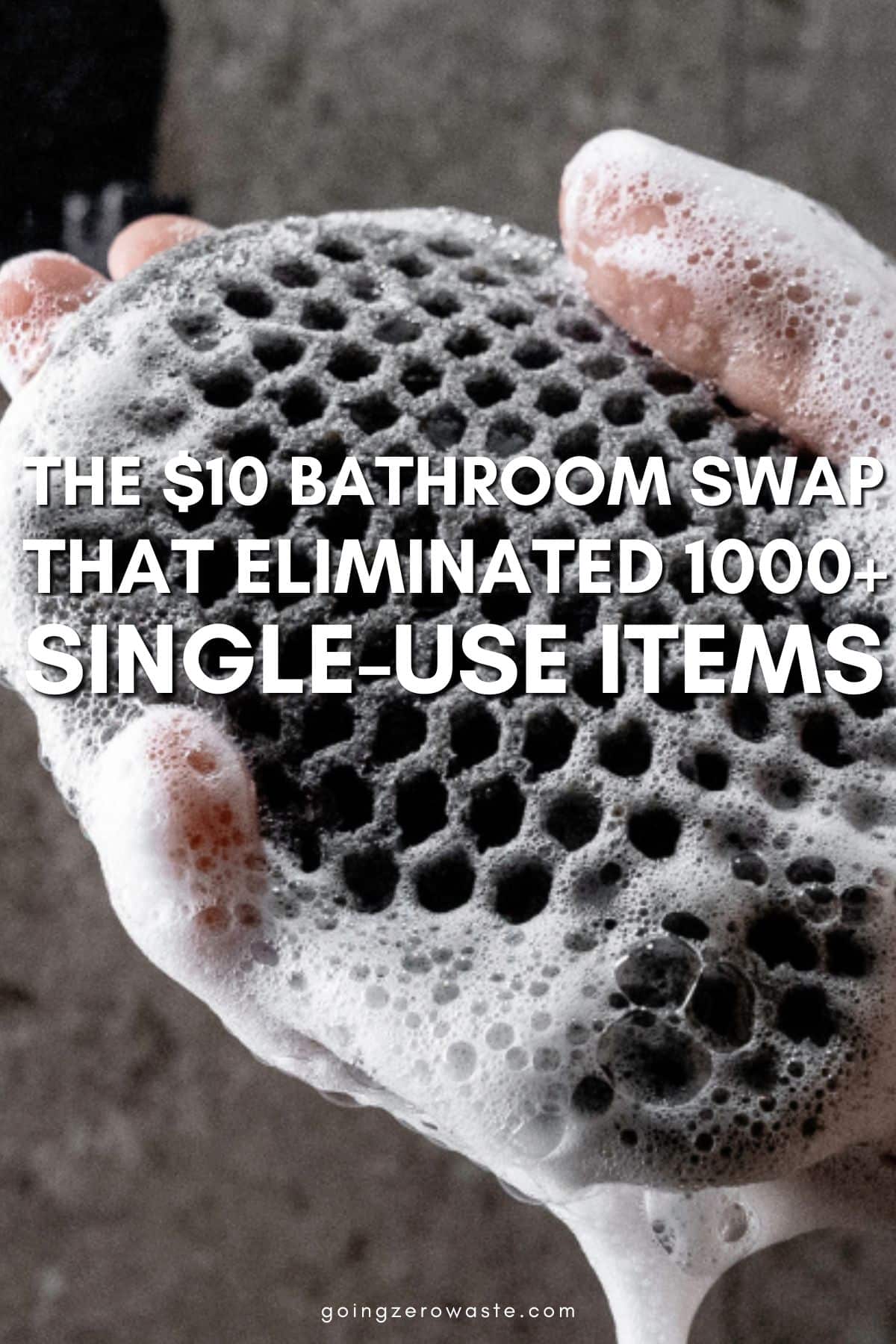
The manufacturing process of a konjac sponge is a study in botanical engineering. It begins with the extraction of glucomannan, a water-soluble dietary fiber found in the konjac root. This fiber is mixed with water and, in the case of specialized products like those offered by Casamera, infused with natural mineral additives. The resulting slurry is poured into molds and subjected to a steaming process that solidifies the mixture into a stable, porous structure. Once dried, the sponge becomes hard and lightweight, but upon rehydration, it transforms into a soft, gelatinous tool that mimics the texture of a natural sea sponge without the ethical concerns associated with harvesting marine life.
Chronology of the Bath Accessory Market
The history of bathing tools has moved in a cyclical pattern. For centuries, humans relied on natural materials, including loofahs (derived from the dried fruit of the Luffa aegyptiaca vine), sea sponges, and linen cloths. The mid-20th century, however, ushered in the "Plastic Age," characterized by the mass production of synthetic polymers.
- Pre-1950s: Dominance of natural fibers and sea sponges in global markets.
- 1960s–1980s: Development of nylon and polyethylene mesh, leading to the invention of the modern "bath lily" or pouf, marketed for its superior lathering capabilities and low production cost.
- 1990s–2010s: The konjac sponge enters the Western "J-Beauty" and "K-Beauty" markets, initially as a niche facial exfoliant.
- 2020–Present: The rise of the "Everything Shower" trend on social media platforms like TikTok and Instagram increases consumer demand for high-performance tools, while simultaneously sparking a backlash against "shelf-clutter" and plastic waste. Brands like Casamera innovate by scaling the konjac sponge for full-body use, challenging the dominance of synthetic alternatives.
Comparative Analysis: Konjac vs. Synthetic Alternatives
The primary advantage of the konjac sponge lies in its dual-functionality and material safety. Unlike synthetic mesh, which can be abrasive on sensitive skin, the konjac fiber is exceptionally gentle. Because it is naturally alkaline, it helps to balance the skin’s pH while removing dirt and oil.
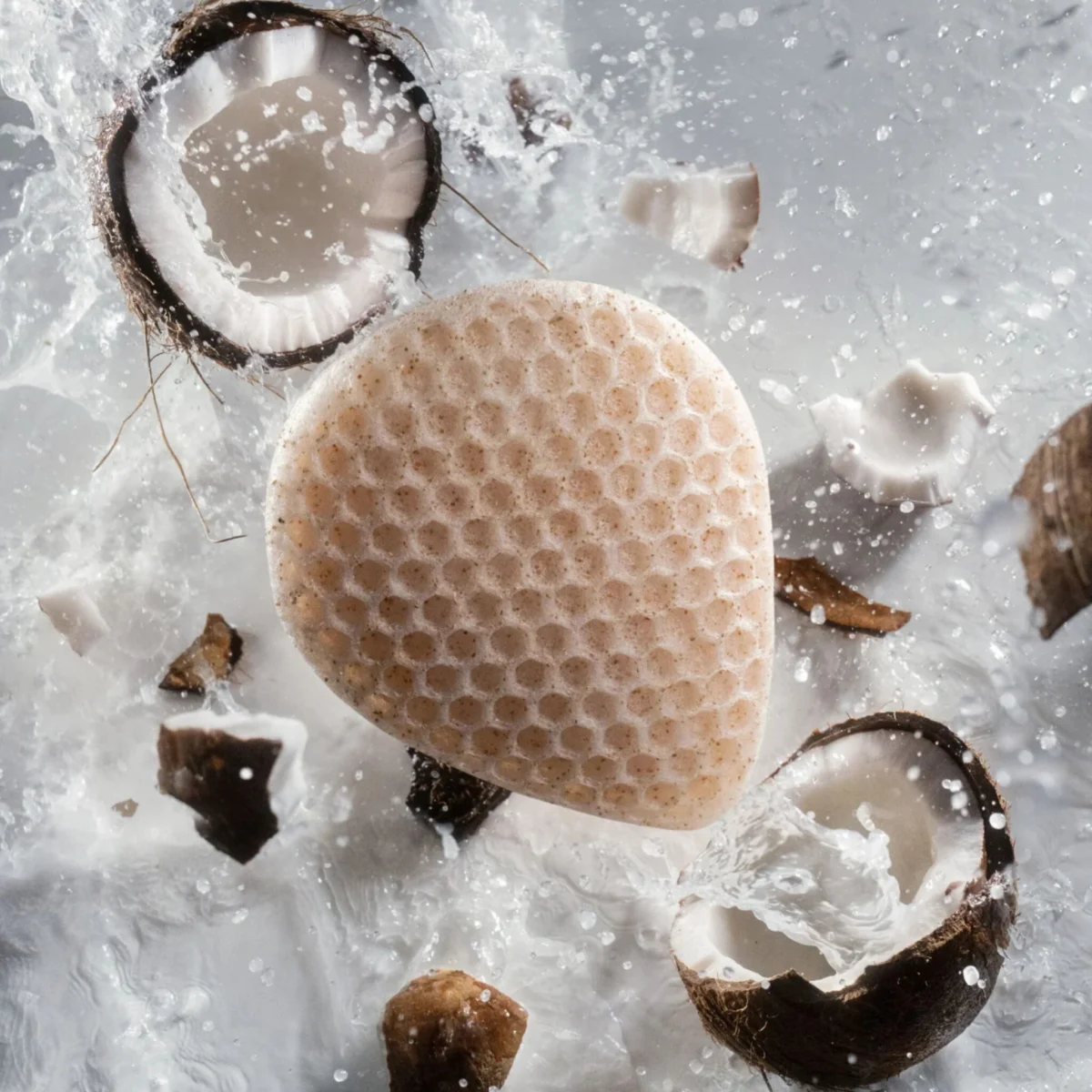
Casamera has further refined this concept by introducing a dual-sided design. One side features a honeycomb texture for standard cleansing, while the other side is reinforced with natural exfoliants such as ground walnut shells. This allows for a deeper "scrub" without the use of plastic microbeads, which have been banned in several countries, including the United States and the United Kingdom, due to their environmental impact.
Furthermore, the antimicrobial properties of the konjac root offer a significant hygienic advantage. Synthetic poufs are notorious for harboring mold and mildew because their structure prevents rapid drying. In contrast, high-quality konjac sponges are often infused with charcoal or volcanic mud, which possess natural purifying properties and help the sponge resist bacterial growth between uses.

The "Fatberg" Crisis and Infrastructure Impact
The shift toward konjac sponges also addresses a growing crisis in municipal infrastructure: the "fatberg." Fatbergs are massive, subterranean blockages in sewer systems formed by the combination of non-biodegradable waste—most notably "flushable" wet wipes—and congealed fats and oils.
While many consumers use face wipes as a convenient alternative to traditional washing, these products are often composed of polyester and polypropylene. Even those marketed as biodegradable often fail to break down in the anaerobic conditions of a sewer system. When these wipes enter the wastewater stream, they contribute to blockages that cost cities millions of dollars in annual repairs. For instance, the infamous "Whitechapel Fatberg" discovered in London in 2017 weighed 130 tonnes and stretched over 250 meters.
By replacing single-use wipes and synthetic poufs with a compostable konjac sponge, consumers reduce the strain on urban infrastructure. At the end of its three-month lifespan, a konjac sponge can be placed in a home compost bin or buried in a garden, where it will break down into organic matter, returning nutrients to the soil rather than contributing to sewer blockages or landfill mass.
Corporate Responsibility and Market Implications
The success of the konjac sponge is also tied to the evolving standards of corporate transparency. Casamera, for example, has integrated sustainability into its entire supply chain. Beyond the product itself, the brand utilizes low-waste shipping materials and participates in carbon-offsetting programs, such as planting trees to counteract the footprint of manufacturing and logistics.
This holistic approach to sustainability is increasingly becoming a requirement for modern consumers. According to a 2023 report by NielsenIQ, products with "environmentally friendly" claims grew 28% faster than their conventional counterparts. The personal care sector is witnessing a "clean-label" revolution, where the absence of "forever chemicals" like PFAs (per- and polyfluoroalkyl substances) and microplastics is a primary selling point.
Practical Application and Maintenance
For consumers transitioning to natural sponges, maintenance is key to maximizing the product’s lifespan. The standard routine involves:

- Rehydration: Soaking the sponge in warm water until it expands and softens completely.
- Cleansing: Applying a small amount of bar or liquid soap. The sponge’s structure naturally enhances lather, often requiring less product than a washcloth.
- Exfoliation: Using gentle circular motions on the face or body.
- Sanitization: To ensure longevity, it is recommended to submerge the sponge in boiling water for two minutes once a week.
- Disposal: Replacing the sponge every two to three months or when the texture begins to break down, followed by composting.
Conclusion: The Future of Sustainable Skincare
The movement to "ditch the plastic pouf" is a microcosm of a larger transition toward a circular economy. By choosing a konjac sponge, consumers are opting for a product that is rooted in historical wisdom and refined by modern environmental science. The transition away from synthetic personal care tools reflects an growing understanding that the health of the individual’s skin is inextricably linked to the health of the planet.
As brands like Casamera continue to innovate, providing accessible, high-quality alternatives to traditional plastics, the "everything shower" may eventually evolve from a trend of excess into a ritual of intentional, sustainable self-care. The data suggests that as long as the performance of natural alternatives matches or exceeds that of synthetics, the decline of the plastic pouf is not just a possibility, but an inevitability in a world increasingly conscious of its ecological footprint.


