
The culinary landscape universally acknowledges cheese as a staple, a versatile ingredient capable of transforming simple dishes into gourmet experiences. From the creamy allure of grated mozzarella melting atop a Neapolitan pizza to the sharp tang of Monterey Jack enhancing a Tex-Mex classic, its appeal is undeniable. Indeed, the global cheese market, valued at well over $100 billion annually and projected to grow steadily, underscores its pervasive presence in diets worldwide. This widespread affection for cheese, however, often brings with it a common kitchen dilemma: the arduous task of cleaning the grater, a process many home cooks describe as a significant inconvenience, if not a minor nightmare.
The Unseen Challenge: Grater Hygiene and Health Risks
While the act of grating fresh cheese is satisfying, the aftermath frequently presents a sticky, greasy problem. The intricate grooves and sharp edges of a cheese grater are perfectly designed to shred dairy products but are equally adept at trapping soft, fatty remnants. These stubborn particles cling tenaciously, often resisting initial attempts at removal and forming a hardened crust if not addressed promptly. The immediate impulse is often to grab a sponge and scrub vigorously, yet this approach can be counterproductive and even hazardous. Fibers from sponges can snag on the grater’s sharp edges, embedding themselves within the holes and making the cleaning task even more frustrating and potentially unsanitary.
Beyond mere aesthetics and convenience, the proper cleaning of kitchen tools like cheese graters carries significant public health implications. Food residues, particularly dairy products, provide an ideal breeding ground for bacteria such as Listeria monocytogenes, Salmonella, and E. coli. If these microorganisms are allowed to proliferate due to inadequate cleaning, they can easily contaminate subsequent meals, posing a serious risk of foodborne illness for individuals and families. Symptoms can range from mild gastrointestinal discomfort to severe infections, particularly dangerous for vulnerable populations such such as young children, the elderly, and immunocompromised individuals. The Centers for Disease Control and Prevention (CDC) consistently highlights the importance of thorough kitchen hygiene in preventing thousands of food poisoning cases annually. Therefore, the seemingly trivial chore of cleaning a cheese grater is, in fact, a critical component of maintaining a safe and healthy kitchen environment.
Modern Solutions: Harnessing the Power of the Kitchen Faucet Sprayer
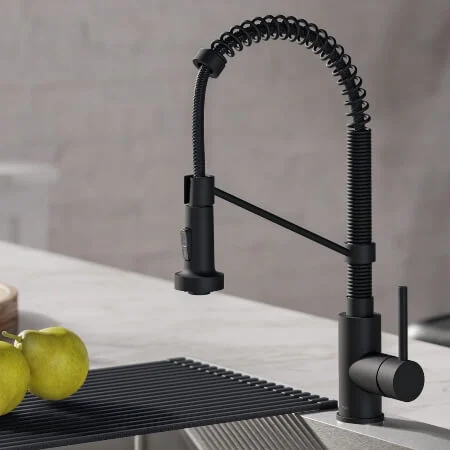
Recognizing this persistent challenge, modern kitchen appliance innovations have increasingly focused on enhancing both efficiency and hygiene. Among these, the advanced kitchen faucet, particularly models equipped with pull-down or pull-out sprayers, has emerged as an indispensable tool in overcoming the grater-cleaning hurdle. These faucets are engineered to deliver a concentrated, high-pressure stream of water, specifically designed to dislodge stubborn food particles from intricate surfaces. This capability represents a significant evolution from traditional fixed-spout faucets, which often lack the force and flexibility required for such precise cleaning tasks.
A Step-by-Step Guide to Effective Grater Cleaning with a Faucet Sprayer
To effectively combat cheese residue and ensure impeccable hygiene, a systematic approach leveraging the capabilities of a modern kitchen faucet is recommended:
-
Pre-Soaking and Initial Loosening: The first crucial step is to prevent cheese residues from hardening. Immediately after use, rinse the grater under warm running water to remove loose particles. For more stubborn or dried-on cheese, a brief pre-soak in hot water for 10-15 minutes can work wonders. The heat helps to soften the fatty components of the cheese, making them easier to dislodge. Culinary experts often emphasize that addressing food residues promptly is the most effective preventative measure against stubborn build-up.
-
The Acidic Advantage: Lemon and Natural Cleaners: For particularly greasy or adherent cheese, natural acidic agents can be highly effective. Lemon, for instance, is not merely a fragrant addition to dishes; its citric acid possesses potent grease-cutting properties. Rubbing the fleshy pulp of a cut lemon over the grater’s surface allows the acid to chemically break down the fatty cheese particles. This method not only aids in cleaning but also leaves a fresh, clean scent, acting as a natural deodorizer. Vinegar, another common household acidic cleaner, can also be used in a diluted solution for soaking or scrubbing.
-
The Abrasive Touch: Salt for Stubborn Residues: When cheese remnants prove exceptionally recalcitrant, a gentle abrasive can be introduced. Combining coarse salt with the lemon pulp enhances the cleaning action. The crystalline structure of salt provides a mild mechanical scrubbing effect, helping to physically dislodge softened cheese from the grater’s tiny holes without damaging the metal or leaving behind harmful chemical residues. This combination offers a powerful, natural alternative to harsh chemical cleaners.
-
The Forceful Rinse: Maximizing Sprayer Efficiency: After pre-treatment, the pull-down faucet’s sprayer becomes the star of the show. Position the grater carefully under the faucet, holding it firmly to prevent slippage. Engage the powerful spray function, directing the high-pressure stream directly into the grater’s holes from various angles. The force of the water will effectively blast away the loosened and chemically weakened cheese particles. Using hot water during this rinse amplifies the effect, as heat further aids in melting and dissolving grease. The flexibility and extended reach of a pull-down sprayer are invaluable here, allowing users to target every nook and cranny with precision.
-
Prioritizing Safety: Avoiding Injuries and Material Contamination: During the cleaning process, safety is paramount. The sharp edges of a grater can cause cuts if not handled with care. Always direct the water flow away from your hands and avoid placing fingers directly against the grating surface. As previously mentioned, traditional scrub pads should be avoided as their fibers can get caught in the grater’s holes, leading to frustration and potential contamination. Should fibers accidentally become lodged, the focused spray of a pull-down faucet is often the most effective tool for dislodging them, offering incredible reach and flexibility to target the affected areas.
Evolution of Kitchen Faucets: From Basic Taps to High-Tech Helpers

The journey of the kitchen faucet mirrors the broader evolution of kitchen design and functionality. For centuries, faucets were simple utilitarian devices, primarily serving to deliver water with basic on/off functionality. The mid-20th century saw the introduction of single-handle mixer faucets, revolutionizing temperature control. However, the true leap in user convenience and efficiency arrived with the advent of pull-down and pull-out sprayers in recent decades.
These innovative designs address fundamental user needs: increased flexibility for various cleaning tasks, enhanced reach for larger sinks and pots, and the ability to deliver targeted water streams. Kitchen design specialists and appliance manufacturers have continuously refined these concepts, integrating features like magnetic docking for spray heads, improved hose durability, and ergonomic handle designs. This chronological development highlights a shift from purely functional design to one that prioritizes user experience, hygiene, and efficiency in the modern kitchen. The market for kitchen faucets, a segment of the broader home fixtures industry, is a multi-billion dollar sector, driven by consumer demand for both aesthetic appeal and practical innovation.
Key Features of Advanced Pull-Down Faucets
Modern pull-down kitchen faucets are distinguished by several advanced traits that make them indispensable for contemporary kitchens:
-
Versatility in Water Flow: Stream vs. Spray: A hallmark of these faucets is their dual-function spray head. Users can typically switch between an aerated stream and a powerful spray with the press of a button or toggle. The aerated stream is ideal for everyday tasks like filling pots, rinsing fruits and vegetables gently, or general hand washing, conserving water while providing ample flow. The powerful spray, conversely, is specifically engineered for heavy-duty cleaning tasks, such as dislodging stubborn food particles from graters, rinsing off caked-on residue from plates, or cleaning the sink basin itself. This versatility ensures that the faucet can adapt to a wide array of kitchen chores, optimizing water usage and cleaning efficacy.
-
Material Innovation: The Rise of Spot-Free Finishes: Contemporary pull-down faucets often feature advanced finishes designed for durability and ease of maintenance. Spot-free stainless steel, a popular choice, is engineered to resist water spots, fingerprints, and smudges. This material innovation not only maintains the faucet’s aesthetic appeal but also contributes to overall kitchen hygiene by preventing grease and food particles from adhering stubbornly to its surface. A quick wipe with a soft, damp cloth is usually sufficient to restore its original shine, minimizing the time and effort required for daily upkeep. This focus on low-maintenance materials reflects a broader consumer trend towards convenience and cleanliness in household appliances.
-
Ergonomics and Design: Single vs. Double Handles: While most pull-down faucets come with a single handle for integrated temperature and flow control, some variations offer double handles. Single-handle designs are widely favored for their ease of use, allowing for one-handed operation and precise control over water temperature and volume. This design is particularly advantageous in busy kitchen environments where efficiency is key. Double-handle models, while offering separate controls for hot and cold water, are less common in pull-down designs but cater to specific aesthetic preferences or installation requirements. The ergonomic design extends to the spray head itself, often featuring a comfortable grip and intuitive controls for switching spray modes.
The Broader Impact: Elevating Kitchen Efficiency and Hygiene
The integration of advanced kitchen faucets, particularly those with pull-down sprayers, extends far beyond the singular task of cleaning a cheese grater. These tools fundamentally enhance the overall efficiency and hygiene of the kitchen. The extended reach simplifies the washing of large pots, pans, and baking sheets that might otherwise be cumbersome to maneuver under a fixed spout. The powerful spray capability reduces scrubbing time and the need for harsh chemicals, promoting a more sustainable and less labor-intensive cleaning routine.
For the hygiene-conscious cook, a modern pull-down faucet is an invaluable asset. It empowers individuals to maintain a consistently high standard of cleanliness for all kitchen tools and surfaces, thereby mitigating the risks associated with cross-contamination and bacterial growth. This focus on ease of cleaning and maintenance aligns with broader public health recommendations for food safety and contributes to a more pleasant and worry-free culinary experience.
Expert Perspectives on Kitchen Cleanliness
Food safety experts and culinary professionals consistently underscore the foundational role of clean equipment in preventing foodborne illnesses. "A clean kitchen is the first line of defense against harmful bacteria," states Dr. Anya Sharma, a public health specialist focusing on food safety. "Tools like cheese graters, with their intricate designs, can easily become reservoirs for microbes if not meticulously cleaned after each use. Modern faucet technology, particularly powerful sprayers, offers a significant advantage in achieving this critical level of cleanliness, reducing reliance on manual scrubbing which can be both inefficient and potentially hazardous."
Similarly, renowned kitchen designers often advocate for integrating high-performance faucets into kitchen plans. "When we design kitchens today, functionality and hygiene are paramount," explains Marcus Thorne, a veteran kitchen architect. "A pull-down faucet isn’t just a convenience; it’s a fundamental tool that contributes to a more efficient, ergonomic, and crucially, a more sanitary cooking environment. It’s about empowering the user to easily maintain a spotless workspace, from the sink basin to the most challenging of utensils."
Conclusion: A Seamless Culinary Experience
In conclusion, while the irresistible appeal of cheese enriches countless dishes, the practical challenge of cleaning its grating tools has historically presented a significant hurdle. However, thanks to the continuous evolution of kitchen technology, modern pull-down and pull-out faucets with their powerful, versatile spray functions have transformed this arduous chore into a manageable and efficient task. By understanding the optimal cleaning techniques and appreciating the advanced features of these essential kitchen fixtures, home cooks can ensure impeccable hygiene, mitigate health risks, and ultimately, elevate their overall culinary experience, making the joys of cheese preparation truly seamless from start to finish.


