In a candid revelation from the world of artisan baking, Austin Durant, founder of the renowned Fermenters Club and author of "Fearless Fermenting," recently shared a common yet often frustrating experience for sourdough enthusiasts: a collapsed loaf. What began as an ambitious attempt at his "Lazy Loaf Sourdough bread technique" unexpectedly concluded not with a perfectly risen boule, but with a "soupy mess" of dough. However, demonstrating remarkable culinary ingenuity and a commitment to minimizing food waste, Durant swiftly transformed the uncooperative dough into a substantial batch of sourdough pancakes, offering a valuable lesson in kitchen resilience and resourcefulness for home bakers worldwide.
The Art and Science of Sourdough: A Delicate Balance
Sourdough baking, a craft that has experienced a significant resurgence in popularity, particularly in recent years, hinges on a delicate interplay of microbiology, temperature, and time. Unlike commercial yeast breads, sourdough relies on a "starter"—a symbiotic culture of wild yeasts and lactic acid bacteria—to leaven the dough and impart its characteristic tangy flavor. This living culture is highly sensitive to environmental conditions, making the proofing process a critical stage.
Proofing, or the final rise of the shaped dough before baking, is where the yeast and bacteria consume sugars in the flour, producing carbon dioxide gas that creates air pockets, giving bread its open, airy crumb. Optimal proofing typically occurs within a specific temperature range, usually between 75°F and 78°F (24°C-26°C), where microbial activity is balanced. Deviations from this range can lead to significant problems. Colder temperatures slow down fermentation, resulting in an under-proofed, dense loaf, while excessively warm conditions, as experienced by Durant, can accelerate fermentation to an detrimental degree.
Environmental Factors: Temperature and Time in Sourdough Proofing
Durant pinpointed two primary culprits for his sourdough’s failure: an overnight ambient temperature he estimated to be around 80°F (27°C) and potentially waiting too long to proof the dough. At elevated temperatures, the wild yeasts in a sourdough starter become hyperactive. While this might seem beneficial for a quick rise, it can be counterproductive. The rapid gas production can outpace the gluten network’s ability to stretch and encapsulate the gas. Gluten, the protein structure in flour, provides the dough’s elasticity and strength. When fermentation is too vigorous or prolonged, the gluten strands can over-stretch and eventually break down, leading to a loss of structural integrity. This results in a dough that cannot hold its shape, becoming slack, sticky, and unable to achieve the necessary rise for a well-structured loaf.
Over-proofing, regardless of temperature, occurs when the dough is allowed to ferment for too long. The yeast consumes all available sugars, and the dough’s structure weakens to the point where it collapses under its own weight or during handling. A tell-tale sign of over-proofing is a dough that feels overly slack, lacks tension, and may even smell excessively sour or alcoholic. When poured onto a bench, an over-proofed dough will spread rather than hold its form, making shaping virtually impossible.
The Genesis of the "Lazy Loaf" Attempt and its Critical Turning Point
Durant’s journey with the uncooperative dough began with his "Lazy Loaf" sourdough bread technique, a method designed for simplicity and efficiency. The technique, like many sourdough recipes, likely involved an overnight bulk fermentation or proofing stage, intended to allow the dough to develop flavor and structure gradually. On the particular night of the incident, the ambient temperature inside Durant’s home soared, reaching an estimated 80°F. While this might be comfortable for residents, it proved detrimental to the sensitive sourdough.
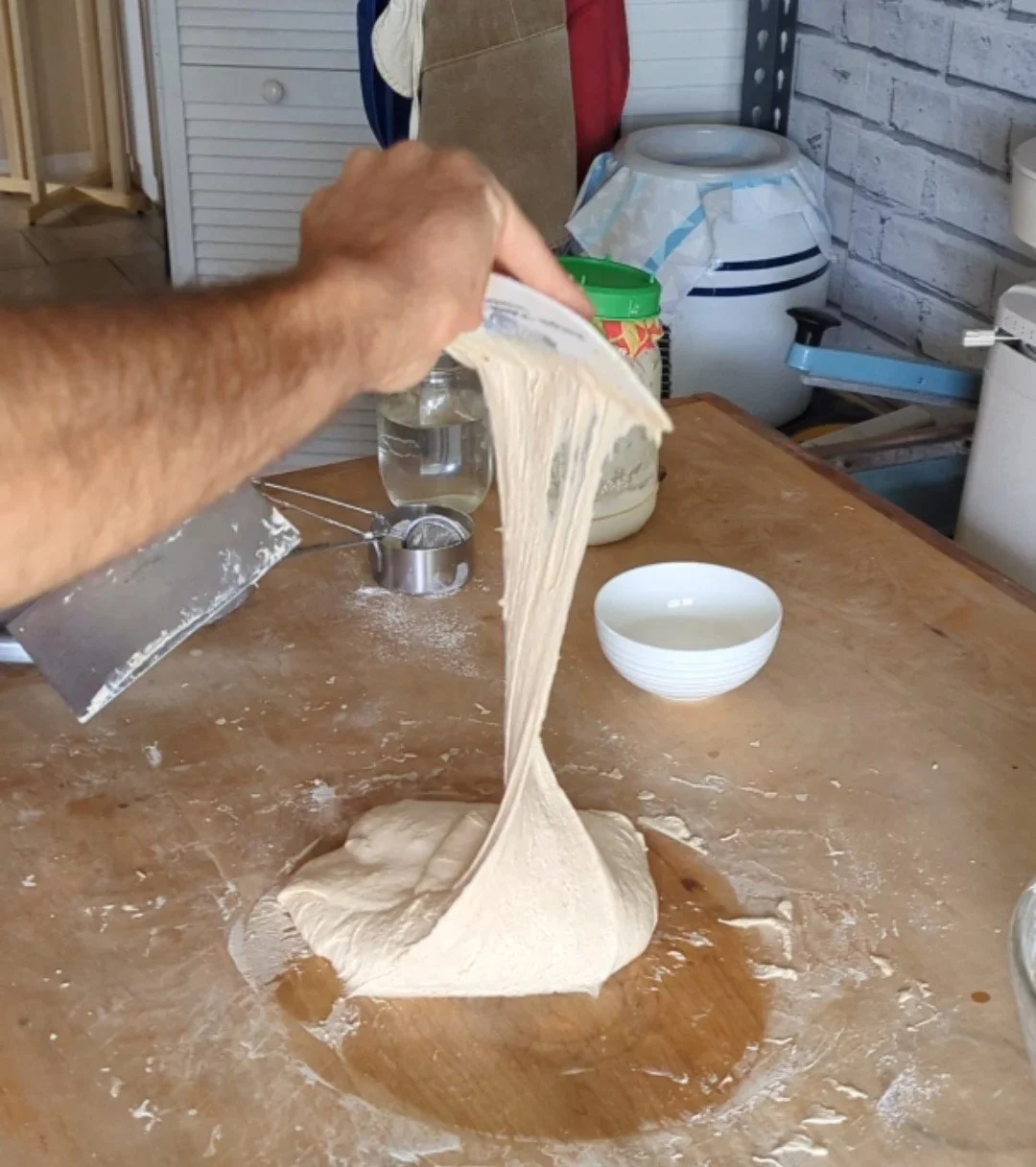
The following morning, as Durant prepared to shape his dough, the extent of the problem became immediately apparent. Instead of the resilient, somewhat elastic mass he anticipated, he was met with a "soupy mess." An attempt to incorporate additional flour onto the bench proved futile, as the dough simply refused to coalesce into a shapeable form. This critical turning point forced a decision: attempt to "wrangle this soupy mess into a proofing basket and then into an oven, hoping it would rise," or pivot to an alternative.
Durant, a seasoned fermenter with 16 years of experience and a deep understanding of culinary improvisation, chose the latter. His pragmatic approach highlights a crucial aspect of successful baking: knowing when to adapt. Forcing a compromised dough into a loaf often leads to further disappointment, yielding a dense, flat, and unappealing product. Recognizing the dough’s inherent qualities, even in its "failed" state, allowed him to envision a new purpose.
From Loaf to Pancake: A Culinary Pivot
The decision to transform the failed sourdough into pancakes was a stroke of culinary brilliance. Sourdough discard, the portion of active starter typically removed before feeding, is a popular ingredient for various recipes, including pancakes, waffles, and crackers, due to its leavening power and distinct tangy flavor. In this instance, Durant’s entire "failed" loaf essentially became an oversized discard batch.
The original bread recipe was a "triple batch," meaning he had a significant quantity of dough—enough to produce approximately two dozen pancakes after adjusting the other ingredients. Durant noted that he omitted baking soda from his pancake recipe, initially believing the dough still possessed "a little lift" from its initial fermentation. However, in hindsight, he admitted, "I should have added it anyway," acknowledging that the breakdown of the gluten structure meant the dough had lost much of its gas-holding capacity, and an additional leavening agent would have enhanced the pancakes’ fluffiness.
Despite this omission, the pancakes were described as "unabashedly sour, and perhaps a bit flat, but otherwise delicious!" The intense sourness is a direct consequence of the prolonged and warm fermentation, which encourages lactic acid bacteria to produce more acetic and lactic acids, intensifying the characteristic sourdough tang. He prepared three variations of the pancakes, although specific details of these variations were not provided in the initial account. The meal was served with complementary accompaniments: "strawberry sauerkraut" (a testament to his fermentation expertise), rich grass-fed butter, and sweet maple syrup, creating a diverse flavor profile that balanced the pancakes’ inherent tartness.
Learning from Baking Setbacks: Expert Advice
Durant’s experience offers valuable lessons for home bakers. Firstly, it underscores the importance of environmental control in sourdough baking. Investing in a reliable thermometer to monitor ambient temperature, or utilizing a proofing box or an oven with the light on (ensuring it doesn’t get too hot), can help maintain optimal conditions. Secondly, it highlights the need for vigilance regarding proofing times. While recipes provide guidelines, doughs can behave differently based on starter activity, flour type, hydration, and ambient conditions. Learning to recognize visual and tactile cues—such as the "poke test" (where a gentle poke with a floured finger should leave a slight indentation that slowly springs back)—is crucial for determining when dough is perfectly proofed.
For those encountering a similar "soupy mess," Durant’s pivot provides a practical solution. Instead of discarding the dough, which contributes to food waste, repurposing it into other fermented goods is an excellent strategy. Sourdough crackers, pizza dough (especially for thin-crust varieties), or even savory fritters are viable alternatives for overly wet or collapsed doughs. The fermented nature of the dough ensures that its flavor profile remains appealing, even if its structure is compromised for bread-making.
The Growing Movement Against Food Waste
Durant’s resourceful action aligns perfectly with a growing global movement to reduce food waste. According to the Food and Agriculture Organization of the United Nations (FAO), roughly one-third of the food produced in the world for human consumption every year—approximately 1.3 billion tons—gets lost or wasted. In developed countries, a significant portion of food waste occurs at the consumer level, often due to aesthetic imperfections, expiration dates, or simply not knowing how to use ingredients that aren’t "perfect."
By transforming a failed sourdough loaf into pancakes, Durant not only salvaged ingredients but also championed a mindset of culinary adaptability. This approach encourages home cooks to view kitchen "failures" not as waste, but as opportunities for creative reinvention. It reinforces the idea that ingredients, even when they don’t perform as expected in one context, often have utility in another. This principle is fundamental to sustainable living and permaculture gardening, practices Austin Durant actively promotes through his work and personal interests.
Cultivating Culinary Resilience: The Fermenters Club Ethos
Austin Durant, as the author and founder of Fermenters Club, has dedicated over a decade and a half to demystifying fermentation and empowering individuals to explore its benefits. His recent book, "Fearless Fermenting," embodies this philosophy, encouraging experimentation and learning from every culinary endeavor. The incident with the sourdough loaf is a perfect illustration of the Fermenters Club ethos: embrace the process, understand the science, and adapt when necessary.
Durant’s willingness to share his baking mishap openly, complete with an image of the "messy dough" and a video documenting the transformation, serves as an authentic educational tool. It normalizes the challenges of home baking and fermentation, reassuring enthusiasts that even experienced practitioners encounter setbacks. More importantly, it provides a tangible, delicious solution, turning a potential moment of frustration into a triumph of culinary creativity and sustainability.
Beyond his contributions to the fermentation community, Durant’s broader interests in permaculture gardening, cooking, yoga, writing, and studying cosmology and esoteric traditions highlight a holistic approach to life. This integrated perspective undoubtedly informs his practical, adaptable, and waste-conscious culinary philosophy, making his "failed" sourdough incident a compelling example of applied resilience.
Broader Impact and Implications
The implications of Durant’s experience extend beyond the immediate kitchen. In an era where food costs are rising and environmental consciousness is paramount, promoting methods of food waste reduction is increasingly vital. Durant’s quick thinking offers a practical model for how individuals can contribute to a more sustainable food system from their own homes. It encourages a shift from a "throwaway" culture to one that values resourcefulness and creative problem-solving.
Furthermore, this episode subtly reinforces the joy of cooking as a continuous learning process. Every attempt, successful or not, provides data and experience that refines one’s skills. The sourdough journey, with its unpredictable nature, perfectly encapsulates this sentiment. It teaches patience, observation, and the valuable lesson that sometimes, the most unexpected culinary masterpieces arise from unforeseen challenges. Durant’s delicious sourdough pancakes stand as a testament to the power of adaptation and the enduring spirit of home bakers.