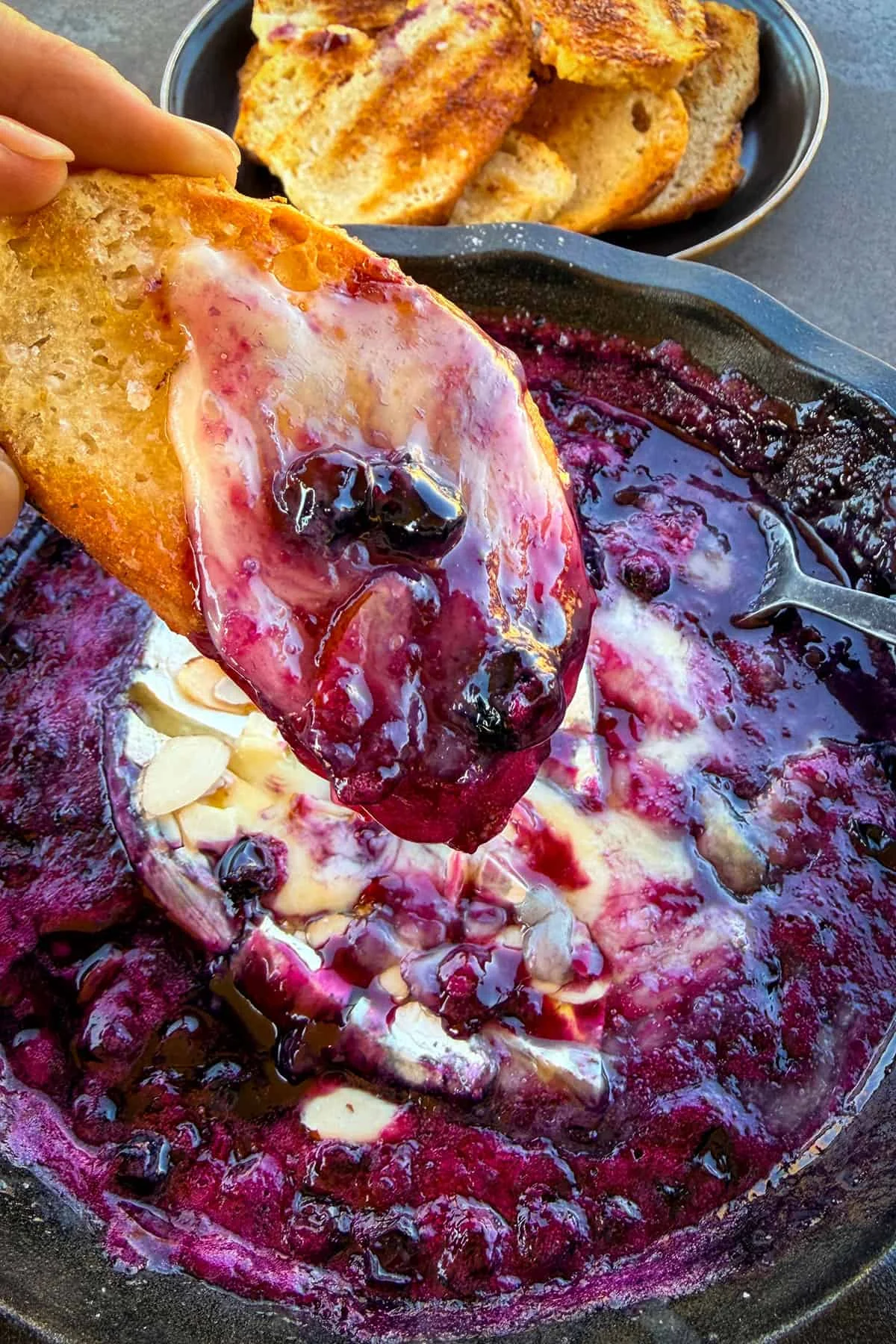
While Brie has long reigned supreme in the realm of warm, melted cheese dips, a culinary challenger has emerged, poised to steal the spotlight: Camembert. This creamy, earthy cheese offers a nuanced flavor profile that, when paired with sweet accompaniments, proves to be a more robust and satisfying choice than its more commonly celebrated counterpart. The subtle, earthy notes of Camembert stand up remarkably well to vibrant, sweet toppings like tangy lemon curd, burst-in-your-mouth fresh blueberries, and a delicate drizzle of honey, preventing the cheese from being overshadowed and ensuring a balanced flavor experience.
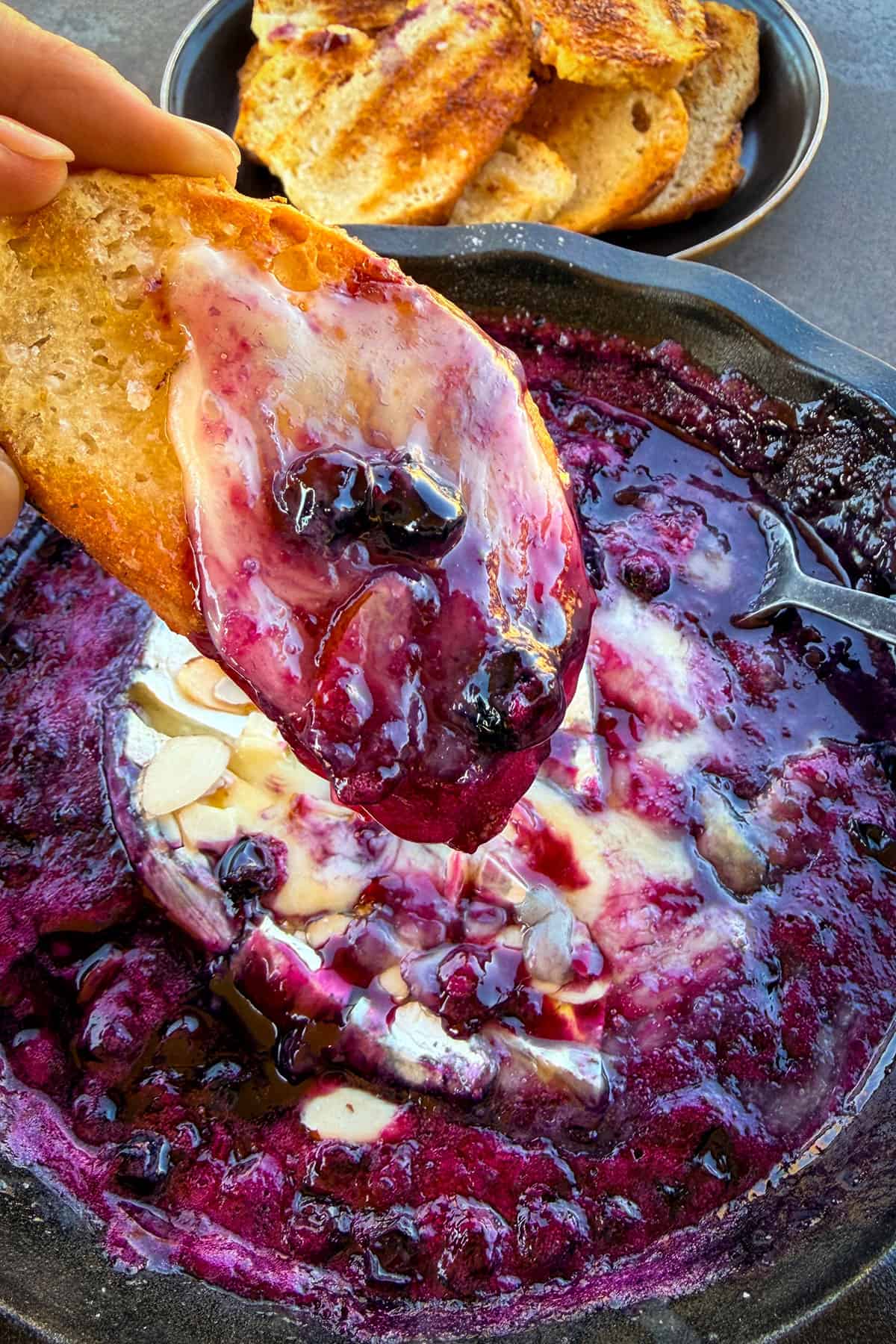
This revelation comes from the evolving landscape of live-fire cooking and appetizer innovation, where chefs and home cooks alike are experimenting with traditional ingredients in novel ways. The technique, which involves scoring a whole wheel of Camembert and gently melting it over an open flame, transforms the cheese into a luscious, dippable delight. As the scored wheel gradually yields to the heat, it opens up within a cast-iron skillet, mingling seamlessly with the warm, sweet elements. The result is a luxurious, interactive appetizer that is best served immediately, inviting guests to scoop up the molten cheese with crusty bread or specially prepared accompaniments like the recommended crispy buttercream bread.
The Genesis of a Gourmet Grilled Cheese
The concept of transforming a whole wheel of cheese into a communal dip is not entirely new, but the deliberate choice of Camembert for sweet pairings marks a significant departure. Historically, many grilled cheese dips have relied on the milder, creamier texture of Brie, which, while delicious, can sometimes be overpowered by intensely flavored toppings. Camembert, with its more pronounced earthy and mushroom-like undertones, provides a richer foundation that can complement, rather than be lost beneath, sweet and tart elements.

This particular iteration of the Camembert skillet dip is part of a broader series exploring the versatility of cheese when subjected to live-fire cooking. The method emphasizes the importance of scoring the cheese deeply, allowing the internal richness to ooze out as it heats. This technique ensures that the cheese doesn’t simply melt into a homogenous mass but rather retains some structural integrity while becoming luxuriously fluid. The thoughtful combination of lemon curd, fresh blueberries, a touch of honey, and slivered almonds creates a symphony of flavors and textures – the bright citrus cutting through the richness of the cheese, the sweet burst of blueberries adding pops of fruitiness, and the honey and almonds providing a final layer of sweetness and crunch.
Why Camembert Takes the Crown for Sweet Pairings
The distinctive character of Camembert is key to its success in this sweet application. Unlike Brie, which can sometimes be described as buttery and mild, Camembert possesses a more complex flavor profile. This complexity stems from its aging process and the specific strains of mold used in its cultivation, which contribute to its signature earthy, sometimes almost nutty, aroma and taste. When heated, these earthy notes become more pronounced, creating a savory counterpoint to the sweetness of the accompanying ingredients.
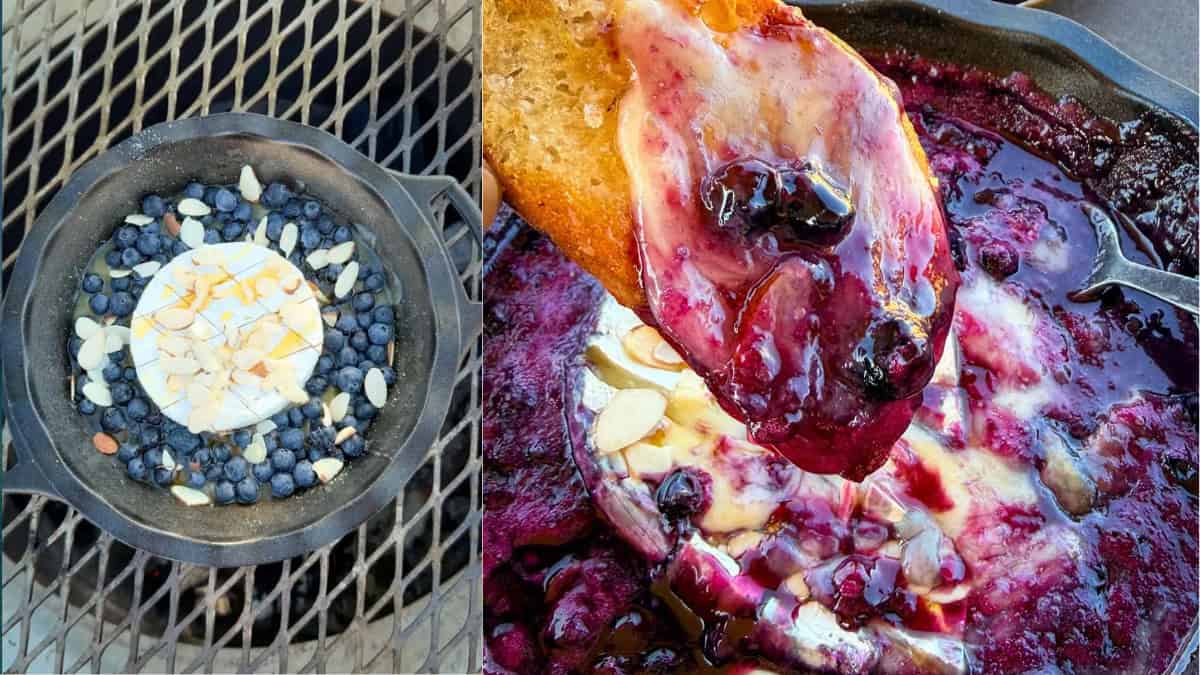
The scoring technique is crucial. By cutting deep diamond patterns into the rind, the cheese is encouraged to ooze outwards as it melts. This controlled release of the creamy interior allows it to integrate with the toppings, creating a unified yet distinct flavor experience. The lemon curd, with its tartness, provides a necessary balance, preventing the dip from becoming overly sweet. The fresh blueberries offer bursts of juicy sweetness and a pleasing visual appeal. The honey adds a layer of concentrated sweetness that harmonizes with the cheese, while almonds contribute a welcome textural contrast and a subtle nutty depth.
Preparing the Perfect Grilled Camembert Skillet Dip
The preparation of this innovative appetizer is designed to be straightforward, even when employing live-fire cooking. The process typically begins with preheating charcoal to a medium-hot state, ensuring that the coals have developed a layer of ash, indicating optimal heat distribution. A cast-iron skillet, favored for its even heat retention and durability over open flames, is then lightly oiled. A whole wheel of Camembert is placed in the center of the skillet and scored deeply in a diamond pattern. This scoring is not merely decorative; it is functional, enabling the cheese to melt and spread outwards as intended.
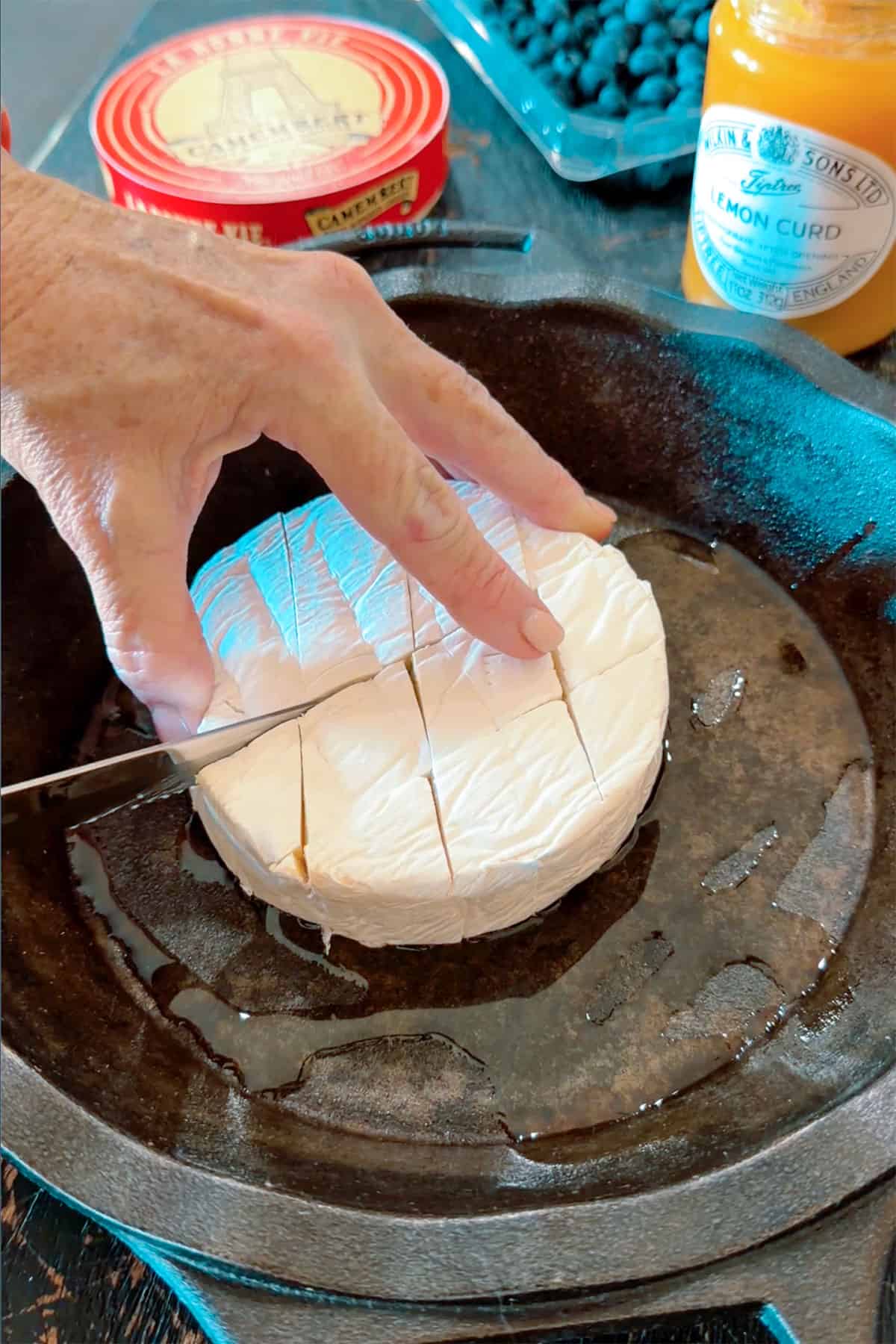
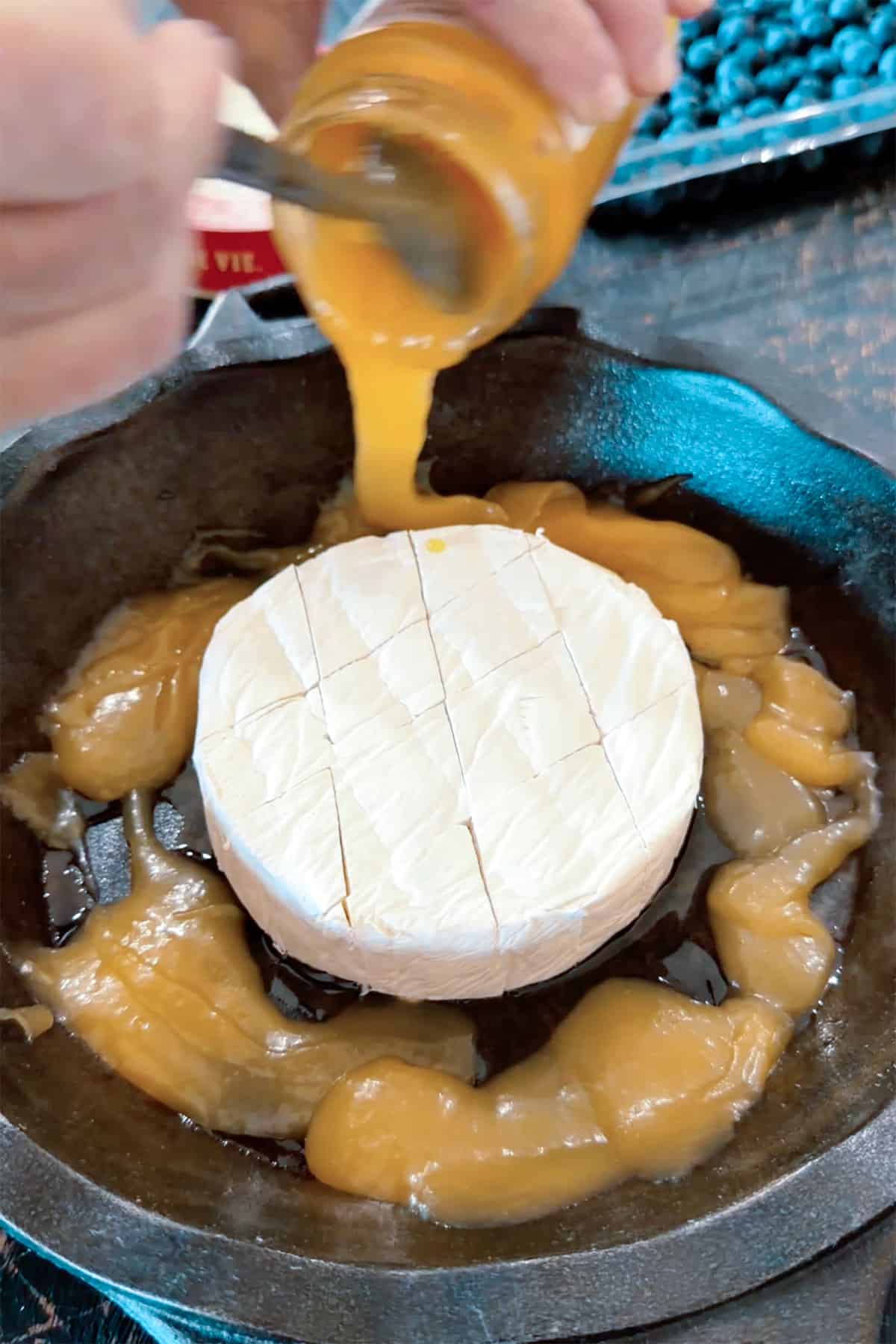
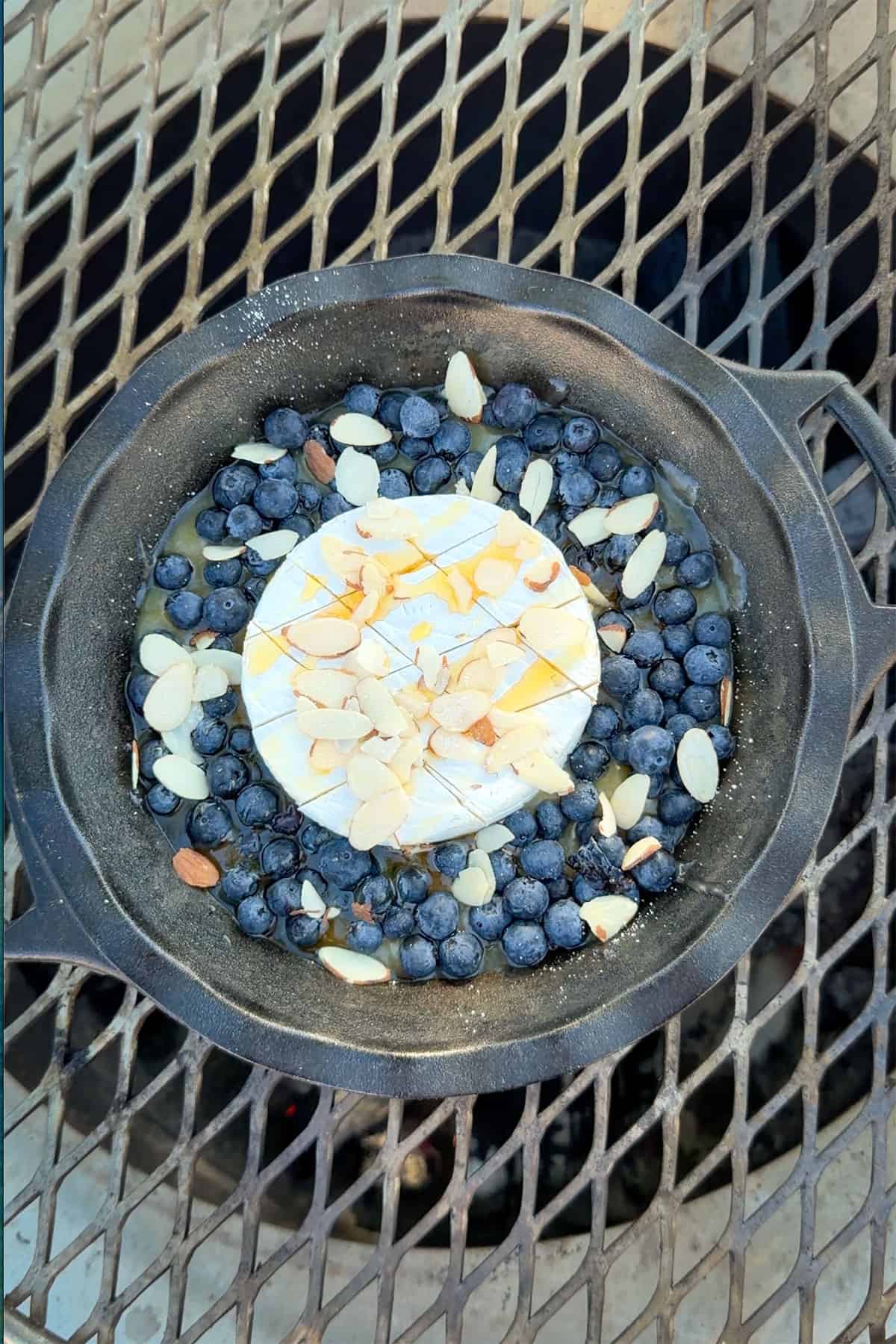
Following the scoring, the sweet elements are artfully arranged around the cheese. Lemon curd is spooned into the spaces between the scoring marks, followed by a generous scattering of fresh blueberries. A drizzle of honey over the entire composition adds sweetness and helps to bind the flavors. Finally, a handful of sliced almonds is sprinkled on top, providing a delightful crunch.
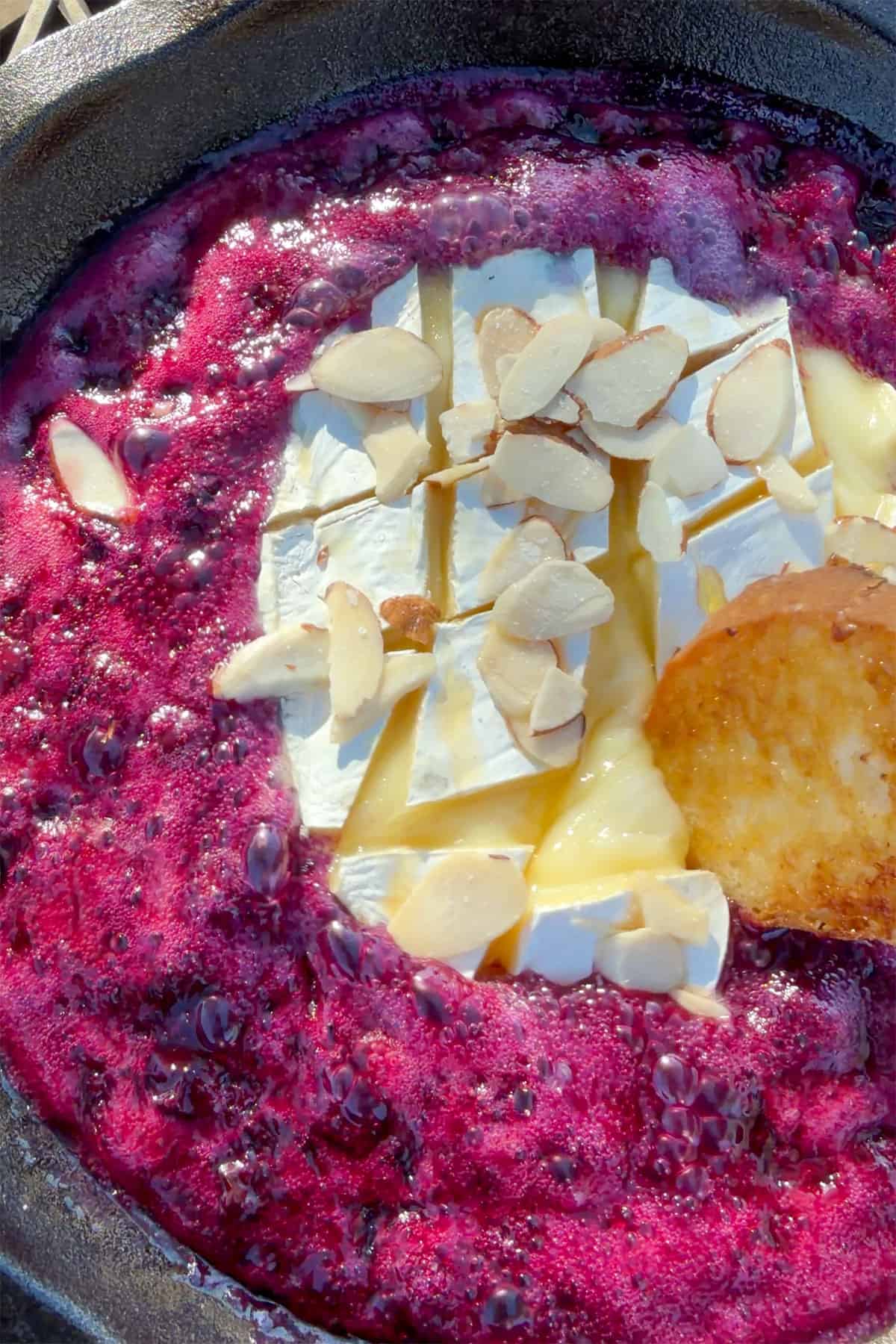
The skillet is then placed directly onto the grill grate, uncovered, over the medium-hot coals. The cooking process typically takes between 15 to 20 minutes, during which time the cheese will visibly soften, the scored sections will begin to pull apart, and the center will become glossy and molten. The key indicator of readiness is the cheese’s texture and appearance – it should be fully melted and invitingly gooey.
Serving Suggestions and Enjoyment
The presentation of this Camembert skillet dip is as important as its preparation. The skillet is brought directly to the table, still warm from the grill, fostering a communal and interactive dining experience. The ideal accompaniments are those that can stand up to the rich, creamy cheese and sweet toppings. Crusty bread, baguette slices, or a specially prepared item like "buttercream bread" are recommended for their ability to effectively scoop and absorb the delicious mixture.
The adage "best enjoyed fresh" is particularly relevant here. As the dip cools, the cheese will begin to firm up, losing its lusciously molten quality. Therefore, it is highly recommended to savor this appetizer immediately after it emerges from the grill.
Nutritional Considerations and Substitutions
For those mindful of nutritional content, a single serving of this Lemon Blueberry Camembert Skillet Dip is estimated to contain approximately 369 calories, 31g of carbohydrates, 14g of protein, and 22g of fat, with 11g of saturated fat. It also provides a moderate amount of sodium (563mg) and sugar (27g), with trace amounts of fiber and vitamins. These figures are approximations and can vary based on specific ingredient choices and portion sizes.
For individuals seeking variations or working with available ingredients, the recipe offers flexibility. Brie can indeed be substituted for Camembert, resulting in a milder flavor profile and a creamier texture. Frozen blueberries can also be used, though fresh berries often offer a superior burst of flavor and texture. The method for oven preparation is also provided: baking at 375°F (190°C) for approximately 15-18 minutes until the cheese is visibly melted and the rind begins to crack.
Addressing Common Culinary Queries
A series of frequently asked questions addresses common concerns and provides further guidance for aspiring cooks. The question of using Brie instead of Camembert is answered affirmatively, with the caveat that the flavor will be gentler. The oven preparation method is reiterated, offering a convenient alternative for those without access to a grill.
A crucial point of inquiry revolves around the cheese’s oozing process. If the cheese is not oozing as expected, it typically indicates that the scores were not deep enough, or the wheel requires additional time over the heat. The scoring must penetrate the entire rind to facilitate the desired melt. For those planning ahead, the dip can be prepped in advance by layering all ingredients in the skillet and refrigerating it. It can then be taken directly from the refrigerator to the grill once the coals are ready.
The Broader Impact on Appetizer Trends
The rise of Camembert in sweet grilled cheese applications signifies a broader trend towards more adventurous and nuanced appetizer offerings. As consumers become more sophisticated in their palates and seek out unique culinary experiences, cheeses like Camembert, with their distinct flavor profiles, are gaining traction. This trend is further amplified by the growing popularity of live-fire cooking, which imparts a smoky depth and an element of theatricality to even the simplest dishes.
The success of this Camembert dip highlights the potential for traditional ingredients to be reimagined and elevated. It challenges the notion that certain cheeses are exclusively suited for savory applications and encourages a more playful and experimental approach to cooking. As this trend continues to develop, it is likely that more chefs and home cooks will explore the sweet and savory possibilities of various cheeses, pushing the boundaries of what constitutes a classic appetizer. The integration of techniques like grilling and the thoughtful pairing of diverse flavor profiles are contributing to a dynamic and exciting evolution in the culinary world.