
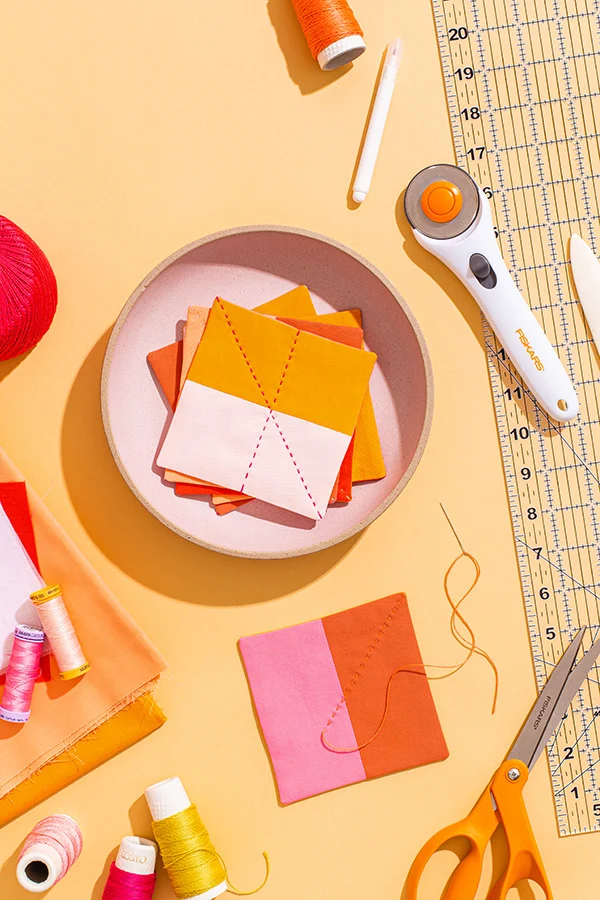
The intersection of seasonal home aesthetics and the burgeoning "slow living" movement has catalyzed a renewed interest in traditional textile arts, specifically modern quilting and patchwork. In a strategic collaboration designed to bridge the gap between professional-grade tool utility and domestic creative expression, Fiskars has unveiled a comprehensive guide to crafting modern patchwork coasters. This initiative reflects a broader shift in consumer behavior, where individuals increasingly seek to personalize their living spaces through tactile, handmade objects that offer both utility and sentimental value. As the autumn season approaches, characterized by shorter daylight hours and a shift toward indoor activities, the DIY (do-it-yourself) sector observes a cyclical uptick in interest for projects that combine machine precision with the meditative qualities of hand-finishing.
The Resurgence of Domestic Textile Arts and Market Context
The global handicrafts market has experienced a significant valuation increase over the last five years, with analysts attributing this growth to a digital-weary population seeking offline, creative outlets. According to market research, the global "do-it-yourself" home improvement and craft market is projected to continue its upward trajectory, driven by the accessibility of online tutorials and high-quality specialized tools. The partnership between Fiskars—a company with a heritage dating back to 1649—and modern textile creators serves as a case study in how legacy brands are adapting to the contemporary "maker" economy.
Modern quilting, the specific discipline utilized in this coaster project, differs from traditional quilting through its use of bold colors, asymmetry, and "negative space." By simplifying these complex concepts into a beginner-friendly project like a coaster set, the initiative lowers the barrier to entry for novice sewists while promoting the use of specialized equipment such as rotary cutters and acrylic rulers, which are essential for achieving the geometric precision required in modern designs.

Technical Specifications and Material Requirements
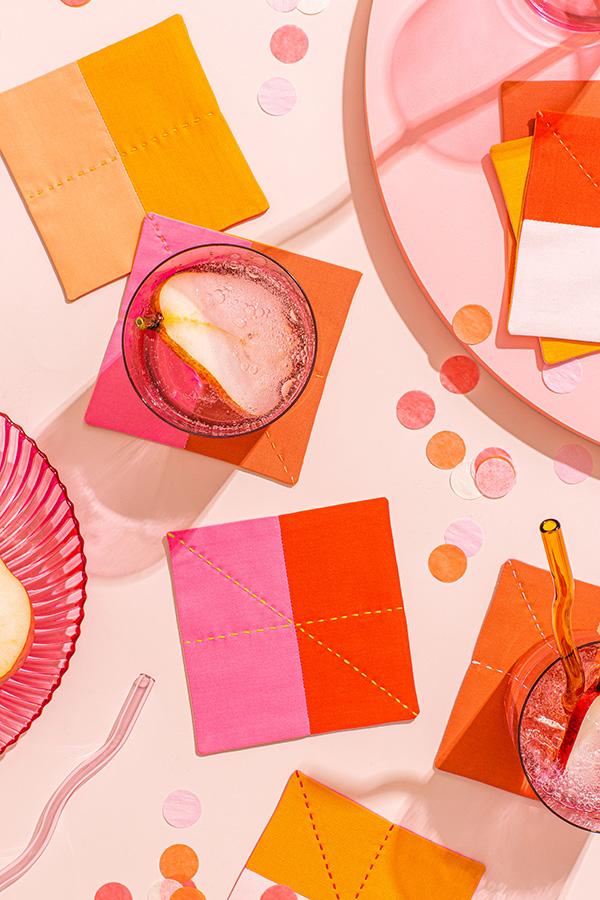
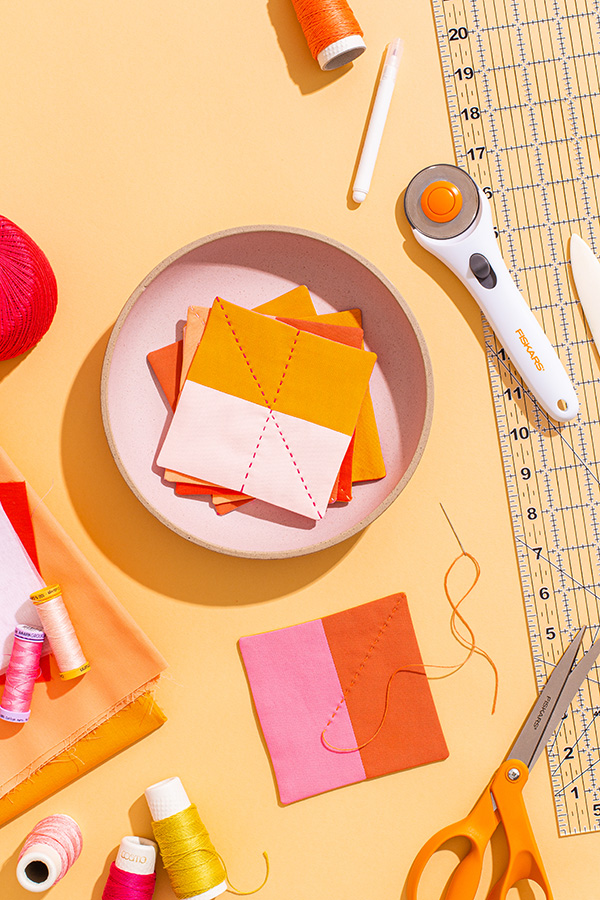
The successful execution of the modern patchwork coaster requires a specific assembly of materials that balance structural integrity with aesthetic appeal. The project utilizes quilting cotton, a medium-weight, 100% cotton fabric known for its stability and ease of handling under a sewing machine needle. The color palette selected for this initiative—ranging from vibrant orange and terracotta to muted apricot and light pink—mirrors the seasonal transition of the natural landscape.
The inclusion of lightweight interfacing, specifically cotton organdy, is a critical technical detail. Interfacing provides the necessary "body" to the coaster, ensuring it protects furniture surfaces from heat and moisture without becoming excessively bulky. Beyond the textiles, the project relies on a suite of Fiskars precision tools:
- 45mm Stick Rotary Cutter: This tool is designed for ergonomic comfort and high-precision cutting through multiple layers of fabric.
- 18” x 24” Cutting Mat: A self-healing surface that protects the workspace while providing a grid for accurate measurements.
- 6” x 24” Acrylic Ruler: Essential for guiding the rotary cutter to produce perfectly straight edges and 90-degree angles.
- Sashiko or Embroidery Thread: A thicker, decorative thread used for the final hand-quilted details, adding a layer of texture and artisanal quality.
A Chronological Methodology for Patchwork Construction
The construction process is divided into distinct phases, moving from geometric preparation to machine assembly and culminating in hand-finished refinement.
Phase I: Geometric Preparation and Squaring
The foundational step involves the "squaring up" of fabric. Using the acrylic ruler and 45mm rotary cutter, the maker must cut 5-inch squares from the selected quilting cotton and the interfacing. For a single coaster, the ratio is three cotton squares to one interfacing square. This stage emphasizes the importance of precision; even a marginal deviation in the initial cut can lead to alignment issues during the final assembly.
Phase II: Machine Stitching and Seam Management
The patchwork effect is achieved by stacking two contrasting cotton squares and executing a straight machine stitch directly down the center. This creates a two-toned "block." A critical aspect of professional-grade sewing is seam management; after the initial stitch, the seam must be pressed open with an iron. This reduces bulk and ensures the coaster lies flat, a functional requirement for any vessel-supporting surface.
Phase III: Structural Layering
Once the primary patchwork piece is prepared, it is integrated into a "sandwich" of materials. The maker stacks the remaining cotton square (which serves as the backing), the newly quilted piece, and the interfacing. This layered approach ensures that the raw edges of the patchwork are encased within the structure once the piece is inverted.
Phase IV: The Perimeter Stitch and Inversion
Using a 1/8-inch seam allowance, the maker stitches around the perimeter of the square. A 1.5-inch gap is intentionally left unstitched on one side to facilitate the "turning" of the fabric. Before inverting, the corners must be trimmed—a technique used to remove excess fabric so that the corners appear sharp and professional once the coaster is right-side out. The use of a point turner or a bamboo skewer is recommended to fully extend the fabric into the corners.
Phase V: Artisanal Finishing and Sashiko Integration
The final phase introduces the element of "slow stitching." Using a water-soluble pen, a guide line is marked down the center of the coaster. The maker then uses a running stitch with Sashiko thread to add a hand-quilted detail. This not only secures the internal layers to prevent shifting during use but also serves as a visual hallmark of handcrafted quality. The 1.5-inch opening is then closed using invisible hand stitches or specialized fabric adhesive.
Analytical Implications: The Value of "Beginner-Friendly" Projects
The strategic design of this project as "beginner-friendly" is significant within the context of brand loyalty and market expansion. By providing a project that can be completed in a single afternoon, Fiskars and its partners address the "instant gratification" desire of modern consumers while simultaneously teaching foundational skills that encourage further investment in the hobby.
From a sustainability perspective, patchwork projects like these promote the "zero-waste" philosophy prevalent in the textile industry. Coasters are an ideal medium for utilizing "scraps"—small remnants of fabric left over from larger garment or quilting projects—thereby reducing the environmental footprint of the hobbyist.
Official Responses and Industry Impact
While specific corporate statements regarding this individual project remain internal, the broader industry response to such collaborations has been overwhelmingly positive. Industry analysts note that "content-led marketing"—where a brand provides a free service or education in exchange for product visibility—is currently the most effective way to reach the millennial and Gen Z demographic.
The DIY community’s reaction, observed through social media engagement and craft forum discussions, suggests a high demand for projects that bridge the gap between "utilitarian" and "decorative." The modern patchwork coaster is viewed not merely as a household item, but as an entry point into the world of fiber arts.

Broader Socio-Economic and Psychological Impacts
Beyond the immediate commercial implications, the act of crafting has been increasingly linked to positive mental health outcomes. The "flow state"—a psychological concept describing total immersion in a task—is frequently achieved during repetitive, tactile activities like hand-quilting. In an era dominated by digital screens, the manual dexterity required for patchwork construction offers a cognitive reprieve.
Furthermore, the "seasonalization" of home decor represents a significant revenue stream for the retail sector. As consumers look to "refresh" their homes for autumn, the ability to create high-end, modern accessories at a fraction of the cost of boutique retail items provides a sense of economic agency. The modern patchwork coaster project, therefore, stands as more than a simple craft tutorial; it is a reflection of current economic trends, a tool for psychological well-being, and a testament to the enduring relevance of traditional craftsmanship in a digitized world.
As the DIY movement continues to evolve, the emphasis will likely remain on the fusion of high-quality tools and accessible artistry. This collaboration serves as a blueprint for future initiatives that seek to empower the individual creator while maintaining the high standards of professional textile production. Through the simple act of cutting, sewing, and quilting, the modern maker is not just creating a coaster; they are participating in a global tradition of making that spans centuries, now refined for the 21st-century home.


