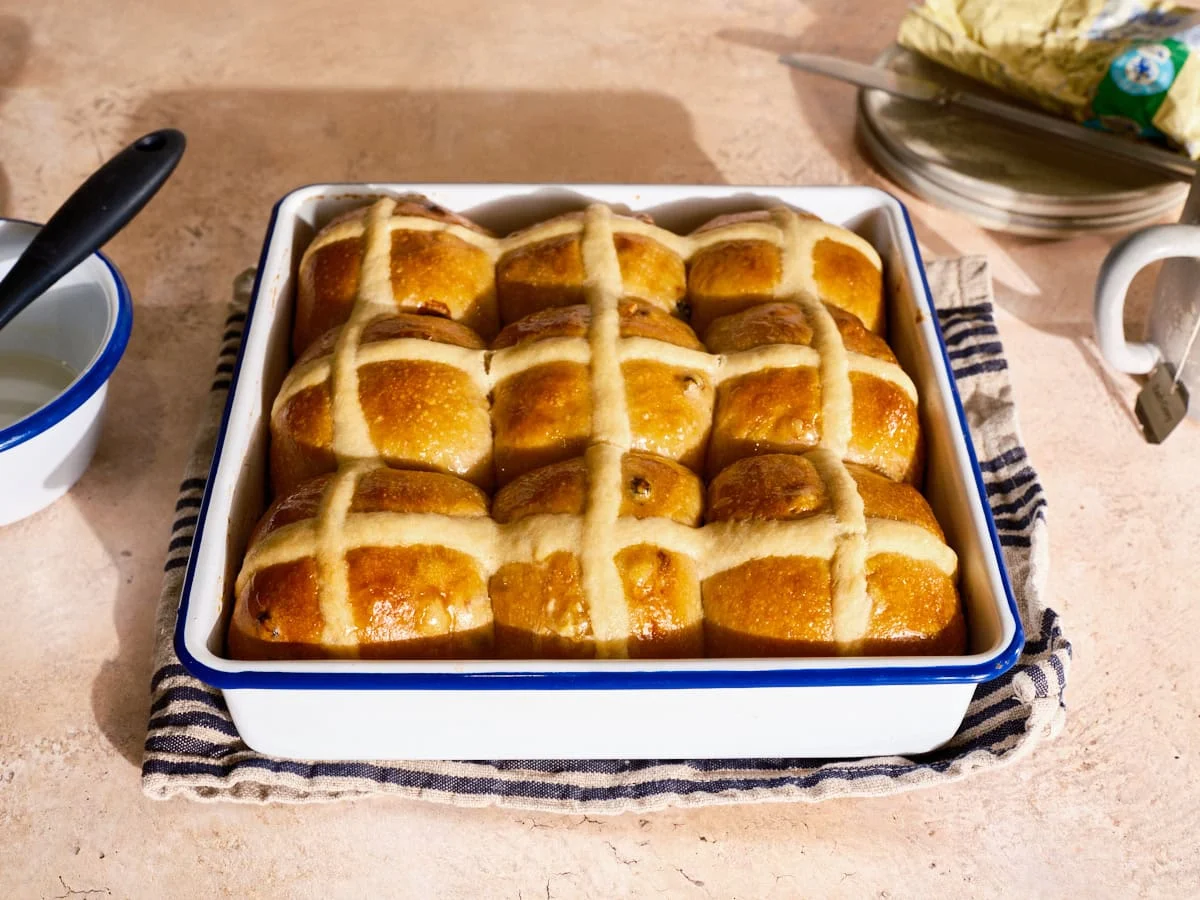
As the warmer weather emerges and the Easter season approaches, a particular confection, the hot cross bun, traditionally associated with Good Friday, is experiencing a contemporary renaissance. This renewed interest is notably fueled by the integration of time-honored sourdough techniques with modern baking advancements, yielding a product that serves as a perfect culinary transition from the hearty bakes of winter to the lighter fare of spring. A standout example of this evolving trend is a refined sourdough hot cross bun recipe, an adaptation from the acclaimed cookbook "The Perfect Loaf," which introduces a crucial innovation: the tangzhong method.
Historical Roots and Enduring Symbolism of the Hot Cross Bun
The hot cross bun carries a rich history, deeply interwoven with Christian traditions and folklore. Originating in Britain, these spiced sweet buns, marked with a cross on top, have been consumed on Good Friday for centuries, with early mentions dating back to the 12th century. The cross itself is widely believed to symbolize the crucifixion, while the spices within are thought to represent the spices used to embalm Christ. Various superstitions also surrounded these buns, with some believing they protected against misfortune, prevented shipwrecks, or would not go stale for a year if baked on Good Friday.
Beyond religious observance, the hot cross bun has evolved into a quintessential spring treat, its warm spices like cinnamon, allspice, and nutmeg, coupled with citrus zest and plump dried fruits (raisins, currants, candied peel), evoking comfort and celebration. The enduring appeal of these buns lies not just in their taste but in their profound cultural resonance, marking a moment of reflection and anticipation for the renewal of spring. The recent adaptation of such a traditional recipe with sourdough underscores a broader movement among bakers to reconnect with historical methods while enhancing quality through contemporary understanding.
The Sourdough Renaissance: A Return to Artisanal Baking
The past decade has witnessed a significant global resurgence in sourdough baking, transitioning from a niche pursuit to a widespread passion among home bakers and professional artisans alike. This movement is driven by several factors, including a desire for more natural ingredients, a fascination with the fermentation process, and the unparalleled flavor complexity that sourdough starters impart. Unlike commercial yeast, which offers rapid fermentation and predictable results, sourdough relies on wild yeasts and bacteria, resulting in a deeper, more nuanced flavor profile with a characteristic subtle tang.
However, sourdough baking demands patience and a nuanced understanding of fermentation dynamics. The microbial activity within a sourdough starter (levain) interacts differently with enriched doughs – those containing milk, eggs, and butter. These rich ingredients can slow down fermentation, requiring precise temperature control and extended proofing times. The development of a "sweet levain," as incorporated in this hot cross bun recipe, is a strategic adaptation designed to optimize yeast activity in such an environment while simultaneously mitigating excessive sourness, ensuring the delicate balance of flavors characteristic of a sweet bun.
The Tangzhong Method: A Scientific Leap in Texture and Freshness
A pivotal innovation integrated into this updated hot cross bun recipe is the tangzhong method, a technique borrowed from Asian baking, particularly popular in milk bread recipes. Tangzhong involves cooking a small portion of flour and liquid (in this case, milk) into a thick, gelatinous paste before incorporating it into the main dough. The scientific principle behind tangzhong is the gelatinization of starch. When flour is heated with liquid, its starch molecules absorb water and swell, forming a stable network.
This pre-gelatinized starch system allows the dough to retain significantly more moisture throughout the baking process and beyond. The benefits are manifold: the resulting buns are exceptionally softer, possess a more tender crumb, and maintain their freshness for an extended period compared to buns made without tangzhong. This method addresses a common challenge in enriched sourdough baking, providing a pillowy, pull-apart texture that elevates the sensory experience of the hot cross bun. Its inclusion represents a sophisticated application of food science to traditional baking, yielding tangible improvements in product quality.
Recipe Development and Refinement: A Synthesis of Tradition and Modernity
The specific sourdough hot cross bun recipe under discussion is a testament to meticulous recipe development, building upon foundational work from "The Perfect Loaf" cookbook. The adaptation to include tangzhong was a deliberate choice aimed at pushing the boundaries of softness and tenderness. The careful balance of rich ingredients—milk, egg, and butter—alongside the traditional spices and fruits, required precise adjustments to the sourdough starter’s activity and fermentation schedule.
The dough’s inherent richness, while contributing to flavor, inherently slows down the sourdough fermentation process. This necessitates a "sweet levain" (sourdough starter fed with sugar) to ensure robust yeast activity and a manageable bulk fermentation time. The outcome is a deeply flavorful bun where the subtle acidity of the sourdough harmonizes beautifully with the sweetness of the sugar, the warmth of the spices, and the brightness of the citrus zest. This intricate interplay of flavors creates a complex profile that is both comforting and sophisticated, appealing to palates seeking depth beyond simple sweetness.
Ingredient Harmony: A Symphony of Seasonal Flavors
The selection and preparation of ingredients are paramount to the success of these sourdough hot cross buns. High-protein white flour forms the structural basis, providing the necessary gluten development for a chewy yet tender crumb. The enriched components—whole milk, a single beaten egg, and unsalted butter—contribute to the dough’s characteristic richness and golden hue. Superfine sugar ensures even distribution and contributes to the buns’ overall sweetness without overwhelming the other flavors.
The aromatic core of the buns is built upon a blend of ground cinnamon, allspice, and freshly ground nutmeg, offering a warm and inviting spice profile. This is brilliantly uplifted by the zest of a fresh lemon and an orange, which infuse the buns with a vibrant, fragrant citrus note. For the traditional inclusions, Thompson raisins and dried currants provide bursts of sweetness and chewiness. The recipe also thoughtfully suggests candied orange peel for a more intense citrus experience or even chocolate chips for a modern, non-traditional twist, catering to diverse preferences. An optional fruit soaker is recommended for drier fruits, ensuring they become plump and tender within the baked bun.
Optimized Baking Schedule for the Home Baker
Understanding the time commitment involved in sourdough baking, the recipe provides a thoughtfully optimized baking schedule designed for efficiency and flexibility. The process begins the evening before the main bake with the preparation of the sweet levain, which ferments overnight, developing its full leavening power and complex flavor. An optional fruit soaker can also be initiated at this stage.
The following morning, the tangzhong is prepared and cooled, setting the stage for the main dough mix. The use of a stand mixer or spiral mixer is highly recommended for incorporating the enriched ingredients and developing the dough’s strength. The desired dough temperature of 78°F (25°C) is crucial for consistent fermentation, a detail often highlighted by experienced sourdough bakers as essential for success.
Following mixing, a bulk fermentation period of approximately four hours at a warm room temperature (74–76°F or 23–24°C) is prescribed, interspersed with two sets of gentle stretch and folds to build strength and evenly distribute inclusions. This phase is critical for flavor development and dough aeration. After bulk fermentation, the dough is divided and shaped into individual buns, then arranged in a buttered 9-inch square baking pan for a cohesive, pull-apart result.
A key feature for home bakers is the overnight proofing option. The shaped buns can be refrigerated overnight after a few hours of initial proofing. This cold fermentation not only deepens the flavor but also provides immense convenience, allowing bakers to bake fresh hot cross buns on Easter morning with minimal effort. The final proof, whether same-day or after refrigeration, is completed when the buns are notably soft, puffed, and have risen to just below the rim of the pan.
The Finishing Touches: Crosses, Glaze, and Presentation
The iconic cross on top of each bun is created from a simple paste of white flour, water, orange juice (or more water), vegetable oil, and a pinch of salt. This mixture is piped onto the buns after an egg wash has been applied, providing a distinct visual and textural element. The baking process begins at a higher temperature (400°F/200°C) for initial oven spring, then reduced to 350°F (175°C) to ensure even baking and a golden-brown crust, typically taking 25 to 30 minutes.
Upon removal from the oven, the hot buns are immediately brushed with a simple syrup glaze (equal parts sugar and water, boiled until clear). This glaze not only adds a glistening sheen but also contributes a final touch of sweetness and keeps the buns moist. The buns are best enjoyed warm, either straight from the pan or after a brief cooling period on a wire rack. They pair exceptionally well with a spread of high-quality salted butter, enhancing their rich flavor profile. While optimal when fresh, they can be stored in an airtight container for a day and gently reheated.
Broader Implications and Culinary Trends
The emergence of such meticulously crafted sourdough hot cross bun recipes signifies a broader trend in contemporary home baking: the pursuit of excellence through the fusion of tradition and innovation. This movement encourages bakers to move beyond mere replication and to actively engage with the science and artistry of baking. The integration of techniques like tangzhong into classic recipes reflects a growing sophistication among home bakers, who are increasingly willing to invest time and effort for superior results.
This trend is also supported by a flourishing online community and dedicated resources, such as "The Perfect Loaf," which provide detailed guidance and foster experimentation. The implications extend beyond individual kitchens, influencing product development in artisanal bakeries and raising consumer expectations for quality and flavor in traditional seasonal goods. As consumers become more discerning and ingredient-conscious, recipes that prioritize natural fermentation, superior texture, and complex flavors are likely to continue gaining prominence.
In conclusion, these sourdough hot cross buns, with their thoughtful incorporation of a sweet levain and the revolutionary tangzhong method, represent more than just a seasonal treat. They embody a modern culinary philosophy that respects historical context while embracing scientific advancements to achieve unparalleled taste and texture. This approach ensures that beloved traditions are not merely preserved but continually enhanced, offering a richer, more satisfying experience for bakers and consumers alike.