
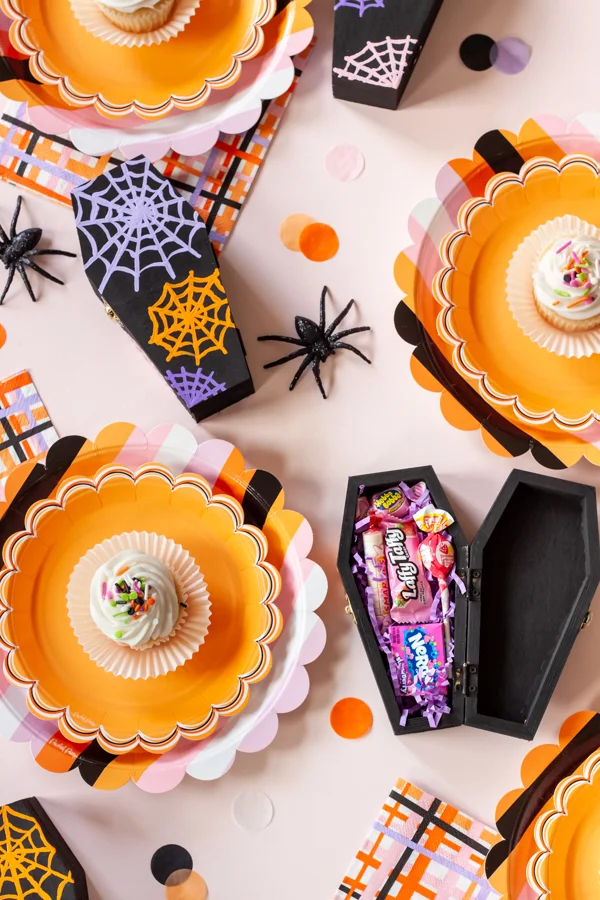
The arrival of the autumn season has historically signaled a significant shift in consumer behavior, moving away from outdoor summer activities toward indoor-centric, creative endeavors that emphasize home aesthetics and familial bonding. As temperatures drop and the "pumpkin spice" cultural phenomenon takes hold, a growing segment of the population is turning toward DIY (do-it-yourself) projects to personalize their holiday celebrations. Among the most prominent trends emerging this season is the integration of personalized party favors and "tablescaping," exemplified by the increasingly popular "Candy Coffin" craft project. This initiative, which utilizes accessible materials from major retailers like Walmart, represents a broader intersection between the retail sector, the maker movement, and the psychological benefits of family-oriented crafting.
The Evolution of Halloween Personalization and the Maker Movement
The modern Halloween celebration has evolved far beyond simple door-to-door candy collection. According to recent consumer data, Halloween spending in the United States has reached record highs, with a significant portion of that budget allocated specifically to home decorations and party supplies. Within this economic landscape, there is a visible shift from mass-produced, "out-of-the-box" decor toward customizable elements that allow hosts to express individual creativity.
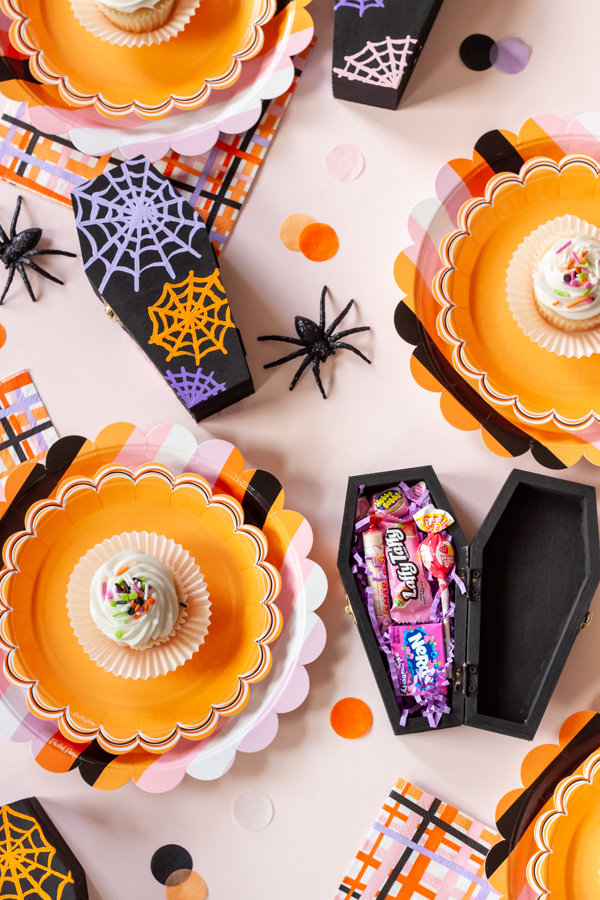
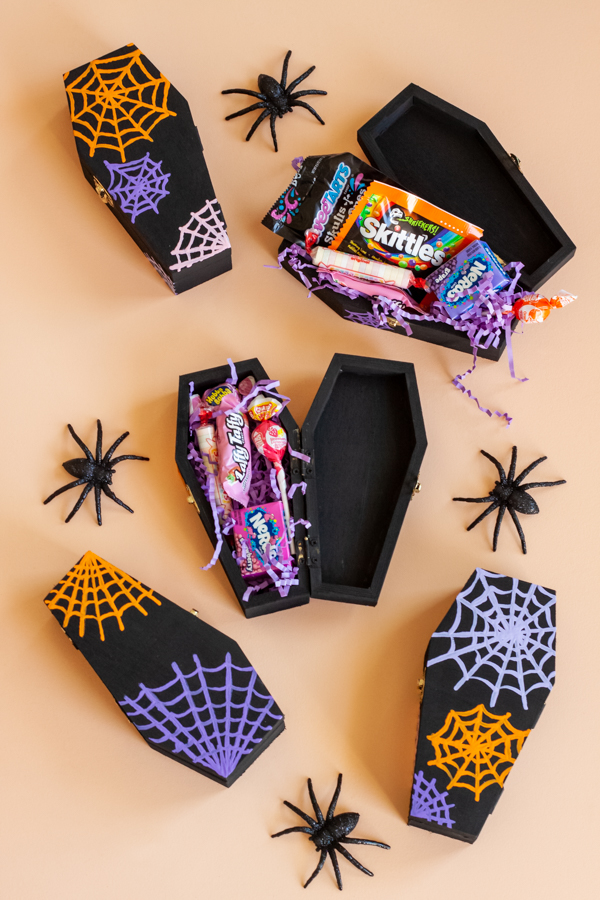
The DIY Candy Coffin project serves as a primary example of this shift. By utilizing 6-inch unfinished wood coffin boxes, consumers are moving away from single-use plastics in favor of materials that offer a tactile, artisanal experience. This trend is part of the larger "Maker Movement," which encourages individuals to create, modify, and personalize everyday objects. In the context of Halloween, this manifests as a desire for "creepy-chic" aesthetics that combine traditional spooky motifs with modern, hand-painted designs.
Technical Specifications and Material Analysis
The success of these seasonal projects relies heavily on the availability of specific, high-quality crafting components. The Candy Coffin project necessitates a curated list of materials that balance ease of use with professional-looking results.
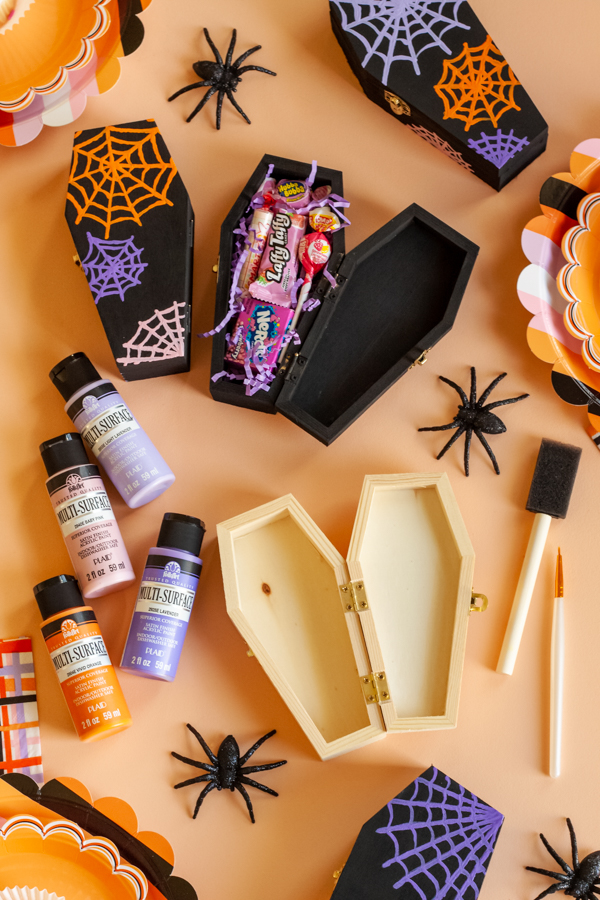
- Structural Base: The core of the project is the 6-inch unfinished wood coffin box. Wood serves as a superior substrate for acrylic paints compared to plastic or cardboard, providing a durable surface that can be kept as a memento.
- Pigment Selection: The use of acrylic craft paint is recommended due to its fast-drying properties and high opacity. The project utilizes a "bright" set for detailing and a standard black for the base coat.
- Application Tools: Foam sponge brushes are utilized for broad coverage to avoid visible brush strokes on the base layer, while fine-tipped "skinny" paintbrushes are required for the intricate "cobweb" linework.
- Customization Elements: Beyond paint, the inclusion of alphabet stickers allows for the conversion of a simple favor box into a functional place card for formal or semi-formal gatherings.
Chronological Methodology for the DIY Candy Coffin
To achieve the desired "creepy cobweb" aesthetic, a systematic approach is required. This methodology ensures that the final product is both durable and visually appealing.
Phase One: The Base Application
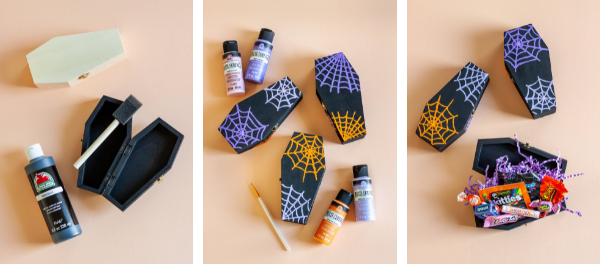
The process begins with the preparation of the unfinished wood. Using a foam sponge brush, the exterior and interior edges of the coffin are coated in a matte or semi-gloss black acrylic paint. This stage is critical as it provides the high-contrast background necessary for the subsequent detailing. Drying time is estimated at 20 to 45 minutes, depending on ambient humidity and the thickness of the application.
Phase Two: Intricate Detailing and Geometric Design
Once the base coat is fully cured, the "spoke and scallop" technique is employed to create the spiderweb effect. A fine-tipped brush is used to draw straight lines (spokes) radiating from a central point on the coffin lid to its outer edges. Following this, small "scallops" or curved lines are painted to connect the spokes. This geometric layering is repeated in concentric circles, moving outward from the center. This phase requires steady hand-eye coordination and is often cited by child development experts as an excellent exercise for fine motor skill refinement in school-aged children.
Phase Three: Personalization and Final Assembly
The final stage involves the transition from a craft object to a functional party favor. Users may apply alphabet stickers to the interior lid to designate seating at a dinner table. The coffin is then filled with a variety of seasonal confections, such as Kinder eggs, candy corn, or lollipops. The inclusion of small plastic spiders or other "creepy" fillers adds a final layer of thematic consistency.
Economic and Consumer Data Insights
The rise of projects like the DIY Candy Coffin is supported by robust data regarding seasonal retail trends. The National Retail Federation (NRF) has consistently reported that nearly 70% of consumers plan to celebrate Halloween annually, with total spending frequently exceeding $10 billion.
A breakdown of this spending reveals that:
- Decorations: Roughly $3.4 billion is spent on decor, with an increasing percentage of consumers purchasing "unfinished" or "raw" materials for DIY purposes.
- Participation Rates: Approximately 52% of celebrants plan to decorate their homes, and 28% plan to host or attend a party.
- The Walmart Factor: Large-scale retailers like Walmart have capitalized on these trends by offering "one-stop-shop" solutions. By bundling craft supplies (paint, brushes) with seasonal items (wood coffins, candy), these retailers reduce the "friction of entry" for consumers who may feel intimidated by more complex DIY projects.
Social and Psychological Implications of Family Crafting
Beyond the economic impact, the shift toward DIY seasonal decor has significant social implications. Psychologists suggest that "seasonal crafting" provides a structured environment for family bonding. In an increasingly digital age, the tactile nature of painting and assembling physical objects offers a "digital detox" for both parents and children.
Industry analysts observe that projects involving "scary" or "spooky" themes allow children to explore themes of fear and the supernatural in a safe, controlled, and creative environment. Furthermore, the act of creating a gift (the candy coffin) for a guest fosters a sense of altruism and hospitality in younger participants.
Retail Strategy and Official Responses
While specific corporate statements regarding the Candy Coffin project are proprietary, retail analysts suggest that sponsorship of such content is a key pillar of modern "content-to-commerce" strategies. By providing "how-to" guides, retailers like Walmart transition from being mere suppliers to being "inspiration partners" for the consumer.
"The goal for major retailers today is to provide the ‘recipe’ as well as the ‘ingredients,’" says one retail trend consultant. "When a consumer sees a finished, adorable coffin filled with candy, they aren’t just buying a wooden box; they are buying the vision of a successful Halloween party. This significantly increases the average basket size as the consumer picks up the paint, the brushes, and the candy all in one trip."
Broader Impact on the Event Planning Industry
The trend of personalized, DIY favors is also rippling through the professional event planning industry. "Tablescaping"—the art of decorating a table in a themed and aesthetically pleasing way—has moved from high-end weddings into the average American home. The use of a hand-painted coffin as a place card represents a democratization of luxury event design.
As social media platforms like Pinterest and TikTok continue to prioritize visual, DIY content, the "Candy Coffin" and similar projects are expected to see a multi-year cycle of popularity. These platforms allow for a rapid exchange of ideas, where one user’s "cobweb" design can be iterated upon by thousands of others, leading to "glam-ghoul," "pastel-ween," and "minimalist-spooky" variations.
Conclusion and Future Outlook
The DIY Candy Coffin project is more than a simple holiday craft; it is a microcosm of current consumer trends that prioritize personalization, family engagement, and accessible creativity. By leveraging the logistical power of major retailers and the creative spirit of the maker movement, consumers are redefining what it means to celebrate the autumn season.
As we look toward future holiday seasons, it is highly probable that the "ready-to-finish" market will continue to expand. The success of this project suggests a robust appetite for holiday activities that combine the sweetness of traditional treats with the lasting satisfaction of handmade art. For the modern household, the transition from pumpkin spice to spooky decor is no longer just a change in weather—it is a season of active, creative participation.


