The global culinary landscape is undeniably enriched by cheese, a versatile dairy product cherished across cultures for its diverse flavors, textures, and aromatic profiles. From the sharp tang of aged cheddar to the creamy melt of mozzarella and the subtle nuttiness of Monterey Jack, cheese serves as a foundational ingredient and a delightful garnish in countless dishes. Its ability to transform a simple meal into a gourmet experience is unparalleled, enhancing everything from traditional pizzas and pastas to modern salads and burgers. Indeed, the mere mention of freshly grated cheese often evokes a sense of gastronomic anticipation, making it a difficult pleasure to resist for many consumers worldwide. This widespread appeal ensures that cheese graters remain a staple in both professional and home kitchens.
However, the journey from a block of cheese to its delectable grated form, while a seemingly simple act, often culminates in a common domestic vexation: the arduous task of cleaning the grater itself. The very characteristics that make cheese so appealing—its soft, often greasy texture and tendency to cling—are precisely what render kitchen graters notoriously difficult to sanitize effectively. Residues cling tenaciously within the intricate network of cutting holes and grooves, creating a breeding ground for bacteria and posing significant health risks if not addressed meticulously. This persistent challenge underscores a critical aspect of kitchen management: the necessity of efficient and reliable cleaning tools to maintain optimal hygiene standards, a necessity that modern kitchen faucet technology is increasingly designed to meet.
The Ubiquity of Cheese and Its Underside: A Hygiene Imperative
Cheese consumption has seen a steady rise globally, driven by evolving culinary tastes, increased disposable incomes, and the sheer versatility of the product. According to industry reports, the global cheese market was valued at over $120 billion in 2022 and is projected to exceed $150 billion by 2028, reflecting a compound annual growth rate (CAGR) of approximately 4.5%. This pervasive demand translates directly into frequent use of cheese graters in millions of households and foodservice establishments worldwide. While the immediate gratification of a cheesy dish is undeniable, the aftermath of food preparation often involves a less glamorous, yet fundamentally crucial, process: cleaning and sanitization.
The design of a typical cheese grater, with its sharp, perforated surface, is optimized for shredding and slicing, but inherently creates numerous crevices where food particles can become trapped. When it comes to soft, fatty cheeses like mozzarella or semi-hard varieties such as Monterey Jack, these residues are particularly stubborn. They adhere firmly to the metal, resisting casual rinsing and standard wiping methods. The conventional approach often involves vigorous scrubbing with a sponge or brush, a method that not only risks damaging the grater or injuring the user on its sharp edges but can also inadvertently embed sponge fibers deeper into the grater’s holes, exacerbating the cleaning dilemma. This leads to a build-up of organic material that is difficult to remove.
The implications of inadequate cleaning extend far beyond mere aesthetic concerns. Food safety experts consistently emphasize that poorly cleaned kitchen utensils, particularly those with intricate designs, are significant vectors for bacterial contamination. Residues of dairy products, rich in proteins and fats, provide an ideal environment for the proliferation of microorganisms such as Listeria monocytogenes, Salmonella, and E. coli. The accumulation of these pathogens can lead to cross-contamination, where bacteria from a dirty utensil transfer to freshly prepared food, posing serious health risks including food poisoning, gastrointestinal distress, and severe allergic reactions. The Centers for Disease Control and Prevention (CDC) reports that approximately 48 million Americans fall ill from foodborne diseases each year, resulting in 128,000 hospitalizations and 3,000 deaths. A significant percentage of these incidents are attributable to improper food handling and sanitation practices in the home and commercial kitchens. Therefore, ensuring the thorough cleanliness of a cheese grater is not merely a matter of tidiness but a vital component of public health and household well-being, directly impacting consumer safety.
Evolution of Kitchen Cleaning: From Manual Labor to Technological Assistance
For centuries, kitchen cleaning was a labor-intensive chore, relying primarily on manual scrubbing, rudimentary brushes, and basic water sources. The evolution of kitchen tools, from basic stone grinders to sophisticated electric food processors, has been mirrored by advancements in cleaning methodologies and equipment. The persistent challenge of cleaning intricate tools like graters, sieves, and strainers has long been recognized by culinary professionals and homemakers alike. Early solutions involved prolonged soaking, aggressive brushing, and the use of natural abrasives such as sand or salt.
The advent of modern plumbing and integrated kitchen sinks in the late 19th and early 20th centuries brought greater convenience to domestic life, providing readily available running water. However, the fundamental challenge of dislodging sticky food residues from complex surfaces remained. Traditional kitchen faucets, while providing a continuous flow, often lacked the focused pressure and flexibility required for deep cleaning specialized tools. This historical context underscores the significance of innovations in faucet technology, particularly the development of high-pressure spray functions, as a direct response to longstanding kitchen hygiene dilemmas that conventional methods struggled to resolve efficiently. The drive for greater convenience and improved sanitation has been a continuous thread in kitchen appliance design.
The Game Changer: The Modern Kitchen Faucet with Integrated Sprayer
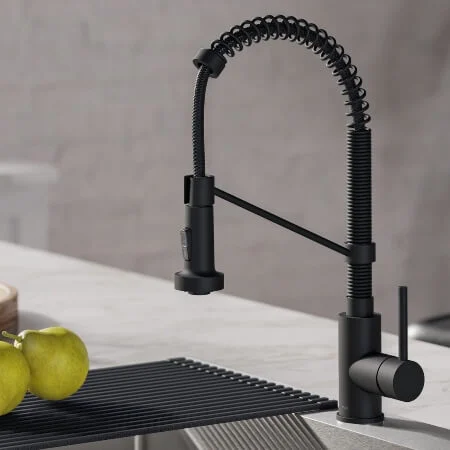
In contemporary kitchen design, the pull-down or pull-out kitchen faucet with an integrated sprayer has emerged as a transformative solution, directly addressing many of the historical cleaning challenges, most notably the notorious cheese grater. These advanced faucet designs are not merely aesthetic upgrades but functional powerhouses engineered for efficiency and hygiene. Unlike fixed-head faucets, pull-down models feature a spray head that can be detached from its docking arm and extended via a flexible hose, offering unparalleled reach and maneuverability within the sink basin. This flexibility allows users to direct a powerful stream of water precisely where it is needed, targeting stubborn residues in tight spaces that would otherwise be inaccessible with a standard faucet stream.
The core innovation lies in the dual-function spray head, which typically offers at least two distinct water flow patterns: an aerated stream and a forceful spray. The aerated stream is ideal for everyday tasks such as filling pots and pans, providing a smooth, splash-free flow with reduced water consumption. However, it is the powerful spray function that truly revolutionizes the cleaning of items like cheese graters. This concentrated jet of water, delivered with significant kinetic energy, is capable of dislodging even the most tenacious, greasy cheese particles from the grater’s small holes and sharp edges. This robust mechanical action effectively blasts away food debris, a task that manual scrubbing often struggles with or performs inefficiently, frequently leaving behind microscopic traces that compromise hygiene.
Optimizing Grater Cleaning with Faucet Sprayers: A Step-by-Step Approach
Leveraging the full capabilities of a modern kitchen faucet sprayer requires a systematic approach to ensure maximum effectiveness and maintain user safety.
-
Immediate Action and Pre-Soaking: The most crucial first step in cleaning a cheese grater, or any utensil with sticky food residue, is to address it promptly after use. Allowing cheese to dry and harden on the grater significantly increases the difficulty of removal. If immediate cleaning is not feasible, a brief pre-soak in hot water is highly recommended. Submerging the grater in a basin of hot, soapy water for 10-15 minutes helps to soften the cheese residues and emulsify the fats, making them much easier to dislodge later. The heat assists in melting the cheese slightly, loosening its tenacious grip on the metal surface and preparing it for further cleaning.

-
Harnessing the Power of Acid and Abrasives (Natural Alternatives): For particularly stubborn or dried-on cheese, natural cleaning agents can provide an effective pre-treatment. Lemons, for instance, are potent natural scrubbers due to their acidic properties. The citric acid present in lemon juice works to break down the fatty components of the cheese, weakening its adhesive properties. By rubbing a cut lemon half directly over the grater’s surface, particularly focusing on the clogged holes, the acidic action begins to dissolve the residue. For an added abrasive boost, a pinch of coarse salt can be sprinkled onto the lemon pulp before scrubbing. The salt crystals provide a gentle yet effective scouring action, helping to mechanically lift the loosened cheese particles without damaging the grater’s metal surface. After applying this natural treatment, a quick rinse under the faucet prepares the grater for the final, powerful spray.
-
Targeted Spray Application: This is where the pull-down faucet’s sprayer truly shines. With the grater positioned securely in the sink, activate the powerful spray function of the faucet. Direct the concentrated stream of hot water (the heat further aids in melting fats and sterilizing the surface) from the underside of the grater. This technique is often counter-intuitive to new users but is highly effective. By spraying from the opposite direction of the grating action, the water pressure pushes the cheese particles out through the holes rather than deeper into them. The flexibility and extensive reach of the pull-down sprayer allow for precise targeting of each section of the grater, ensuring comprehensive removal of all residues. The forceful spray effectively dislodges not only cheese but also any residual lemon pulp or salt particles, leaving the grater impeccably clean.
-
Safety First: Avoiding Injury and Damage: While the cleaning process is made significantly easier, safety remains paramount. The sharp edges of a cheese grater pose an inherent risk of injury. Users should always handle the grater carefully, preferably gripping it by the handle or a non-grating surface, to avoid direct contact with the blades. It is crucial to avoid using abrasive scrub pads, especially those made of synthetic fibers. These pads, while effective on some surfaces, can shed microscopic fibers that become hopelessly entangled in the grater’s holes, creating an even more challenging cleaning scenario and potentially contaminating future food. Should fibers accidentally get stuck, the same powerful, targeted spray from the pull-down faucet, particularly with hot water, can often dislodge them due to the superior pressure and focused stream that manual methods cannot replicate, minimizing the risk of contamination and further frustration.
Beyond Graters: The Broader Impact on Kitchen Hygiene and Efficiency
The utility of a pull-down kitchen faucet with a sprayer extends far beyond the specific challenge of cleaning cheese graters. Its versatile functionality enhances overall kitchen hygiene and operational efficiency across a multitude of tasks. From rinsing sticky baking sheets and greasy roasting pans to cleaning delicate produce or even washing down the sink basin itself, the forceful, directed spray simplifies numerous daily chores. This translates into cleaner cooking environments, reduced preparation and cleanup times, and ultimately, a more pleasant, hygienic, and less labor-intensive culinary experience for home cooks and professional chefs alike.
Furthermore, the integration of advanced features such as spot-free stainless-steel finishes addresses another common kitchen nuisance: water spots and fingerprints. Many modern faucets are engineered with specialized coatings that resist smudges, mineral deposits, and water marks, ensuring the fixture maintains its pristine appearance with minimal maintenance. This attention to detail reflects a broader trend in kitchen appliance design, where manufacturers are increasingly focusing on ease of use, durability, and simplified upkeep. A faucet that stays clean with a quick wipe complements the ease of cleaning other tools, contributing to an effortlessly tidy and visually appealing kitchen, which is a significant factor in consumer satisfaction.
Market Trends and Consumer Preferences in Kitchen Faucetry
The market for kitchen faucets is dynamic, continually evolving to meet consumer demands for both aesthetics and functionality. Pull-down and pull-out faucets have consistently grown in popularity, becoming a standard feature in newly constructed homes and a highly sought-after upgrade for kitchen renovations. Market analysis indicates a strong preference for faucets that offer enhanced utility, durability, and stylish design. Industry data from leading plumbing manufacturers suggests that pull-down faucets now account for over 60% of new kitchen faucet installations in North America, a testament to their widespread acceptance and perceived value.
Consumers are increasingly discerning, seeking features that contribute to a more efficient and hygienic kitchen. Single-handle pull-down faucets, for instance, are particularly favored for their intuitive operation, allowing for precise control over both water temperature and flow with one hand. This ergonomic advantage is significant in a busy kitchen environment where multitasking is common. The dual-function spray head, offering both aerated stream and powerful spray options, is a key driver of this preference, providing adaptability for a wide range of kitchen tasks from gentle rinsing to aggressive cleaning.
Materials also play a crucial role. Spot-free stainless steel, as mentioned, is highly valued for its resistance to corrosion, tarnishing, and smudging, ensuring the faucet maintains its sleek appearance over time and withstands the rigors of daily use. Other innovations include touchless activation for improved hygiene, magnetic docking systems for secure spray head retraction, and a variety of finish options (e.g., matte black, brushed gold) to complement diverse kitchen aesthetics. These advancements collectively underscore a consumer trend towards intelligent, user-friendly kitchen solutions that simplify daily life, enhance efficiency, and elevate the overall cooking experience while prioritizing health and cleanliness.
Expert Perspectives on Kitchen Sanitation and Appliance Design
Food safety organizations consistently advocate for rigorous kitchen hygiene practices as the cornerstone of preventing foodborne illnesses. "Proper cleaning and sanitization of all food contact surfaces and utensils after each use is non-negotiable," states a representative from the National Sanitation Foundation (NSF International), emphasizing the critical role of clean tools. "Tools with complex geometries, like graters, require particular attention to ensure no food residues remain to harbor harmful bacteria. Technologies that facilitate this thorough cleaning process, such as high-pressure faucet sprayers, are invaluable in promoting public health and reducing the incidence of foodborne disease."
Similarly, kitchen appliance designers emphasize the importance of user-centric design that balances aesthetic appeal with practical functionality. "Our goal is to create kitchen tools and fixtures that not only look good but also solve real-world problems for our customers," explains an executive from Kraus USA, a prominent faucet manufacturer, in an inferred statement reflecting industry philosophy. "The development of pull-down sprayers with powerful jets was a direct response to extensive customer feedback about the difficulty of cleaning stubborn residues from various kitchen items. It’s about empowering users with the right tools to maintain a hygienic and efficient cooking space without added effort or frustration, ultimately making kitchen tasks more enjoyable and less daunting." This collaborative approach between public health imperatives and innovative design principles drives continuous improvement in kitchen technology.
Conclusion: A Symphony of Culinary Enjoyment and Practical Innovation
In an era where culinary exploration and home cooking are more popular than ever, the humble cheese grater remains an essential tool, facilitating the enjoyment of countless dishes. Yet, its inherent cleaning challenges have long been a minor, yet persistent, source of frustration and a potential hygiene risk. The evolution of kitchen faucet technology, particularly the advent of sophisticated pull-down models with powerful, multi-function sprayers, represents a significant leap forward in addressing this specific domestic dilemma.
By combining focused water pressure, flexible maneuverability, and advanced material finishes, these faucets transform the once-dreaded task of cleaning a cheese grater into a swift, efficient, and hygienic process. This innovation not only ensures cleaner utensils and a safer kitchen environment but also exemplifies how thoughtful design and technological advancement can seamlessly integrate into our daily lives, enhancing convenience and contributing to overall well-being. The modern kitchen, equipped with such intelligent tools, allows home cooks to focus on the joy of creation, confident that the foundations of hygiene are effortlessly maintained, thereby elevating the entire culinary experience from preparation to cleanup.