
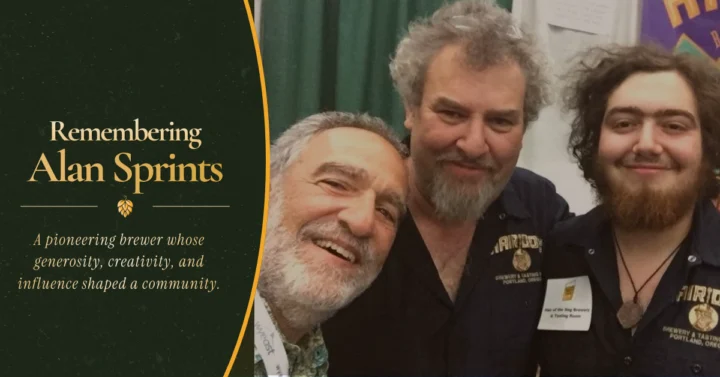
Alan Sprints, the pioneering brewer whose Portland-based Hair of the Dog Brewing Company became synonymous with cult-favorite, limited-edition beers, has died at the age of 61. Sprints succumbed to metastatic stage 4 bladder cancer, leaving behind a profound legacy that significantly shaped the landscape of craft brewing, particularly in the realms of strong ales and barrel-aging. His passing has sent ripples of sorrow through the global beer community, with tributes pouring in from brewers, enthusiasts, and historians alike, all acknowledging his immense contributions and indelible spirit.
A Legacy Forged in Bold Flavors and Unwavering Passion
Sprints first gained widespread recognition for his mastery of robust, four-letter named ales, a signature that would define Hair of the Dog. He is widely credited with popularizing the concept of the "white whale" beer – elusive, highly sought-after brews released in limited quantities, fostering a devoted following among collectors and connoisseurs. Among his most celebrated creations was Adam, a beer inspired by the historical German strong ale Adambier, meticulously documented by beer authority Michael Jackson in his influential tome, Beer Companion. Launched in 1994, Adam was a formidable 10% ABV Old Ale, boasting a pronounced bitterness of 60 International Bitterness Units (IBUs). Its remarkable aging potential allowed it to develop complex, nuanced flavors over time, a characteristic that few breweries at the time were capable of achieving, making it a groundbreaking offering.
Following Adam’s success, Sprints introduced Fred in 1997. Named in honor of Fred Eckhardt, a revered Portland-based beer historian and a significant figure in the craft and homebrew world, Fred was a Belgian Golden Strong Ale-inspired brew. This dark gold, 10% ABV ale quickly became even more coveted than its predecessor, cementing Hair of the Dog’s reputation for producing beers of exceptional character and rarity. The scarcity and unique profiles of these beers fueled intense demand, establishing a precedent for the desirability of limited-release brews in the burgeoning craft beer market.
Early Influences and the Genesis of Hair of the Dog
Originally hailing from the Los Angeles area, Sprints’ early career path was diverse, encompassing involvement in aerospace and music before he found his true calling in the culinary arts. His journey into brewing began as a passionate homebrewer, a pursuit that would eventually lead him to Portland, Oregon, in 1991, where he took a position at Widmer Brothers. His active participation in the local brew club, the Oregon Brew Crew, saw him rise to the position of club president, demonstrating his early leadership and dedication to the brewing community. After honing his skills as a chef for three years and as a professional brewer for two, Sprints felt compelled to embark on his own venture.
In 1993, Hair of the Dog Brewing Company opened its doors in an industrial district of southeast Portland. From its inception, the brewery was dedicated to not only recreating historical beer styles but also to pushing the boundaries of innovation. Sprints was an early adopter and pioneer of barrel-aging techniques, a practice that would become a hallmark of his brewing philosophy and earn him accolades from esteemed publications such as Beer Advocate and Whiskey Advocate. Matt Simpson, founder of The Beer Sommelier, reflected on Sprints’ impact, stating, "He didn’t create the barleywine style—he perfected it. He didn’t invent barrel-aged beers—he curated and melded them like nobody at the time could or would." This sentiment underscores Sprints’ ability to transform existing concepts into something entirely novel and masterful.
A Generous Spirit and Unforgettable Encounters
The personal anecdotes shared by those who knew Sprints paint a vivid picture of a man who was as generous and enthusiastic as his beers were bold. Amahl Turczyn, the author of the original article, fondly recalls visiting Sprints at Hair of the Dog in the mid-1990s with fellow beer luminaries Fred Eckhardt and Jim Parker. She describes being awestruck by the brewery’s massive, chalice-like steam-jacketed brew kettle and Sprints’ infectious passion for the craft. His willingness to share aged bottles of his creations and his generous pours left a lasting impression, embodying the spirit of the vibrant and evolving Portland craft beer scene of that era.
Drew Beechum, a Founding Board member of the American Homebrewers Association (AHA) and a prolific author, echoed these sentiments, highlighting Sprints’ deep connection to his homebrewing roots. "He was a homebrewer at heart—always super generous with his time and enthusiasm (and his cellar)," Beechum stated. Beechum’s memories offer a particularly intimate glimpse into Sprints’ character and the early days of Hair of the Dog. He recounts stumbling upon the original brewery, a somewhat dilapidated warehouse nestled along the river and train tracks in Portland, prior to the advent of widespread GPS technology. Sprints, despite not knowing Beechum, extended a warm welcome to a private party he hosted annually before the Oregon Brewers Festival.
Beechum vividly remembers being invited to this gathering, where he was treated to a grand feast. Sprints proudly showcased his 4-barrel steam-jacketed kettle, which had an unlikely past use by Campbell’s for boiling peas. The sheer scale of Sprints’ brewing operation was evident, with a malt silo standing impressively beside the kettle, humorously dwarfing it. "He laughed at the observation and handed me a glass of the fabled Dave from a secret Golden Gate keg hanging out in the corner," Beechum recalled, referencing another iconic Hair of the Dog beer.
His recollections also detail a memorable encounter in the Bay Area. During a celebration for Beechum’s homebrew club, the Falcons, which had been named Anchor’s California Homebrew Club of the Year, Sprints made a surprise appearance at a party hosted by Celebrator Beer News at Trumer Brewery in Berkeley. He arrived bearing two magnums of Doggie Claws Barleywine as a congratulatory gift. In a display of Sprints’ characteristic generosity and playful spirit, he repeatedly reappeared, as if by magic, with more magnums each time a bottle was emptied, leaving the club members both astonished and delighted.
A Pioneer of Craft Beer Innovation
Sprints’ contributions extended beyond his signature ales. He was a recognized innovator in the field of barrel-aging, a practice that was still nascent in the craft beer industry during the 1990s. His willingness to experiment with different wood types and aging durations allowed his beers to develop unparalleled complexity and depth. This forward-thinking approach not only set Hair of the Dog apart but also influenced countless other breweries to explore the potential of barrel aging, a technique now integral to the craft beer world.
The impact of his work can be seen in the evolution of beer styles. Sprints was instrumental in elevating barleywines and strong ales to new heights, showcasing their potential for longevity and nuanced flavor development. His dedication to historical styles, coupled with his innovative spirit, created a unique niche for Hair of the Dog, attracting a dedicated following that appreciated the depth and artistry of his brewing.
A Loss to the Brewing Community
The passing of Alan Sprints represents a significant loss for the homebrewing and craft brewing communities, both locally in Portland and globally. His influence as a brewer, an educator, and a passionate advocate for the craft is undeniable. "Seriously, we lost a hell of a beer lover and educator," commented Drew Beechum, encapsulating the sentiment felt by many. Sprints’ legacy will undoubtedly continue to inspire brewers and delight beer enthusiasts for generations to come, a testament to his enduring vision and his profound impact on the world of beer. His family, friends, and the countless individuals whose lives he touched through his passion and his exceptional brews will deeply miss his presence.


