
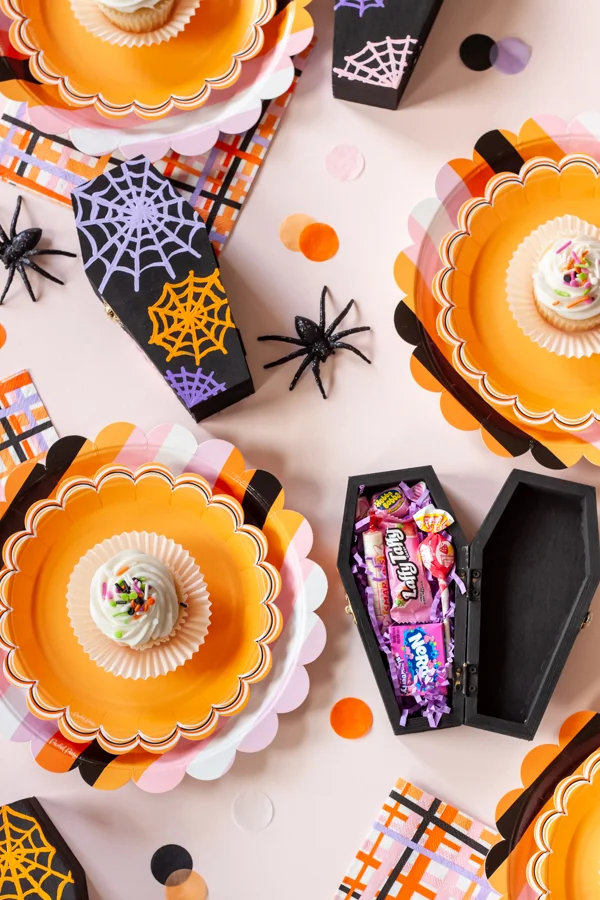
As the autumn season transitions into the late October festivities, the consumer landscape experiences a significant shift toward personalized, home-based creative projects. This trend, often referred to as the "DIY (Do-It-Yourself) movement," has seen a substantial uptick in the category of seasonal home decor and party planning. Central to this movement is the integration of family-oriented activities that combine traditional holiday motifs with functional utility. One such project gaining traction among domestic organizers is the creation of miniature candy coffins, a versatile craft that functions as both a decorative element and a personalized party favor.
The project utilizes accessible materials primarily sourced from major retail chains, such as Walmart, highlighting a broader economic trend where large-scale retailers provide specialized crafting components to cater to the growing demand for bespoke holiday experiences. These six-inch unfinished wood coffin boxes serve as a blank canvas for various artistic techniques, ranging from simple monochromatic painting to intricate "creepy cobweb" designs. By incorporating elements like alphabet stickers and neon acrylics, participants can transform basic supplies into sophisticated table settings.
The Evolution of Halloween Traditions and Modern DIY Culture
The historical context of Halloween has evolved from ancient Celtic traditions into a multi-billion-dollar modern retail phenomenon. In recent decades, there has been a noticeable pivot from mass-produced, ready-made decorations toward "craft-core" aesthetics. This shift is driven by a desire for uniqueness and the psychological benefits associated with creative labor. According to consumer behavior analysts, the act of creating one’s own decorations fosters a sense of seasonal immersion that pre-packaged goods often fail to provide.
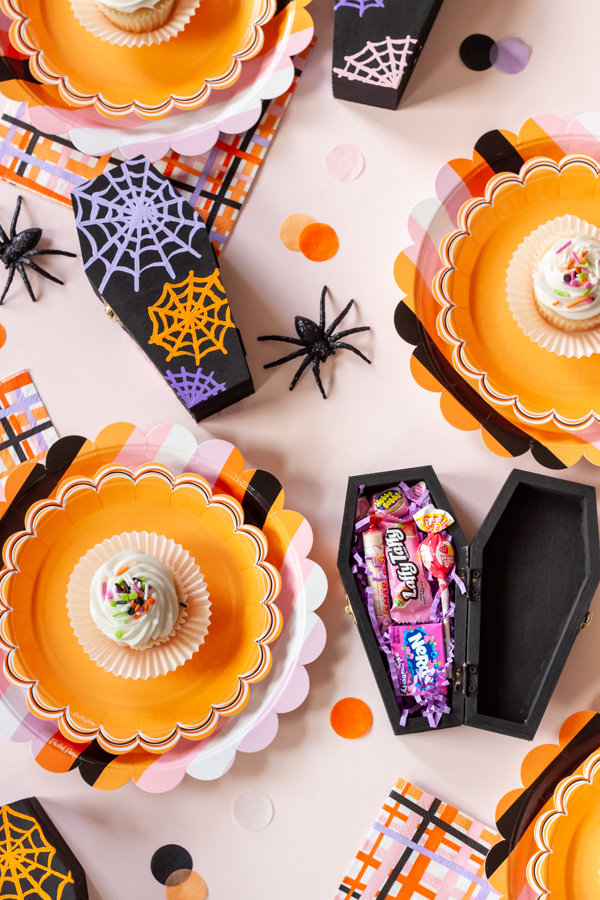
The miniature candy coffin project exemplifies this trend. By involving children in the assembly and decoration process, families create a narrative around their holiday preparations. This participatory approach to holiday hosting is not merely about aesthetics; it is a form of social engagement that begins weeks before the actual event. The utility of these items as place cards—using alphabet stickers on the interior lids—demonstrates a sophisticated approach to guest management, blending the "spooky" theme of the season with the formal requirements of a structured social gathering.
Technical Specifications and Required Materials
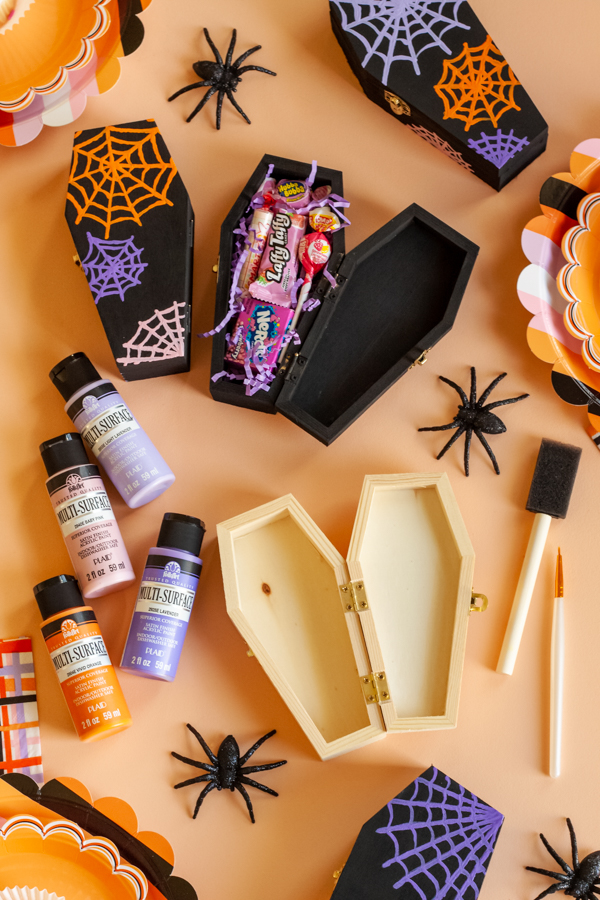
To achieve a professional-grade finish for these festive favors, a specific inventory of materials is required. The primary component is the 6-inch unfinished wood coffin box, which offers a porous surface ideal for acrylic medium absorption. The choice of paint is critical; black acrylic craft paint provides the necessary opaque base, while a "bright" or neon acrylic set allows for high-contrast detailing that is visible even in the dim lighting typical of Halloween parties.
The toolkit for this project includes:
- Substrate: 6-inch wood coffin boxes (unfinished).
- Pigments: Black acrylic craft paint and a selection of bright/neon acrylics for detailing.
- Application Tools: Foam sponge brushes for broad surface coverage and fine-tipped "skinny" paintbrushes for precision linework.
- Adhesives/Detailing: Alphabet stickers for personalization and miniature decorative spiders for added texture.
- Confectionery: Seasonal candies such as candy corn, lollipops, or chocolate eggs to fill the interior volume.
Procedural Methodology: A Three-Step Execution Strategy
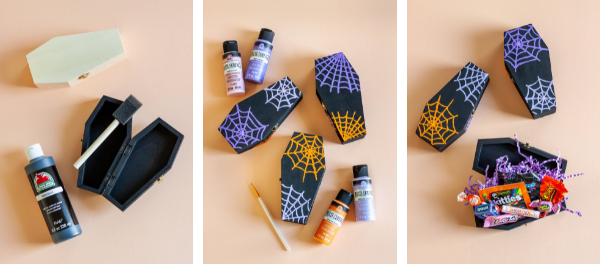
The production of these decorative items follows a logical progression designed to ensure durability and visual impact. The process is divided into three distinct phases: preparation, detailing, and final assembly.
Step 1: Base Coat Application
The initial phase involves the application of the black acrylic base coat. Using a foam sponge brush is recommended for this stage, as it allows for an even distribution of paint across the wood grain without leaving the visible brush strokes often associated with traditional bristles. It is imperative to cover all exterior surfaces, including the lid edges and the base. Once coated, the coffins must be allowed to dry completely to prevent the subsequent layers of paint from bleeding into the base.
Step 2: Decorative Linework and "Cobweb" Detailing
The second phase requires a higher degree of precision. Using a fine-tipped paintbrush and a contrasting neon color, the artist must establish a central point on the lid. From this point, "spokes" are painted outward toward the edges of the coffin. To create the spiderweb effect, small "scalloped" or curved lines are drawn to connect the spokes. This layering process continues from the center outward, leaving the ends of the spokes slightly extended to mimic the structural integrity of a natural web. This step allows for significant creative variance, as the thickness and symmetry of the webs can be adjusted to suit the individual’s preference.
Step 3: Functional Integration and Personalization
The final phase transitions the item from a craft project to a functional party favor. After the decorative paint has cured, the interior of the coffin is filled with a curated selection of Halloween treats. At this stage, hosts may choose to apply alphabet stickers to the interior of the lid. This serves as a "place card" when the coffin is set at a dining table, directing guests to their assigned seats. The finished product is then placed at each setting, providing an immediate decorative impact and a take-home souvenir for guests.
Economic Context: The Financial Landscape of Seasonal Crafting
The rise of projects like the DIY candy coffin is supported by robust spending in the seasonal sector. According to the National Retail Federation (NRF), annual spending on Halloween in the United States has consistently surpassed the $10 billion mark in recent years. A significant portion of this expenditure—approximately $3.4 billion—is dedicated to decorations. The "crafting" sub-sector of this market is particularly lucrative for retailers like Walmart, which have expanded their "Great Value" and "Mainstays" lines to include more specialized hobbyist materials.
Retail analysts suggest that by offering affordable, unfinished components (like the wooden coffins), retailers tap into the "IKEA effect," a psychological phenomenon where consumers place a higher value on products they have partially created themselves. This strategy not only increases the volume of sales for the primary item but also drives "basket growth" as consumers must purchase paints, brushes, and candy to complete the project.
The Role of Retail Giants in Democratizing Holiday Decor
The sponsorship of such projects by major corporations like Walmart indicates a strategic move to position the brand as a partner in family traditions rather than just a supplier of goods. By providing free tutorials and structured project ideas, these retailers lower the barrier to entry for complex-looking decor. This democratization of design allows households with varying levels of artistic skill to produce professional-looking results.
Furthermore, the accessibility of these materials—available both in-store and via e-commerce platforms—ensures that the DIY trend is not limited to urban centers with specialized craft stores. The integration of "Shop This Post" links in digital content facilitates a seamless transition from inspiration to purchase, reflecting the modern "content-to-commerce" pipeline that dominates the retail industry.
Psychological and Social Implications of Family Crafting
Beyond the economic and aesthetic factors, there are significant social implications to the proliferation of seasonal DIY projects. Child development experts often highlight the benefits of "process art," where the focus is on the act of creation rather than the final product. Engaging in a structured project like coffin painting helps children develop fine motor skills, patience, and the ability to follow multi-step instructions.
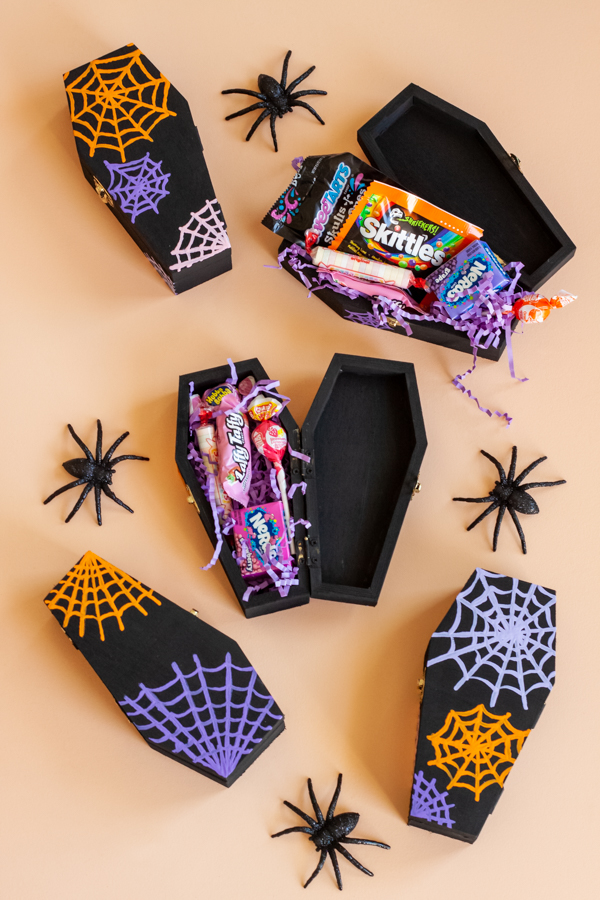
In a social context, the use of these coffins as place cards and party favors fosters a sense of community and appreciation among guests. In an era where digital communication often replaces physical tokens, the receipt of a hand-painted, personalized item carries substantial social weight. It signals to the guest that the host has invested time and creative energy into their experience, thereby elevating the standard of the social gathering.
Broader Impact and Future Market Trends
As we look toward future holiday seasons, the "DIY Candy Coffin" project serves as a microcosm of larger shifts in the consumer goods industry. There is an increasing demand for "multi-purpose" holiday items—products that serve as decor, activities, and gifts simultaneously. This efficiency appeals to the modern consumer who is often time-constrained but still values traditional celebration.
Additionally, the trend toward personalization is expected to grow. Future iterations of this project may involve laser-engraved names, 3D-printed attachments, or the use of sustainable, biodegradable paints as environmental consciousness becomes a more prominent factor in consumer choices. For now, the combination of simple wooden substrates and vibrant acrylics remains a staple of the Halloween season, bridging the gap between spooky folklore and modern domestic artistry.
In conclusion, the DIY miniature coffin project is more than a simple craft; it is an intersection of retail strategy, psychological engagement, and seasonal tradition. By transforming basic materials into personalized artifacts, consumers are redefining the way holidays are celebrated, moving away from passive consumption toward active, creative participation. As major retailers continue to fuel this movement with accessible supplies and instructional content, the landscape of holiday decor will likely continue its trajectory toward the bespoke and the handmade.


