

The integration of mobile technology and sustainable consumption has reached a new milestone as digital platforms and culinary enthusiasts collaborate to address the escalating crisis of global food waste. In a strategic partnership designed to highlight the accessibility of eco-conscious living, the surplus-food application Too Good To Go has demonstrated how high-quality, gourmet ingredients can be salvaged and repurposed for sophisticated social gatherings. This initiative underscores a growing movement where surplus food—once destined for landfills—is being repositioned as a viable resource for the modern household, offering a solution that is simultaneously economical and environmentally responsible.
The Logistics of Surplus Food Redistribution
The operational model of the partnership centered on the use of the Too Good To Go mobile application, a platform that connects consumers with local restaurants, bakeries, and grocery stores that have unsold food at the end of the day. The mechanism of the app relies on the "Surprise Bag" concept, where users purchase a collection of surplus items for approximately one-third of the original retail price. For this specific event, the selection involved a high-end gourmet grocery store and a specialized juice boutique.

The procurement process follows a strict chronology: retailers assess their daily inventory, identify items that are nearing their sell-by date but remain safe for consumption, and list them on the platform. Consumers then reserve these bags through the interface and collect them during a specified window. In this instance, the "Surprise Bag" yielded a variety of artisanal breads and fresh ingredients, which served as the foundation for a zero-waste social gathering. The culinary approach focused on "upcycling" these items by combining them with existing pantry staples and home-grown produce, such as basil and tomatoes, to create a series of gourmet appetizers.
Global Context: The Environmental and Economic Cost of Waste
The partnership between content creators and Too Good To Go arrives at a critical juncture in global environmental policy. Food waste is currently recognized as one of the most significant contributors to climate change, accounting for an estimated 10% of all global greenhouse gas emissions. According to data from the United Nations Food and Agriculture Organization (FAO), approximately one-third of all food produced for human consumption—roughly 1.3 billion tons—is lost or wasted annually.
The environmental implications extend beyond carbon emissions. When food is discarded, the resources used in its production, including water, land, energy, and labor, are also wasted. For example, the agriculture sector accounts for 70% of global freshwater withdrawals; wasting food is, by extension, a massive waste of water. Furthermore, when food decomposes in landfills, it produces methane, a greenhouse gas that is significantly more potent than carbon dioxide in the short term.

Economically, the impact is equally staggering. The retail value of wasted food globally is estimated at nearly $1 trillion. By utilizing applications that redistribute surplus, consumers can mitigate these losses while businesses recover a portion of their overhead costs, creating a circular economy that benefits the retailer, the consumer, and the planet.
From Surplus to Sophistication: The Culinary Execution
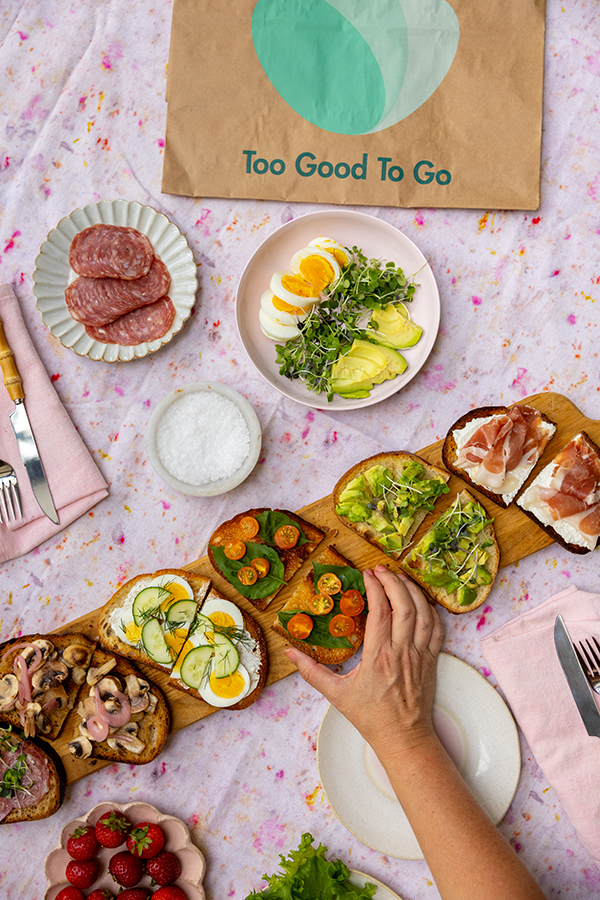
The practical application of the surplus ingredients demonstrated that "waste-free" does not equate to a compromise in quality. The focal point of the gathering was a curated selection of crostini, utilizing the surplus bread as a versatile base. The preparation involved toasting large quantities of bread in a single oven cycle to maximize energy efficiency.
The toppings were designed to showcase the versatility of the salvaged items, combined with fresh accents:

- Protein and Sweet Profiles: Ricotta cheese paired with prosciutto and a drizzle of "hot honey."
- Plant-Based Options: Smashed avocado seasoned with lemon and sea salt, finished with fresh sprouts.
- Classic Garden Profiles: A traditional blend of vine-ripened tomatoes, fresh basil, salt, and extra virgin olive oil.
- Northern European Influences: Sliced hard-boiled eggs with mayonnaise, cucumbers, and fresh dill.
- Savory Umami Profiles: Melted artisanal cheeses topped with sautéed mushrooms or spicy soppressata with jalapeños.
By setting up a "build-your-own" station, the hosts encouraged guests to engage directly with the ingredients, a method that not only reduces pre-plating waste but also serves as an educational tool regarding the potential of surplus food.
Background and Evolution of Too Good To Go
Founded in 2015 in Denmark, Too Good To Go has rapidly expanded to become a leader in the "social impact" technology sector. The company, a certified B Corporation, operates in 17 countries across Europe and North America. Its mission is to empower everyone to take action against food waste. As of late 2021, the company reported having saved over 90 million meals globally, involving a network of more than 110,000 partner merchants.
The expansion into the North American market has been particularly significant, as the United States is one of the world’s largest producers of food waste. Industry analysts note that the success of such apps relies on overcoming the "perfectionist" stigma associated with retail food. Traditionally, grocery stores have discarded items that are aesthetically imperfect or close to an arbitrary "best before" date. Too Good To Go challenges this by educating consumers on the difference between "use by" dates (which concern safety) and "best before" dates (which concern peak quality).
Analysis of the Broader Impact on Consumer Behavior
The adoption of surplus-food technology represents a shift in consumer psychology. Historically, "discounted" food was often associated with lower socioeconomic status or inferior quality. However, by rebranding surplus as a "Surprise Bag" and partnering with gourmet or high-end vendors, platforms like Too Good To Go have successfully shifted the narrative toward "eco-conscious hunting" and "culinary discovery."
This shift has several long-term implications for the hospitality and retail sectors:
- Inventory Management: Retailers are incentivized to be more transparent about their surplus, knowing there is a ready market for it.
- Community Engagement: Small businesses can reach new customers who might not have otherwise visited their store, using the app as a low-cost marketing tool.
- Sustainability Metrics: Corporations are increasingly using the data provided by these platforms to track their progress toward Environmental, Social, and Governance (ESG) goals.
Industry experts suggest that as food prices continue to fluctuate due to inflation and supply chain disruptions, the economic incentive to utilize surplus food will only grow. The "surprise" element of these apps also encourages culinary creativity, as consumers must learn to cook with whatever ingredients they receive, rather than following a rigid shopping list.

Strategies for Implementing Zero-Waste Hosting
For individuals looking to replicate the success of this waste-free gathering, the partnership highlights several actionable strategies. These tips are designed to minimize the environmental footprint of entertaining without sacrificing the guest experience.
Inventory Assessment and "Fridge Foraging"
Before purchasing new ingredients, hosts are encouraged to audit their existing pantry and refrigerator. Many of the toppings used in the featured crostini party were items already on hand or harvested from a home garden. This practice prevents the over-purchasing of perishable goods that often leads to post-event waste.
The Versatility of the "Surprise Bag"
Using an app to procure the bulk of the menu’s bread and specialty items ensures that the gathering is supporting the reduction of retail waste. Because the contents are unknown until pick-up, it allows the host to build a menu based on what is available, rather than forcing the environment to provide specific, out-of-season items.

Self-Service Stations
Providing a DIY assembly station for guests serves two purposes. First, it reduces the labor required by the host. Second, it allows guests to take only what they intend to eat, significantly reducing the amount of half-eaten appetizers that are typically discarded after a party.
Composting and Proper Storage
Any organic waste generated during preparation—such as vegetable peels or eggshells—should be composted. Furthermore, hosts should have reusable containers ready to send leftovers home with guests, ensuring that the "zero-waste" mission extends beyond the duration of the event itself.
Future Outlook: The Scaling of Food Waste Solutions
The success of the partnership between Too Good To Go and lifestyle influencers suggests a bright future for tech-driven sustainability. As more cities adopt mandatory organic waste recycling laws and more consumers demand transparency from the brands they support, the integration of surplus food into daily life is expected to become normalized.

Governmental bodies are also taking notice. In the European Union, there are ongoing discussions regarding the standardization of date labeling to reduce consumer confusion, a move that would complement the work of surplus-redistribution apps. In the United States, the USDA and EPA have set a goal to reduce food loss and waste by 50% by the year 2030. Achieving this target will require a combination of policy changes, infrastructure investment, and the widespread adoption of consumer-facing technologies.
Ultimately, the crostini gathering served as a micro-demonstration of a macro-solution. It proved that the fight against global greenhouse gas emissions can begin in the kitchen, facilitated by a simple app and a shift in perspective. By valuing food for its nutritional and culinary potential rather than its retail perfection, consumers can play a direct role in mitigating one of the most pressing environmental challenges of the 21st century.


