As the autumn season approaches, bringing shorter daylight hours and a distinct shift toward cooler temperatures, the home decor industry is witnessing a significant resurgence in "slow crafting" and functional textile art. In a recent collaboration, industry leader Fiskars has partnered with design specialists to introduce a modern patchwork coaster project aimed at bridging the gap between traditional quilting and contemporary interior aesthetics. This initiative reflects a broader market trend where consumers are increasingly moving away from mass-produced seasonal accessories in favor of handmade, high-quality items that offer both utility and a sense of personal accomplishment.
The project, which centers on the creation of minimalist patchwork coasters, utilizes a blend of machine sewing for structural integrity and hand-quilted Sashiko-style details for tactile appeal. By leveraging advanced fabric cutting technology, the initiative seeks to lower the barrier to entry for novice crafters while providing a sophisticated outcome that appeals to the "Warm Minimalism" design movement.
The Resurgence of the DIY Textile Market
The global handicrafts market has experienced robust growth over the last five years, with recent data suggesting the industry is poised to reach a valuation of nearly $1.3 trillion by 2028. This growth is driven largely by the "maker movement," a social trend that emphasizes the value of self-reliance and the psychological benefits of manual labor. The patchwork coaster project serves as a microcosm of this movement, emphasizing the use of high-quality materials and precision tools to create objects that are both decorative and durable.
Industry analysts note that projects like these are strategically timed to coincide with the "hygge" lifestyle trend—a Danish concept of coziness and comfortable conviviality that traditionally peaks during the autumn and winter months. By focusing on warm color palettes including terracotta, apricot, and various shades of pink, the project aligns with the 2024-2025 seasonal color forecasts which prioritize earthy, grounded tones that evoke a sense of stability and warmth.

Precision Engineering in the Modern Craft Suite
A central component of this project is the emphasis on professional-grade tools. Fiskars, a company with a heritage dating back to 1649, has long been associated with the orange-handled scissors that have become a staple in households worldwide. However, this collaboration highlights their more specialized quilting suite, designed to provide the precision required for small-scale patchwork where even a millimeter of error can affect the final alignment.
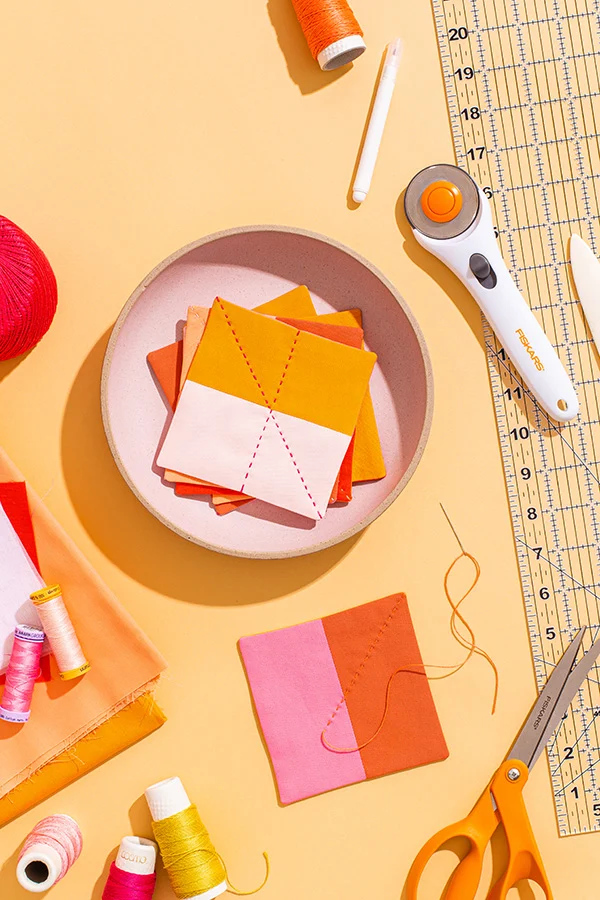
The toolkit for the project includes the Fiskars 45mm Stick Rotary Cutter, an 18” x 24” Cutting Mat, and a 6” x 24” Acrylic Ruler. These tools are engineered to reduce physical strain and increase accuracy. The rotary cutter, in particular, allows for clean, continuous lines through multiple layers of quilting cotton, a task that traditional scissors often struggle to perform with the same level of uniformity. The use of a self-healing cutting mat is also highlighted as a critical safety and longevity feature, preventing damage to work surfaces while ensuring the blade remains sharp for extended periods.
A Chronological Breakdown of the Modern Patchwork Process
The methodology behind the coasters is structured into six distinct phases, designed to transition the crafter from raw material preparation to refined hand-finishing.
Phase 1: Material Preparation and Precision Cutting
The process begins with the selection of high-quality quilting cotton. The project recommends a palette of five specific colors: orange, terracotta, light pink, apricot, and pink. Crafters are instructed to cut 5-inch squares from both the quilting cotton and a lightweight interfacing, such as cotton organdy. The interfacing is a crucial addition, providing the necessary body and heat resistance for a functional coaster.
Phase 2: Geometric Assembly
The "patchwork" element is achieved by stacking two squares of different colored cotton and executing a straight machine stitch down the center. This step introduces the beginner to the concept of seam allowances and the importance of "pressing open" seams with an iron to ensure a flat, professional finish.
Phase 3: Layering and Structural Integrity
Once the primary patchwork piece is assembled, it is layered with an additional square of cotton (forming the back) and the interfacing. This "sandwich" method is a fundamental quilting technique, though scaled down for this specific application.
Phase 4: Perimeter Seaming
Using a 1/8-inch seam allowance, the layers are stitched together. A 1.5-inch gap is intentionally left to allow the fabric to be inverted. This stage requires careful corner trimming—a technique used to reduce bulk and allow for sharp, 90-degree angles once the piece is turned right-side out.
Phase 5: Inversion and Refinement
The coaster is flipped to reveal the finished patterns. Tools such as a point turner or a bamboo skewer are utilized to ensure the corners are fully extended. A final press with an iron sets the shape and prepares the fabric for the decorative stage.
Phase 6: Hand-Quilted Detailing (Sashiko Influence)
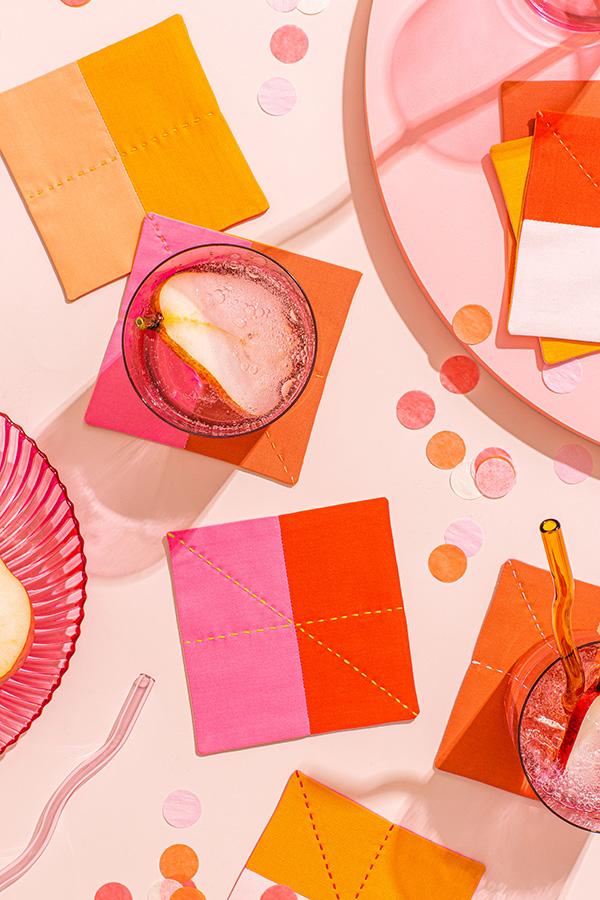
The final step involves the application of a running stitch using Sashiko thread. Sashiko, a traditional Japanese form of functional embroidery, was historically used to reinforce or repair worn clothing. In this modern context, it provides a decorative "slow-stitch" element that adds texture and a high-end artisanal feel. The project concludes with an invisible hand-stitch or the use of fabric glue to seal the final opening.
Technical Analysis of Material Choices
The selection of materials in this collaboration is not merely aesthetic but grounded in textile science. Quilting cotton is preferred for its high thread count and ability to withstand the heat of hot beverages. Unlike synthetic fabrics, cotton does not melt or warp when in contact with high temperatures.
The inclusion of cotton organdy as an interfacing is a sophisticated choice. While many modern crafters opt for polyester-based fusible interfacing, organdy is a crisp, plain-weave cotton that provides stiffness without adding excessive weight. It is also more environmentally friendly and aligns with the project’s "natural" theme. Furthermore, the use of Sashiko thread—which is thicker and more matte than standard embroidery floss—ensures that the hand-quilted details remain prominent even after multiple washes.
Statements and Industry Implications
While formal statements from Fiskars executives often focus on the ergonomic benefits of their "PowerGear" and "Easy Action" technology, the broader implication of this partnership is the company’s commitment to the "wellness through crafting" sector. Research from the University of Otago has suggested that engaging in creative activities like sewing leads to an "upward spiral" of positive emotions and increased mental well-being.
"The shift toward small-batch, handmade home goods is a reaction to the digital fatigue many consumers are experiencing," says an industry analyst specializing in home and garden trends. "Fiskars is positioning itself not just as a tool manufacturer, but as a facilitator of these ‘analog’ experiences. By providing the tools for a beginner-friendly project like the patchwork coaster, they are capturing a demographic that values both the process and the product."
Environmental Impact and the "Zero-Waste" Movement
An overlooked aspect of the patchwork coaster project is its potential for waste reduction. Patchwork, by its very nature, is a technique born from the need to utilize every scrap of fabric. In a time when the textile industry is under scrutiny for its environmental footprint, projects that encourage the use of small fabric remnants (scraps) are being hailed as part of the "Zero-Waste" movement.
By teaching crafters how to create functional items from 5-inch squares, this project provides a template for upcycling leftover material from larger sewing projects. This sustainable approach resonates with younger demographics, particularly Gen Z and Millennials, who are more likely to support brands that promote circular economy principles.

Conclusion: The Future of Functional Art in the Home
The DIY modern patchwork coaster project is more than a simple seasonal craft; it is a reflection of the evolving relationship between consumers and their living spaces. As the boundary between "hobbyist" and "artisan" continues to blur, the demand for professional-grade tools and sophisticated project guides is expected to rise.
By combining the historical depth of quilting and Sashiko with the precision of modern cutting tools, Fiskars and its partners have created a project that addresses the current consumer desire for authenticity, sustainability, and aesthetic refinement. As these coasters find their places on coffee tables this autumn, they serve as a testament to the enduring appeal of the handmade in an increasingly automated world. The project successfully demonstrates that with the right tools and a structured approach, even the most traditional crafts can be reimagined for the modern home.