
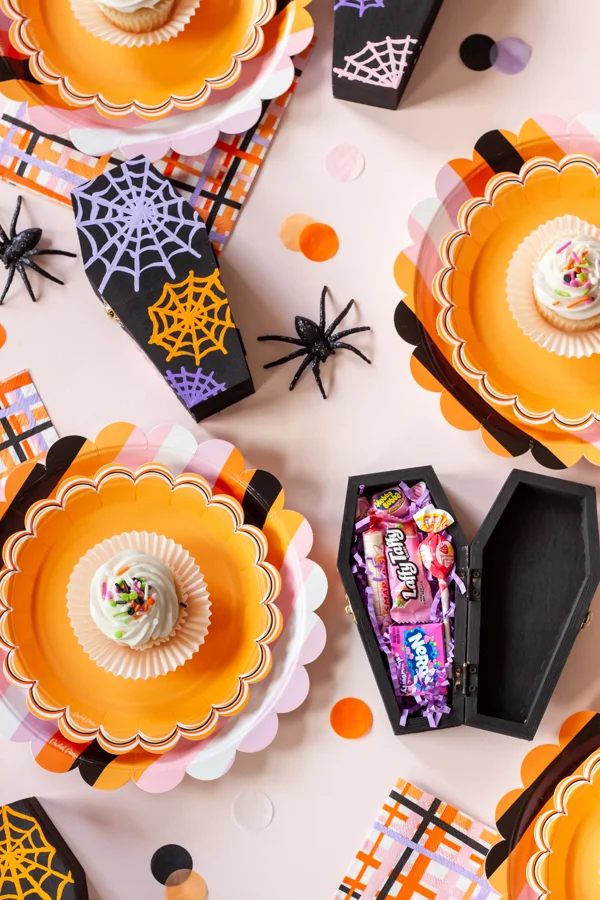
The landscape of seasonal festivities in the United States has undergone a significant transformation, evolving from simple door-to-door activities into an expansive multi-billion dollar industry characterized by elaborate home decor and personalized social gatherings. As the autumn season progresses, consumer interest in "DIY" (Do-It-Yourself) projects has surged, driven by a desire for unique, customizable experiences that differentiate private events from mass-produced celebrations. A prominent example of this trend is the emergence of interactive party favors, such as hand-painted "Candy Coffins," which serve as both decorative elements and functional guest gifts. This shift highlights a broader economic and cultural movement where retailers like Walmart are increasingly positioning themselves as suppliers for the "maker economy," providing the raw materials necessary for consumers to execute professional-grade creative projects at home.
The Economic Context of Seasonal Crafting
The National Retail Federation (NRF) has consistently reported record-breaking figures for Halloween-related spending over the past several years. In 2023, total spending was projected to reach an unprecedented $12.2 billion, with a significant portion of that capital allocated toward decorations and party supplies. Within this financial ecosystem, the "crafting" sub-sector has seen robust growth. Consumers are no longer satisfied with off-the-shelf products; instead, there is a measurable preference for semi-customizable items that allow for individual expression.
Retailers have responded to this demand by stocking "blanks"—unfinished wood, paper, or plastic items intended for modification. The 6-inch unfinished coffin boxes currently marketed by Walmart represent a strategic entry into this niche. By offering low-cost, foundational items, retailers encourage the purchase of high-margin secondary goods, including acrylic paints, specialized brushes, and adhesive lettering. This "ecosystem shopping" model ensures that a single project drives multiple category sales, from the hardware of the craft to the confectionery used to fill the finished product.
Methodology: The "Candy Coffin" Assembly Process
The creation of personalized Halloween favors follows a specific procedural timeline that mirrors professional artisanal production, albeit on a scale accessible to families and hobbyists. The process is designed to be modular, allowing for varying levels of complexity based on the skill level of the participant.
Phase I: Surface Preparation and Priming
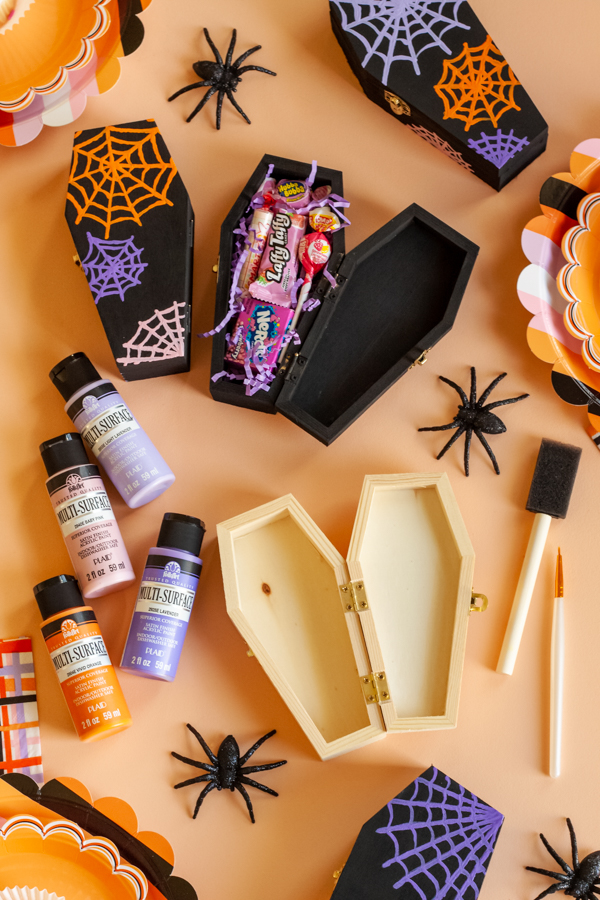
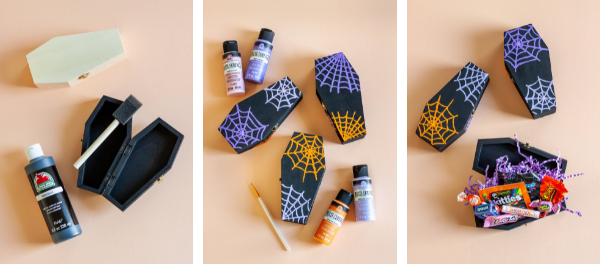
The initial stage of the project involves the application of a base coat to the unfinished wood or composite material of the coffin. Using foam sponge brushes—chosen for their ability to provide even coverage without the visible brushstrokes associated with traditional bristles—the exterior and interior surfaces are coated in black acrylic craft paint. This phase is critical as it provides the high-contrast background necessary for subsequent detailing. Technical requirements at this stage include a controlled drying environment to ensure the paint adheres correctly without warping the material.
Phase II: Geometric Detailing and Thematic Illustration
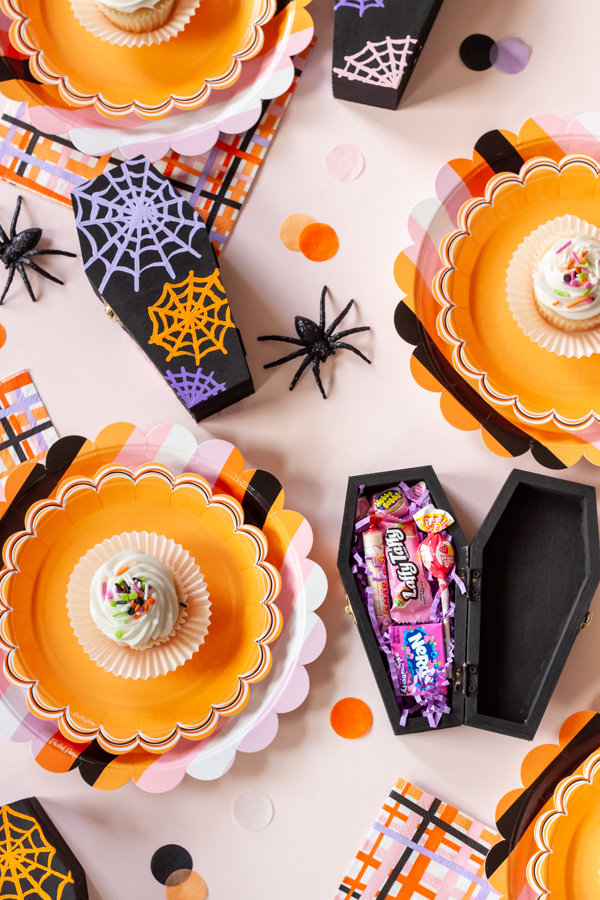
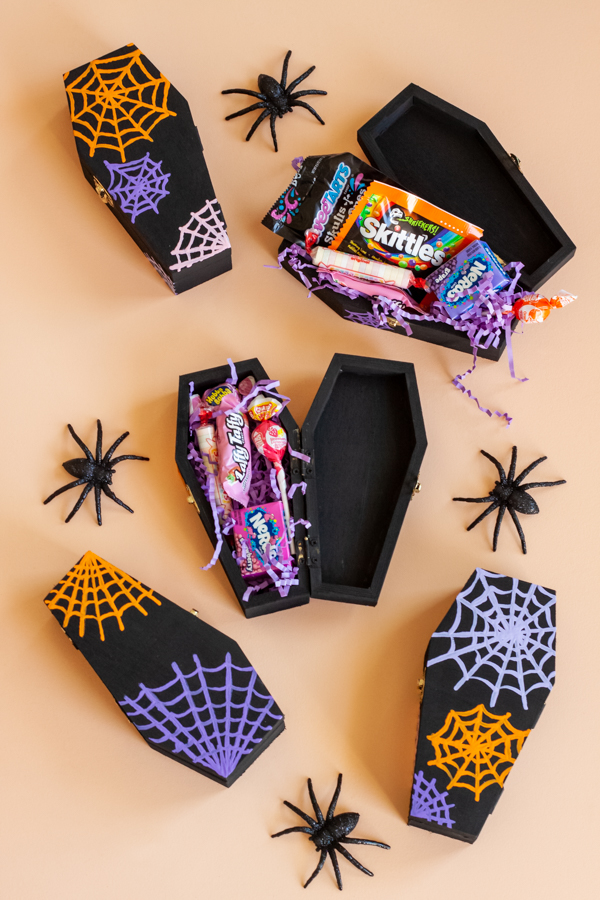
Once the primer is set, the "creepy cobweb" aesthetic is achieved through a systematic application of fine-line painting. This involves using a skinny paintbrush to draw "spokes" radiating from a central point on the coffin lid to its edges. The spiderweb effect is completed by painting concentric "scallops" or curved lines that connect the spokes. This step requires a steady hand and a basic understanding of radial symmetry, bridging the gap between simple craft and elementary graphic design.
Phase III: Personalization and Final Assembly
The final stage focuses on the functional utility of the item. To transform the decorative object into a personalized place card, alphabet stickers are applied to the interior of the lid. This serves a dual purpose: it manages guest seating arrangements during a formal dinner and provides a personalized keepsake. The coffins are then integrated with various confectionery products, such as Kinder eggs, candy corn, or lollipops, completing the transition from a raw material to a finished retail-grade party favor.
Consumer Behavior and the Psychology of Personalization
Market analysts suggest that the popularity of projects like the Candy Coffin is rooted in the psychology of "prosocial spending" and the "IKEA effect," a cognitive bias in which consumers place a disproportionately high value on products they partially created. By involving children and family members in the creation of party decor, hosts are able to create a more memorable and emotionally resonant event.
Furthermore, the integration of place cards—a staple of formal Victorian dining—into a "spooky" or "macabre" theme demonstrates the modern consumer’s penchant for "high-low" aesthetics. This blending of formal social etiquette with playful, seasonal themes is a hallmark of the millennial and Gen Z approach to hosting. The use of alphabet stickers to denote names inside the coffin lids reflects a broader trend toward "stealth personalization," where the custom element is a surprise discovered by the guest, thereby enhancing the user experience.
Retail Strategy and Sponsored Content Integration
The emergence of these crafting guides is often the result of sophisticated marketing partnerships. The "Candy Coffin" initiative, sponsored by Walmart, illustrates how modern retailers use content marketing to drive sales. Rather than traditional television or print advertisements, retailers are opting for "utility-based marketing"—providing the consumer with a "how-to" guide that naturally necessitates the purchase of specific products.
Industry experts note that this approach is highly effective in the digital age. By providing a list of materials with direct links to purchase (including acrylic craft paint sets, sponges, and specific candy brands like Dum Dums), the retailer removes friction from the consumer’s path to purchase. This "one-click" craft model is increasingly dominant in the e-commerce sector, as it caters to the time-constrained consumer who desires the prestige of a DIY project without the logistical burden of sourcing disparate materials.
Chronology of the Seasonal Crafting Surge
The rise of the DIY Halloween favor can be traced through a clear chronological progression over the last decade:
- 2010-2015: The Pinterest Era. The rise of visual discovery platforms led to an explosion of interest in "aesthetic" holidays. Consumers began moving away from plastic, store-bought "orange and black" decor toward more sophisticated, handmade items.
- 2016-2019: The Professionalization of the Hobbyist. Retailers began offering professional-grade tools (like precision brushes and high-pigment acrylics) to the general public, narrowing the gap between "crafts" and "fine arts."
- 2020-2022: The Pandemic Pivot. With large-scale public events canceled, families turned to home-based activities. Crafting became a primary source of entertainment and a way to maintain holiday traditions in a domestic setting.
- 2023-Present: The Integrated Retail Experience. Retailers now provide end-to-end solutions, where the project idea, the instructional video, and the material kit are all provided in a single digital ecosystem.
Broader Implications for the Craft Industry
The success of the "Candy Coffin" and similar projects has broader implications for the global craft and toy markets. According to data from the Creative Industries Association, the total value of the craft and hobby market in the United States exceeds $36 billion. Seasonal spikes, particularly around Halloween and Christmas, account for nearly 40% of annual revenue for many independent and big-box craft suppliers.
As consumers become more adept at these projects, there is a secondary impact on the "gig economy." Many individuals who begin by making favors for their own parties eventually transition into selling finished versions on platforms like Etsy or at local craft fairs. This creates a circular economy where the initial retail purchase from a company like Walmart fuels a secondary market of small-scale entrepreneurship.
Conclusion: The Future of Interactive Decor
As the 2024 holiday season approaches, the trend toward interactive and "double-duty" decor shows no signs of waning. The Candy Coffin project serves as a microcosm of the current retail climate: it is affordable, customizable, and serves multiple functional roles (decor, place card, and gift).
Looking forward, we can expect to see further integration of technology into these crafts—perhaps through the inclusion of QR codes inside the coffin lids that lead to digital playlists or AR (Augmented Reality) experiences. However, the core appeal remains rooted in the tactile, analog joy of painting and assembly. For retailers, the challenge will be to continue providing high-quality "blanks" and innovative content that inspires the next generation of "makers" to turn a simple wooden box into a centerpiece of holiday tradition. Through these creative endeavors, the modern Halloween celebration has become less about the "scare" and more about the "share," fostering community and creativity one craft project at a time.


