
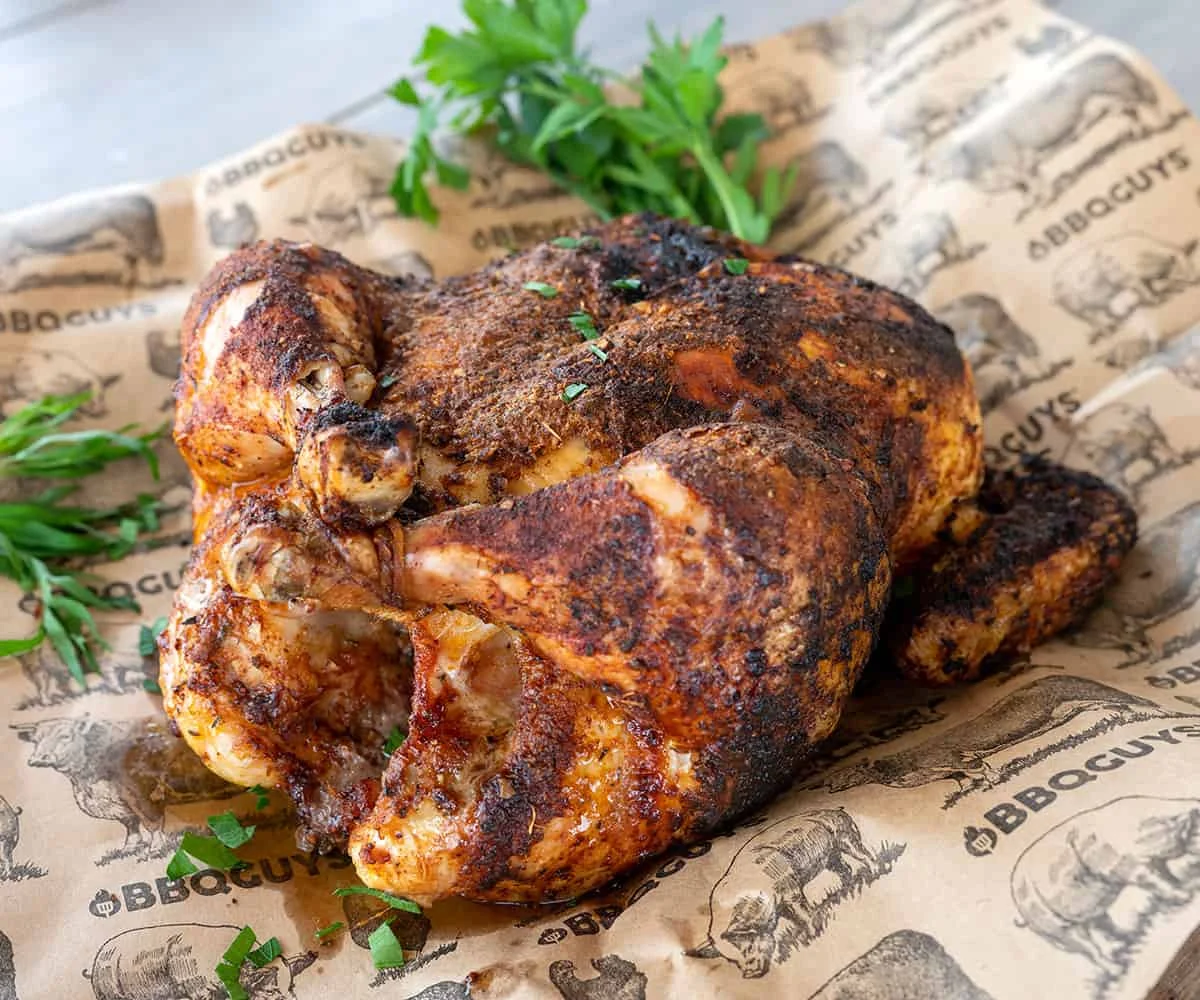
The quest for a perfectly grilled whole chicken, characterized by its smoky aroma and succulent interior, is a culinary endeavor that transforms simple ingredients – chicken, butter, and a flavorful rub – into a show-stopping centerpiece. This versatile technique can be executed on a variety of grills, including gas, charcoal, and pellet models, offering a consistent path to delicious results. The fundamental principle for achieving this culinary triumph lies in precise cooking, specifically adhering to indirect heat at a temperature range of 375-400°F. The general guideline suggests approximately 15-20 minutes of cooking time per pound, with the ultimate indicator of doneness being an internal temperature of 165°F in the thigh.
A common pitfall that prevents many home cooks from achieving a perfectly grilled chicken is the misapplication of cooking time. Relying solely on a predetermined total cooking duration, rather than calculating based on the chicken’s weight and employing the "minutes per pound" methodology, frequently leads to an unevenly cooked bird. This often manifests as a dry breast coupled with an undercooked thigh, a frustrating outcome that can be easily rectified by understanding and implementing proper grilling practices.
Years of dedicated testing and experimentation by grilling enthusiasts, such as those at Girls Can Grill, have refined this method, proving its efficacy across diverse grilling platforms. Whether utilizing a gas, charcoal, or pellet grill, the core principles remain consistent, ensuring that backyard cooks of all levels can achieve exceptional results. The process emphasizes not just the final temperature, but also the careful management of heat and time, which are crucial for transforming a whole chicken into a flavorful and juicy masterpiece.
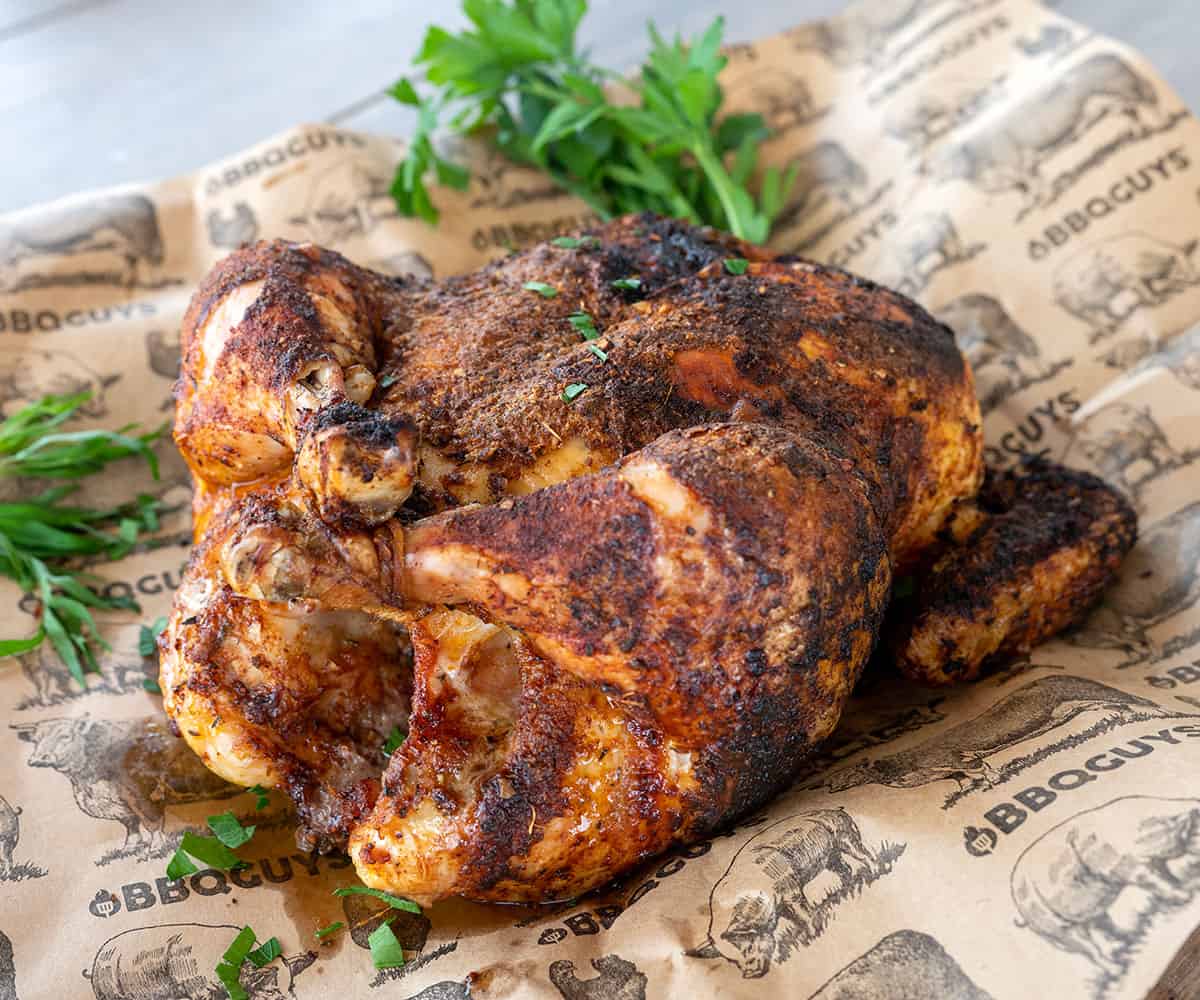
Understanding the Whole Chicken: From Butcher Counter to Grill
The term "whole chicken" encompasses a range of avian varieties, often identified by terms such as roaster, broiler, fryer, Cornish game hen, or poussin. For the purposes of this grilling technique, the most suitable candidates are roaster and broiler/fryer chickens, typically weighing between 4 and 7 pounds. Cornish game hens and poussins, being significantly smaller, are generally found in frozen sections and are not ideal for this specific grilling approach.
The economic and culinary advantages of grilling a whole chicken are substantial. The per-pound cost is often lower as it bypasses the labor of butchering. Furthermore, the presence of bones and skin during the cooking process imparts a richer flavor to the meat, contributing to a more satisfying and complex taste profile.
It is important to note that whole chickens commonly contain giblets within their cavity. These can include organs such as the gizzard, heart, and liver, along with the neck. These components, often found bagged between the legs or loose inside, should be removed prior to grilling. While they can be utilized for stocks or gravies, they are typically discarded when the focus is solely on grilling the chicken itself.
The Art of Grill Setup: Ensuring Indirect Heat Mastery
The cornerstone of a successfully grilled whole chicken lies in the proper setup of the grill to ensure indirect heat. This technique is vital for preventing the exterior of the chicken from charring before the interior is cooked through. The target temperature range for this indirect cooking method is consistently between 375°F and 400°F.

Grilling a Whole Chicken on a Gas Grill
For gas grills, achieving indirect heat involves strategically managing the burners. Typically, one burner is left off, while at least one other is ignited. The heat from the lit burner(s) is then adjusted to maintain the desired grill temperature. The chicken is placed on the grate directly above the unlit burner, ensuring it cooks via radiant heat rather than direct flame. To introduce a smoky dimension, a smoke box filled with wood chips can be placed over the lit burner.
Grilling a Whole Chicken on a Charcoal Grill
Charcoal grills require a different approach to indirect heat. On a kettle-style grill, hot coals are piled to one side of the charcoal grate. The cooking grate is then placed on top, and the chicken is positioned over the section of the grate devoid of coals. For more specialized charcoal units like drum smokers or ceramic cookers, a diffuser plate is employed to create a barrier between the direct heat source and the food, effectively establishing an indirect cooking zone.
Cooking a Whole Chicken on a Pellet Grill
Pellet grills inherently facilitate indirect cooking due to their design. The fire pot is typically located beneath a metal diffuser plate, which distributes heat evenly across the cooking grate. To grill a whole chicken on a pellet grill, the unit is set to 375°F. Once the grill reaches temperature, the chicken can be placed anywhere on the grate, as the entire surface will be subjected to indirect heat.
The Step-by-Step Culinary Process
Achieving a perfectly grilled whole chicken involves a meticulous preparation and cooking process, designed to maximize flavor and moisture retention.
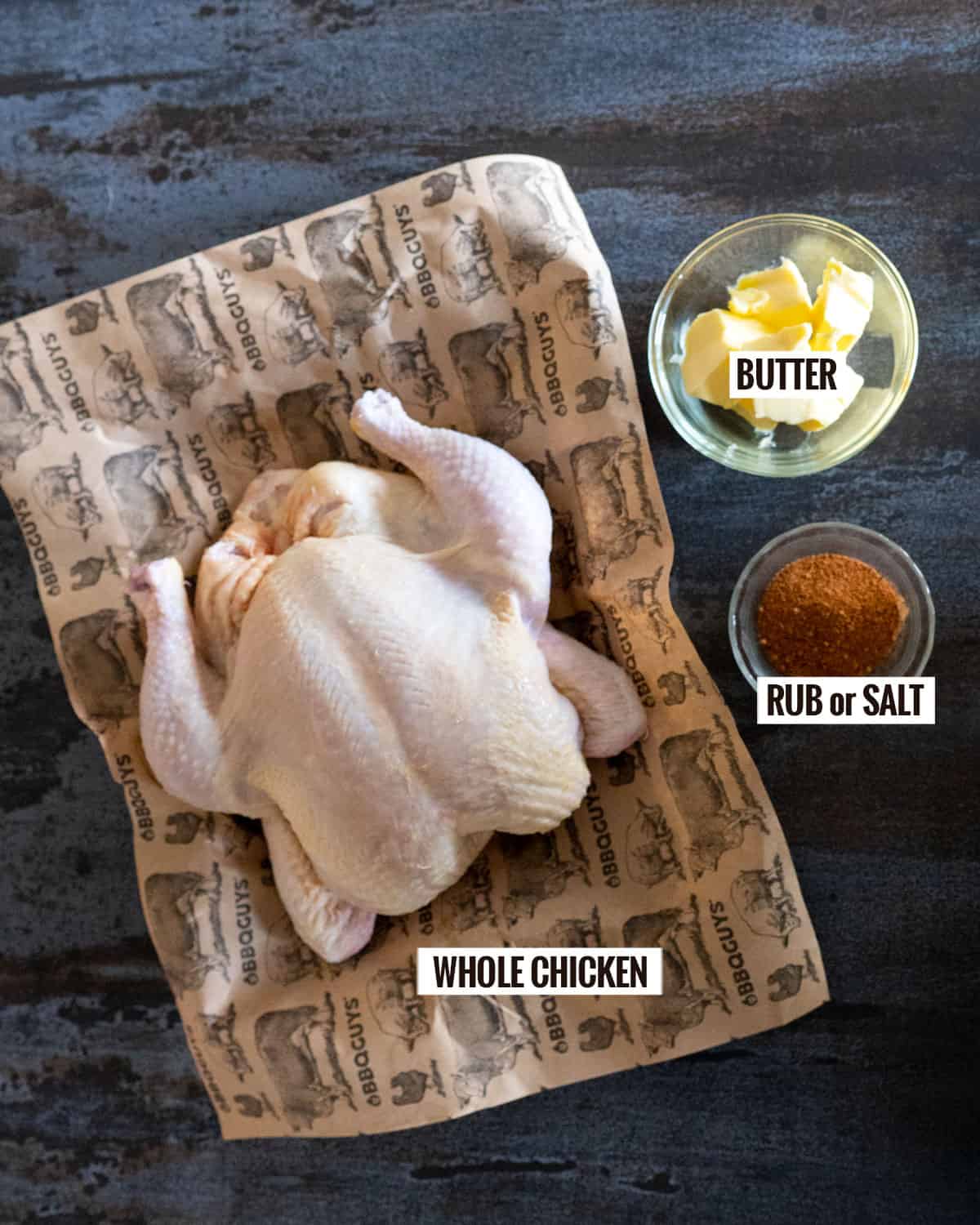
Step 1: Preparation and Butter Application
Begin by removing the chicken from its packaging. Reach into the cavity to remove and discard the neck and any included giblets. Thoroughly pat the chicken dry with paper towels. This step is crucial for achieving crispy skin. Subsequently, generously smear a softened stick of butter all over the exterior of the chicken. It is also beneficial to gently lift the breast skin and spread butter underneath for enhanced flavor and moisture.
PRO TIP: It is important to refrain from washing the chicken before grilling. Washing raw poultry can inadvertently spread harmful bacteria around the kitchen. Moreover, wet skin will prevent the butter from adhering effectively.
Step 2: Seasoning the Bird
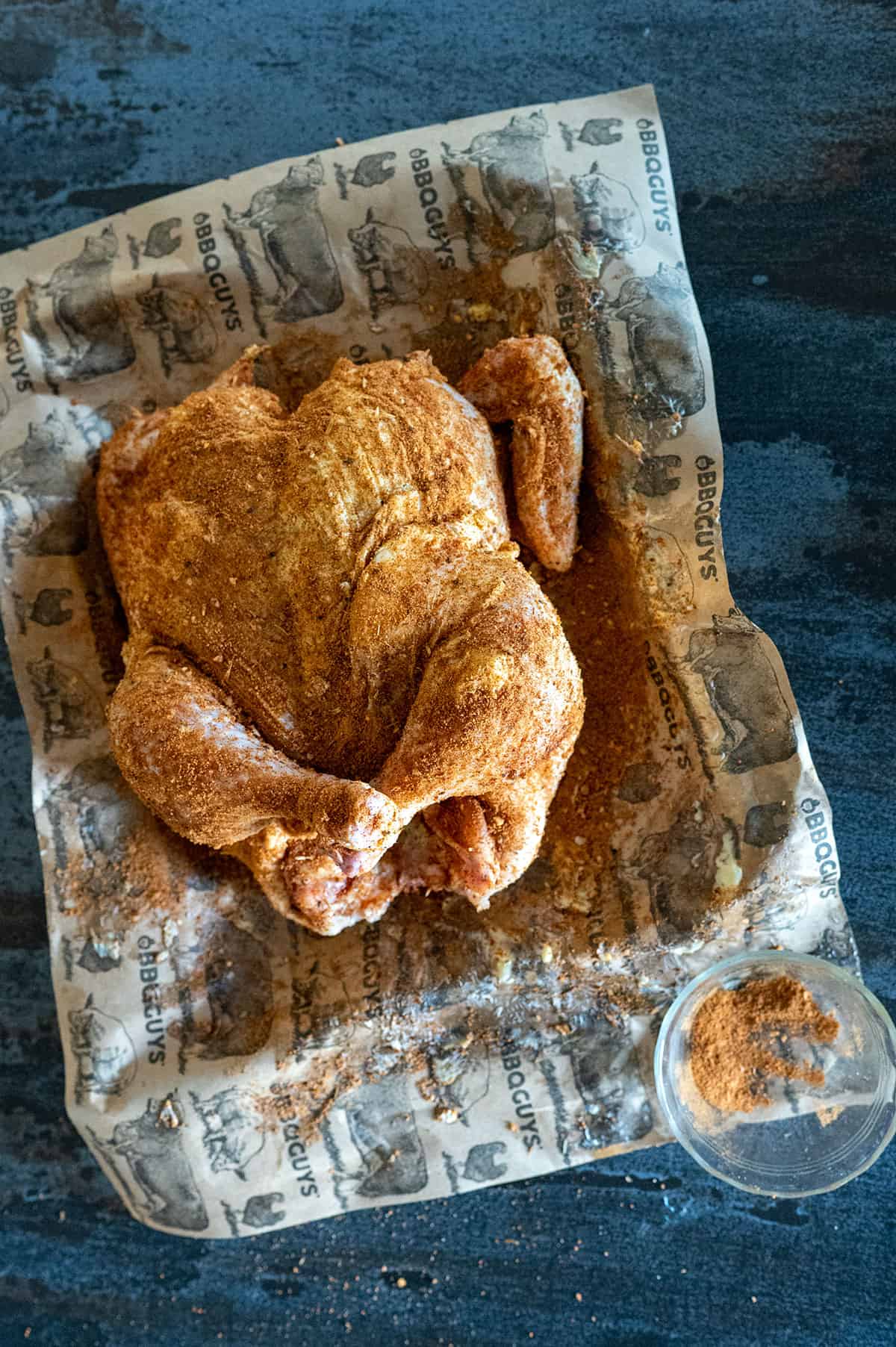
Once buttered, generously sprinkle your chosen rub all over the entire surface of the chicken. Ensure the rub reaches into all nooks and crannies, including under the wings and legs. A sprinkle of rub inside the cavity also adds depth of flavor. For a more aesthetically pleasing presentation, the legs can be tied together with butcher’s twine, though this step is entirely optional.
VARIATION: For an elevated flavor profile, consider creating a compound butter. Soften the butter and thoroughly mix it with a spoonful of your dry rub before applying it to the chicken.
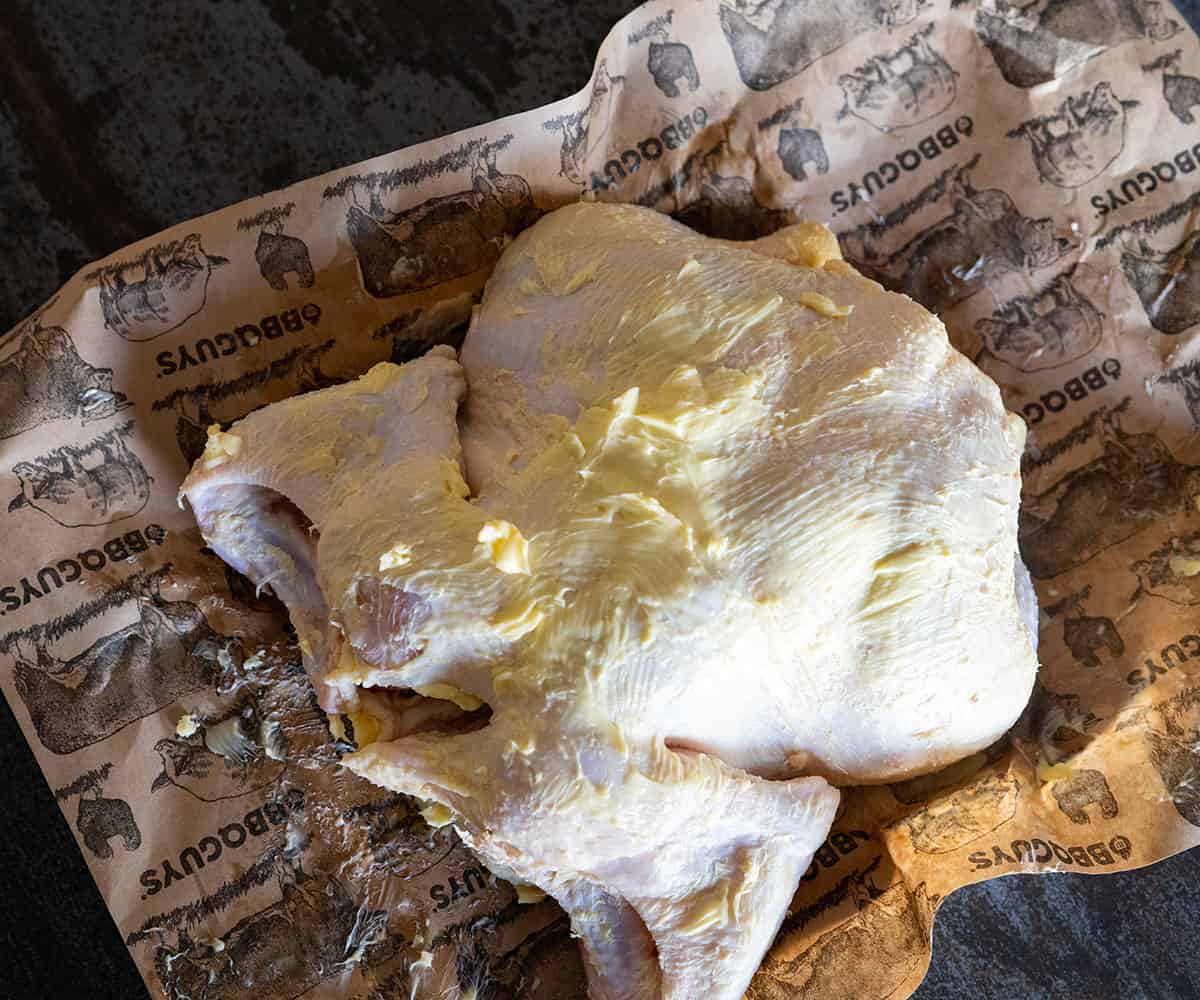
Step 3: Chilling for Crispiness and Flavor
After seasoning, place the prepared chicken, uncovered, in the refrigerator. This chilling period serves a dual purpose: it allows the seasonings to penetrate the meat, creating a dry brine effect, and it further dries the skin, which is essential for achieving a crispy exterior. Allow the chicken to chill while you preheat your grill to the target temperature of 375-400°F.
PRO TIP: For an even more pronounced flavor and moisture enhancement, allow the seasoned chicken to dry brine in the refrigerator for 4 to 8 hours. This extended period significantly contributes to juicier meat and exceptionally crispy skin.
Step 4: Grilling the Chicken
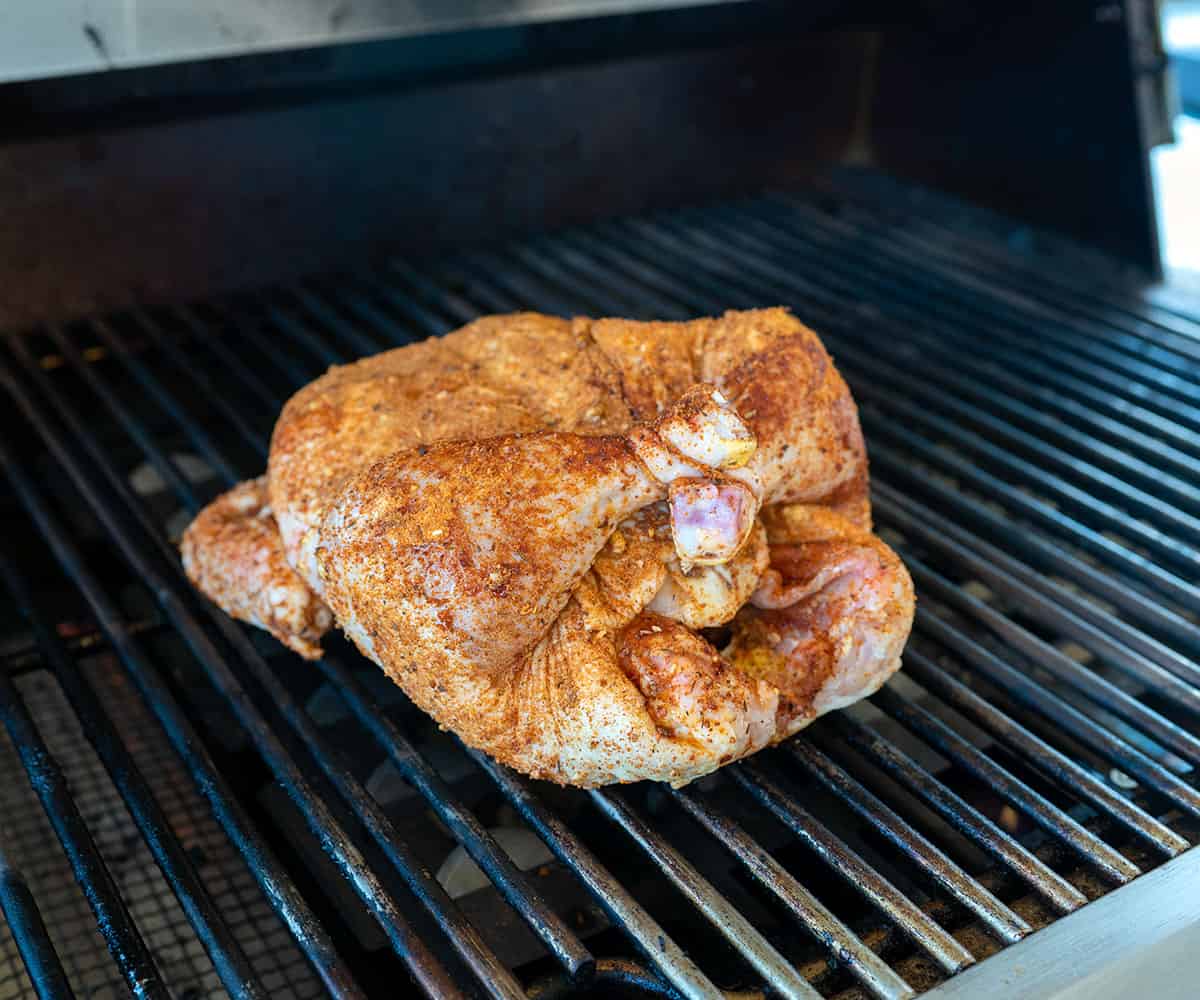
Once the grill is preheated and stable within the 375-400°F range, carefully place the chicken on the hot grate over the indirect heat zone, breast-side up. Close the grill lid promptly to maintain a consistent cooking environment.
Step 5: Cooking to Perfection
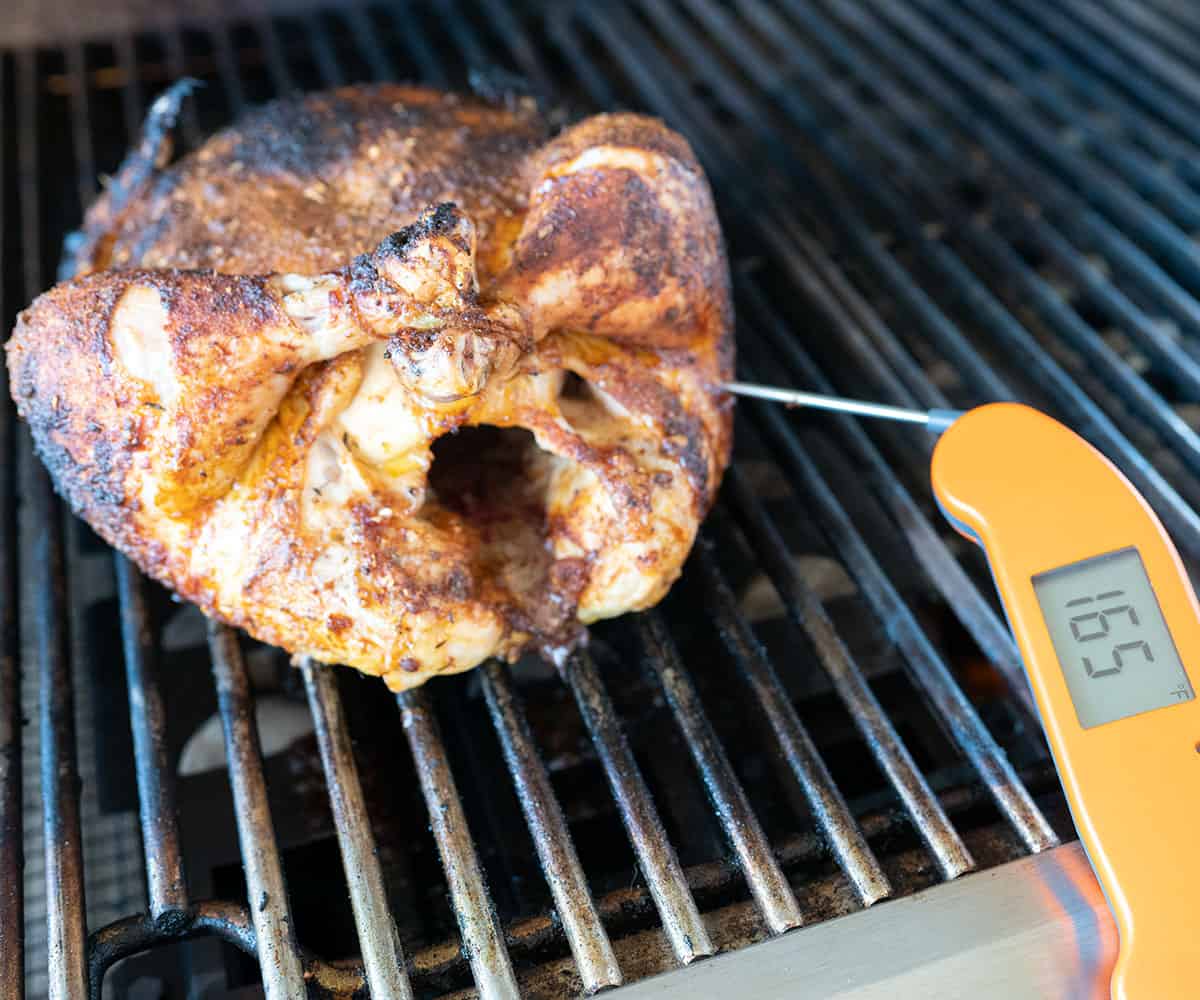
The grilling time will vary based on the size of the chicken, but a general estimate is 15-20 minutes per pound. The definitive indicator of doneness is an internal temperature of at least 165°F. To accurately measure this, insert an instant-read meat thermometer into the thickest part of the thigh, ensuring the probe does not make contact with the bone.
PRO TIP: If your grill’s heat source is predominantly on one side, it is advisable to rotate the chicken once or twice during the cooking process. This simple adjustment helps ensure more even cooking and browning.
Serving and Enjoying Your Grilled Masterpiece
Upon reaching the target internal temperature, carefully remove the grilled chicken from the grill. Tent it loosely with aluminum foil and allow it to rest for a minimum of 15 minutes. This resting period is crucial for allowing the juices to redistribute throughout the meat, ensuring maximum moisture and tenderness.
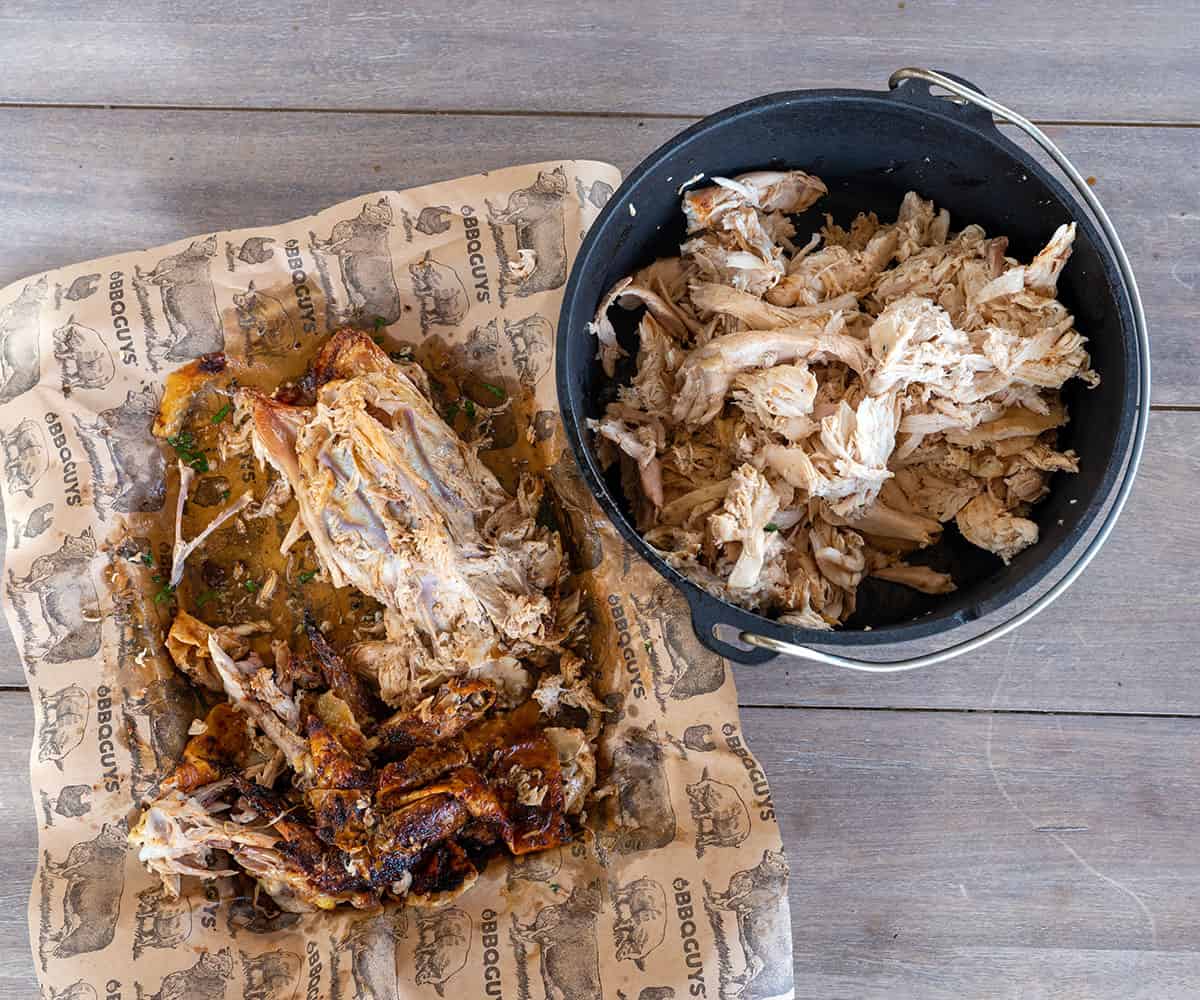
The perfectly grilled whole chicken can be carved into its constituent parts – wings, thighs, breasts, and legs – for individual serving. Alternatively, the meat can be pulled from the bones, creating versatile shredded chicken ideal for a multitude of culinary applications. Shredded chicken is a fantastic ingredient for dishes such as chili, enchiladas, quesadillas, taquitos, or as the base for sandwiches, complemented by a favorite barbecue sauce or Alabama white sauce.
Storage and Broth Creation
Leftover grilled chicken, whether in pieces or pulled, can be stored in an airtight container in the refrigerator for up to five days. For longer storage, it can be frozen for up to six months.
The bones of the chicken should not be discarded. They are an excellent resource for creating homemade chicken broth. Simmer the bones in a pot of water with diced onions, carrots, and celery. Once strained, this flavorful broth can be frozen for up to six months, providing a base for future soups and stews.
Expert Insights for Pitmaster Excellence
To elevate your grilled chicken game, consider these advanced tips:
- Achieve Perfect Crispy Skin: Ensure the chicken is thoroughly dried before grilling, and maintain a consistent grill temperature. A dry brine is a key technique for achieving superior crispiness.
- Compound Butter Variations: Experiment with different flavor combinations for compound butter, such as adding herbs like rosemary or thyme, or a touch of garlic powder and paprika to the softened butter.
- Smoke Infusion: For those who enjoy a pronounced smoky flavor, consider adding wood chunks or chips to your charcoal or pellet grill, or utilizing a smoke tube on a gas grill.
- Temperature Monitoring: While the "minutes per pound" is a useful guideline, always rely on a reliable meat thermometer for accuracy. Fluctuations in grill temperature or chicken thickness can impact cooking time.
- Resting is Key: Never skip the resting period. It is as critical as the cooking itself for ensuring a tender and juicy final product.
Frequently Asked Questions Answered
How many pounds is a whole chicken?
A whole chicken, typically including giblets, can range in weight from 4 to 7 pounds.
How do you make grilled whole chicken?
The process involves rubbing the chicken with butter, seasoning it generously, and then grilling it over indirect heat at 375-400°F on a gas, charcoal, or pellet grill. Cooking time is estimated at 15-20 minutes per pound, or until the thigh reaches an internal temperature of 165°F, followed by a 15-minute rest.
How long does it take to grill a whole chicken on a gas grill?
On a gas grill set to indirect heat at 375-400°F, a 5-6 pound chicken will typically take between 75 and 120 minutes to cook. It’s imperative to use a thermometer to confirm the thigh reaches 165°F, rather than relying solely on the clock.
How do you grill a whole chicken on a charcoal grill?
For a kettle-style grill, arrange hot coals to one side and place the chicken over the cooler side. On drum smokers or ceramic cookers, use a diffuser plate. Maintain a grill temperature of 375-400°F and cook for 15-20 minutes per pound until the thigh registers 165°F.
How many cups of chicken are in a whole chicken?
The yield of pulled meat from a whole chicken generally equates to approximately one loosely packed cup of cooked meat per pound of raw chicken. A 4-pound chicken will yield about 4 cups of shredded meat.
How many people does a whole chicken feed?
A whole chicken can serve approximately four people if presented in pieces (two pieces per person). If the meat is pulled, a 4-pound chicken can serve up to four people, and a 7-pound chicken can serve up to seven people, based on one cup of shredded meat per person.
Should I spatchcock a whole chicken instead of grilling it whole?
Spatchcocking, which involves removing the backbone and flattening the chicken, results in faster and more even cooking. However, it sacrifices the traditional whole-bird presentation. This recipe focuses on grilling the chicken intact for its classic visual appeal.
Why isn’t my grilled whole chicken skin crispy?
Common causes for soggy skin include insufficient drying of the chicken before cooking and a grill temperature that is too low. Ensuring the indirect heat zone maintains 375-400°F and thoroughly drying the chicken are crucial steps. A dry brine also significantly contributes to crispy skin.
Can I use compound butter on grilled whole chicken?
Absolutely. Mixing softened butter with your preferred rub before applying it to the chicken enhances both flavor and moisture during the grilling process.
What part of the chicken is dark meat?
The thighs and legs are considered dark meat due to their higher concentration of myoglobin, an oxygen-storing protein, which is more prevalent in frequently used muscles. The breasts and wings are classified as white meat.
What is beer can chicken?
Beer can chicken is a cooking method where a whole chicken is placed upright on a grill, with its cavity straddling a can of beer or other liquid. This method steams the chicken from the inside while it grills, resulting in moist meat.
This comprehensive approach to grilling a whole chicken, from understanding the bird to mastering the grill setup and executing each step with precision, empowers cooks to achieve consistently delicious and impressive results.


