
The universal appreciation for cheese, a staple in cuisines across the globe, is often met with a shared culinary dilemma: the arduous task of cleaning the grater after use. From the creamy, melt-in-your-mouth allure of grated mozzarella enhancing a pizza or pasta dish to the sharp, savory kick of Monterey Jack elevating burgers and salads, cheese undoubtedly elevates gastronomic experiences. Yet, this indulgence frequently culminates in a frustrating battle against sticky, stubborn residues lodged within the intricate grooves of a grater. This pervasive challenge has driven innovation in kitchen sanitation, highlighting the critical role of modern appliances, particularly the pull-down kitchen faucet with its high-pressure spray capabilities, in maintaining a hygienic cooking environment.
The Culinary Delight and the Cleaning Dilemma
Cheese, in its myriad forms, has been a cornerstone of human diet and culture for thousands of years. Its versatility allows it to be enjoyed fresh, aged, melted, or grated, making it an indispensable ingredient in virtually every culinary tradition. The act of grating cheese, while simple in concept, transforms a solid block into fine shreds or delicate curls, increasing its surface area for melting, blending, and flavor distribution. However, this very process also creates a notorious cleaning challenge. The soft, fatty nature of cheese means that tiny particles easily adhere to the sharp edges and small perforations of a grater. These greasy remnants, particularly from softer or semi-hard cheeses, stubbornly cling, resisting conventional scrubbing methods and often becoming embedded deep within the grater’s design. Whether it’s a traditional box grater, a handheld flat grater, or a rotary grater, the intricate metallic surfaces present numerous crevices that act as traps for cheese particles. The common instinct to immediately attack the mess with a sponge often exacerbates the problem, pushing particles deeper or transferring them to the cleaning tool itself, leading to an even more frustrating cleanup.
The Imperative of Kitchen Hygiene: More Than Just Aesthetics
Beyond the annoyance of a soiled utensil, the failure to thoroughly clean kitchen tools like cheese graters poses significant health risks. Food residues, especially dairy products, provide an ideal breeding ground for bacteria such as Listeria monocytogenes, Salmonella, and Escherichia coli. When cheese particles are left behind, even in microscopic amounts, they can rapidly multiply, forming biofilms that are even more resistant to cleaning. Subsequent use of the grater, or any utensil not properly sanitized, introduces these pathogens directly into fresh food, leading to cross-contamination. This can result in foodborne illnesses, ranging from mild digestive upset to severe infections requiring medical intervention. The Centers for Disease Control and Prevention (CDC) estimates that millions of Americans fall ill from foodborne diseases each year, underscoring the critical importance of meticulous kitchen hygiene. Public health guidelines consistently emphasize the need for thorough cleaning and sanitization of all food-contact surfaces and utensils after each use to prevent microbial buildup and ensure food safety for families. Therefore, effective cleaning is not merely about maintaining a tidy kitchen; it is a fundamental pillar of public health.
Evolution of Kitchen Sanitation Tools: A Timeline of Progress
The history of kitchen sanitation is a testament to human ingenuity in adapting to challenges. Early kitchens relied on basic tools and methods, often limited by water access and rudimentary cleaning agents. As plumbing systems advanced, so too did kitchen design. The late 19th and early 20th centuries saw the widespread adoption of indoor plumbing, bringing running water directly into homes. Initially, kitchen faucets were simple spigots, offering a single stream of water. The mid-20th century brought innovations like mixing faucets, allowing for temperature control, and eventually, the introduction of spray hoses, typically separate attachments for rinsing.
The true revolution in kitchen faucet design, particularly relevant to tasks like grater cleaning, arrived with the development of pull-down and pull-out faucets. These designs, gaining significant traction in the late 20th and early 21st centuries, integrated the spray function directly into the main faucet head. This innovation offered unparalleled flexibility, reach, and targeted water delivery. Manufacturers like Kraus USA, mentioned in the original context, have been at the forefront of developing such advanced faucet systems, emphasizing features like powerful spray functions and spot-free finishes to address common kitchen frustrations. The evolution from a basic water outlet to a multi-functional cleaning tool reflects a growing consumer demand for efficiency, convenience, and superior hygiene in the modern kitchen.
The Pull-Down Faucet: A Modern Solution to Stubborn Residues
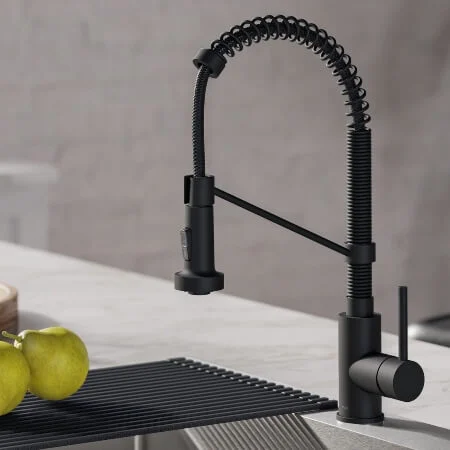
The contemporary pull-down kitchen faucet represents a significant leap forward in kitchen utility. Its defining characteristic is a spray head that can be detached from the main faucet body and extended, thanks to a flexible hose. This design offers an extraordinary range of motion, allowing users to direct a powerful stream of water precisely where needed. For challenging tasks like cleaning a cheese grater, this precision is invaluable. The forceful sprayer, often equipped with multiple spray patterns, can dislodge sticky cheese particles and other food debris from the grater’s tiny holes and crevices with remarkable efficiency.
Modern pull-down faucets are engineered with advanced internal mechanisms to generate a high-pressure spray while often remaining water-efficient, adhering to environmental standards. Many models feature dual-function spray heads, allowing users to switch between an aerated stream for filling pots and pans, and a powerful spray for rinsing. This versatility makes the faucet a central workhorse in the kitchen, not just for grater cleaning but for washing produce, rinsing dishes, and cleaning the sink itself. Furthermore, materials science has played a role, with many faucets now available in spot-free stainless steel or other resilient finishes that resist fingerprints and water spots, ensuring the fixture itself remains hygienic and aesthetically pleasing with minimal effort.
Optimizing Grater Cleaning with Advanced Faucet Technology
While the pull-down faucet offers a powerful solution, combining it with specific cleaning techniques can maximize its effectiveness in tackling cheese grater residues.
-
Immediate Action and Pre-Soaking: The most crucial step is to address the grater immediately after use. Allowing cheese to dry and harden makes it exponentially more difficult to remove. If immediate cleaning is not possible, a short pre-soak in hot water is highly recommended. Hot water helps to melt and soften the fatty components of the cheese, loosening their grip on the metal. Submerging the grater for 5-10 minutes can significantly reduce the effort required for the subsequent cleaning steps. The thermal energy from the hot water weakens the adhesive forces between the cheese proteins and fats and the metal surface.

-
Leveraging Acidic and Abrasive Agents: For particularly stubborn residues, natural cleaning agents can be highly effective. Lemon, a natural acid, works wonders. The citric acid in lemon juice helps to break down the proteins and fats in the cheese. Rubbing a cut lemon half directly over the grater’s surface, particularly the areas with trapped cheese, can dissolve the greasy film. For an added abrasive boost, a sprinkle of coarse salt (like kosher salt) on the lemon pulp can provide gentle scrubbing action without the risks associated with synthetic scrub pads. The salt crystals work to physically dislodge softened particles while the acid chemically breaks down the cheese, creating a powerful cleaning combination. This method is a safer alternative to metal brushes or abrasive sponges, which can damage the grater’s surface or leave fibers trapped in its holes.
-
The Force of the Faucet Sprayer: After pre-soaking and applying any natural cleaning agents, the pull-down faucet’s sprayer comes into its own. Position the grater under the faucet, utilizing the flexible hose to direct the powerful spray precisely at the clogged holes and grooves. The high-velocity water stream acts as a miniature pressure washer, effectively blasting away softened cheese particles. For optimal results, use hot water from the faucet, as the combination of heat and kinetic energy is far more effective than cold water. The ability to manipulate the spray head allows for thorough rinsing from all angles, ensuring that no residue remains. This targeted, forceful rinse is superior to simply running water over the grater, which often lacks the power to dislodge embedded particles.
-
Avoiding Common Pitfalls: While cleaning, exercise caution. The sharp edges of a grater can cause injury, so always handle it carefully. As mentioned, traditional scrub pads, especially those made of synthetic fibers, should be avoided. Their fibers can easily get caught in the grater’s small holes, creating a new, equally frustrating cleaning problem. If, by accident, fibers do become entangled, the precise and powerful spray of a pull-down faucet is again your best recourse. Its flexibility allows you to target the affected areas directly, often dislodging the trapped fibers without further intervention.
Beyond the Grater: Broader Applications and Consumer Impact
The benefits of a pull-down kitchen faucet extend far beyond the niche task of cleaning cheese graters. Its enhanced functionality significantly improves overall kitchen efficiency and hygiene. From rinsing large pots and pans to washing delicate fruits and vegetables, the flexibility and powerful spray make countless daily chores easier and faster. This convenience aligns with modern consumer trends towards smart, ergonomic kitchen solutions that simplify household tasks. Kitchen designers often recommend pull-down faucets not only for their practical utility but also for their sleek aesthetics, which complement contemporary kitchen designs.
Moreover, the emphasis on spot-free finishes and durable materials in these faucets speaks to a broader consumer desire for low-maintenance appliances. In an era where time is a premium, any feature that reduces cleaning time or effort is highly valued. The robustness of stainless steel construction, for example, ensures longevity and resistance to corrosion, representing a sound investment for homeowners. From an environmental perspective, many modern pull-down faucets are designed to be water-efficient, incorporating aerators that reduce flow rate without compromising spray power, thus contributing to water conservation efforts. This blend of functionality, durability, aesthetics, and environmental consciousness positions the pull-down faucet as an indispensable tool in the modern kitchen.
Choosing the Right Faucet: Key Considerations for Homeowners
When selecting a pull-down kitchen faucet, several factors warrant consideration to ensure it meets individual needs and preferences.
-
Handle Configuration: Faucets are typically available with single or double handles. Single-handle designs offer simplicity and ease of use, allowing temperature and flow to be controlled with one hand – a significant advantage when hands are messy during cooking. Double-handle models provide separate controls for hot and cold water, which some users prefer for precise temperature adjustment. However, for sheer convenience and often a cleaner aesthetic, single-handle pull-down faucets are increasingly popular.
-
Spray Head Functionality: As highlighted, the dual-function spray head (aerated stream and powerful spray) is a key feature. Evaluate the ease of switching between these modes and the strength of the spray. Some advanced models may offer additional spray patterns, such as a sweep spray that creates a wide, powerful blade of water, further enhancing cleaning capabilities. Magnetic docking systems for the spray head are also a desirable feature, ensuring the head securely retracts and stays in place when not in use.
-
Material and Finish: The choice of material and finish impacts both durability and aesthetics. Spot-free stainless steel is highly recommended for its resistance to fingerprints, water spots, and corrosion, making it easier to maintain a pristine appearance. Other popular finishes include chrome, bronze, and matte black, each offering a distinct visual appeal. Ensure the finish is robust and resistant to daily wear and tear.
-
Reach and Flexibility: Consider the size of your sink and the typical items you wash. A longer pull-down hose provides greater reach, which is beneficial for large sinks, multiple basins, or when needing to fill pots on the countertop. The flexibility of the hose and the smooth operation of the pull-down mechanism are crucial for a positive user experience.
-
Installation and Maintenance: While often a professional task, understanding the installation requirements can be helpful. Also, consider the ease of future maintenance, such as replacing aerators or spray head components. Reputable brands typically offer clear instructions and readily available replacement parts.
Ultimately, the choice of a kitchen faucet should align with one’s working style and hygiene priorities. For the hygiene-conscious and busy individual, a pull-down faucet with its powerful, flexible sprayer is not merely an upgrade; it is an essential tool that transforms potentially frustrating tasks into quick, efficient processes.
In conclusion, the humble cheese grater, while a source of culinary joy, has long presented a challenge in kitchen hygiene. However, the continuous evolution of kitchen technology, particularly the development of sophisticated pull-down faucets, offers a robust and effective solution. By combining the powerful, targeted spray of these modern fixtures with simple, scientifically sound cleaning techniques, home cooks can ensure their graters, and indeed their entire kitchen, remain immaculately clean and safe. This focus on efficiency and hygiene underscores a broader trend in kitchen design, where advanced appliances are increasingly integral to facilitating a healthier, more convenient, and enjoyable culinary experience.


