The culinary landscape for artisanal bread has been significantly enriched with the introduction of a distinctive Scalded Buckwheat and Malt Sourdough Bread. This particular creation stands out for its robust spice profile, featuring the aromatic depth of aniseed, the subtle sweetness of barley malt, and the earthy complexity of buckwheat, all integrated within a meticulously crafted sourdough matrix. Designed to offer profound warmth and satisfaction, particularly during colder seasons, this bread exemplifies a sophisticated approach to home baking, elevating traditional sourdough methods with nuanced flavor and textural innovation.
The Genesis of a Hearty Loaf: Responding to Culinary Demand
This unique sourdough development emerges at a time when consumer interest in artisanal, whole-grain, and flavor-forward breads is at an all-time high. The demand for comfort foods that offer both nutritional value and complex sensory experiences has driven bakers to explore unconventional ingredient combinations and time-honored techniques. The inspiration behind this recipe specifically targeted the creation of a substantial, spice-infused loaf capable of cutting through the pervasive chill of winter months, a testament to bread’s enduring role as a source of both sustenance and solace. By combining ingredients traditionally associated with hearty, rustic baking, this recipe provides a compelling answer to the contemporary palate’s quest for authenticity and depth.
Key Ingredients and Their Culinary Significance
The distinctive character of this bread is meticulously built upon a selection of ingredients, each playing a crucial role in its overall profile:
-
Aniseed: The Aromatic Backbone: Anise, a spice celebrated for its potent licorice-sweet and aromatic qualities, plays a central role in defining the character of this sourdough. Historically valued across various cuisines for both its flavor and perceived digestive benefits, aniseed is incorporated in ground form, ensuring its pungent aroma permeates every aspect of the loaf from the initial grinding stage to the final slice. Its assertive presence is carefully balanced by the other ingredients, preventing it from overpowering the overall profile, a testament to thoughtful recipe development. This strategic inclusion marks a departure from its more common use in smaller baked goods like biscotti, demonstrating its versatility in large-format loaves. The initial grinding of the aniseed releases a powerful, almost intoxicating aroma, signaling the depth of flavor to come.
-
Buckwheat: Earthiness and Texture: The choice of buckwheat flour introduces a layer of nutty, mineral, and subtly tannic notes, providing a crucial counterpoint to the anise’s sweetness. Beyond its distinctive flavor, buckwheat, a pseudo-cereal, contributes significant nutritional value, including essential amino acids, fiber, and various minerals. While its inherent lack of gluten structure typically results in a denser crumb, its judicious inclusion in this recipe is calculated to impart its earthy essence and a beautiful speckled appearance without compromising the bread’s overall texture. This strategic pairing creates a balanced and compelling flavor profile, appealing to palates seeking complexity in their daily bread. Culinary experts often highlight buckwheat’s ability to ground sweeter flavors, making it an ideal partner for anise.
-
Barley Malt Syrup: Sweetness and Color: Barley malt syrup contributes a rich, complex sweetness and a subtle malty flavor that complements both the anise and buckwheat. Beyond its flavor contributions, malt plays a critical role in the dough’s fermentation, providing fermentable sugars that enhance yeast activity and promote a robust rise. Furthermore, malt sugars contribute to the desirable deep brown crust and appealing caramelization during baking, a hallmark of well-crafted artisanal bread.
The Flour Scald Technique: Enhancing Texture and Longevity
A pivotal element in the textural success of this sourdough is the application of a flour scald, a technique closely related to the Asian yudane and tangzhong methods. This process involves gelatinizing a portion of the flour by mixing it with boiling water to form a thick, aromatic paste. Scientifically, this pre-cooking of the starch allows it to absorb and retain a significantly greater amount of water than uncooked flour. When incorporated into the main dough, the scald contributes a remarkably silky texture to the final bread, enhances its overall flavor, and critically, extends its shelf life by trapping moisture and retarding the staling process. This ancient technique, rediscovered in modern artisanal baking, demonstrates a sophisticated understanding of dough rheology and its impact on bread quality, ensuring a softer, more succulent crumb that remains fresh for longer. The visual transformation of the flour into a thick, glossy paste is a preliminary indicator of the unique texture it will impart.
Strategic Flour Selection: Optimizing Flavor and Structure
The foundational flour for this recipe is a high-extraction (Type 85) wheat flour, often exemplified by varieties like Cairnspring’s Trailblazer. This choice underscores the recipe’s objective of producing a hearty, substantial loaf suitable for diverse culinary applications, including sandwiches. High-extraction flour retains a greater percentage of the wheat kernel’s bran and germ compared to standard white flours, thereby contributing enhanced flavor, a richer nutritional profile, and a more complex textural dimension. Its use reflects a growing trend in artisanal baking towards flours that offer a fuller expression of the grain. Complementing this, a portion of whole wheat flour (e.g., Camas Country Hard Red Wheat) further enhances the nutritional value and deepens the earthy notes of the final product. The careful balance of these flours, particularly with the inclusion of buckwheat, aims to achieve a robust flavor without overly compromising the desired open crumb structure characteristic of sourdough.
A Meticulous Two-Day Baking Schedule for Optimal Results
The creation of this sourdough follows a meticulously planned two-day schedule, optimizing both flavor development and baker convenience. This structured approach, common in advanced sourdough recipes, ensures thorough fermentation and complex flavor maturation:
-
Day 1: Fermentation and Development:
- Levain Preparation (Morning): The process begins with preparing an active levain from a ripe sourdough starter, high-extraction wheat flour, and water. This mixture is allowed to ripen for approximately three hours at a controlled temperature of 74-76°F (23-24°C), ensuring peak activity for the main dough.
- Flour Scald Creation (Early Morning): Concurrently, the buckwheat flour scald is prepared by pouring boiling water over the flour, stirring to form a paste. This scald is then set aside to cool, ready for integration into the autolyse.
- Autolyse (Mid-morning): The high-extraction wheat flour, whole wheat flour, and water are combined with the cooled flour scald. This initial mixing, known as autolyse, allows the flours to fully hydrate and gluten development to begin passively over an hour, without the presence of salt or starter. This step is crucial for enhancing extensibility and reducing mixing time. The water temperature is carefully adjusted to target a final dough temperature of 78°F (25°C).
- Final Mix (Midday): The ripe levain and fine sea salt are incorporated into the autolyse. A portion of the total water is reserved and added gradually using the bassinage technique, allowing the baker to adjust hydration based on the dough’s consistency. This ensures the dough, with an overall hydration of 75% (or 83% including the scald water), remains manageable despite its inherently slack nature. Mechanical mixers or manual slap-and-fold techniques can be employed to achieve a smooth, cohesive dough.
- Bulk Fermentation (Afternoon): The mixed dough undergoes bulk fermentation for approximately three hours at a warm room temperature of 74-76°F (23-24°C). During this phase, two sets of gentle stretch-and-folds are performed at 30-minute intervals to build strength and equalize dough temperature. A targeted volume increase of about 30% indicates sufficient fermentation.
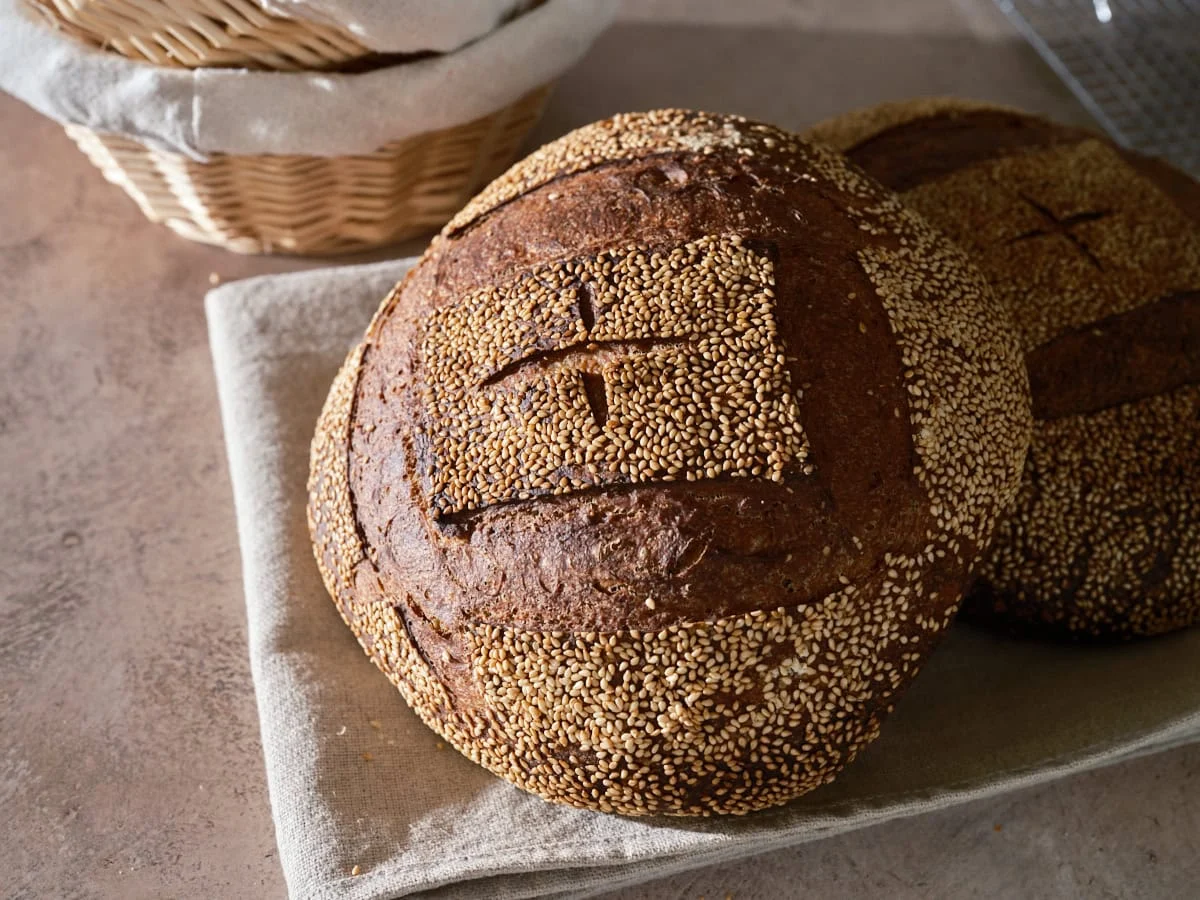
- Pre-shape and Shape (Late Afternoon): Following bulk fermentation, the dough is gently divided and pre-shaped into loose rounds, allowing a 30-minute rest for relaxation. The final shaping incorporates a "gather up" method, creating surface tension. The shaped loaves are then inverted onto white sesame seeds, which adhere to the moist exterior, adding both flavor and a striking visual contrast.
- Cold Proof (Overnight): The shaped loaves are transferred to proofing baskets, covered, and refrigerated for an extended cold proof overnight. This crucial step, known as retardation, significantly slows fermentation, allowing for deeper flavor development, improved crumb structure, and enhanced crust formation during baking.
-
Day 2: Baking for Peak Flavor and Texture:
- Preheating and Baking (Morning): The oven, equipped with a Dutch oven, combo cooker, or baking stone/steel with a steaming mechanism, is preheated to 450°F (230°C). The cold-proofed dough is then carefully scored and loaded into the preheated baking vessel.
- Steam and Dry Heat Phases: The initial 20 minutes of baking are conducted with steam (either by covering the vessel or introducing ice to a preheated pan), which promotes maximum oven spring and a glossy, tender crust. Following this, the steam is vented, and baking continues for an additional 30 minutes in a dry heat environment, allowing the crust to crisp and deepen in color. The internal temperature of a fully baked loaf should register around 204°F (95°C).
- Cooling: Critical for optimal flavor and texture, the loaves are allowed to cool completely on a wire rack for 1 to 2 hours before slicing. This allows the internal starches to set and moisture to redistribute evenly.
Nutritional and Market Implications
This Scalded Buckwheat and Malt Sourdough Bread taps into several significant food trends. The resurgence of sourdough baking is not merely a culinary fad but reflects a growing appreciation for traditional fermentation processes, which can enhance nutrient bioavailability and digestibility. The inclusion of buckwheat, a gluten-free pseudo-cereal, caters to the increasing demand for diverse grain options and adds a unique nutritional dimension. Furthermore, the emphasis on hearty, spice-forward profiles aligns with consumer desires for adventurous yet comforting food experiences. The recipe’s success demonstrates the potential for artisanal bakers, both professional and amateur, to push the boundaries of flavor and texture within the sourdough tradition, offering a compelling alternative to more conventional bread varieties.
Notes on Customization and Alternatives
For bakers seeking to adapt this recipe, several substitutions are possible without compromising its core integrity. If high-extraction flour is unavailable, a blend of 90% bread flour and 10% whole wheat flour can serve as an effective substitute, offering a similar balance of structure and flavor. For the barley malt syrup, blackstrap molasses provides a more pronounced bitter-rich note, while honey offers a more floral sweetness that harmonizes exceptionally well with anise. In terms of spices, caraway seeds can be utilized as an alternative to aniseed, providing a somewhat similar warm, pungent flavor profile. For those experimenting with single loaves, all ingredient quantities can be proportionally halved, maintaining the recipe’s precise ratios and methods. The precise hydration level of this dough (75% total, or 83% including the scald) is high, and bakers are advised to exercise discretion with the final addition of water, ensuring the dough remains workable.
This Scalded Buckwheat and Malt Sourdough Bread stands as a testament to thoughtful ingredient pairing and advanced baking techniques. It offers a complex, satisfying loaf that transcends the ordinary, enriching the daily ritual of breaking bread with a symphony of flavors and textures. Its meticulous process and robust profile position it as a significant contribution to the evolving world of artisanal sourdough.