
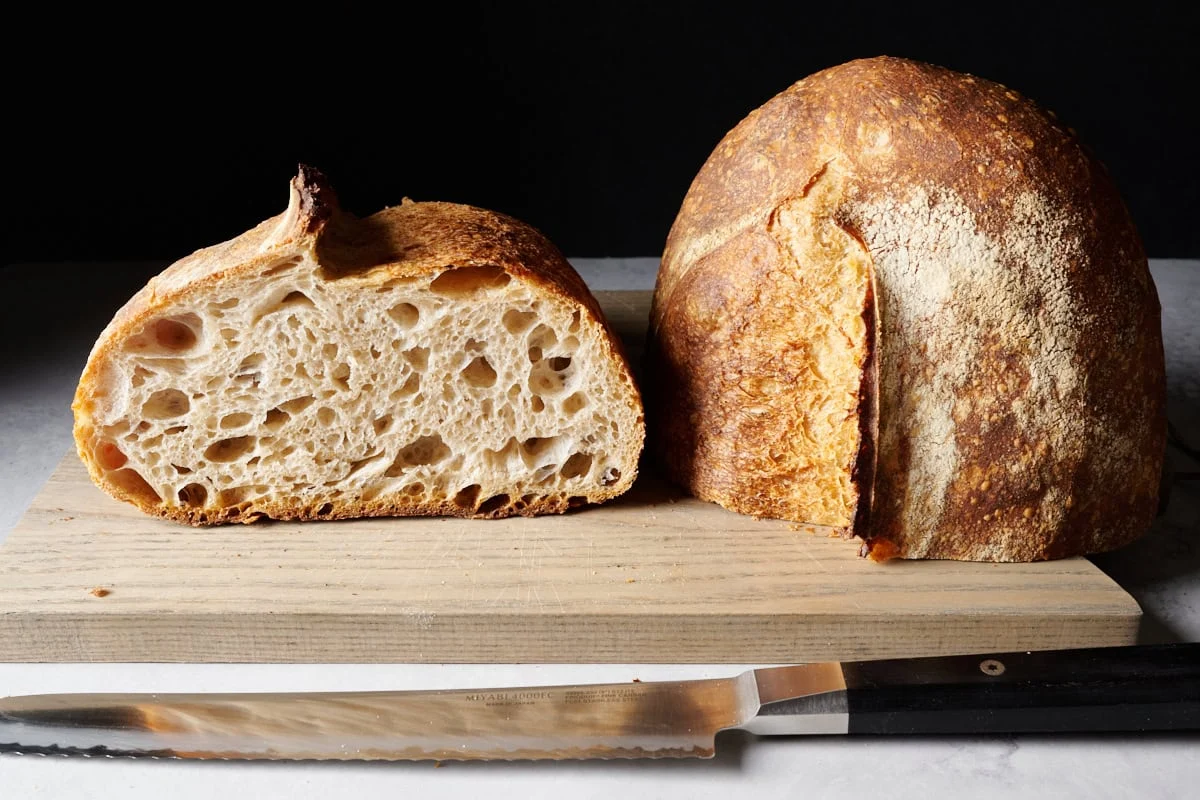
The distinct tang of sourdough bread, a hallmark of its artisanal appeal, is far from a fixed characteristic. Instead, it represents a sophisticated interplay of microbiology, time, and temperature, offering bakers a remarkable degree of control over their final product. This comprehensive guide delves into the scientific principles and practical methodologies that allow both amateur and professional bakers to precisely calibrate the sourness of their sourdough loaves, transforming a seemingly mystical process into a predictable culinary art.
Understanding the Sour Spectrum: Lactic and Acetic Acids
The characteristic flavor of sourdough originates primarily from two organic acids produced during fermentation: lactic acid and acetic acid. These acids are the metabolic byproducts of lactic acid bacteria (LAB) within the sourdough starter and dough. Understanding their individual contributions and the conditions that favor their production is fundamental to controlling sourness.
Lactic acid, often associated with yogurt and fermented dairy products, imparts a smooth, mellow, and less aggressive sourness. It contributes to the overall complexity and creamy mouthfeel of the bread, often described as a "rounded" acidity. Acetic acid, conversely, is sharper, more pungent, and readily identifiable with vinegar. It delivers the assertive, "mouth-puckering" tang that many associate with traditional sourdough. A key distinction lies in their volatility: acetic acid has a higher vapor pressure, meaning it is more volatile and therefore more perceptible through smell, contributing to the distinct "vinegary" aroma of an overly ripe starter or dough.
The ratio of these two acids significantly influences the final flavor profile. This ratio is not arbitrary; it is a direct consequence of the environment within the dough, particularly temperature, hydration, and the available substrate (sugars).
The Microbial Orchestra: Yeast, Bacteria, and Their Environment
Sourdough fermentation is a symbiotic dance between wild yeasts, primarily Saccharomyces cerevisiae (though other species may be present), and a diverse community of lactic acid bacteria. While yeasts are responsible for producing carbon dioxide, which leavens the bread, LAB are the primary architects of flavor.
Lactic acid bacteria can be broadly categorized into two groups: homofermentative and heterofermentative. Homofermentative LAB predominantly produce lactic acid from sugars, while heterofermentative LAB produce a mix of lactic acid, acetic acid, ethanol, and carbon dioxide. The balance and activity of these bacterial types are highly sensitive to environmental factors. For instance, cooler temperatures and lower hydration levels tend to favor heterofermentative bacteria, leading to a higher proportion of acetic acid. Conversely, warmer temperatures and higher hydration often encourage homofermentative activity, resulting in a more lactic-dominated profile.
Crucially, the pH level of the dough acts as a critical regulator of microbial activity. As LAB metabolize sugars and produce acids, the pH of the dough progressively drops. This increasing acidity eventually inhibits bacterial growth, creating a self-limiting process. The buffering capacity of the flour, primarily its mineral content (ash), also plays a significant role. Flours with higher ash content (like whole grains) can absorb more acid before the pH drops to inhibitory levels, allowing for greater total acid accumulation.
Historical Context: A Journey Through Sourdough Science
The practice of sourdough baking dates back thousands of years, with archaeological evidence suggesting its use in ancient Egypt. For millennia, the process was understood empirically, passed down through generations of bakers who instinctively learned to manage their starters and doughs. The scientific understanding of sourdough, however, began to crystallize with the advent of microbiology in the 19th and 20th centuries.
Pioneering work by figures like Louis Pasteur laid the groundwork for understanding microbial fermentation. Later, food scientists meticulously identified the specific yeast and bacterial strains present in sourdough starters and began to unravel their complex metabolic pathways. Research conducted in the mid-20th century, and increasingly in recent decades, has provided detailed insights into how temperature, hydration, flour type, and fermentation duration precisely influence the production of lactic and acetic acids. This scientific underpinning has transformed sourdough baking from an art reliant on intuition into a craft informed by precise, measurable parameters, allowing for intentional flavor manipulation rather than serendipitous outcomes.
Precision Control: Strategies to Increase Sourdough Tang
For bakers seeking an assertive, pronounced sourness in their loaves, several key levers can be pulled during the bread-making process:
-
Optimizing Starter Ripeness for Acidity: The most direct method to boost sourness is to utilize a starter that has fermented past its peak ripeness. A starter at this stage will typically have a strong, pungent, vinegary aroma, a loose, collapsed consistency, and abundant bubbles. When the starter has consumed most of its readily available carbohydrates, its microbial community continues to metabolize residual sugars and even proteins, accumulating a higher concentration of both lactic and acetic acids. Integrating this highly acidic levain into the dough sets a lower initial pH, but its significant acid load carries through to the final product.
-
The Extended Cold Proof: A Catalyst for Acetic Acid: Refrigeration, or "cold proofing" (retardation), is arguably the most reliable method for developing a pronounced tang. While cold temperatures slow microbial activity, they affect yeast and bacteria differentially. Yeasts are often less inhibited by cold than many LAB strains, meaning they continue to produce sugars that are then available for bacterial fermentation. Crucially, cooler temperatures specifically favor the production of acetic acid by heterofermentative LAB. An overnight proof of 12-16 hours will yield subtle sourness, but extending this to 24, 48, or even 72 hours, as seen in some specialized recipes, will dramatically increase acetic acid accumulation, resulting in a much sharper, more complex tang. A study published in the Journal of Cereal Science (2008) highlighted that prolonged cold fermentation significantly shifts the lactic-to-acetic acid ratio in favor of acetic acid, correlating directly with increased sensory perception of sourness. The trade-off, however, can be a reduction in oven spring due to enzymatic degradation of gluten over extended periods.
-
Stiff Levains: Concentrating Flavor: The hydration level of the levain plays a significant role in acid production. A stiffer levain (typically 50-65% hydration) creates an environment with lower water activity, which can differentially slow microbial metabolism. While overall fermentation might be slower, these conditions tend to favor acetic acid production over lactic acid. This is because the reduced water availability and potentially higher osmotic pressure can stress certain LAB, pushing their metabolic pathways towards acetic acid. The key, as noted in the original article, is sufficient ripening time. A stiff levain that ripens for an extended period will accumulate more acetic acid, imbuing the final loaf with a sharper tang.
-
Embracing Whole Grains: The Power of Ash Content: Incorporating whole-grain flours, particularly rye, is an effective strategy for increasing sourness. The primary reason lies in their higher ash content, which corresponds to a greater mineral profile. These minerals act as natural buffering agents, resisting changes in pH. In essence, the higher buffering capacity of whole grains allows LAB to produce a greater total amount of acid before the dough’s pH drops to a level that inhibits their activity. Rye flour is particularly potent due to its specific enzymatic activity and unique polysaccharide composition, which further support robust bacterial fermentation and acid production, even at small percentages. A loaf made with 100% whole wheat or a significant percentage of rye will invariably exhibit a more pronounced tang than one made predominantly with refined white flour, given similar fermentation parameters.
-
Warm Fermentation: Maximizing Total Acid Production: While cooler temperatures favor acetic acid, warmer bulk fermentation temperatures (e.g., 78-82°F / 25-28°C) generally encourage overall greater bacterial activity. Most LAB strains thrive in moderately warm conditions (mesophilic range, often peaking around 89-91°F / 32-33°C). Keeping the dough in this "comfort zone" allows bacteria to metabolize sugars more rapidly and for a longer duration before the inhibitory pH threshold is reached. This results in a higher total acid production, contributing to a more generally sour, often lactic-dominated, flavor profile. Combining a moderately warm bulk fermentation with an extended cold proof offers a synergistic effect, yielding both high total acidity and a desirable acetic acid component.
-
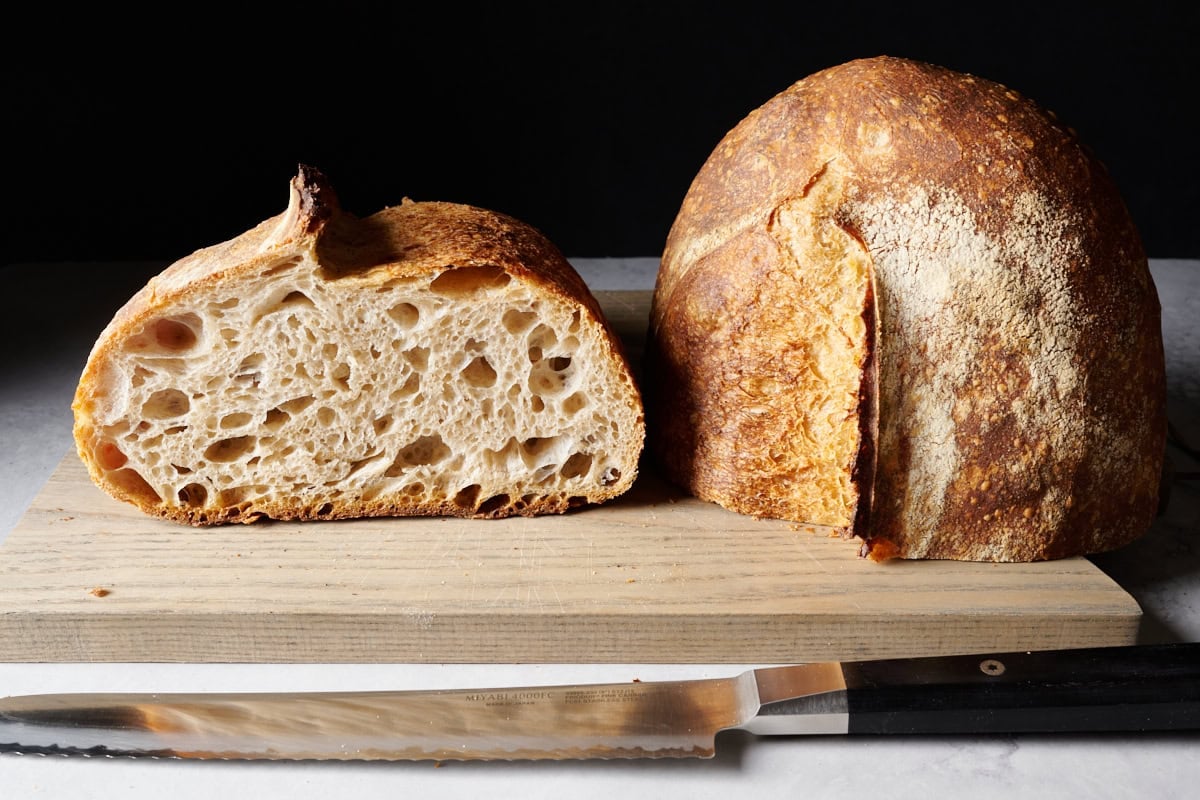
The Nuance of Levain Percentage: Smaller for Greater Acidity: Counterintuitively, using a smaller levain percentage (e.g., 10-15% pre-fermented flour) can lead to a more sour loaf. A larger, already acidic levain quickly drops the dough’s initial pH. As discussed, bacteria are sensitive to low pH, and their activity diminishes as acidity rises. A dough starting at a higher pH (due to a smaller levain) provides bacteria with a longer "runway" to gradually produce and accumulate acids before their activity is significantly inhibited. This necessitates a longer overall fermentation time, but it allows for a greater total acid development over the entire process.
Cultivating Milder Profiles: Techniques to Reduce Sourness
For those who prefer a more nuanced, subtle sourness—a "background note" rather than a dominant flavor—the opposite strategies apply:
-
Vigilant Starter Maintenance: Diluting Acidity: The most effective way to produce a milder loaf is to maintain a consistently healthy and frequently fed starter. Regular feedings (ee.g., daily or every 12 hours) constantly dilute the accumulated acids and provide fresh food, preventing the starter from becoming overly acidic. A well-fed starter used at its peak ripeness—risen, bubbly, and with a mild, pleasant aroma—will contribute less pre-formed acid to the dough.
-
The Young Levain Approach: Prioritizing Yeast Activity: Utilizing a "young" levain, one that has risen but has not yet reached its absolute peak or begun to collapse, is key to minimizing sourness. At this stage, yeast activity is high, but acid accumulation is still relatively low. Bakers often refer to this as a "booster levain" due to its robust leavening power with minimal flavor contribution. A typical young levain might be fermented at a 1:1:1 ratio (starter:flour:water) at 78-80°F (25-27°C) for 3-4 hours, used when it shows good activity and a sweet, subtly sour aroma. This is a common strategy in sourdough pizza, where a strong rise without overpowering tang is desired.
-
Accelerated Cold Proofing or Room Temperature Fermentation: Shortening or eliminating the cold proof is a direct route to reducing sourness. Instead of an overnight refrigeration of 16-18 hours, opting for 10-12 hours, or even a full room-temperature proof (2-4 hours, depending on ambient temperature), significantly limits the time available for acid accumulation, especially acetic acid. This yields a bread with a fresher, more grain-forward flavor profile.
-
Liquid Levains: Favoring Lactic Harmony: A higher hydration levain (e.g., 100% hydration, equal parts flour and water by weight) fosters an environment where lactic acid production is favored. The increased water activity allows for more efficient metabolism by homofermentative LAB, leading to a smoother, yogurt-like sourness rather than a sharp, vinegary bite. Many popular sourdough recipes designed for balanced flavor profiles utilize 100% hydration levains.
-
Cooler Fermentation: Limiting Total Acid Development: While cooler temperatures in the cold proof shift the acid ratio towards acetic acid, a cooler and shorter bulk fermentation (e.g., maintaining a lower dough temperature, around 72-75°F / 22-24°C) will generally result in less total acid accumulation. The overall slower metabolic activity of bacteria means less acid is produced during the primary fermentation phase, leading to a milder loaf. This must be carefully managed to avoid underproofing.
-
Strategic Levain Sizing: Larger for Faster Fermentation: Using a larger levain percentage (e.g., 25-35% pre-fermented flour) will introduce more active microbes, accelerating fermentation. This rapid fermentation means the dough reaches full proof more quickly, leaving less time for acids to develop significantly. Additionally, a larger levain often contributes a higher initial acid load, causing the dough’s pH to drop faster, which can prematurely slow further bacterial acid production.
Addressing Common Sourdough Dilemmas
Bakers frequently encounter specific questions and challenges regarding sourdough sourness:
-
Does a Longer Cold Proof Make Bread More Sour? Unequivocally, yes. The differential activity of yeast and bacteria at cold temperatures is the primary mechanism. Yeast, being more tolerant of cold, continue to produce sugars, which heterofermentative LAB then convert into a higher proportion of acetic acid. While overall fermentation slows, the type of acid shifts, making the perceived sourness more pronounced. Experiments show a clear correlation: 12 hours yields subtle tang, 18-24 hours a noticeable tang, and 48+ hours a distinctly assertive sourness. However, pushing beyond 24 hours risks over-fermentation, leading to a compromised gluten structure and reduced oven spring.
-
Does Using More Starter or Levain Increase Sourness? This is a nuanced point often misunderstood. Simply increasing the pre-fermented flour (PFF) percentage does not automatically guarantee more sourness. As previously explained, a larger, highly ripened levain introduces a significant amount of acid, causing a rapid drop in the dough’s initial pH. This can actually limit the subsequent acid production by bacteria, as their activity is inhibited by high acidity. Conversely, a smaller levain allows the dough to start at a higher pH, providing a longer window for gradual acid accumulation during an extended fermentation. Therefore, manipulating other variables like starter ripeness, dough temperature, and overall fermentation time often yields more predictable results than merely increasing levain percentage.
-
Why Does My Bread Have No Tang at All? This common frustration can stem from several factors:
- Immature Starter: A new starter (under 2-3 weeks old) may not have developed a robust enough bacterial population to produce significant acids. Patience and consistent feeding are key for maturation.
- Levain Used Too Young: If the levain is incorporated before it has adequately ripened and accumulated acids, its contribution to flavor will be minimal. Ensure it has at least doubled and exhibits a hint of tang.
- Insufficient Fermentation Time: Both bulk fermentation and proofing contribute to flavor. Rushing these stages, or working in a very warm environment that accelerates fermentation, can lead to insufficient time for acid development. Extending fermentation by 30-60 minutes or incorporating a cold proof can help.
- Overly Warm Kitchen: Temperatures above 80°F (27°C) can cause fermentation to proceed too rapidly, leading to a fully proofed dough before adequate flavor has developed. Adjusting mixing water temperature or relying more on an extended cold proof can mitigate this.
- Exclusive Use of Refined White Flour: As discussed, low-ash refined flours have less buffering capacity, limiting the total acid that can be produced before bacterial activity is inhibited. Incorporating a small percentage of whole wheat or rye can significantly boost tang.
Implications for Bakers and the Broader Culinary Landscape
The ability to control sourdough acidity has profound implications for both home bakers and commercial operations. For home bakers, it transforms the baking process into a dynamic experiment, fostering a deeper understanding of microbial biology and personalizing the final product to individual taste preferences. This mastery contributes to the growing trend of artisanal home baking, where quality and customization are paramount.
In the commercial sphere, precise control over sourness is crucial for product consistency and market positioning. Bakeries often aim for specific flavor profiles to differentiate their offerings, catering to diverse consumer preferences ranging from mild, approachable sourdoughs to intensely tangy, traditional European-style loaves. Food scientists and master bakers in commercial settings employ advanced techniques, including pH meters, titratable acidity measurements, and controlled fermentation chambers, to ensure batch-to-batch uniformity and targeted flavor development. The rise of interest in ancient grains and diverse fermentation techniques also highlights a broader culinary movement towards exploring the full spectrum of sourdough’s potential.
Conclusion
Sourdough baking is a journey of continuous learning and adaptation. The inherent adjustability of its flavor profile, particularly its sourness, stands in stark contrast to the more monolithic characteristics of commercial yeast breads. By understanding the intricate "conversation" between time, temperature, flour composition, and microbial activity, bakers gain unparalleled control over their loaves. Experimentation, coupled with meticulous observation and note-taking, is the key to developing an intuitive sense for producing the desired flavor profile. There is no single "correct" level of sourness; the ideal tang is ultimately a matter of personal preference, a reflection of the baker’s skill and artistic vision. The ongoing exploration of sourdough’s flavor dimensions ensures that this ancient craft remains a vibrant and endlessly rewarding pursuit.


