A highly anticipated return to the culinary spotlight has seen the re-release of a fundamental recipe for three-ingredient fig jam, designed specifically for home canning. After a hiatus exceeding a year, the creator behind Food in Jars has unveiled this straightforward method, emphasizing accessibility and safety for enthusiasts keen on preserving the bounty of fig season. The recipe, which relies solely on fresh figs, sugar, and lemon juice, aims to provide a bright, flavorful, and reliable option for managing annual fig harvests.

The Resurgence of Home Canning and Seasonal Preservation
The re-introduction of this recipe comes at a time when interest in home food preservation is experiencing a significant resurgence. Driven by desires for food security, reduced waste, control over ingredients, and a deeper connection to seasonal produce, individuals are increasingly turning to traditional methods like canning. This practice, dating back to the late 18th century with French confectioner Nicolas Appert, has evolved into a well-researched science, with organizations like the National Center for Home Food Preservation (NCHFP) providing critical, evidence-based guidelines for safety. The ability to transform ephemeral seasonal fruits into shelf-stable delicacies offers both practical benefits and a profound sense of accomplishment. The fig jam recipe, with its minimal ingredients, exemplifies the elegant simplicity that often underpins successful home preservation efforts.

The Allure of the Fig: A Seasonal Treasure
Figs, Ficus carica, are among the oldest cultivated fruits, cherished for millennia across various cultures for their unique sweetness, delicate texture, and versatility. Native to the Middle East and western Asia, they thrive in warm climates and typically yield two harvests: a smaller breba crop in early summer from last year’s growth, and a main crop in late summer or early autumn from the current season’s growth. Common varieties include Black Mission, Brown Turkey, Kadota, and Calimyrna, each offering distinct flavor profiles and textures. The abundance of the main crop often presents a delightful challenge for growers and consumers alike: how to utilize and preserve a sudden influx of perishable fruit. This annual event often leads to community sharing, with friends and neighbors exchanging harvests, as evidenced by the significant quantity—over ten pounds—of fresh figs, plus frozen reserves, acquired by the recipe’s author from a generous friend’s prolific backyard tree. This communal aspect underscores the deep-rooted social fabric that often intertwines with agricultural cycles and food preparation.

The Three Pillars of Preservation: Figs, Sugar, and Lemon
The essence of this fig jam lies in its three core components, each playing a vital role in flavor, texture, and most importantly, preservation safety.

-
Fresh Figs: The foundation of the jam, fresh figs are prepared by washing thoroughly and trimming any woody stems. Quartering the fruit is recommended, not only to facilitate the cooking process but also to maximize surface area for sugar penetration during maceration, which is crucial for flavor development and initial breakdown of the fruit’s structure. The recipe notes that even frozen figs can be utilized, demonstrating flexibility for year-round jam making, although fresh figs are preferred for optimal texture and vibrancy.
-
Sugar: Serving as more than just a sweetener, sugar is a critical preservative in jam making. Its osmotic properties draw water out of the fruit cells, inhibiting microbial growth. The recipe specifies a 2:1 ratio of figs to sugar by weight, meaning for every four pounds of figs, two pounds of sugar are used. This ratio can be precisely measured with a kitchen scale or approximated by volume, ensuring consistent results. The process of macerating the quartered figs with sugar, ideally overnight in the refrigerator, allows the sugar to dissolve, drawing out the figs’ natural juices and creating a syrupy base that prevents scorching during the initial cooking phase. This step also contributes significantly to the jam’s ultimate flavor and translucent appearance.

-
Lemon Juice: Perhaps the most critical, yet often overlooked, ingredient in home canning, lemon juice provides the necessary acidity to ensure food safety. Figs are classified as a low-acid fruit, meaning their natural pH is typically above 4.6. For safe boiling water bath canning, a food’s pH must be below 4.6 to inhibit the growth of Clostridium botulinum, the bacterium responsible for botulism. The NCHFP provides specific guidelines for acidifying low-acid foods. While bottled lemon juice is often recommended for its consistent acidity, the author notes a preference for fresh lemon juice in fig jam due to its superior flavor profile. To compensate for potential variations in acidity of fresh lemons, the recipe calls for double the NCHFP’s recommended amount for similar fig jam recipes: two tablespoons of fresh lemon juice per pound of figs. This adjustment ensures a safe pH level while imparting a bright, complementary flavor that prevents the jam from tasting overly sweet and enhances the inherent "figginess" of the fruit. This balance of safety and sensory experience is a hallmark of expertly crafted preserves.
Crafting the Jam: A Step-by-Step Chronology

The transformation of raw fruit into shimmering jam involves a precise sequence of actions and observations.
- Preparation and Maceration (Pre-cooking): After washing and quartering, figs are combined with sugar. A vigorous stir ensures thorough mixing. The option to macerate overnight in the refrigerator allows the sugar to dissolve completely and fruit juices to release, enhancing flavor and reducing cooking time. This initial step is vital for developing the foundational texture and flavor of the jam.
- Initial Cooking Phase: The fruit and sugar mixture is transferred to a large, non-reactive pot. Stainless steel or enameled cast iron are preferred materials; aluminum and bare cast iron should be avoided as they can impart metallic flavors. Lemon juice is added at this stage. The mixture is brought to a high, active boil, which is then adjusted to a controlled boil. Consistent stirring every 2-3 minutes is essential to prevent sticking and ensure even cooking. This active boiling facilitates the evaporation of excess water, concentrating the sugars and fruit solids.
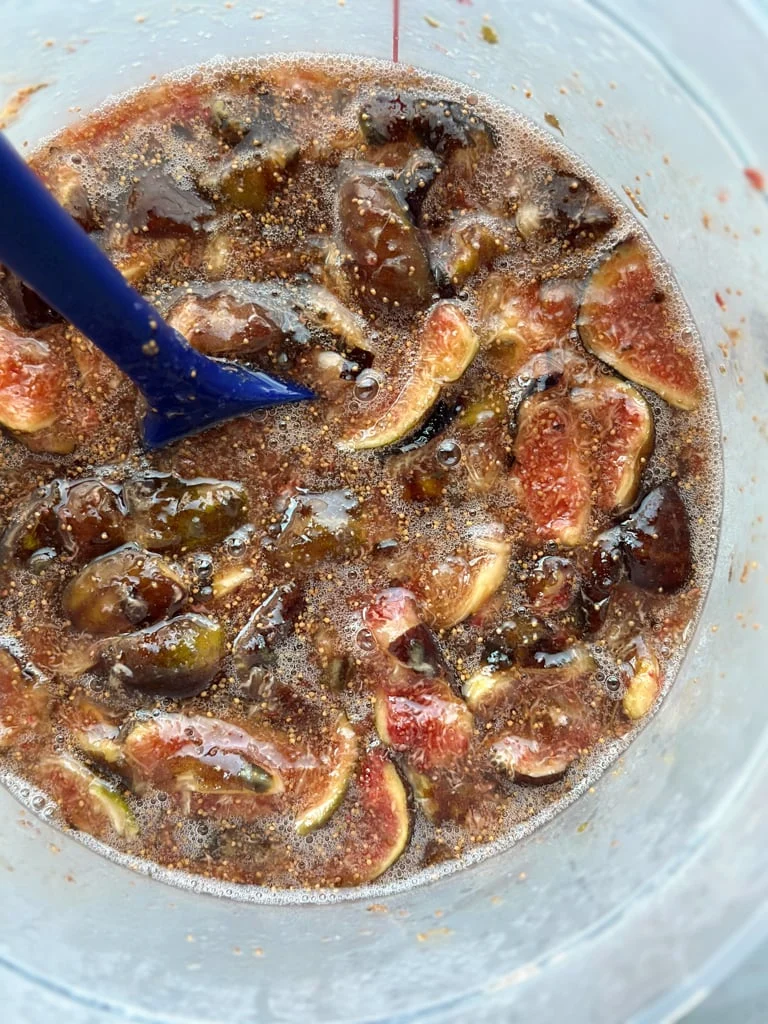
- Achieving Set (The Science of Jam): Unlike jams that rely on added pectin, this recipe achieves its set through natural pectin present in the figs (though figs are not high in pectin, the long cooking time and sugar concentration help) and primarily through evaporation. The cooking duration, typically 25-30 minutes once boiling begins, is influenced by factors such as pot width (wider pots allow faster evaporation), stove heat, and the initial water content of the figs. As the jam cooks, visual and tactile cues indicate doneness. The mixture will thicken, acquiring a red and rosy hue. Individual fig pieces will become translucent and the overall appearance will be glossy. A reliable test involves running a spatula through the jam; when droplets falling from the spatula are thick-based, slow-moving, and show a reluctance to separate, the jam has reached its optimal set point. This process relies on understanding the physical and chemical changes occurring in the fruit-sugar matrix as water evaporates and sugar concentrations increase, affecting viscosity and gelling properties.
Ensuring Safety and Longevity: The Canning Process

The final stage, boiling water bath canning, is critical for ensuring the jam’s shelf stability and safety. This method creates an anaerobic environment that prevents spoilage.
- Jar Preparation: While the jam cooks, a boiling water bath canner is prepared, along with enough jars (pints, half-pints, or quarter-pints are all suitable) to accommodate approximately four pints of jam. It’s important to note that actual yields can vary, so having a few extra jars on hand is a good practice. Jars should be clean and kept warm to prevent thermal shock when filled with hot jam.
- Filling and Headspace: Once cooked, the hot jam is carefully funneled into the prepared jars, leaving precisely 1/4 inch of headspace. This space is crucial for allowing the jar’s contents to expand during processing and for forming a proper vacuum seal.
- Lid Application: Jar rims are meticulously wiped clean with a damp paper towel to remove any sticky residue that could interfere with the seal. New lids are applied, followed by clean rings, tightened only "finger-tight." Overtightening can prevent air from escaping during processing, potentially leading to buckled lids and failed seals.
- Boiling Water Bath Processing: The filled and sealed jars are then carefully placed into the boiling water bath canner, ensuring they are fully submerged in water. Processing time is ten minutes. Crucially, individuals residing above 1,000 feet in elevation must adjust processing times to compensate for lower boiling points at higher altitudes, following NCHFP guidelines.
- Cooling and Verification: After the processing time elapses, the heat is turned off, and the canner lid is removed. The jars are left in the cooling water for an additional five minutes. This "added cooling step," a recommendation from Ball Corporation in recent years, helps prevent siphoning (loss of liquid from jars) and significantly improves the quality and reliability of the seal.
- Final Steps: Jars are then removed from the canner and placed on a wooden cutting board or folded kitchen towel to cool completely for 12-24 hours. Once cool, seals are checked by pressing on the center of the lid; a properly sealed lid will not flex. Sealed jars can be stored in a cool, dark place for at least a year. Any jars that did not seal must be refrigerated and consumed promptly.
Beyond the Jar: Culinary Versatility and Broader Impact

The resulting three-ingredient fig jam is a versatile culinary asset, capable of elevating a wide array of dishes. Its classic pairing with cheese and cured meats transforms a simple charcuterie board into a sophisticated appetizer, highlighting the interplay of sweet, savory, and tangy notes. Beyond this traditional application, the jam finds delicious utility in baking, serving as a flavorful filling for jam crumble bars, thumbprint cookies, rugelach, and hamantaschen. Its deep, fruity sweetness and subtle tang also make it an excellent accompaniment to breakfast pastries, yogurt, or even as a glaze for roasted meats.
This simple recipe underscores the broader implications of home food preservation:

- Reduced Food Waste: Utilizing abundant seasonal harvests prevents spoilage and maximizes food resources.
- Economic Savings: Preserving produce at its peak and lowest price point offers a cost-effective alternative to purchasing commercially processed goods.
- Nutritional Control: Home canners can avoid artificial preservatives, excessive sugars, and unknown additives often found in store-bought products.
- Sustainable Practices: Supporting local agriculture and reducing reliance on global food supply chains fosters environmental responsibility.
- Community Building: Sharing recipes, knowledge, and even excess harvests strengthens social bonds.
Expert Insights and Community Impact
The commitment of experienced preservers, like the author of Food in Jars, to share tested and safe recipes is invaluable to the home canning community. Adherence to scientifically vetted guidelines, such as those provided by the NCHFP, is paramount. The author’s deliberate choice to double the recommended lemon juice for fresh lemons demonstrates a responsible approach to adapting safety protocols for specific ingredient preferences, a crucial lesson for all home canners. This meticulous attention to detail ensures that the joy of creating homemade preserves is coupled with the assurance of safe consumption.

In conclusion, the re-emergence of this three-ingredient fig jam recipe is more than just a culinary offering; it is a reaffirmation of the enduring appeal and practical value of home food preservation. It provides a clear, concise, and safe pathway for individuals to engage with seasonal abundance, fostering a deeper appreciation for food, community, and the timeless art of canning.