

The global skincare industry is undergoing a significant paradigm shift as consumers increasingly prioritize ingredient transparency and long-term health over traditional marketing claims. As the body’s largest organ, the skin serves as a semi-permeable barrier, providing the first line of defense against pathogens and environmental stressors while simultaneously absorbing a portion of the substances applied to its surface. This physiological reality has fueled a surge in demand for non-toxic personal care products, specifically body lotions, which are often applied over large surface areas on a daily basis.
Recent market analysis indicates that the "clean beauty" sector is expected to reach a valuation of approximately $15.3 billion by 2028, reflecting a broader public health movement toward eliminating potentially harmful synthetic compounds from domestic environments. However, identifying truly non-toxic products requires a nuanced understanding of toxicology, regulatory loopholes, and the complex chemistry of modern cosmetics.
The Evolution of Cosmetic Regulation and Oversight
The regulatory landscape for cosmetics in the United States remained largely unchanged for over eight decades following the passage of the Federal Food, Drug, and Cosmetic Act of 1938. Under this historic framework, the Food and Drug Administration (FDA) possessed limited authority to regulate cosmetic ingredients before they reached the market. This changed significantly in December 2022 with the enactment of the Modernization of Cosmetics Regulation Act (MoCRA).
MoCRA represents the first major expansion of the FDA’s authority over cosmetics since 1938, granting the agency the power to mandate recalls, require adverse event reporting, and enforce stricter labeling requirements. Despite these advancements, many advocates argue that the U.S. still trails behind the European Union, which has banned or restricted more than 1,600 chemicals in cosmetic products, compared to approximately 30 in the United States. This regulatory gap has led to the rise of third-party organizations, such as the Environmental Working Group (EWG) and MADE SAFE, which provide independent toxicity screenings to help consumers navigate the market.
Identifying Chemicals of Concern in Conventional Skincare
To understand the necessity of non-toxic alternatives, one must examine the specific chemical classes frequently found in conventional lotions. Dermatologists and toxicologists often highlight four primary categories of concern:
Endocrine Disrupting Chemicals (EDCs)
Parabens (such as methylparaben and propylparaben) are widely used as preservatives to prevent microbial growth. However, scientific studies have demonstrated their ability to mimic estrogen, potentially disrupting the endocrine system. Similarly, phthalates, often used to increase the flexibility of plastics or as solvents in fragrances, have been linked to reproductive developmental issues and hormonal imbalances.
Synthetic Fragrances
The term "fragrance" or "parfum" on a label often serves as a legal loophole. Under trade secret laws, companies are not required to disclose the specific chemical constituents of their scents. A single fragrance entry can represent a mixture of dozens or even hundreds of undisclosed chemicals, many of which are known allergens or respiratory irritants.
Petroleum-Derived Ingredients
Mineral oil and petroleum jelly are common occlusives used to lock in moisture. While highly effective, they are derivatives of the oil industry. Concerns regarding these ingredients often center on the risk of contamination with polycyclic aromatic hydrocarbons (PAHs), which are classified as potential carcinogens. Furthermore, these ingredients do not offer the nutritional benefits found in plant-based lipids.

Formaldehyde Releasers
Ingredients such as DMDM hydantoin and quaternium-15 are designed to slowly release formaldehyde to act as a preservative. Formaldehyde is a known human carcinogen, and its presence in leave-on products like lotion has been a point of contention among consumer safety advocates for years.
The Shift Toward Bio-Available and Plant-Based Nutrition
In response to these concerns, non-toxic lotion formulations have pivoted toward bio-available, nutrient-dense ingredients. Modern clean beauty brands utilize plant-derived lipids that closely resemble the skin’s natural sebum. Aloe vera, rich in vitamins and minerals, often replaces water as a primary base to provide soothing hydration. Jojoba oil, which is technically a liquid wax, offers excellent emollient properties without clogging pores, while shea and cocoa butters provide fatty acids essential for maintaining the skin’s lipid barrier.
The following eight brands have been identified by industry experts and consumer advocates as leaders in the non-toxic skincare space, combining clean ingredient profiles with sustainable business practices.
1. Osea: Marine-Based Innovation
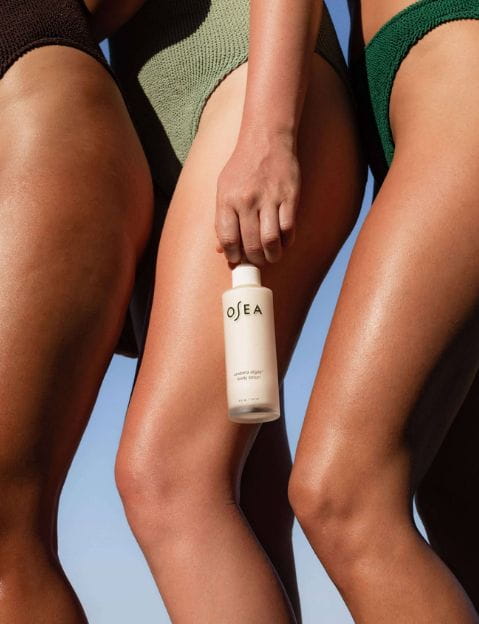
Based in Malibu, California, Osea has been a pioneer in vegan and clean skincare since 1996. Their formulations are centered around bioavailable seaweed, which is hand-harvested to ensure ecological balance. Osea’s body lotions are notable for being Climate Neutral Certified and for utilizing glass packaging to reduce plastic dependency. Their products are free from synthetic fragrances, opting instead for essential oils that provide therapeutic benefits alongside hydration.
2. Attitude: The Standard for Verification
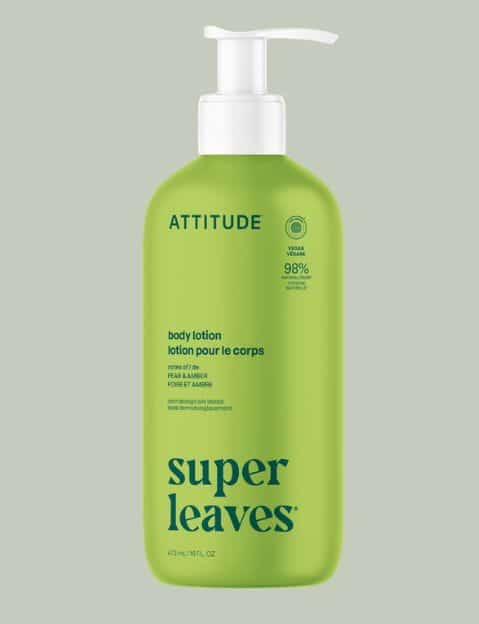
Attitude, a Canadian brand, has distinguished itself through its commitment to rigorous third-party testing. Nearly all of their products are EWG Verified, meaning they meet the strictest standards for health and transparency. Attitude utilizes naturally sourced ingredients and has pioneered "plastic-free" lines, utilizing biodegradable cardboard packaging for solid lotions to address the environmental impact of the personal care industry.
3. EcoRoots: Zero-Waste Philosophy
EcoRoots focuses on the intersection of personal health and environmental sustainability. Their small-batch lotions are formulated without parabens, sulfates, or synthetic dyes. By prioritizing plastic-free shipping and compostable or recyclable containers, EcoRoots caters to the "zero-waste" movement, proving that effective skincare does not require the generation of permanent landfill waste.
4. Public Goods: Minimalist Accessibility
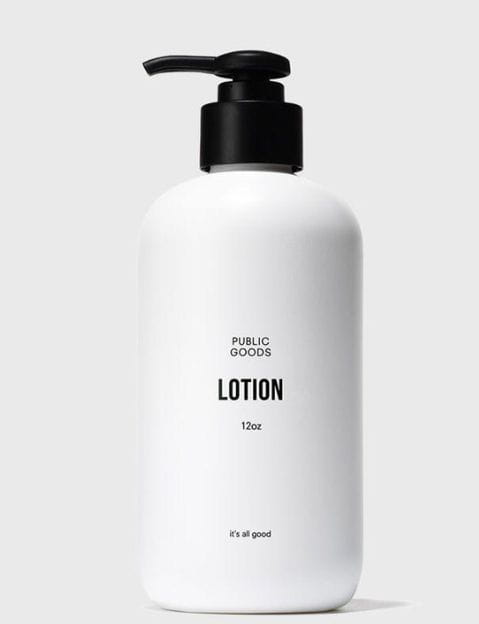
Public Goods has adopted a minimalist approach to both design and formulation. Their body lotions prioritize essential ingredients like orange, geranium, and grapefruit essential oils. By stripping away unnecessary additives and focusing on a membership-based model, they provide high-quality, non-toxic options at a price point that is often more accessible than boutique clean beauty brands.
5. Plaine Products: The Circular Economy Model
Plaine Products has revolutionized the industry through a refillable subscription model. Their lotions are housed in aluminum bottles that consumers return to the company to be cleaned, refilled, and reused. This circular system eliminates single-use plastic entirely. Their formulas are vegan, non-GMO, and biodegradable, ensuring that the product is as safe for the water system as it is for the skin.
6. The Good Fill: Community Refill Solutions
As a prominent player in the refill movement, The Good Fill offers unscented and lightly scented lotions designed for sensitive skin. Their "refill pouch" system allows customers to top up their existing containers at home, significantly reducing the carbon footprint associated with manufacturing new packaging. Their formulations are intentionally simple, avoiding the complex chemical stabilizers found in mass-market alternatives.
7. Meow Meow Tweet: Small-Batch Integrity
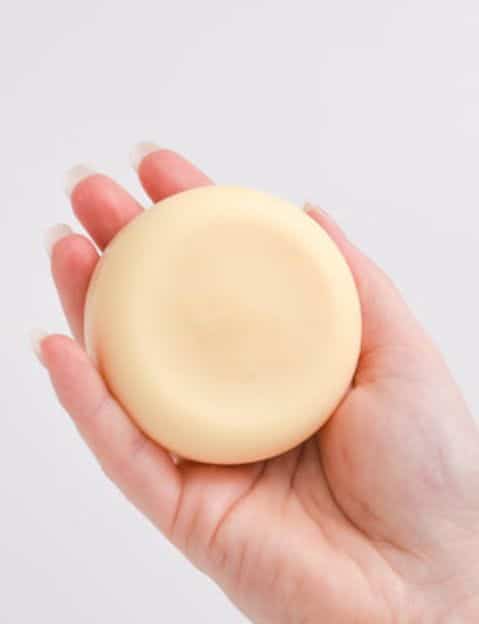
Meow Meow Tweet is a vegan brand known for its whimsical branding and serious commitment to ingredient safety. Their aloe-rose body lotion is a staple for those seeking lightweight, non-greasy hydration. The brand is a certified B-Corp, indicating a high level of social and environmental performance, and they utilize glass and compostable paper packaging across their product line.
8. Upcircle: Upcycled Beauty
Upcircle represents the cutting edge of the circular economy by "upcycling" ingredients that would otherwise go to waste. They incorporate residual water from fruit processing or discarded coffee grounds into their formulations, extracting potent antioxidants and nutrients. Their lotions are housed in glass jars with aluminum lids, aligning with their goal of becoming a plastic-free brand while maintaining a high standard of dermatological efficacy.
Broader Environmental and Health Implications
The transition to non-toxic lotions carries implications that extend beyond individual dermatological health. The environmental impact of the traditional beauty industry is profound; it is estimated that the industry produces 120 billion units of packaging every year, the majority of which is non-recyclable plastic.
Furthermore, the presence of microplastics in skincare products has become a global concern. These tiny plastic particles, used as exfoliants or texture enhancers, eventually enter the water cycle, where they have been detected in marine life and, subsequently, the human food chain. By choosing non-toxic, plastic-free alternatives, consumers are participating in a larger effort to mitigate the chemical and plastic pollution of the planet’s ecosystems.
The rise of "green chemistry" also suggests a future where high-performance skincare is no longer dependent on harsh synthetics. Researchers are increasingly finding that plant-derived polyphenols and peptides can offer anti-aging and moisturizing benefits that rival or exceed those of synthetic counterparts, without the associated risks of toxicity or environmental degradation.
Conclusion
As the body of scientific evidence regarding chemical exposure grows, the demand for non-toxic skincare is likely to move from a niche market to a standard industry expectation. The brands highlighted in this report represent a diverse range of approaches to this challenge—from marine-based science to circular refill models. For the modern consumer, the "best" non-toxic lotion is one that balances personal health requirements with a commitment to environmental stewardship, ensuring that the quest for smooth skin does not come at the cost of biological or ecological integrity.


