The art of home food preservation continues to resonate with contemporary audiences, particularly through accessible recipes that yield delicious and shelf-stable results. A recent spotlight falls on a remarkably straightforward three-ingredient fig jam, meticulously designed for safe canning, which relies solely on fresh figs, granulated sugar, and lemon juice. This recipe underscores a growing trend towards culinary simplicity without compromising on flavor or the vital principles of food safety in home canning. Its emergence offers a practical solution for individuals faced with an annual bounty of figs, transforming perishable fruit into a vibrant, flavorful staple for year-round enjoyment.

The Enduring Appeal of Home Preservation
The practice of preserving seasonal produce, such as figs, into jams and jellies, is a tradition deeply rooted in human history, born from the necessity to extend the availability of perishable foods. In recent years, this ancestral skill has experienced a significant resurgence, evolving from a domestic chore into a popular culinary hobby and a conscious lifestyle choice. Factors contributing to this renewed interest include a heightened awareness of food provenance, a desire for natural ingredients free from artificial additives, and a growing emphasis on sustainability and reducing food waste. The global landscape, marked by supply chain uncertainties and economic fluctuations, has further amplified the appeal of self-sufficiency in food preparation.

Recipes like the three-ingredient fig jam exemplify this movement. By focusing on minimal, high-quality ingredients, they demystify the canning process, making it approachable for novice preservers while still appealing to seasoned canners seeking efficient and reliable methods. This particular fig jam, celebrated for its bright flavor profile and ease of preparation, stands as a testament to the enduring value of simple, well-executed food preservation techniques. It provides a tangible link to seasonal cycles, allowing consumers to capture the ephemeral sweetness of fresh figs and enjoy it long after the harvest season concludes.
The Seasonal Bounty: Harnessing the Fig Harvest

Figs (Ficus carica) are a fruit with a rich history, cultivated for millennia across various civilizations. Their distinctive taste and texture make them a coveted seasonal delight. The peak fig season, typically spanning late summer through early autumn, often presents an abundance that outstrips immediate consumption. This seasonal glut makes figs an ideal candidate for preservation. Home growers and local farmers frequently find themselves with surplus quantities, prompting the search for effective methods to utilize the harvest. The featured jam recipe directly addresses this, transforming a potential overload of fresh figs into a valuable pantry item.
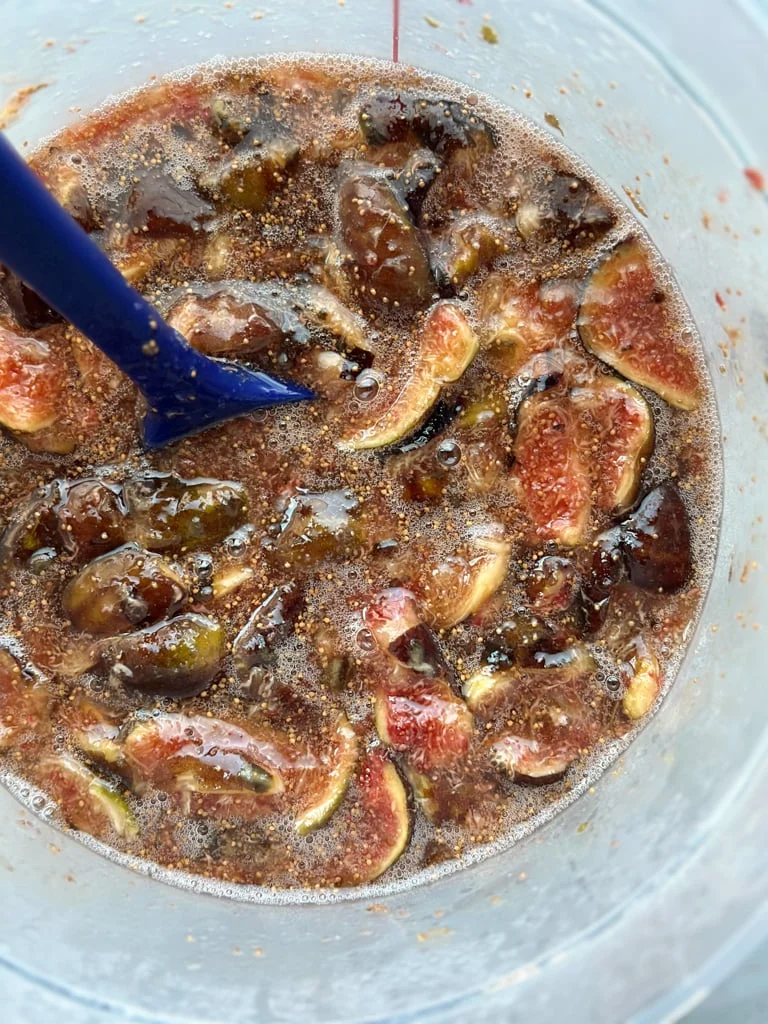
The process begins with the careful selection and preparation of the fruit. For optimal flavor and texture in the jam, ripe, unblemished figs are paramount. Upon acquisition, whether from a personal garden, a friend’s generous tree, or a local market, the figs undergo an initial inspection. Woody stems are meticulously trimmed, and the fruits are washed thoroughly to remove any surface impurities. The quartering of the figs is a crucial step, increasing the surface area for the subsequent maceration process and facilitating the breakdown of the fruit during cooking. This preparation ensures that the figs are ready to absorb the sugar and release their natural juices, setting the stage for the jam’s development.

The Science of Simplicity: Ingredients and Their Roles
The elegance of this fig jam lies in its three core components, each playing a vital role in the final product’s flavor, texture, and safety for canning.

-
Fresh Figs: Beyond providing the primary flavor, figs contribute natural sugars and a moderate amount of pectin. Pectin, a soluble fiber found in fruit, is essential for the gelling process in jams and jellies. While some fruits are high in pectin, figs are considered to have sufficient natural pectin when combined with sugar and acid to achieve a desirable set without external additives. The variety of fig can subtly influence the jam’s final color and sweetness, though the fundamental characteristics remain consistent across most common types like Black Mission, Brown Turkey, or Kadota.
-
Granulated Sugar: Sugar serves multiple critical functions in jam making. Primarily, it acts as a preservative, inhibiting the growth of microorganisms by reducing water activity. This is why a specific sugar-to-fruit ratio is crucial for shelf stability. In this recipe, a 2:1 ratio of figs to sugar by weight (e.g., two pounds of figs to one pound of sugar) is recommended. This ratio is a classic standard in low-pectin fruit jams, balancing sweetness with preservation efficacy. Furthermore, sugar contributes significantly to the jam’s texture, providing body and gloss, and enhances the fruit’s natural flavors. The maceration process, where quartered figs are combined with sugar and allowed to rest, is key. This step draws out the fruit’s natural liquids through osmosis, creating a syrupy mixture that helps dissolve the sugar evenly and initiates the flavor development before cooking even begins. While overnight maceration is often suggested for deeper flavor extraction and more uniform sugar dissolution, the jam can proceed to cooking once the sugar has visibly dissolved.

-
Lemon Juice: The inclusion of lemon juice is perhaps the most critical component from a food safety perspective, particularly for boiling water bath canning. Figs are naturally low in acid, and for safe home canning, a certain level of acidity (pH 4.6 or below) is required to prevent the growth of harmful bacteria like Clostridium botulinum. The National Center for Home Food Preservation (NCHFP), a leading authority on safe home food preservation, provides stringent guidelines on acid levels. While commercially bottled lemon juice is often recommended for its consistent acidity, the recipe’s preference for fresh lemon juice, albeit in a doubled quantity (two tablespoons per pound of figs compared to NCHFP’s typical recommendations for fig jam, which might use less), is a deliberate choice to enhance the jam’s bright, fresh flavor profile without compromising safety. This adjustment accounts for potential variability in the acidity of fresh lemons while ensuring the pH remains within safe canning parameters. This strategic use of fresh lemon juice underscores a balanced approach between culinary preference and scientific safety.
The Culinary Transformation: From Fruit to Jam

The cooking phase is where the mixture of figs, sugar, and lemon juice transforms into jam. This process requires attentiveness and a suitable cooking vessel. A large, non-reactive pot, such as stainless steel or enameled cast iron, is essential to prevent metallic flavors from leaching into the jam, which can occur with reactive metals like aluminum or bare cast iron.
The cooking process typically involves bringing the mixture to a high, active boil. Maintaining a controlled yet vigorous boil is crucial for efficient evaporation of water, which concentrates the sugars and pectin, allowing the jam to set. Constant stirring, ideally every 2-3 minutes, is necessary to prevent the jam from sticking to the bottom of the pot and scorching, which would impart an undesirable flavor.

The duration of cooking is variable, influenced by factors such as the pot’s width (affecting evaporation rate), stove heat, and the initial water content of the figs. Typically, a batch may cook for 25-30 minutes after reaching a boil. Experienced preservers rely on a combination of visual and tactile cues to determine doneness. The jam will visibly thicken, its color deepening to a rich, rosy hue. The individual fig pieces will begin to appear translucent, and the entire mixture will acquire a glossy sheen. A reliable test involves observing the jam as it drips from a spatula: done jam will form thick-based, slow-moving drops that show reluctance to separate from the utensil, indicating a sufficient concentration of sugar and pectin for proper gelling. This empirical method, honed through practice, is a hallmark of traditional jam making.
The Final Act: Canning for Shelf Stability

Once the fig jam reaches its optimal consistency, the final step involves packaging it for long-term storage through boiling water bath canning, a method endorsed by food safety experts for high-acid foods. This process ensures the jam’s shelf stability by creating a vacuum seal that prevents spoilage.
Preparation for canning involves sterilizing jars (pints, half-pints, or quarter-pints, all of which share the same processing time for this recipe) and ensuring a boiling water bath canner is ready. The hot jam is then carefully funneled into the prepared jars, leaving precisely 1/4 inch of headspace. This headspace is critical; too little can lead to siphoning (jam boiling out), and too much can prevent a proper seal. After filling, jar rims are meticulously wiped clean with a damp paper towel to ensure a pristine sealing surface. New lids are applied, followed by clean rings, tightened only until finger-tight. Overtightening can impede air escape during processing, potentially leading to buckled lids or compromised seals.

The filled and lidded jars are then carefully placed into the boiling water bath canner, ensuring they are fully submerged by at least an inch of water. The jars are processed for 10 minutes, with a crucial adjustment for altitude if the elevation exceeds 1,000 feet above sea level. Altitude adjustments are vital because water boils at lower temperatures at higher elevations, necessitating longer processing times to achieve the same sterilization effect.
A recent recommendation from major canning authorities, including Ball, suggests an additional cooling step: after the processing time is complete, the heat is turned off, the canner lid is removed, and the jars are allowed to rest in the hot water for an additional five minutes. This gradual cooling period helps to equalize pressure, reducing the likelihood of siphoning and improving the integrity of the seal, leading to higher quality preserves. Following this resting period, jars are carefully removed from the canner and placed on a wooden cutting board or a folded kitchen towel, spaced apart to cool completely and undisturbed for 12-24 hours. Once cooled, the seals are checked by pressing on the center of the lid; a properly sealed lid will be concave and will not flex. Sealed jars are then stored in a cool, dark place, where they can maintain their quality for at least a year. Any jars that fail to seal must be refrigerated and consumed promptly.

Beyond the Jar: Culinary Versatility and Broader Impact
The preserved fig jam, with its bright, concentrated fig flavor, offers remarkable versatility in culinary applications. Its classic pairing with cheese and cured meats elevates charcuterie boards, providing a sweet counterpoint to savory elements. Beyond this, fig jam proves to be an excellent ingredient in various baked goods. It can be incorporated into jam crumble bars, where its rich texture and flavor shine through a buttery crust. It is also a delightful filling for thumbprint cookies, rugelach, and hamantaschen, adding a sophisticated fruity note to these traditional pastries. The jam’s robust flavor stands up well to baking, making it a valuable addition to any baker’s pantry.

The creation of this three-ingredient fig jam, and indeed the broader practice of home canning, extends beyond mere food preparation. It embodies principles of self-reliance, sustainability, and mindful consumption. By transforming seasonal abundance into pantry staples, individuals gain greater control over their food supply, reduce reliance on commercially processed goods, and contribute to minimizing food waste. Furthermore, sharing homemade preserves fosters community connections and acts as a tangible expression of care. The simple fig jam recipe, therefore, serves not only as a guide for preserving fruit but also as an entry point into a rewarding and increasingly relevant aspect of modern living. It underscores the profound satisfaction derived from creating wholesome food from scratch, ensuring that the fleeting flavors of summer can be savored throughout the year.