
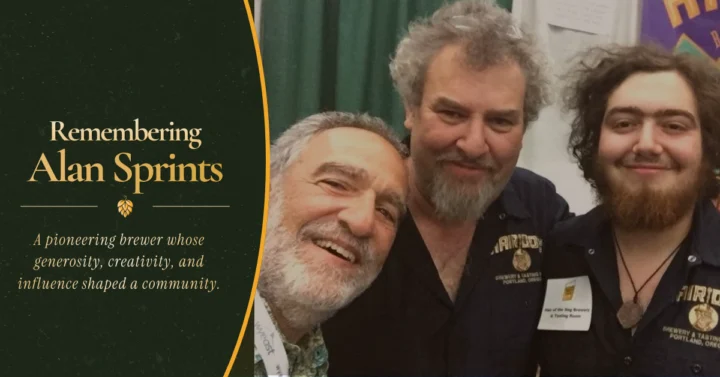
Alan Sprints, a visionary brewer whose iconic Hair of the Dog Brewing Company in Portland, Oregon, redefined the landscape of craft beer with its cult-favorite, limited-edition "white whale" releases, has died at the age of 67. Sprints succumbed to metastatic stage 4 bladder cancer, leaving behind a profound legacy that influenced generations of brewers and beer enthusiasts. He is widely credited with popularizing the concept of highly sought-after, barrel-aged, and historically inspired ales, forever changing how the industry perceived and pursued rare and exceptional brews.
A Legacy Forged in Flavor and Innovation
Sprints’ most celebrated creation, "Adam," was a groundbreaking 10% ABV Old Ale, first brewed in 1994. Inspired by the historical German strong ale Adambier, as documented by the esteemed beer writer Michael Jackson in his seminal work Beer Companion, Adam possessed a formidable bitterness of 60 International Bitterness Units (IBUs). What set Adam apart, and indeed many of Sprints’ creations, was its remarkable aging potential. These beers were not meant for immediate consumption but rather to evolve and deepen in complexity over time, a concept that was revolutionary in the nascent craft beer scene of the mid-1990s. This characteristic fostered a devoted following among collectors and connoisseurs eager to track down and cellar these elusive brews.
Following the success of Adam, Sprints introduced "Fred" in 1997, a 10% ABV Belgian Golden Strong Ale named in honor of Portland-based beer historian and craft beer luminary Fred Eckhardt. Fred, with its dark gold hue and similarly limited availability, quickly became even more coveted than its predecessor. The release of these meticulously crafted, high-alcohol, and long-aging beers established Hair of the Dog as a destination for those seeking something beyond the ordinary, cementing Sprints’ reputation as an innovator who pushed the boundaries of what American craft beer could be.
Early Life and the Path to Brewing Excellence
Born in the Los Angeles area, Alan Sprints’ early career path was diverse, encompassing experiences in aerospace and music. However, his passion for homebrewing eventually led him to a career in culinary arts. This foundation in flavor development and precision would later serve him exceptionally well in the brewing world. In 1991, Sprints transitioned into professional brewing, joining Widmer Brothers in Portland, Oregon. His involvement in the local homebrew community was significant; he was an active member of the Oregon Brew Crew, eventually serving as its president. After three years as a chef and two years as a professional brewer, Sprints felt compelled to forge his own path.
In 1993, he opened Hair of the Dog Brewing Company in an industrial district of southeast Portland. The brewery’s location, often described as unconventional, added to its mystique. Sprints’ vision extended beyond recreating historical styles; he was also a pioneer in the adoption and refinement of barrel-aging techniques. This forward-thinking approach garnered significant acclaim, earning accolades from respected publications like Beer Advocate and Whiskey Advocate. Matt Simpson, founder of The Beer Sommelier, eloquently summarized Sprints’ impact, stating, "He didn’t create the barleywine style—he perfected it. He didn’t invent barrel-aged beers—he curated and melded them like nobody at the time could or would." This sentiment highlights Sprints’ unique ability to not just follow trends but to elevate them through his artistry and dedication.
A Homebrewer’s Spirit and Generosity
Despite his professional success, Sprints remained deeply connected to his roots as a homebrewer. This connection fostered a spirit of generosity and community that resonated with many in the craft beer world. Drew Beechum, a founding board member of the American Homebrewers Association (AHA) and an author, fondly recalled Sprints’ unwavering enthusiasm and willingness to share. "He was a homebrewer at heart—always super generous with his time and enthusiasm (and his cellar)," Beechum stated.
Beechum’s anecdotes paint a vivid picture of Sprints’ character and the early days of Hair of the Dog. He described visiting the original brewery, situated in a "weird old half broken down warehouse along the river and the train tracks in Portland." Beechum, an eager new brewer at the time, recounted stumbling upon a private party Sprints hosted annually before the Oregon Brewers Festival. Despite being a stranger, Sprints welcomed him with open arms. "Despite not knowing me from Adam, Sprints welcomed me to his party and to his giant feast," Beechum recalled. He vividly remembered Sprints proudly showcasing his 4-barrel steam-jacketed brew kettle, a piece of equipment that had once been used by Campbell’s to boil peas. Amusingly, the malt silo beside the kettle seemed to dwarf the brewing apparatus itself. Sprints, with a characteristic laugh, then offered Beechum a glass of the legendary "Dave" from a secret keg.
Further illustrating Sprints’ generosity and the impact of his beers on the wider community, Beechum shared another memorable encounter. During a visit to the Bay Area, Sprints surprised Beechum’s homebrew club, the Falcons, who were celebrating their win as Anchor’s California Homebrew Club of the Year. At a party in Berkeley, Sprints appeared with two magnums of his highly prized Doggie Claws Barleywine as a congratulatory gift. The generosity continued throughout the evening, with Sprints making repeated appearances, each time with another pair of magnums, a gesture that left a lasting impression.
The "White Whale" Phenomenon and Its Implications
The concept of a "white whale" beer – a rare, highly sought-after brew that collectors and enthusiasts pursue with immense dedication – owes a significant debt to Alan Sprints. His limited releases, often brewed in small quantities and aged for extended periods, created a scarcity that fueled demand and cemented their status as collector’s items. This phenomenon, while generating excitement and brand loyalty, also brought challenges. The intense demand often meant that many enthusiasts were unable to procure these beers, leading to frustration and a secondary market that sometimes overshadowed the appreciation of the beer itself.
However, the "white whale" model, pioneered by Sprints, has since been adopted by numerous breweries worldwide. It has become a significant driver of consumer interest and a key marketing strategy for many craft operations. While the pursuit of rarity can sometimes overshadow the craft, Sprints’ original intention was always rooted in creating exceptional, complex beers that rewarded patience and appreciation. His legacy lies not just in the beers he made but in the anticipation, the shared experiences, and the elevated standards he set for the entire craft beer industry.
A Revered Figure in Brewing History
The passing of Alan Sprints has sent ripples of sadness throughout the global brewing community. His influence extended far beyond his own brewery, inspiring countless brewers to explore historical styles, embrace experimentation, and prioritize quality and patience in their craft. His commitment to the art of brewing, coupled with his genuine warmth and generosity, made him a beloved figure.
Charlie Papazian, founder of the Brewers Association and a central figure in the craft beer movement, who was often seen with Sprints at events like Homebrew Con, has yet to issue a formal statement. However, the impact of Sprints’ work is undeniable, aligning with the Brewers Association’s mission to promote and protect American craft brewers. The organization, which advocates for small and independent brewers, has consistently championed the innovation and quality that Sprints embodied.
The Homebrewers Association, in its tribute to Sprints, highlighted his deep connection to the homebrewing roots that informed his professional success. His dedication to sharing knowledge and his passion for the craft served as a beacon for aspiring brewers. The image accompanying the original announcement, featuring Sprints alongside Charlie Papazian and his son Isaac Sprints at Homebrew Con 2018, serves as a poignant reminder of his place within the broader craft beer family.
A Lasting Impact on Craft Beer Culture
Alan Sprints’ contributions to the craft beer world are multifaceted and enduring. He not only produced exceptional beers but also fostered a culture of appreciation for complexity, longevity, and historical reverence. His approach to brewing challenged conventional wisdom and paved the way for a more adventurous and discerning beer-drinking public. The "white whale" phenomenon, while sometimes debated, ultimately pushed the boundaries of what was considered possible in beer production and consumption.
The loss of Sprints is deeply felt by his family, friends, and the vast community of homebrewers and professional brewers who were touched by his vision and generosity. His legacy will continue to be celebrated in the meticulous aging of a perfectly cellared ale, in the adventurous spirit of a brewer exploring historical styles, and in the enduring appreciation for beers that are crafted with passion, patience, and an unwavering commitment to excellence. The narrative of American craft beer is undeniably richer and more complex for Alan Sprints’ significant contributions.


