
The personal care industry is currently undergoing a significant transformation as consumers increasingly scrutinize the chemical compositions of everyday products. For decades, conventional body lotions have relied on a complex array of synthetic stabilizers, preservatives, and fragrances to achieve shelf-stability and sensory appeal. However, as the skin is the human body’s largest organ and its primary defense against environmental pathogens, the long-term health implications of transdermal absorption have become a focal point for dermatologists and environmental health advocates alike. The presence of unpronounceable synthetic compounds on ingredient labels is no longer viewed merely as a byproduct of modern chemistry, but as a potential public health concern that warrants a shift toward non-toxic, plant-based alternatives.
The Regulatory Landscape and the Evolution of Skincare Safety
The history of skincare regulation in the United States has been characterized by a "post-market" approach, where products are generally assumed safe until proven otherwise. For nearly 85 years, the Federal Food, Drug, and Cosmetic Act of 1938 provided the primary framework for oversight, which granted the Food and Drug Administration (FDA) limited authority over cosmetic ingredients. Unlike the European Union, which has banned or restricted over 1,600 chemicals in personal care products, the U.S. regulatory environment has historically been more permissive.
This changed significantly with the passage of the Modernization of Cosmetics Regulation Act (MoCRA) of 2022. This legislation represents the first major expansion of the FDA’s authority over cosmetics since 1938, requiring companies to provide serious adverse event reports and granting the FDA the power to mandate recalls. This shift in the legal landscape mirrors a growing consumer movement toward "clean beauty," a market segment projected to reach a global valuation of $15.3 billion by 2028. The demand for non-toxic lotions is a central pillar of this movement, driven by data linking certain synthetic chemicals to endocrine disruption and environmental degradation.
Identifying the Chemicals of Concern in Conventional Lotions
Scientific research has identified several categories of ingredients frequently found in conventional lotions that pose potential risks to human health and the ecosystem. Identifying these "chemicals of concern" is the first step for consumers seeking to transition to non-toxic alternatives.
Parabens and Phthalates
Parabens, such as methylparaben and propylparaben, are used as preservatives to prevent the growth of mold and bacteria. However, they are known endocrine disruptors that can mimic estrogen in the body. Similarly, phthalates are often used to increase the flexibility of plastics or as solvents in fragrances. Research published in journals such as Environmental Health Perspectives has linked phthalate exposure to reproductive developmental issues and hormonal imbalances.
Synthetic Fragrances and the "Trade Secret" Loophole
One of the most significant challenges in skincare transparency is the "fragrance" label. Under current labeling laws, companies are not required to disclose the specific chemicals used to create a scent, as these are considered trade secrets. A single "fragrance" listing can contain dozens of undisclosed synthetic chemicals, many of which are allergens or respiratory irritants.
Mineral Oil and Petroleum Byproducts
Mineral oil is a colorless, odorless byproduct of the distillation of petroleum. While it is an effective occlusive that traps moisture in the skin, it does not provide nutritional benefits and is often associated with pore-clogging (comedogenicity). Furthermore, the sourcing of petroleum-based ingredients raises significant environmental concerns regarding carbon emissions and resource extraction.
The Rise of Third-Party Certifications and Consumer Advocacy
To navigate the complexities of ingredient labels, consumer advocacy groups have developed rigorous testing and certification standards. The Environmental Working Group (EWG) maintains the "Skin Deep" database, which scores over 100,000 products based on their hazard potential. Products that earn the "EWG Verified" seal have met the strictest standards for transparency and health.

Another gold standard in the industry is the "MADE SAFE" certification. This non-toxic seal ensures that products are made without known carcinogens, endocrine disruptors, reproductive toxins, or ecosystem predators. These third-party validations have become essential tools for consumers who wish to avoid "greenwashing"—a marketing tactic where products are falsely portrayed as environmentally friendly or natural through misleading packaging and terminology.
Top-Tier Non-Toxic Lotion Recommendations for 2024
Based on ingredient purity, ethical sourcing, and packaging sustainability, the following eight brands represent the current pinnacle of non-toxic skincare.
1. Osea
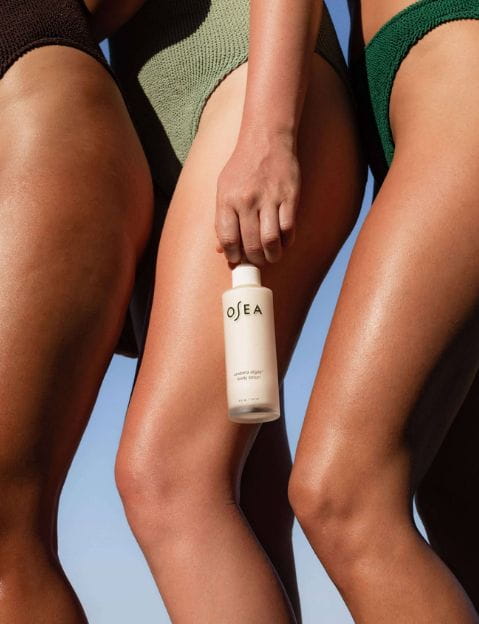
Based in California, Osea has pioneered the use of seaweed-based skincare for over 25 years. Their formulations prioritize bioavailable nutrients derived from organic algae, combined with cold-pressed essential oils. Osea was the first company to sign The Compact for Global Production of Safe Cosmetics, emphasizing their long-term commitment to non-toxic formulations.
2. Attitude
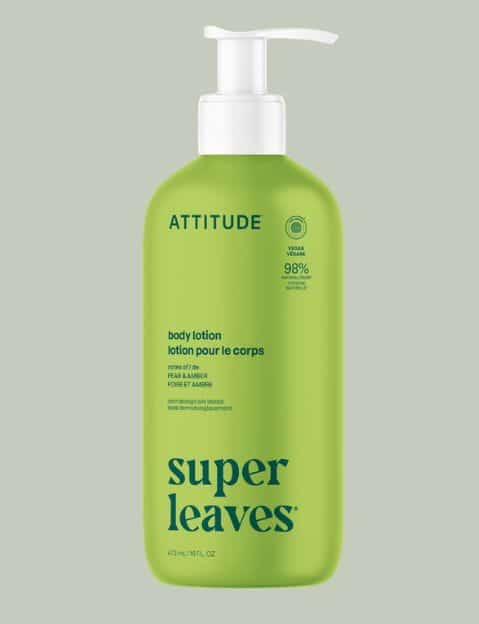
Attitude focuses on "Living Consciously" by utilizing ingredients that are entirely plant- and mineral-based. Their products are ECOLOGO certified, ensuring they meet rigorous environmental leadership standards. Attitude is particularly noted for its plastic-free packaging options, including biodegradable cardboard tubes for their solid body butters.
3. EcoRoots
EcoRoots addresses the intersection of skincare and zero-waste living. Their lotions often come in glass jars with metal lids, eliminating the need for single-use plastic pumps. Their formulations are vegan, cruelty-free, and handmade in small batches to ensure ingredient integrity.
4. Public Goods
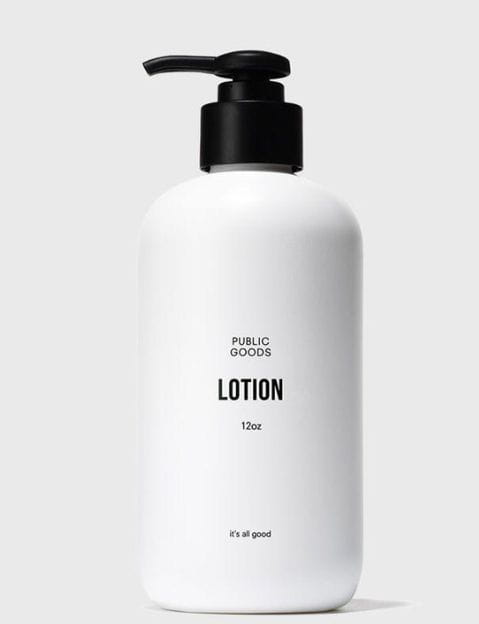
Public Goods operates on a membership model that emphasizes minimalist design and high-quality, essential ingredients. Their lotions are formulated without parabens, synthetic fragrances, or sodium lauryl sulfates. They utilize "bioplastic" bottles made from sugarcane, which are carbon-neutral and recyclable.
5. Plaine Products
Plaine Products has revolutionized the industry with a circular refill system. Customers receive their lotion in aluminum bottles; once empty, the bottles are returned to the company to be washed, refilled, and reused. This model virtually eliminates packaging waste while providing a high-performance, aloe-based lotion.
6. The Good Fill
Specializing in bulk refills, The Good Fill provides unscented and lightly scented lotions designed for sensitive skin. By offering refill pouches and in-store refill stations, they significantly reduce the carbon footprint associated with shipping and packaging manufacturing.
7. Meow Meow Tweet
Meow Meow Tweet is a small-batch apothecary known for its whimsical packaging and serious commitment to ethical sourcing. Their Aloe Rose lotion utilizes organic plant oils and steam-distilled hydrosols. The brand is Leaping Bunny certified, ensuring no animal testing at any stage of production.
8. Upcircle
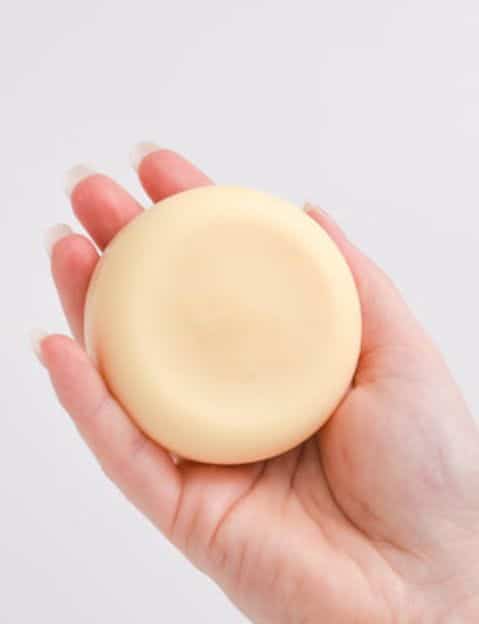
Upcircle focuses on "upcycled" beauty, utilizing ingredients that would otherwise go to waste, such as discarded coffee grounds or fruit pits. Their lotions incorporate these antioxidant-rich extracts into nourishing bases, proving that the circular economy can produce luxury skincare results.
The Environmental Impact of Skincare Packaging
Beyond the chemical composition of the lotion itself, the packaging represents a critical environmental challenge. The personal care industry produces an estimated 120 billion units of packaging every year, the vast majority of which is non-recyclable plastic.
Microplastics, which are tiny plastic particles less than five millimeters in length, have been detected in human blood and tissues. The degradation of plastic lotion bottles contributes to this global crisis. Furthermore, plastic containers often contain Endocrine Disrupting Chemicals (EDCs) like Bisphenol A (BPA), which can leach into the lotion over time, particularly if the product is stored in warm environments. Transitioning to glass, aluminum, or compostable packaging is therefore a health decision as much as an environmental one.
Broader Implications and Future Outlook
The shift toward non-toxic lotion is indicative of a broader "wellness" economy where consumers view their purchasing power as a tool for advocacy. As more individuals opt for transparent, plant-based brands, conventional manufacturers are being forced to reformulate their products to remain competitive. This "trickle-up" effect is leading to a cleaner marketplace for all.
Public health experts suggest that while a single application of a conventional lotion may not cause immediate harm, the "body burden"—the cumulative total of chemicals stored in the body—is the primary concern. By choosing non-toxic lotions, consumers reduce their daily exposure to synthetic compounds, potentially lowering the risk of long-term health issues.
As the industry moves forward, the focus is expected to shift toward "regenerative beauty," where ingredients are not only non-toxic but are sourced through agricultural practices that actively restore soil health and biodiversity. For now, the adoption of non-toxic, sustainably packaged lotions remains the most effective way for individuals to protect both their personal health and the planet’s future.