Sourdough bread, with its characteristic tangy flavor and complex aroma, has captivated bakers and consumers for centuries. The distinctive "sour" note is not merely a byproduct but a finely tunable element, offering a spectrum of sensory experiences from a subtle, mellow background hint to an assertive, mouth-puckering tang. Understanding and controlling this acidity is a hallmark of skilled sourdough baking, transforming a basic fermented loaf into a bespoke culinary creation. This guide delves into the scientific principles and practical methodologies employed by bakers to precisely modulate the sourness of their sourdough, providing a comprehensive overview for both aspiring and seasoned enthusiasts.
The Science Behind the Sour: Lactic and Acetic Acids
The unique flavor profile of sourdough bread originates from the metabolic activities of a symbiotic community of microorganisms residing in the starter: primarily lactic acid bacteria (LAB) and wild yeasts (predominantly Saccharomyces cerevisiae). These microorganisms ferment sugars present in flour, producing a variety of compounds, with organic acids being key contributors to sourness. The two most significant acids are lactic acid and acetic acid.
Lactic acid, often associated with dairy products like yogurt, imparts a smooth, mild, and creamy sourness. It is a less volatile acid and is produced in greater quantities when LAB are highly active and have abundant sugar and water. Conversely, acetic acid, the same acid found in vinegar, delivers a sharper, more pungent, and often more assertive tang. Acetic acid is highly volatile, meaning it readily evaporates, and is the primary acid detectable by smell in an active, very ripe sourdough starter.
The ratio and total concentration of these acids are influenced by environmental conditions, particularly temperature, hydration, and the availability of specific nutrients. Lactic acid bacteria exhibit different metabolic pathways depending on these factors. For instance, some LAB are homofermentative, primarily producing lactic acid, while others are heterofermentative, yielding both lactic acid and acetic acid, along with carbon dioxide. The interplay between these bacterial types and their environmental triggers forms the bedrock of sourness control.
Crucially, the activity of these bacteria is highly sensitive to the pH level of the dough. As bacteria produce acids, the pH drops, making the environment more acidic. Eventually, the pH can drop to a level that inhibits the bacteria’s own activity, slowing or even halting acid production. This self-limiting mechanism means that factors allowing bacteria to function longer before reaching this inhibitory pH threshold will generally result in more total acid accumulation and a more pronounced sour flavor.
Key Levers for Flavor Modulation: A Baker’s Control Panel
Bakers possess several potent levers to influence the sourness of their sourdough, each interacting with the microbial ecosystem in distinct ways. These control points offer a systematic approach to tailoring the final product’s acidity.
1. Starter Ripeness and Management
The condition of the sourdough starter or levain at the point of mixing into the final dough is perhaps the most immediate and impactful determinant of sourness.
- Increasing Sourness: Utilizing a starter that is past its peak ripeness is a reliable method. An over-ripened starter typically presents with a collapsed structure, a loose consistency, a strong, pungent, vinegar-like aroma, and numerous bubbles, indicating that much of its readily available food has been consumed. At this stage, the microorganisms have had ample time to produce and accumulate significant amounts of both lactic and acetic acids. When incorporated into the main dough, this pre-existing acidity contributes directly to the final loaf’s tang.
- Decreasing Sourness: To achieve a milder flavor, bakers should use a starter or levain at its peak ripeness or even slightly before (a "young" levain). A peak-ripe starter is typically risen, bubbly, and dome-shaped, with a mild, slightly sweet aroma and a cohesive consistency. At this point, the yeast and bacteria are highly active but have not yet produced an excessive amount of acid. A young levain, characterized by high yeast activity and minimal acid accumulation, is often built with a higher ratio of fresh flour and water to starter, fermented quickly at a warmer temperature, and used before it reaches full maturity. This approach dilutes existing acidity and minimizes further acid production during the initial stages of dough fermentation.
Experienced bakers emphasize the importance of consistent starter feeding schedules to maintain microbial balance and predictable acid production. Infrequent feeding or prolonged storage can lead to an accumulation of acids and undesirable microbial shifts, resulting in overly sour or unbalanced flavors.
2. The Crucial Role of Fermentation Time and Temperature
Time and temperature are inextricably linked in sourdough fermentation, dictating both the rate of microbial activity and the types of acids produced.
- Extended Cold Proof (Retardation) for Increased Sourness: This is one of the most effective and widely used methods for intensifying sourness. When dough is subjected to cold temperatures (typically 38-45°F or 3-7°C) in the refrigerator for an extended period (e.g., 24-72 hours), microbial activity slows down significantly but does not cease entirely. Importantly, yeast tend to be less inhibited by cold than many lactic acid bacteria. This imbalance allows yeast to continue breaking down complex carbohydrates into simpler sugars, which then become available for the cold-tolerant lactic acid bacteria. Under these cooler conditions, heterofermentative LAB are often favored, leading to a higher proportion of acetic acid production relative to lactic acid. The net effect is a gradual accumulation of total acid, with a notable shift towards the sharper, vinegar-like tang of acetic acid. While beneficial for flavor, prolonged cold proofing (beyond 48 hours for many recipes) can also lead to the enzymatic breakdown of gluten structure, potentially impacting oven spring and crumb structure.
- Warmer Fermentation for Overall Acidity: Fermenting dough at warmer temperatures (typically 78-82°F or 25-28°C) generally encourages more robust bacterial activity overall. Most sourdough bacteria thrive in a moderately warm environment (optimal growth often cited around 89-91°F or 32-33°C). Keeping the dough within their comfort zone allows for greater total acid production. However, warmer temperatures often favor homofermentative LAB, leading to a higher proportion of lactic acid and a rounder, milder sourness. For a robust yet balanced flavor, many bakers combine a moderately warm bulk fermentation with an extended cold proof, leveraging the strengths of both temperature regimes.
- Shorter Fermentation for Decreased Sourness: To reduce sourness, shortening both bulk fermentation and cold proofing times is essential. Rapid fermentation, often achieved through warmer temperatures and/or a larger levain percentage, allows the dough to reach adequate proofing more quickly, limiting the window for extensive acid accumulation. Skipping the overnight cold proof entirely and opting for a room-temperature proof (2-4 hours, depending on ambient temperature) will yield a significantly milder loaf, prioritizing grain flavors over tang.
3. Hydration of the Levain
The hydration level of the levain (the ratio of water to flour) influences the metabolic pathways of the resident microorganisms.
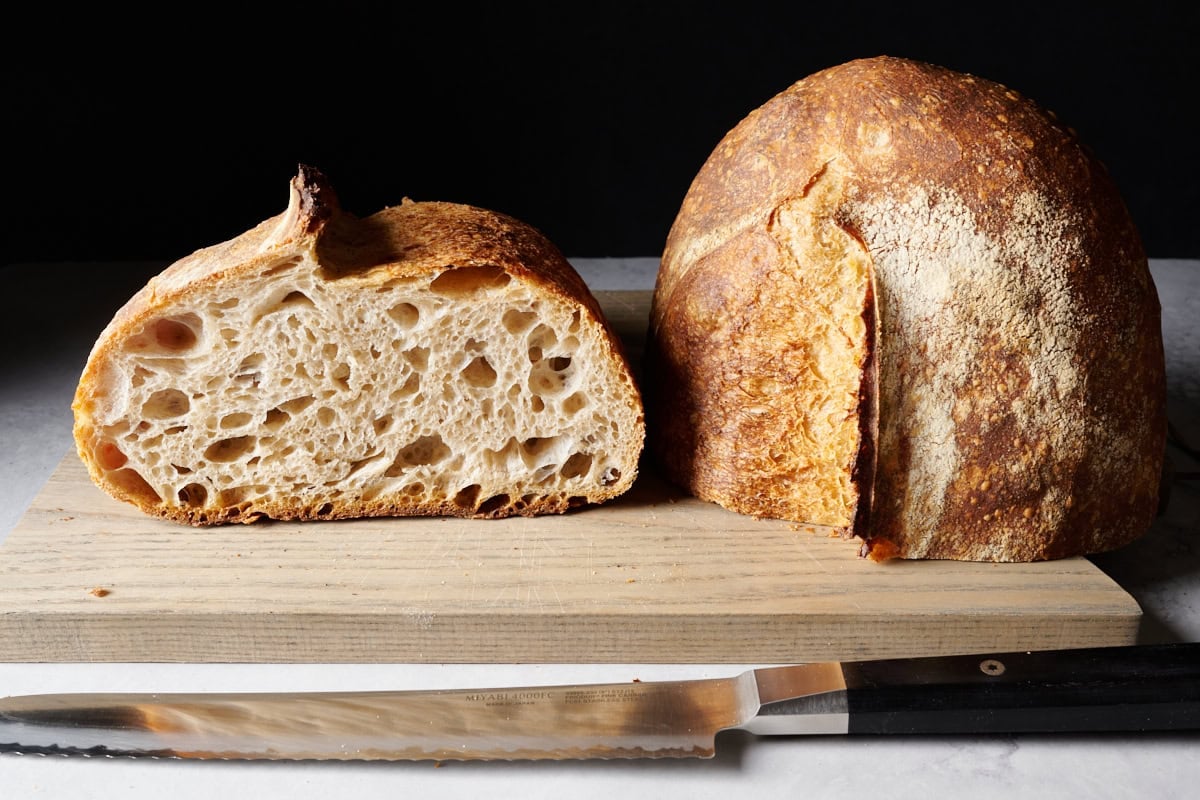
- Stiffer Levain (Lower Hydration) for Sharper Tang: A stiff levain, typically maintained at 50-65% hydration, creates an environment where bacterial activity is slowed more significantly than yeast activity. This imbalance, similar to the effects of cold temperatures, can shift the acid profile towards acetic acid. The reduced water activity in a stiffer dough matrix can limit the diffusion of nutrients and waste products, potentially stressing bacteria in a way that favors acetic acid production, especially when given sufficient time to ripen. However, it’s crucial to note that a stiff starter fed very frequently on a tight schedule (like a lievito madre used in panettone) can produce a very mild bread because acids are constantly diluted before they can accumulate. The key for increased sourness lies in the combination of low hydration and a longer ripening period.
- Liquid Levain (Higher Hydration) for Milder Acidity: Liquid levains, typically at 100% hydration or higher (equal parts flour and water by weight), provide a more aqueous environment that generally supports robust bacterial growth and favors lactic acid production. The higher water content allows for better nutrient transport and less microbial stress, promoting a smoother, less aggressive sourness profile. Many classic sourdough recipes that aim for a balanced, nuanced flavor often utilize a 100% hydration levain.
4. Flour Composition: The Impact of Grains
The type of flour used in both the starter and the final dough profoundly impacts sourness, primarily due to differences in mineral content.
- Whole Grains (Especially Rye) for Increased Sourness: Whole-grain flours, particularly rye, significantly increase sourness. The primary reason is their higher "ash content," which corresponds to a greater concentration of minerals. These minerals act as natural buffering agents in the dough. Buffers resist changes in pH. This means that as bacteria produce acid, a whole-grain dough can absorb and neutralize more of that acid before its pH drops to a level that inhibits bacterial activity. This allows the microorganisms to produce a larger total quantity of acid, resulting in a more sour-tasting loaf. Rye flour is particularly effective due to its unique enzymatic activity and its rich content of fermentable sugars and buffering compounds, making even small percentages in the levain or final dough noticeably increase tang.
- Refined White Flour for Decreased Sourness: Refined white flours have a much lower ash content and thus less buffering capacity. In a dough made predominantly with white flour, the pH drops more quickly as acids are produced, reaching the inhibitory threshold for bacteria sooner. This limits the total amount of acid that can accumulate, leading to a milder-flavored bread. Bakers seeking a very subtle tang will often opt for recipes with a high percentage of white flour.
5. Levain Percentage: A Nuanced Relationship
The percentage of pre-fermented flour (PFF) contributed by the levain to the total flour in the dough can also influence sourness, often in a counter-intuitive manner.
- Smaller Levain Percentage for Potentially More Sourness: Contrary to common belief, using a smaller levain percentage (e.g., 10-15% PFF) can actually lead to a more sour loaf over an extended fermentation period. A smaller levain introduces less pre-formed acid into the dough initially, meaning the dough starts at a higher pH. This higher initial pH provides a longer "runway" for the bacteria to produce acid before the environment becomes too acidic and inhibits their activity. To compensate for the slower fermentation rate of a smaller levain, the bulk fermentation and proofing times must be extended, allowing more time for acid accumulation.
- Larger Levain Percentage for Potentially Less Sourness: A larger levain percentage (e.g., 25-35% PFF) introduces more acid from the start, causing the dough’s pH to drop quickly. While this provides a strong leavening boost, it can also prematurely inhibit bacterial activity due to the lower pH, limiting the additional acid that can be produced during the main fermentation stages. Furthermore, a larger levain accelerates fermentation, leading to shorter overall bulk and proofing times, which inherently reduces the window for extensive flavor development.
Many expert bakers find that maintaining a consistent levain percentage (e.g., 15-22%) and adjusting other variables like starter ripeness, dough temperature, and total proofing time offers more predictable control over sourness.
Addressing Common Baking Challenges
Understanding these levers allows bakers to troubleshoot common issues related to sourdough acidity.
Why Does My Bread Have No Tang at All?
This common frustration often stems from:
- Immature Starter: Newly established starters (less than 2-3 weeks old) typically lack the robust and balanced microbial populations required for significant acid production. Patience and consistent feeding are key to starter maturation and flavor development.
- Levain Used Too Young: If the levain is incorporated before it has adequately ripened and accumulated some initial acidity, the final bread will lack tang. Ensure the levain has at least doubled in volume, shows active bubbling, and has a pleasant, slightly acidic aroma.
- Insufficient Fermentation Time: Rushing through bulk fermentation or final proofing, or operating in an overly warm kitchen where fermentation proceeds too rapidly, leaves insufficient time for acids to develop. Extending fermentation by 30-60 minutes or incorporating an overnight cold proof can significantly enhance flavor.
- High Kitchen Temperatures: In environments above 80°F (27°C), yeast activity can outpace bacterial acid production, leading to a fully proofed but flavorless loaf. Adjusting mixing water temperature to achieve a lower final dough temperature (DDT) or prioritizing an extended cold proof can help.
- Exclusive Use of Refined White Flour: As discussed, low-ash flours have less buffering capacity, limiting total acid accumulation. Incorporating even a small percentage of whole wheat or rye can boost tang.
Why Is My Bread Too Sour?
Conversely, an overly sour loaf typically results from:
- Over-ripened Starter: Using a starter that has been left to ferment for too long, accumulating excessive acid.
- Excessively Long Cold Proof: While beneficial for developing some tang, proofing for 48-72 hours or more can lead to overwhelming sourness and potential gluten degradation.
- High Whole Grain Content Without Balance: While whole grains increase buffering, combining them with other sourness-enhancing factors (e.g., long cold proof, stiff levain) without moderation can lead to an intensely sour profile.
- Stiff Levain with Prolonged Ripening: This combination is a potent generator of acetic acid, which can be too aggressive for some palates.
Broader Implications and Industry Perspectives
The ability to control sourdough sourness has significant implications for both home bakers and commercial bakeries. For home bakers, it transforms a seemingly complex process into an empowering act of culinary creativity, allowing them to personalize their bread to individual taste preferences. This contributes to the ongoing resurgence of artisanal bread making and a deeper appreciation for traditional food processes.
In commercial settings, precise control over sourness is vital for product consistency and brand identity. Bakeries often develop specific protocols for starter maintenance, fermentation schedules, and flour blends to ensure their sourdough loaves consistently deliver the desired flavor profile. This level of control is supported by scientific understanding, with many bakeries investing in pH meters and controlled fermentation environments. Furthermore, the perceived health benefits of sourdough – including improved digestibility due to enzymatic breakdown of starches and proteins, and potentially a lower glycemic index – are often linked to the extent and type of fermentation, further emphasizing the importance of understanding and controlling the process.
Conclusion
Sourdough baking is a dynamic interplay of art and science, offering an unparalleled opportunity to sculpt the flavor of naturally leavened bread. The spectrum of sourness, from barely perceptible to boldly assertive, is a testament to the versatility of this ancient craft. By manipulating variables such as starter ripeness, fermentation time and temperature, levain hydration, flour choice, and levain percentage, bakers can navigate this spectrum with precision.
The journey to mastering sourdough acidity is an iterative one, demanding careful observation, methodical experimentation, and detailed record-keeping. There is no singular "correct" level of sourness; rather, the ideal tang is a subjective preference, influenced by cultural palate and personal taste. Ultimately, the objective is to cultivate an intuitive understanding of how these microbial processes unfold, allowing the baker to consistently produce a loaf that delights the senses and reflects their unique vision of the perfect sourdough. For those seeking to delve deeper into the intricate science and artistry of sourdough, comprehensive resources from culinary institutes, specialized baking texts, and experienced bakers offer further avenues for exploration and refinement.