
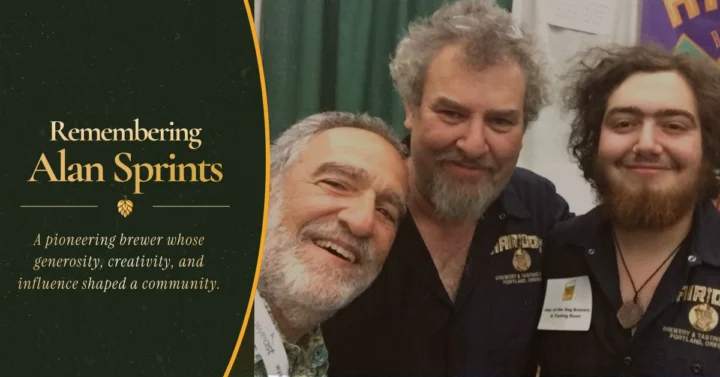
Alan Sprints, the pioneering brewer whose innovative approach to crafting robust, complex ales at Hair of the Dog Brewery in Portland, Oregon, redefined the concept of limited-edition beers and inspired a generation of craft brewers, has died at the age of 61. Sprints succumbed to metastatic stage 4 bladder cancer, leaving behind a profound legacy in the craft beer world. He is widely recognized for his mastery of strong ales and his prescient understanding of aging and barrel-aging techniques, which transformed certain releases into highly sought-after collectibles, often referred to as "white whales" within the enthusiast community.
A Legacy Forged in Bold Flavors and Enduring Enigmas
Sprints’ influence on craft beer is inextricably linked to the iconic beers he created at Hair of the Dog, which he founded in 1993. Among his most celebrated creations was "Adam," a beer that paid homage to the historical German strong ale Adambier, a style documented by the esteemed beer historian Michael Jackson in his seminal work, Beer Companion. Launched in 1994, Adam was a formidable dark ale boasting a 10% ABV and a robust 60 IBUs. Its exceptional aging potential allowed it to develop complex nuances over time, making it a pioneering example of a beer designed for cellaring and a stark departure from the lighter, more immediately palatable offerings prevalent at the time. This very characteristic of graceful aging and evolving flavor profiles cemented Adam’s status as a groundbreaking beer.
Following the success of Adam, Sprints introduced "Fred" in 1997. Named in honor of Portland-based beer historian Fred Eckhardt, a significant figure in the craft and homebrew movements, Fred was inspired by the Belgian Golden Strong Ale. This dark gold, 10% ABV ale quickly became even more elusive and coveted than its predecessor, further solidifying Sprints’ reputation for creating beers that were not only delicious but also possessed a narrative and a mystique. The limited production and exceptional quality of these beers created a fervent demand among collectors and enthusiasts, establishing a blueprint for the "white whale" phenomenon that continues to shape the craft beer landscape today.
From Aerospace and Music to the Alchemy of Beer
Sprints’ journey to becoming a brewing luminary was as unique as his beers. Originally hailing from the Los Angeles area, his early career path was diverse, encompassing interests in aerospace and music. This eclectic background likely contributed to his unconventional and creative approach to brewing. His passion for homebrewing eventually led him to pursue a career in culinary arts, serving as a chef before transitioning to the professional brewing industry. In 1991, he joined Widmer Brothers in Portland, a pivotal step that exposed him to the commercial brewing environment.
During his time in Portland, Sprints became deeply involved in the local homebrewing scene, actively participating in the Oregon Brew Crew, where he eventually held the position of club president. This period of engagement fostered his understanding of brewing science and community, laying the groundwork for his entrepreneurial ambitions. After three years as a chef and two as a professional brewer, Sprints felt ready to embark on his own venture.
Hair of the Dog Brewery opened its doors in 1993 in an industrial district of southeast Portland. From its inception, the brewery was characterized by Sprints’ commitment to innovation and his reverence for historical brewing traditions. He was not only dedicated to recreating and elevating historical beer styles but was also an early adopter and master of barrel-aging techniques. This forward-thinking approach garnered significant recognition, earning accolades from prominent publications such as Beer Advocate and Whiskey Advocate.
A Master of Barleywine and Barrel-Aging
Matt Simpson, founder of The Beer Sommelier, articulated the profound impact of Sprints’ brewing philosophy on Facebook, stating, "He didn’t create the barleywine style—he perfected it. He didn’t invent barrel-aged beers—he curated and melded them like nobody at the time could or would." This sentiment highlights Sprints’ ability to not just replicate but to elevate and innovate within established beer categories. His barleywines, in particular, became benchmarks for the style, showcasing a depth of flavor, complexity, and an ability to age gracefully that few could match. His work with barrel aging, often incorporating retired whiskey and wine barrels, introduced a layer of sophistication and depth to his beers, contributing to their unique character and long-term appeal.
Anecdotal Accounts of Generosity and Passion
The narrative of Alan Sprints is richly interwoven with personal recollections from those who knew him and experienced his brewing firsthand. Amahl Turczyn, the author of the original article, fondly recalls visiting Sprints at Hair of the Dog in the mid-1990s alongside beer historian Fred Eckhardt and former Zymurgy editor Jim Parker. Turczyn remembers being impressed by the brewery’s imposing, chalice-like steam-jacketed brew kettle and Sprints’ enthusiastic generosity in sharing older vintages of his beers. "His enthusiasm for the craft was infectious," Turczyn noted, underscoring Sprints’ genuine passion for brewing and his willingness to share his knowledge and his creations. The experience of discovering his beers at local establishments like Burlingame Market and enjoying them at the renowned Horse Brass pub were highlights of the burgeoning Portland craft beer scene of the 1990s.
Drew Beechum, a founding board member of the American Homebrewers Association (AHA) and an accomplished author, echoed these sentiments. "He was a homebrewer at heart—always super generous with his time and enthusiasm (and his cellar)," Beechum stated. His memories paint a vivid picture of Sprints’ approachable nature and his dedication to the brewing community.
Beechum recounted a memorable experience from his early days as a brewer. He stumbled upon the original Hair of the Dog location, described as being in a "weird old half broken down warehouse along the river and the train tracks in Portland." This was prior to the widespread availability of digital navigation tools, making the discovery an adventure in itself. Despite being a relative stranger, Sprints welcomed Beechum to a private party held at the brewery before the Oregon Brewers Festival. Sprints proudly showcased his 4-barrel steam-jacketed kettle, which he revealed had previously been used by Campbell’s for boiling peas, a detail that amused Beechum. He also noted the humorous contrast between the kettle and a malt silo that "absolutely dwarfed" it, a testament to the scale of the beers Sprints was producing. Sprints’ warmth and generosity were further exemplified when he poured Beechum a glass of the highly coveted "Dave" from a hidden keg.
Another anecdote from Beechum highlights Sprints’ remarkable generosity on a larger scale. During a visit to the Bay Area, Sprints surprised Beechum’s homebrew club, the Falcons, who were celebrating their win as Anchor’s California Homebrew Club of the Year. At a party in Berkeley, Sprints arrived bearing two magnums of Doggie Claws Barleywine as a congratulatory gift. The humor escalated as, each time a bottle was emptied, Sprints reappeared with more magnums, "like a mischievously grinning Santa Claus." This story encapsulates Sprints’ playful spirit and his extraordinary willingness to share his prized creations.
Impact and Enduring Influence
Alan Sprints’ passing represents a significant loss not only to his family and friends but to the broader homebrewing and craft brewing communities. His contributions extend beyond the exceptional beers he brewed. He was a mentor to many, a source of inspiration, and a testament to the power of pursuing one’s passion with dedication and creativity. His pioneering work in developing and aging strong ales, and his innovative use of barrel aging, laid essential groundwork for many brewers who followed. The "white whale" phenomenon, while sometimes criticized for fostering hype, also undeniably drove innovation and a pursuit of excellence in beer production, a movement Sprints was instrumental in initiating. His legacy is etched in the continued appreciation for complex, well-aged beers and in the ongoing quest by brewers to push the boundaries of flavor and creativity. He will be remembered for his technical skill, his artistic vision, and his profound generosity, qualities that made him a true legend in the world of beer.


