
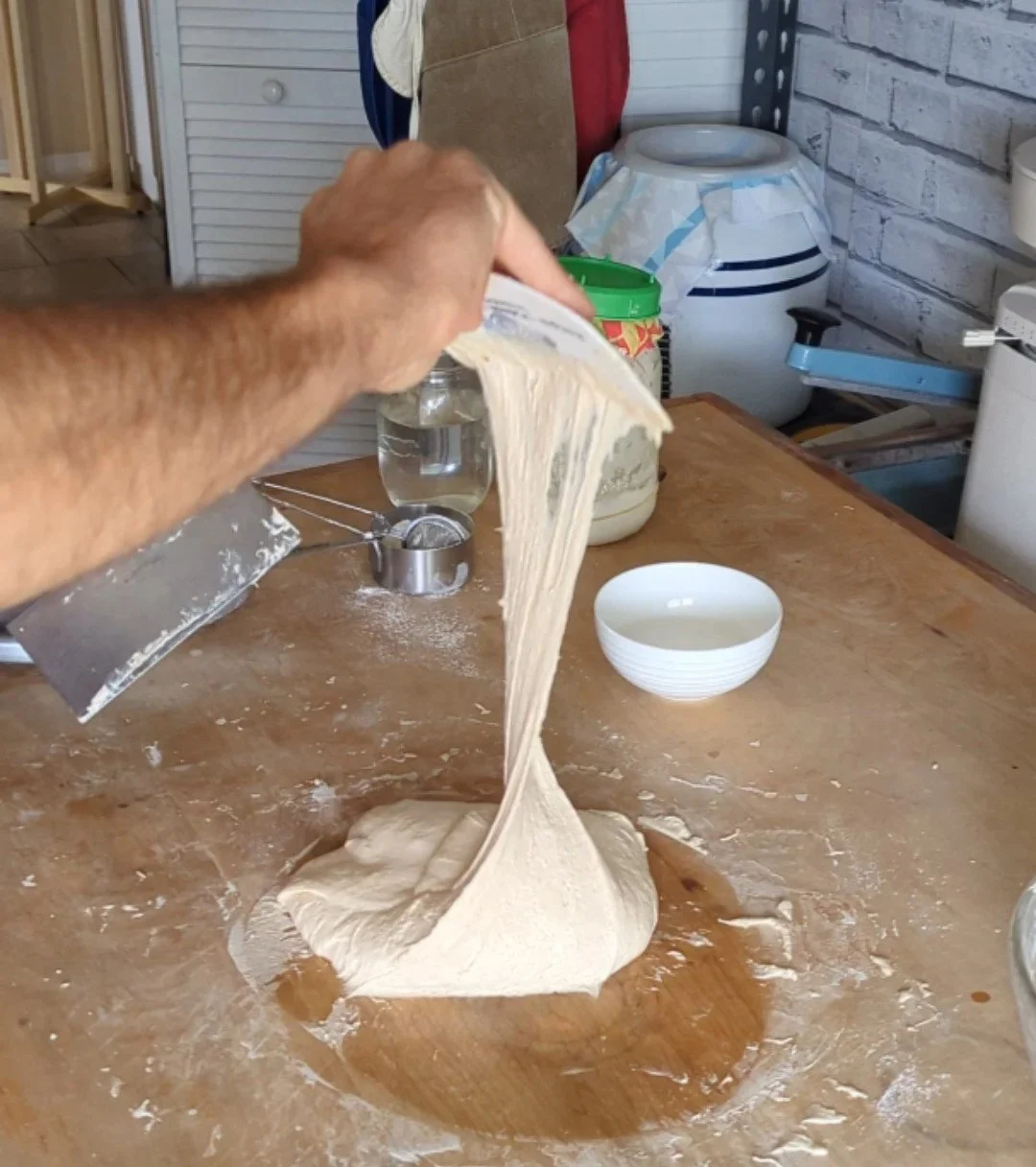
A recent culinary mishap involving a sourdough bread attempt by Austin Durant, the esteemed founder of Fermenters Club and author of "Fearless Fermenting," has provided a compelling lesson in adaptability and resourcefulness for the home baking community. What began as an anticipated rise of a "Lazy Loaf Sourdough" ultimately resulted in an unshapeable, "soupy mess," attributed primarily to an unseasonably warm overnight proofing environment and potential over-proofing. Rather than discarding the substantial volume of dough, Durant ingeniously repurposed the entire batch into a generous yield of sourdough pancakes, offering a practical demonstration of culinary resilience and waste reduction.
The Unexpected Turn in Sourdough Craft
The incident occurred during an overnight proofing cycle of what was intended to be a sourdough loaf prepared using Durant’s innovative "Lazy Loaf Sourdough bread technique." This method, designed to simplify the often-intricate process of sourdough baking, still relies on the delicate balance of yeast and bacteria activity within the starter, profoundly influenced by ambient conditions. Durant reported that his home’s internal temperature likely reached approximately 80°F (26.7°C) during the critical proofing period. This elevated temperature, significantly above the optimal range typically recommended for sourdough (which usually hovers between 70-75°F or 21-24°C), dramatically accelerated the fermentation process.
The accelerated fermentation, coupled with what Durant inferred might have been an extended proofing duration, led to a catastrophic breakdown of the dough’s gluten structure. Gluten, a protein network formed when flour and water are combined and kneaded, is responsible for trapping the carbon dioxide gas produced by yeast, allowing the bread to rise and develop its characteristic open crumb structure. When dough over-proofs, particularly in warm conditions, the yeast consumes sugars too quickly, producing an excess of acid that can weaken and eventually degrade the gluten network. This results in a dough that loses its elasticity and structural integrity, becoming slack, sticky, and unable to hold its shape—a scenario precisely matching Durant’s description of a "soupy mess."
Upon discovering the unworkable dough the following morning, Durant attempted to incorporate additional flour on his workbench. However, the extent of the gluten degradation rendered the dough beyond salvaging for traditional bread shaping. Faced with a triple batch of dough that would not hold its form for a proofing basket or subsequent baking, a strategic pivot was necessary.
The Science of Sourdough: A Delicate Balance
Sourdough baking is an ancient art experiencing a modern resurgence, celebrated for its complex flavors, improved digestibility, and the deeply satisfying process of creating food from a living starter. At its heart is a symbiotic culture of wild yeast and lactobacilli bacteria, which metabolize sugars in flour to produce lactic acid, acetic acid, and carbon dioxide. These byproducts contribute to sourdough’s characteristic tang and its natural leavening power.
However, this biological process is exquisitely sensitive to environmental variables, with temperature being paramount. Yeast activity roughly doubles with every 10°C (18°F) increase in temperature within its optimal range. While warmth can speed up fermentation, excessive heat can lead to rapid over-proofing, where the yeast depletes its food source and the gluten structure breaks down before the dough is baked. This not only impairs the dough’s ability to rise but can also lead to an overly sour flavor profile, as more acetic acid is produced.
Durant’s "Lazy Loaf" technique, aimed at streamlining the process, likely relies on specific timing and environmental assumptions. The unexpected heat wave, pushing his indoor temperature to 80°F, directly interfered with these assumptions, highlighting that even simplified methods are subject to the fundamental principles of fermentation science. The incident underscores that while sourdough baking is rewarding, it demands attention to detail and an understanding of the dynamic interactions within the dough.
A Chronology of the Culinary Pivot
The sequence of events leading to the sourdough pancake transformation unfolded as follows:
- Evening (Day 1): Austin Durant prepares a significant batch of sourdough dough using his "Lazy Loaf Sourdough bread technique," intending it for a standard bread loaf. The dough is left to proof overnight, a common practice for many sourdough recipes to develop flavor and structure slowly.
- Overnight Period: Unbeknownst to Durant at the time of preparation, the ambient temperature inside his home rises to approximately 80°F (26.7°C). This elevated temperature significantly accelerates the dough’s fermentation and proofing process, much faster than anticipated for a typical overnight schedule.
- Morning (Day 2): Durant discovers the dough has not risen properly. Instead of the desired elastic, airy texture, he finds a severely over-proofed, "soupy mess" that has lost all structural integrity, making it impossible to shape into a loaf.
- Attempted Salvage: He transfers the unmanageable dough to his workbench, attempting to incorporate additional flour in a last-ditch effort to restore some form and texture. This attempt proves futile, confirming the dough’s unsuitability for bread.
- Strategic Decision: Recognizing the impossibility of creating a successful bread loaf, Durant makes a practical decision to repurpose the large quantity of dough. Instead of discarding it, he chooses to transform it into sourdough pancakes, a well-known method for utilizing sourdough discard.
- Pancake Preparation: Adapting a standard sourdough pancake recipe, Durant adjusts the ingredients to accommodate the triple batch of dough. Crucially, he decides to omit baking soda from the pancake batter, reasoning that the dough already possessed "a little lift" from the initial fermentation.
- Pancake Cooking and Serving: The batter is cooked, yielding approximately two dozen pancakes. Durant observes that the resulting pancakes are "unabashedly sour, and perhaps a bit flat," a direct consequence of the over-proofed dough and the omitted baking soda, yet he deems them "otherwise delicious." He prepares three variations and serves them with unique accompaniments: strawberry sauerkraut, grass-fed butter, and maple syrup.
The Art of Repurposing: From Loaf to Pancake
Durant’s decision to convert the failed bread dough into pancakes exemplifies a core principle of sustainable cooking and baking: minimizing waste through creative adaptation. Sourdough discard—the portion of the starter that is removed before feeding to maintain its vitality—is a common byproduct that many bakers learn to integrate into other recipes. In this instance, the entire dough itself, having undergone significant fermentation, became a form of "discard" suitable for repurposing.
The transformation process involved a clever adjustment of a traditional pancake recipe. Given the triple batch of dough, Durant scaled up the supplementary ingredients such as eggs, milk, and additional flour or leavening agents typically found in sourdough pancake recipes. His decision to initially omit baking soda, while retrospectively identified as a factor in the pancakes’ flatness, speaks to an understanding of sourdough’s inherent leavening capabilities. However, for fully over-proofed dough where the yeast’s gas-producing power is largely exhausted, supplemental chemical leaveners like baking soda (often activated by the acidity of sourdough and an additional acid like buttermilk) are crucial for achieving a fluffy texture. His acknowledgment of this oversight ("in hindsight, I should have added it anyway") offers an honest and valuable learning point for other bakers.
The resulting pancakes, despite being "flat" and "unabashedly sour," were still deemed delicious, highlighting the robust flavor profile that fermented dough imparts. The sourness is a hallmark of sourdough and, in many applications, a desirable characteristic. The unusual accompaniment of strawberry sauerkraut further underscores Durant’s experimental and fermentation-focused culinary philosophy, demonstrating how diverse fermented foods can complement each other.
Expert Insights and Lessons Learned
Austin Durant’s candid account serves as a valuable case study for both novice and experienced bakers. His status as the founder of Fermenters Club and author of "Fearless Fermenting" lends significant weight to his experience, demonstrating that even seasoned experts encounter challenges. His practical solution highlights several key insights:
- Temperature Control is Critical: The incident emphatically reinforces the importance of managing ambient temperature during sourdough proofing. Fluctuations can drastically alter fermentation rates, leading to undesirable outcomes. Bakers are often advised to use proofing boxes, oven lights (turned off, just for warmth), or cooler environments (like a refrigerator for a slow proof) to maintain consistent temperatures.
- Recognizing Over-proofing: Learning to identify the signs of over-proofed dough—excessive stickiness, loss of elasticity, a tendency to spread rather than hold shape—is vital for making timely adjustments or alternative plans.
- The Value of Sourdough Discard: The event underscores the versatility of sourdough cultures. Even when a primary baking goal is not met, the fermented material remains a valuable ingredient that can be transformed into a variety of other delicious foods, from crackers and waffles to pizza dough and, as demonstrated, pancakes. This promotes a zero-waste approach in the kitchen.
- Adaptability in Baking: Durant’s quick pivot from bread to pancakes is a testament to culinary adaptability. It encourages bakers to view "failures" not as wasted effort but as opportunities for creative problem-solving and culinary exploration.
- Understanding Leavening Agents: The reflection on baking soda highlights the interplay between biological (yeast) and chemical (baking soda/powder) leavening. In cases of exhausted yeast activity, chemical leaveners can provide the necessary lift.
Broader Implications for Home Bakers and Food Sustainability
The experience shared by Austin Durant resonates deeply within the growing community of home bakers. It demystifies the perceived perfection of professional baking and normalizes the learning curve inherent in working with living ingredients like sourdough. For many, the fear of "ruining" a batch of dough can be a significant barrier to entry or continued experimentation. Durant’s open discussion of his mishap, coupled with his creative resolution, provides encouragement and practical guidance.
This incident also carries broader implications for food sustainability. Food waste is a significant global concern, and home kitchens contribute substantially to this issue. By demonstrating how a large quantity of "failed" dough can be successfully repurposed, Durant champions a mindful approach to ingredients. This aligns with the principles often advocated by Fermenters Club, which promotes traditional food preservation techniques not only for their health benefits but also for their role in reducing waste and fostering self-sufficiency.
Furthermore, the "Lazy Loaf" technique itself, while subject to environmental variables, points to a trend towards making complex culinary processes more accessible. When these simplified methods encounter unforeseen challenges, the ability to adapt, as Durant did, becomes even more crucial for maintaining enthusiasm and continuing the baking journey.
In conclusion, Austin Durant’s sourdough "flop" turned pancake triumph is more than just a recipe adaptation; it is a powerful narrative about resilience, resourcefulness, and the continuous learning process inherent in fermentation. It reminds us that in the world of baking, even the most unexpected turns can lead to delicious discoveries, reinforcing the idea that true culinary mastery lies not in avoiding mistakes, but in gracefully and creatively navigating them.


