
The Skagit Valley in Washington State recently played host to The Grain Gathering, a pivotal three-day event from July 19-21, 2026, marking its return after an eight-year hiatus. Hosted by the Washington State University (WSU) Breadlab and the Washington State Department of Agriculture (WSDA), the gathering convened a diverse assembly of grain enthusiasts, from seasoned breeders and farmers to professional bakers and passionate home artisans, all united under the theme, "Nourishing Communities." The event served as a vibrant nexus for critical discussions and practical demonstrations aimed at reshaping the journey of grain from field to loaf, emphasizing transparency, economic equity for farmers, and the resurgence of flavor and nutrition in staple foods.
Background and Context of The Grain Gathering
The Grain Gathering, more aptly described as a congregation than a conventional conference, has historically been a significant forum for advancing sustainable grain systems. Its return in 2026 after nearly a decade underscored a renewed urgency and heightened interest in local and regional grain economies. The WSU Breadlab, a globally recognized center for grain research and development, served as a primary host, leveraging its expertise in breeding wheat varieties specifically adapted to local conditions and optimized for both agricultural performance and exceptional baking qualities. The WSDA’s involvement further highlighted the state’s commitment to supporting agricultural innovation and fostering robust food supply chains within Washington.
Skagit Valley, with its fertile soils and burgeoning agricultural community, provided an ideal backdrop for the gathering. The region has become a microcosm of the broader movement towards specialty grains, boasting farmers dedicated to heritage varieties and mills committed to processing them with integrity. The "Nourishing Communities" theme resonated deeply, framing the discussions around not just the technical aspects of grain production and baking, but also the societal implications of food systems – how they impact local economies, environmental health, and the nutritional well-being of populations. Attendees engaged in a packed schedule of talks, masterclasses, and immersive experiences, including tours of active wheat fields, providing a holistic perspective on the intricate journey of grain.
A Mobile Revolution: Marc Benoit’s Farm-to-Loaf Vision
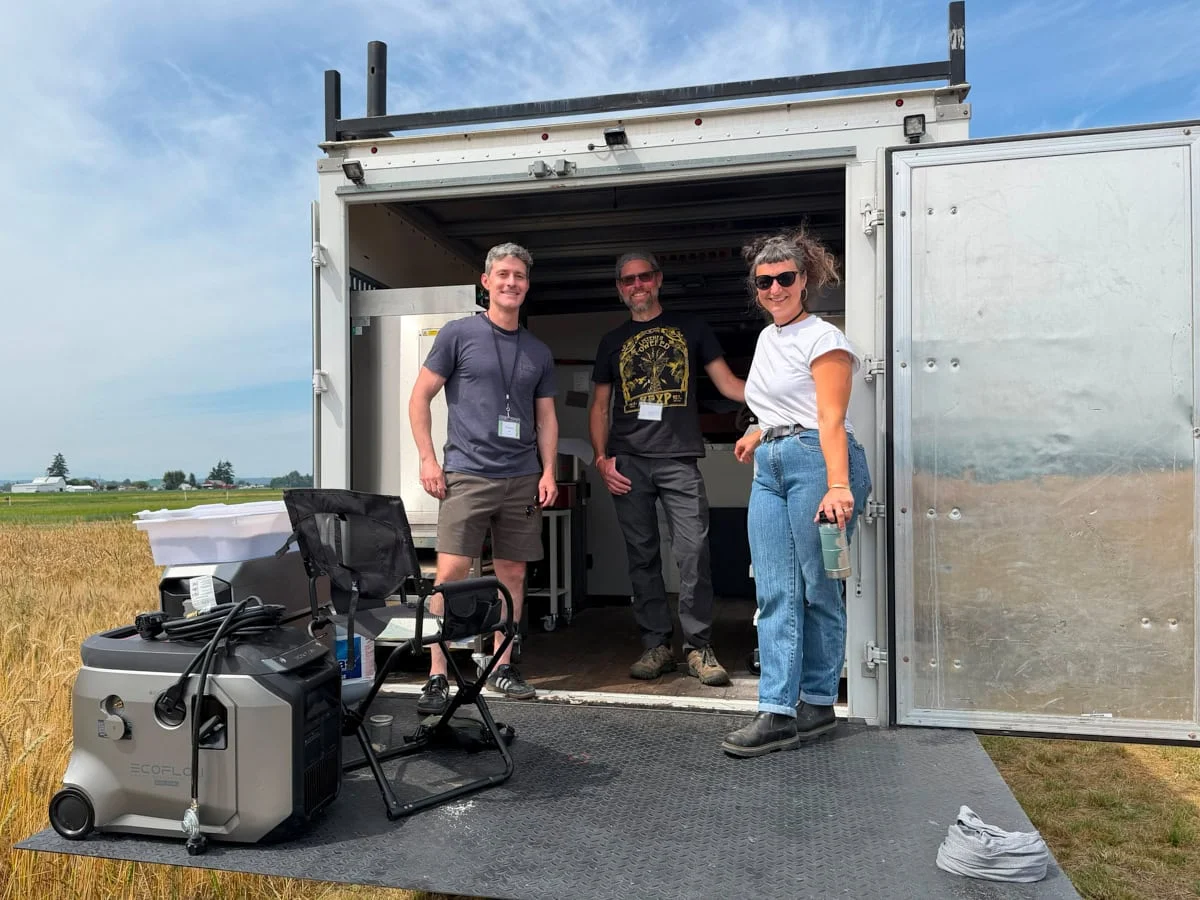
One of the most compelling innovations showcased at the gathering was the solar-powered mobile bakery and mill, conceptualized and built by Marc Benoit of Red’s Breads. This self-contained unit, housed in the back of a truck, featured a bread oven (specifically, a workhorse RackMaster), a grain mill, a mixer, and a workbench—all efficiently powered by a solar array mounted on the roof. This ingenious setup epitomized the gathering’s core objective: to dramatically shorten the supply chain from field to loaf and redirect a greater share of the final product’s value back to the farmers who cultivate the grain.
Participants at the gathering had the unique opportunity to experience this mobile operation firsthand. Benoit, alongside Baylin Speidel and Thomas Vroom, demonstrated the seamless process of milling freshly harvested grains and baking an impressive array of products. The output included over twenty sourdough country loaves made with varieties like Moon Family Farms’ Hollis, Chimacum Confluence, and Palouse Heritage Elwha River Spelt, three large-format focaccia, an "armada" of baguettes, and bialys topped with sesame and roasted vegetables. The RackMaster oven, even after hours of continuous baking, maintained its temperature, underscoring the efficiency and reliability of the mobile setup. This direct, transparent process allowed for an "unbroken chain of custody," where the grain entered the system with the farmer’s name and emerged as bread directly traceable to its grower, challenging the anonymity inherent in commodity grain markets.
Re-evaluating Value: The Economics of Artisanal Bread
A central tenet of the discussions at The Grain Gathering revolved around the economic disparities within the current grain supply chain. While an artisanal loaf of sourdough bread can retail for $6 to $12 or even more, a significant portion of this cost often bypasses the primary producer: the farmer. The conventional commodity grain system, designed for mass production and global distribution, effectively anonymizes grain. Once wheat enters the vast commodity silos, it loses its identity, and the considerable care, attention to soil health, and unique growing conditions provided by individual farmers go largely unrewarded financially.
Proponents of the local grain movement argue that while staple foods should be affordable, the current system undervalues the foundational labor and environmental stewardship of farmers. Marc Benoit’s mobile mill and bakery offers a tangible solution to this imbalance. By integrating milling and baking into a single, mobile operation, the operator effectively captures the margins typically distributed among separate millers, distributors, and retailers. This consolidated revenue stream, if placed directly in the hands of the farmer or a farmer-baker cooperative, represents a substantial shift in economic power. It transforms grain from a mere commodity into an identity-preserved ingredient, allowing the farmer’s name and specific varietal to be celebrated on the final product’s packaging. For home bakers, the practice of purchasing identity-preserved grain directly from farms or small mills, and especially milling it fresh at home, contributes to this same compression of the supply chain, fostering a more equitable and transparent food system. This model suggests a potential for farmers to earn a significantly larger percentage of the retail price of their grain, moving beyond the often meager 15-20% share typically seen in commodity agriculture.
Breeding for Flavor and Nutrition: The WSU Breadlab’s Approach
The conversations at the gathering frequently delved into the priorities that shape wheat breeding, and why common grocery store flour often lacks distinctive flavor and nutritional depth. Historically, wheat breeding programs have predominantly optimized for traits such as high yield, crop uniformity, disease resistance, and ease of mechanical harvest. While these attributes are crucial for large-scale agricultural efficiency and feeding large populations, flavor and nutritional density have often been secondary considerations, if considered at all.
The WSU Breadlab stands at the forefront of a paradigm shift in this approach. Their breeding program explicitly incorporates flavor and nutrition into its evaluation scorecard. Rather than aiming for varieties that perform adequately in all conditions, the Breadlab focuses on developing grains specifically suited to thrive in particular growing environments, such as Skagit Valley. Examples include renowned varieties like Skagit 1109, Salish Blue, and Ruth, which are celebrated for their unique characteristics and regional adaptability. Crucially, the Breadlab goes beyond field performance; they rigorously mill and bake candidate varieties to assess their performance in a loaf, ensuring that the grains not only grow well but also translate into superior flour and bread. This holistic approach ensures that the "flavor has a name, and so does the farmer who grew it," providing consumers with flours that offer distinct baking qualities and richer sensory experiences, directly countering the anonymity of commodity flour. This research is instrumental in reconnecting consumers to the origin and inherent quality of their food.
A Diverse Congregation: Connecting the Grain Community
The true essence of The Grain Gathering lay in its ability to foster connections across the entire spectrum of the grain community. Far from being an exclusive industry conference, it welcomed bakers of every stripe, from home enthusiasts baking a couple of loaves a week to seasoned professionals running large community bakeries. This diverse representation allowed for rich, interdisciplinary conversations, where technical terms like "falling numbers" (an indicator of enzymatic activity and starch damage in flour) were discussed alongside mixing techniques and the operational intricacies of community bakeries.
The event facilitated invaluable networking opportunities, bringing together luminaries and emerging talents. Marc Benoit, Baylin Speidel, and Thomas Vroom were recognized for their innovative spirit and hands-on contributions to the mobile bakery demonstration. Crystie and Keith Kisler of Chimacum Valley Grainery were lauded for their inspiring work in growing, milling, and malting exceptional grains. Kevin Morse, Meech Crowley, and Jon Feldman of Cairnspring Mills were thanked for their role in bringing Skagit grain to a wider audience. Esteemed figures like Andrew Heyn and Blair Marvin of Elmore Mountain Bread shared insights into milling, growing, and community-focused baking. Legendary baker Jeffrey Hamelman, whose seminal work has guided countless bakers, also engaged with attendees, confirming the enduring wisdom of his contributions. Other notable participants included Andrew Ross, known as the "wholegrain surfer," Katie Phelan, Brandon Buza, and Cat Cox of Country Bird Bakery, all contributing to a vibrant exchange of ideas, techniques, and shared passion for grain. These interactions underscored the collaborative spirit driving the resurgence of craft grain and bread.
Shifting Paradigms: Implications for Home and Professional Bakers
The insights gleaned from The Grain Gathering extended beyond theoretical discussions, offering tangible implications for both home and professional bakers. The immersive experience, from walking through WSU Breadlab’s wheat fields to witnessing grain transformed into bread in a mobile unit, served as a powerful catalyst for re-evaluating baking practices. While the prospect of a complete overhaul might seem daunting, the gathering emphasized that meaningful change can begin with small, deliberate steps.
For instance, bakers were encouraged to replace just one of their conventional flours with an identity-preserved variety, such as Ruth, or to source grain directly from a farmer and mill it fresh at home. These actions, while seemingly minor, contribute directly to the principles of supply chain compression and farmer support advocated at the gathering. The event highlighted a growing trend among informed bakers towards incorporating more whole grains, exploring named varieties with distinct characteristics, and utilizing freshly milled flour. This evolution is driven not merely by a sense of obligation, but by the pursuit of superior flavor and enhanced nutrition—qualities that the right grain, coupled with proper fermentation, can deliver simultaneously. The implication is a future where bakers, armed with knowledge and access to quality ingredients, can consistently produce bread that is both deeply flavorful and profoundly nourishing.
Looking Ahead: The Future of Grain in Skagit Valley and Beyond
The 2026 Grain Gathering concluded with a resonant message of hope and momentum for the future of grain. It truly "nourished" its attendees, not just with exceptional bread, but with a renewed sense of purpose and community. The event solidified the idea that the "grain-obsessed" are a powerful force, collectively striving to feed people better, whether through baking two loaves at home or hundreds in a commercial kitchen.
The personal transformation experienced by many attendees, exemplified by the shift from anonymous flour to flour directly linked to specific farmers and fields, underscores the gathering’s profound impact. The vision championed by the WSU Breadlab, the WSDA, and innovative individuals like Marc Benoit points towards a future where the connection between the consumer and the source of their food is strengthened, where economic fairness for farmers is prioritized, and where the intrinsic value of flavor and nutrition guides agricultural and culinary practices. The collaborative spirit and shared knowledge fostered in the Skagit Valley suggest a blueprint for other regions seeking to cultivate more sustainable, transparent, and flavorful grain economies, ensuring that the legacy of quality bread endures for generations to come.


