
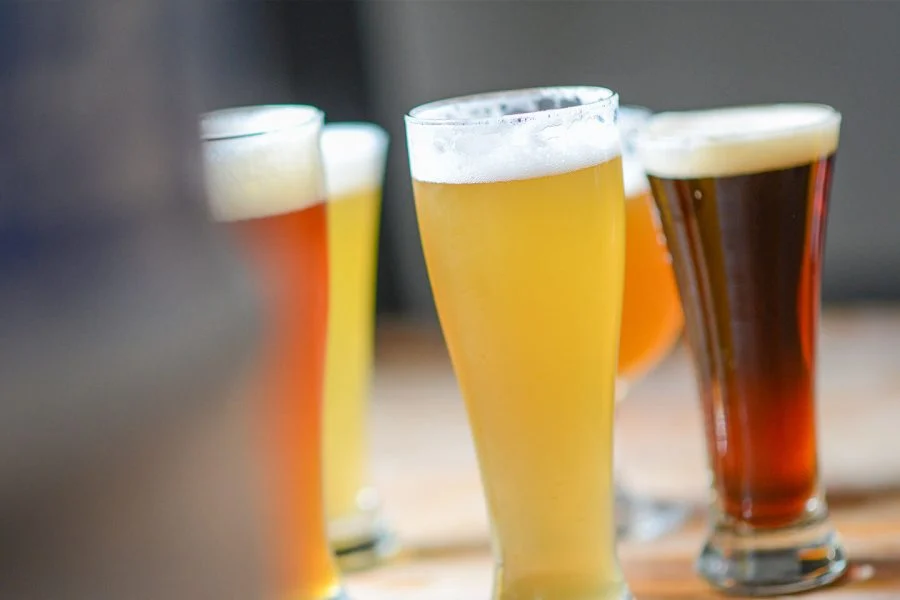
Alex Rezmerski of Louisville, Kentucky, a dedicated member of the Louisville Area Grain and Extract Research Society (LAGERS), has achieved a significant honor, securing a gold medal in Category 21: Strong European Lager at the prestigious 2026 National Homebrew Competition. His winning brew bested a field of 68 entries in the final round, marking a notable achievement in the highly competitive world of homebrewing. This victory underscores the growing sophistication and dedication within the homebrewing community and highlights the exceptional quality that can be achieved outside of commercial brewing environments.
The National Homebrew Competition: A Pinnacle of Homebrewing Excellence
The National Homebrew Competition (NHC), organized annually by the American Homebrewers Association (AHA), stands as the world’s largest and most respected homebrewing competition. It serves as a critical platform for amateur brewers to showcase their craft, receive expert evaluation, and gain recognition for their brewing prowess. The competition spans numerous categories, meticulously designed to encompass the vast spectrum of beer styles, from classic lagers and ales to more experimental and contemporary creations. Each category involves multiple rounds of judging, starting with extensive regional competitions and culminating in a grand final where the best of the best vie for top honors.
The 2026 iteration of the NHC, like its predecessors, saw thousands of entries submitted by homebrewers from across the United States and internationally. The judging process is rigorous, employing a panel of highly experienced and certified beer judges who evaluate each submission based on a detailed set of criteria, including aroma, appearance, flavor, mouthfeel, and overall impression, all while adhering to established BJCP (Beer Judge Certification Program) style guidelines. Achieving a gold medal in any category signifies that the beer was deemed exemplary, demonstrating outstanding adherence to style, technical brewing skill, and a superior sensory profile.
Alex Rezmerski’s Victory: A Deep Dive into Strong European Lager
Rezmerski’s triumph in Category 21: Strong European Lager places him among an elite group of homebrewers recognized for their mastery of this complex and demanding style. Strong European Lagers are characterized by their robust malt profiles, often exhibiting a rich, bready, or toasty complexity, balanced by a clean, crisp lager fermentation. These beers typically possess a higher alcohol content than their standard counterparts, yet they maintain a remarkable drinkability and refinement. Styles within this broad category can include Bock, Doppelbock, Eisbock, Baltic Porter, and strong versions of Pilsner or Export lagers.
The specific nuances of a winning Strong European Lager involve achieving a delicate balance. The malt character must be prominent without being cloying, offering layers of flavor that can range from sweet and caramel-like to deeply toasty or even slightly roasted. Crucially, the lager yeast fermentation must be executed flawlessly, producing a clean fermentation profile that allows the malt and hop characteristics to shine through without off-flavors. Hop additions, while not always overtly dominant, should contribute to the overall balance, providing a subtle bitterness or aroma that complements the malt. Achieving this level of precision, especially with a higher alcohol content, requires significant brewing skill, meticulous attention to detail in fermentation control, and a deep understanding of ingredient selection.
The Louisville Area Grain and Extract Research Society (LAGERS): A Hub for Brewing Innovation
Rezmerski’s affiliation with the Louisville Area Grain and Extract Research Society (LAGERS) provides further context to his success. Homebrew clubs like LAGERS serve as vital incubators for brewing knowledge and camaraderie. Members often share techniques, troubleshoot brewing challenges, participate in collaborative brews, and engage in friendly competition, all of which foster a continuous learning environment. The sharing of information regarding ingredient sourcing, fermentation strategies, and recipe development within such a community can significantly elevate a brewer’s skill set. It is plausible that Rezmerski benefited from the collective expertise and support of his fellow LAGERS members, a common occurrence in successful homebrewing circles.
The Journey to Gold: A Chronological Perspective (Inferred)
While the article does not detail Rezmerski’s specific brewing journey, the path to a gold medal at the NHC is typically a lengthy and iterative process. It likely began with recipe formulation, involving careful consideration of malt bill composition, hop selection, yeast strain, and water chemistry. This would have been followed by multiple test brews, where Rezmerski would have refined his recipe and brewing process, seeking to optimize flavor, aroma, and overall balance.
The competition itself involves several stages. Brewers first submit their entries to regional qualifying competitions. If a beer performs exceptionally well at the regional level, it advances to the final round of the NHC. This multi-stage process means that Rezmerski’s winning beer was likely brewed and perfected over a period that could span months, if not years, of dedicated effort. The final round judging, which determines the ultimate medalists, typically occurs over several days, allowing judges ample time to meticulously evaluate the top-tier entries. The 2026 competition would have followed a similar timeline, with regional competitions concluding in the months leading up to the final round.

Supporting Data and Broader Impact
The success of homebrewers at events like the NHC has a tangible impact on the broader craft beer landscape. Many professional craft breweries today trace their origins back to homebrewers who honed their skills and gained recognition through competitions. The innovation and creativity displayed by homebrewers often influence emerging trends in the commercial beer market. Rezmerski’s gold medal in a specific European lager category could inspire other homebrewers to explore and perfect similar styles, potentially leading to a greater appreciation and availability of these nuanced brews within the homebrewing community and beyond.
The fact that Rezmerski’s beer earned gold out of 68 entries in its category highlights the competitive nature of the Strong European Lager division. This level of participation suggests a strong interest in and dedication to brewing these traditional yet challenging styles. The NHC’s detailed judging sheets, which are often made available to participants, provide invaluable feedback, enabling brewers to understand precisely why their beer excelled or where it could be improved. This feedback loop is crucial for continuous development and contributes to the overall elevation of brewing standards.
Official Recognition and Community Engagement
The American Homebrewers Association, as the organizer of the NHC, plays a pivotal role in fostering the growth and recognition of homebrewing. Their mission includes advocating for homebrewers, providing educational resources, and hosting events like the NHC. The organization’s commitment to showcasing medal-winning recipes, as indicated by the link provided in the original content, allows a wider audience to learn from the best. This initiative democratizes brewing knowledge, enabling aspiring brewers to replicate successful recipes and understand the principles behind them.
The "AHA Member-Only Content" prompt suggests that the full details of Rezmerski’s recipe and the specific judging feedback are likely exclusive to AHA members. This model incentivizes membership by offering access to premium resources, thereby supporting the organization’s efforts to promote and advance homebrewing. The availability of such detailed information for members fosters a deeper engagement with the craft and encourages continued participation in the homebrewing community.
Analysis of Implications: Trends and Future of Homebrewing
Alex Rezmerski’s victory in the Strong European Lager category at the 2026 National Homebrew Competition is more than just a personal triumph; it reflects several key trends within the homebrewing world. Firstly, it signifies a continued resurgence of interest in traditional lager styles. While IPAs and other hop-forward ales have dominated headlines for years, there is a growing appreciation for the subtlety, complexity, and technical mastery required to produce exceptional lagers. This suggests a maturing palate within the homebrewing community, one that values a broader range of beer styles.
Secondly, Rezmerski’s success underscores the increasing sophistication of homebrewing techniques and ingredient access. With advancements in temperature control, water chemistry analysis, and the availability of high-quality malts and yeasts, homebrewers are now capable of producing beers that rival, and in some cases surpass, commercial offerings. The fact that a homebrewer can consistently achieve gold in a category as nuanced as Strong European Lager speaks volumes about the dedication to learning and experimentation within the hobby.
Furthermore, the NHC’s continued growth in participation and the detailed judging processes highlight the professionalization of homebrewing competitions. These events are no longer just informal gatherings but structured, rigorous assessments that provide meaningful feedback and recognition. This professionalism benefits not only the individual brewers but also the entire craft beer ecosystem by identifying and nurturing talent.
The availability of medal-winning recipes through organizations like the AHA is a crucial element in this ecosystem. By sharing these blueprints for success, the AHA empowers a new generation of homebrewers to learn from the best, adapt techniques, and push the boundaries of what is possible in their own kitchens and garages. This continuous cycle of learning, competing, and sharing is what will continue to drive innovation and excellence in the vibrant world of homebrewing for years to come. The future of homebrewing appears bright, fueled by the passion, skill, and dedication of individuals like Alex Rezmerski.


