Dough hydration, a seemingly straightforward concept, is increasingly recognized as one of the most complex and pivotal elements in the intricate art and science of sourdough bread baking. It transcends a mere numerical value in a recipe, evolving into a dynamic interaction between the baker, the flour, ambient environmental conditions, and even the specific milling process. This nuanced relationship profoundly dictates the texture, structure, and overall quality of the final loaf.
The Foundational Metric: Understanding Hydration Percentage
For centuries, bread baking relied heavily on empirical knowledge passed down through generations. However, modern understanding, augmented by scientific inquiry, highlights dough hydration as a central pillar of success, particularly in sourdough where the living culture interacts intimately with the water-flour matrix. Hydration fundamentally refers to the total water content in a dough, expressed as a percentage relative to the total flour weight. This metric provides bakers with a standardized language to discuss and predict dough characteristics before mixing even begins.
The calculation is precise: divide the weight of the water by the total weight of the flour, then multiply by 100. For instance, a recipe calling for 1,000 grams of flour and 700 grams of water results in a 70% hydration dough (700 ÷ 1,000 × 100 = 70%). While this percentage offers an immediate snapshot of expected dough consistency, leading baking experts consistently caution that it serves as a guideline rather than an immutable law. The inherent variability of flour—its type, the mill from which it originates, and even differences between bags from the same producer—significantly influences its water absorption capacity.
The Scientific Imperative: Why Water Matters
Water is not merely a binder; it is the catalyst that transforms dry flour into a viscoelastic dough capable of entrapping the carbon dioxide gases produced during fermentation. This gas entrapment is critical for creating the open, airy crumb characteristic of well-made sourdough. At a microscopic level, water hydrates the proteins in flour, primarily glutenin and gliadin, enabling them to form gluten—a complex protein network that provides elasticity and extensibility to the dough. Simultaneously, water facilitates the gelatinization of starches during baking, contributing to the loaf’s final texture and moisture.
An imbalance in hydration can lead to significant structural and textural defects. Insufficient water results in a tight, resistant dough that is difficult to work with, yields a dense crumb, and may develop a thick, unyielding crust. Conversely, excessive hydration can render the dough overly slack and soupy, unable to maintain its shape, leading to a collapsed loaf with a gummy interior. Between these two extremes lies a spectrum of bread styles, each optimized by a specific hydration range.
Chronology of Dough Development: The Evolution of Hydration Control
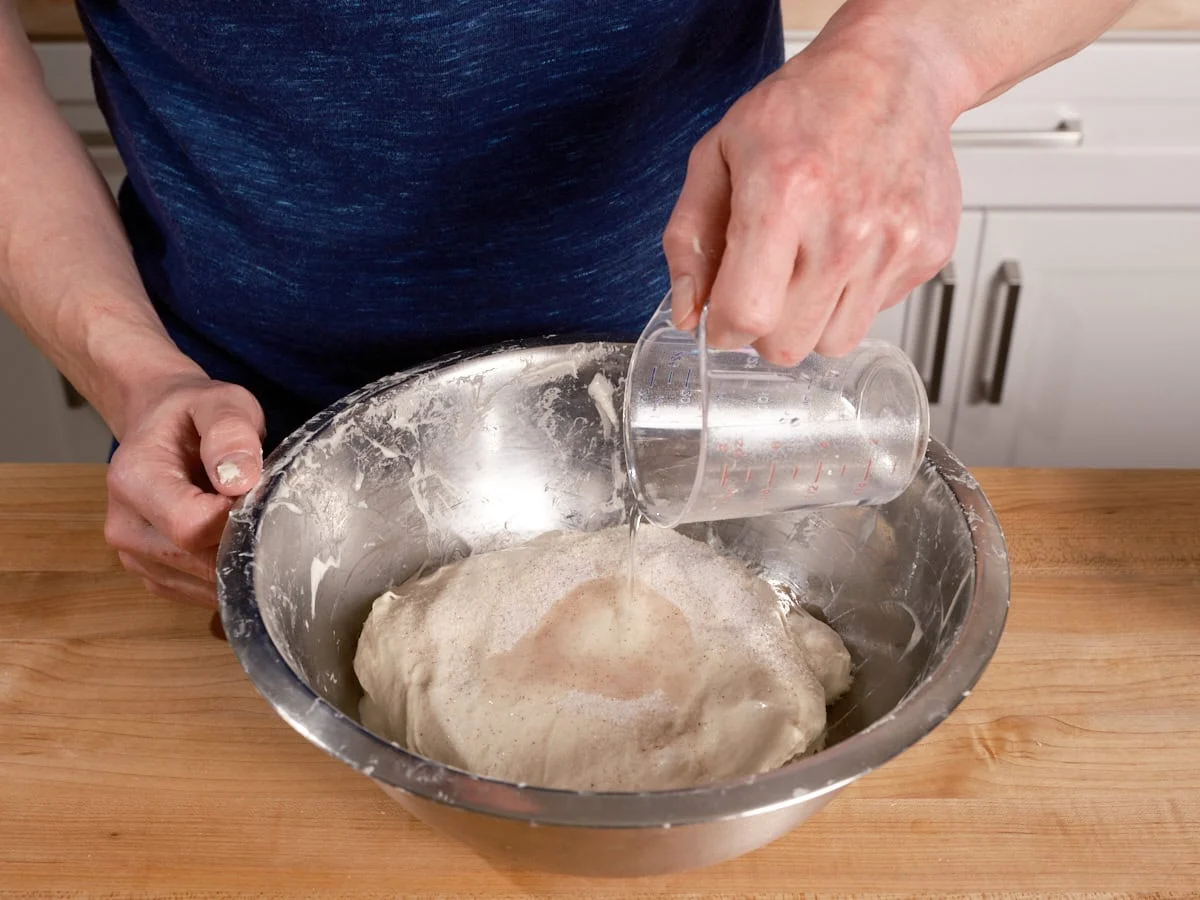
Historically, bakers adjusted water intuitively, relying on touch and experience. Modern techniques, however, have refined this process, often incorporating phased water addition, or bassinage, to optimize gluten development and hydration control. This method, now a cornerstone in many artisan bakeries, involves withholding a portion of the total water initially, adding it gradually later in the mixing process.
The benefits of bassinage are manifold. By starting with a slightly stiffer dough (typically 80-90% of the total water), the gluten network can develop more efficiently. The reduced initial water content increases friction during mixing, accelerating gluten formation. Once a foundational gluten structure is established, the remaining water can be slowly incorporated. This allows the dough to reach higher hydration levels without the common pitfalls of extended mixing times or insufficient gluten development that often plague single-stage high-hydration doughs. Furthermore, bassinage offers a critical opportunity for the baker to assess the dough’s strength and adjust the final water content in real-time, responding to the flour’s unique absorption qualities and environmental conditions. This technique demonstrates an evolution in baking science, moving from simple ingredient mixing to a more controlled, adaptive process that respects the dynamic nature of dough.
Factors Influencing Water Absorption: A Detailed Analysis
The capacity of flour to absorb water is not uniform; it is a complex interplay of several factors:
- Flour Type and Protein Content: Flours with higher protein percentages, such as strong bread flours (typically 12-14% protein), possess a greater capacity to absorb water due to the increased gluten-forming proteins. These flours often require higher hydration to prevent a gummy texture in the final product. For instance, American bread flours, generally higher in protein than their European counterparts, often necessitate increased hydration for an optimal final texture. Conversely, lower-protein flours, common in parts of Europe or for specific applications like pastries, may require reduced hydration to avoid an unmanageable, sticky dough. This distinction is crucial for international recipes.
- Whole Grain Flours: The presence of bran and germ in whole grain flours (e.g., whole wheat, rye) dramatically increases water absorption. These fibrous components act like sponges, absorbing significant moisture. Recipes incorporating substantial percentages of whole grains, such as a 50% whole wheat sourdough, often push hydration levels considerably higher (e.g., 82%) to ensure a tender crumb, a level that would be impractical for a pure white flour dough. Additionally, the sharp edges of bran particles can interfere with gluten development, necessitating more water to facilitate a cohesive network and prevent a dense crumb.
- Freshly Milled Flour: Flour milled freshly tends to require more hydration than aged flour. Even after sifting to remove bran and germ, freshly milled flour often exhibits different hydration characteristics due to enzymatic activity and structural differences, necessitating an upward adjustment in water content to achieve proper dough consistency. This is a common consideration for artisanal millers and bakers.
- Climate and Environment: Ambient conditions, particularly humidity and altitude, play a subtle yet significant role. In arid, high-altitude environments, such as parts of New Mexico, bakers typically require higher hydration percentages as the flour may be drier and the air has a lower moisture content, leading to faster evaporation from the dough surface. Conversely, in humid, low-altitude climates, flour might already have absorbed some atmospheric moisture, potentially requiring a slight reduction in added water. While often minimal, these environmental shifts can be critical for experienced bakers seeking optimal consistency and can significantly impact the dough’s initial feel.
The Spectrum of Dough Hydration: Characteristics and Applications
Understanding the impact of varying hydration levels is crucial for tailoring bread to specific desired outcomes.
-
Lower-Hydration Bread (60-68%):
- Characteristics: These doughs are notably stiffer and easier to handle, making them less challenging for novice bakers. They tend to produce loaves with a denser, more uniform crumb and a thicker, more substantial crust. The handling properties make them ideal for precise shaping.
- Applications: Commonly used for items requiring structural integrity and less spread, such as bagels, pretzels, certain pizza doughs, and traditional pan loaves. The reduced water content can also contribute to a longer shelf life for some bread types due to less free water activity.
-
Moderate-Hydration Bread (68-75%):
- Characteristics: Represents a balanced approach, offering manageability while yielding a satisfyingly open crumb and a relatively thin, crisp crust. These doughs strike a good balance between workability and desirable textural qualities, making them a popular choice.
- Applications: The sweet spot for many classic country loaves and excellent for beginner-friendly sourdough recipes, providing a forgiving yet rewarding baking experience. Baguettes often fall into this range, providing a crisp crust and a moderately open interior.
-
Higher-Hydration Bread (75-85%+):
- Characteristics: These doughs demand longer mixing times to adequately develop gluten due to their slack nature. They produce a very tender crumb, often described as custardy, with a highly open, irregular cell structure and a thin, brittle crust. Handling these doughs requires significant skill and experience, often relying on gentle folds rather than traditional kneading.
- Applications: Favored for breads like ciabatta, focaccia, and modern artisan loaves aiming for an exceptionally open crumb and delicate texture. While offering superior mouthfeel and texture when mastered, pushing hydration too high can lead to challenges. Over-hydrated loaves may struggle to retain their structure post-baking, potentially collapsing or staling faster due to an excessively soft crumb. The goal is to achieve the desired characteristics without compromising volume, texture, or eating quality.
Troubleshooting Common Dough Issues Related to Hydration
Sticky dough is a perennial challenge for many bakers, frequently stemming from issues related to hydration or gluten development. Visual and tactile assessment of the dough is paramount for effective troubleshooting.
-
Under-Hydrated Dough (~62% or less):
- Appearance/Feel: Stiff, resistant to mixing and stretching, tears easily, often appears crumbly or shaggy, lacking cohesion.
- Outcome: Dense, tight crumb with small, irregular air pockets, a thick and often tough crust, poor oven spring resulting in a smaller loaf volume.
-
Properly Hydrated Dough (~68-75%):
- Appearance/Feel: Pliant, elastic, smooth and cohesive surface, stretches without tearing, passes the "windowpane test" (can be stretched thin enough to see light through it).
- Outcome: Open, airy crumb with varied cell structure, tender texture, good oven spring, balanced and crisp crust.
-
Over-Hydrated Dough (~75%+):
- Appearance/Feel: Excessively slack, very sticky, spreads rapidly on the work surface, difficult to handle and shape, lacks structural integrity.
- Outcome: Flat, pancake-like loaf, gummy or wet crumb, poor oven spring and volume, difficulty in holding shape after baking, rapid staling due to structural weakness.
Common causes of persistent stickiness in dough include:
- Insufficient Gluten Development: Even with adequate water, if the gluten network is not properly developed through mixing and folding, the dough will remain slack and sticky, unable to hold its structure. This is often due to short mixing times or insufficient stretch-and-folds.
- Over-Fermentation: A dough that has fermented too long can experience enzymatic degradation of its gluten structure, causing it to lose strength, become weak, and excessively sticky.
- Flour Quality: Low-protein or weaker flours may not absorb as much water as anticipated, leading to a sticky dough even at moderate hydration levels.
- Excessive Water: Simply adding too much water for the specific flour type and desired outcome is a direct cause of stickiness and unmanageability.
- Lack of Tension: Proper shaping techniques are crucial for building surface tension, which helps manage stickier doughs and contributes to better oven spring and structural integrity.
Expert Recommendations for Managing High-Hydration Doughs
Working with highly hydrated doughs presents unique challenges but can yield exceptional results with the right techniques:
- Develop Strong Gluten: Longer, gentle mixing or extended bulk fermentation with regular stretch-and-folds is essential to build a robust gluten network capable of supporting the high water content.
- Use Wet Hands and Tools: To prevent sticking, bakers should keep their hands and dough scrapers wet when handling high-hydration doughs.
- Minimize Handling: Excessive manipulation can degas the dough and make it even stickier. Work efficiently and gently.
- Utilize a Bench Scraper: This tool is invaluable for moving, shaping, and dividing wet dough without it adhering excessively to surfaces.
- Consider a Stronger Flour Blend: Incorporating a percentage of higher-protein flour can enhance water absorption and provide greater structural integrity, especially when pushing hydration limits.
- Cold Fermentation: Retarding the dough in the refrigerator slows fermentation, allowing gluten to strengthen further and stiffening the dough slightly, making it easier to handle and shape before baking.
- Embrace the Stickiness: Acknowledge that wet doughs are inherently sticky and adjust expectations and techniques accordingly rather than fighting against their nature.
Broader Impact and Implications for the Baking Community
The evolving understanding of dough hydration has significant implications for both professional and home bakers. For artisan bakeries, precise hydration control allows for consistent product quality, optimal crumb development, and differentiation in a competitive market. It enables bakers to experiment with diverse flour varieties and create unique bread profiles that cater to sophisticated palates. For home bakers, demystifying hydration empowers them to move beyond rigid recipes, adapting to their ingredients and environment, thereby unlocking a deeper level of baking intuition and success.
The ongoing discourse among baking communities often highlights hydration as a key area for development. Discussions frequently revolve around the "ideal" hydration for specific flours or desired crumb structures. However, leading experts consistently emphasize that there is no universal "ideal." Instead, the focus should be on achieving a hydration level that aligns with the flour’s capacity, the baker’s skill level, and the intended characteristics of the final bread. Generally, bread doughs fall within the 60%-80% hydration range, though variations exist for specialized products like very stiff pan loaves or extremely wet ciabatta.
Developing Baker’s Intuition: The Ultimate Goal
Ultimately, mastering dough hydration is less about memorizing numbers and more about cultivating "baker’s intuition." This involves developing a heightened sensitivity to the dough’s visual and tactile cues, learning to interpret what the dough is "telling" the baker at each stage of its development. Given that every bag of flour and every kitchen environment is subtly different, rigid adherence to a recipe’s hydration percentage can be counterproductive.
Culinary professionals and experienced home bakers advocate for meticulous record-keeping. Documenting the hydration used, the dough’s perceived feel and appearance, prevailing weather conditions, and the final loaf’s outcome allows bakers to build a personal knowledge base. Over time, this empirical data fosters an intuitive understanding of hydration, enabling on-the-fly adjustments and consistent improvements that no prescriptive guide can fully replicate. This continuous learning process transforms baking from a mere execution of steps into a dynamic, responsive craft.
Dough hydration stands as a cornerstone of successful sourdough baking, influencing everything from handling characteristics to the final eating experience. By understanding the scientific principles, recognizing the diverse factors that influence water absorption, and developing the critical skill of "reading the dough," bakers can transcend recipe limitations and consistently produce exceptional loaves. The journey towards hydration mastery is one of continuous observation, adaptation, and the rewarding development of true baker’s intuition.