
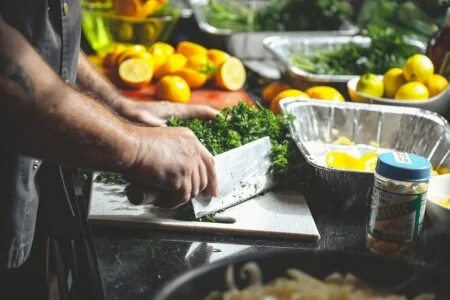
The journey of the knife, a fundamental human invention, spans millions of years, tracing its origins back to the Stone Age. Initially crafted from natural elements such as stone, wood, and bone, these rudimentary tools served prehistoric humans primarily for hunting, butchering, and early carpentry. Over millennia, the knife evolved from a survival necessity into a sophisticated instrument, adapting its materials and designs to meet ever-changing human needs. Today, while steel, ceramic, and titanium blades dominate, the core challenge remains: maintaining their cutting edge. This article delves into the historical context of knives and sharpening, explores the critical importance of a sharp blade, and provides a comprehensive guide to unconventional yet effective sharpening methods when traditional sharpeners are out of reach, emphasizing safety and practical application.
The Enduring Legacy of the Knife: A Chronological Overview
The knife’s history is inextricably linked to human development. Early hominids fashioned crude choppers and flakes from flint and obsidian approximately 2.5 million years ago, marking the dawn of tool-making. These early blades were not "sharpened" in the modern sense but created by fracturing stone to produce a keen edge. As civilizations advanced, so did knife technology. The Bronze Age (circa 3300-1200 BCE) introduced metal blades, offering superior durability and the ability to be resharpened. Iron Age knives, emerging around 1200 BCE, further refined the material, making knives more accessible and versatile.
The Roman Empire saw the widespread use of iron and steel blades, not only for warfare and utility but also for domestic purposes. Medieval Europe continued this tradition, with blacksmiths crafting various knives for culinary, agricultural, and personal defense uses. The Renaissance brought about advancements in metallurgy and design, transforming knives into objects of both utility and art, especially within the context of dining and social status. The industrial revolution mechanized knife production, making high-quality blades more affordable and ubiquitous. Today, specialized knives, such as those by Schmidt Bros., exemplify the pinnacle of modern culinary tool design, marrying ergonomic efficiency with advanced materials. However, regardless of their sophisticated origins or advanced manufacturing, all blades eventually succumb to the immutable law of physics: repeated use dulls their edge.
The Science of Sharpness and the Imperative of Maintenance
A knife’s edge is a microscopic structure, a fine wedge designed to cleave material with minimal resistance. With each cut, this delicate edge encounters friction and impact, causing it to roll, chip, or wear down. A dull knife is not merely inefficient; it is inherently more dangerous than a sharp one. A dull blade requires greater force to cut, increasing the likelihood of slipping and causing injury. According to safety data from various culinary and woodworking associations, a significant percentage of knife-related accidents are attributed to dull blades. A sharp knife, conversely, glides through material cleanly, requiring less effort and offering superior control, thus significantly reducing the risk of slippage and promoting safer handling.
Traditional sharpening typically involves abrasive tools like whetstones, ceramic rods, or electric sharpeners, which remove microscopic amounts of material from the blade to reform the edge. Whetstones, often graded by grit size, abrade the steel, creating a new, finer edge. However, these specialized tools are not always available, prompting the need for ingenious, albeit often temporary, alternatives. The following methods, while effective in a pinch, require careful execution and an understanding of their limitations to ensure both efficacy and user safety.
Unconventional Sharpening Methods: A Detailed Guide
When a dedicated sharpener is out of reach, resourcefulness becomes key. Several common household items and natural elements possess abrasive properties sufficient to restore a functional edge to a dull knife.
1. The Edge of Another Knife: A Culinary Trick
This technique, often observed in professional kitchens, leverages the hardened steel spine of one knife to abrade and realign the edge of another. While seemingly counterintuitive, the spine of a knife, particularly a larger chef’s knife, is typically harder and has a slightly textured surface due to its manufacturing process, making it an effective abrasive.

- Principle: The harder steel of the sharpening knife’s spine acts as a honing steel, realigning the rolled edge (burr) of the dull knife and subtly abrading microscopic material to create a new, albeit coarse, edge.
- Technique: Select two knives of similar size, though a larger, sturdier knife for the "sharpener" can be more stable. Hold the sharpening knife firmly by the handle, blade facing away, with its thick spine pointing upwards. Position the dull knife at a consistent angle (typically 20-25 degrees for most kitchen knives) against the spine of the sharpening knife. With moderate pressure, slide the dull blade down and across the spine from heel to tip, as if shaving a thin layer from the spine. Repeat this motion on both sides of the blade, alternating strokes. The key is to maintain a consistent angle and apply even pressure. Rapid, controlled strokes are characteristic of this method.
- Safety Considerations: This method carries a high risk of injury due to the proximity of two sharp objects and the swift motions involved. Always ensure a firm grip on both knives. Perform the action away from your body and any bystanders. Avoid excessive force, which can damage the blade or lead to a loss of control. It is crucial not to overdo it; a few passes are usually sufficient to achieve a workable edge.
- Edge Quality: This method typically produces a "utility edge" – sharp enough for basic cutting tasks but not as refined or durable as an edge achieved with a whetstone. It primarily realigns the existing edge rather than truly removing and reshaping metal efficiently.
2. Smooth Stones: Nature’s Abrasive
Drawing inspiration from humanity’s earliest sharpening methods, a smooth, dense stone can serve as an effective substitute for a whetstone, particularly in outdoor or emergency scenarios. The effectiveness hinges on selecting the right type of stone.
- Principle: Natural stones, especially those found in riverbeds or geological formations, possess a crystalline structure that, when rubbed against steel, acts as an abrasive. The finer the grain of the stone, the finer the edge it can produce.
- Selection: Look for stones that feel smooth to the touch, indicating a fine, uniform grit. Avoid rough, porous, or crumbly stones, which can damage the blade or create an uneven edge. Basalt, granite, or river stones are often suitable due to their density and fine grain. The stone should be large enough to provide a stable sharpening surface.
- Technique: First, wet the stone thoroughly, or even submerge it and the knife in water. Water acts as a lubricant, carrying away metal particles (swarf) and preventing the blade from overheating, which can compromise its temper. Hold the knife at the appropriate sharpening angle (e.g., 20 degrees) against the wet stone. Glide the blade across the stone in one direction, from heel to tip, maintaining a consistent angle and light to moderate pressure. Do not push the blade directly into the cutting edge, as this can dull it further; instead, focus on abrading the bevel (the angled surface that forms the edge). After several passes on one side, flip the blade and repeat the process on the other side. Continue alternating sides until a burr (a microscopic wire edge) forms on the opposite side of the blade, indicating that the entire edge has been worked. Then, make lighter passes to remove the burr.
- Safety and Maintenance: Ensure the stone is stable on a flat surface. Keep fingers clear of the blade’s path. After sharpening, clean the knife thoroughly to remove any stone grit or metal particles. Proper storage of the knife, such as in a sheath or knife block, is essential to maintain the newly acquired edge and prevent accidents.
- Edge Quality: The quality of the edge will vary significantly based on the stone’s natural grit. Finer-grained stones can produce a remarkably sharp edge, comparable to a medium-grit whetstone, while coarser stones will yield a more aggressive, but less refined, cutting edge.
3. Sandpaper: The Versatile Abrasive Sheet
Sandpaper, a common item in workshops and hardware stores, is essentially a flexible abrasive sheet and can be an excellent stand-in for a whetstone, offering a range of grits for progressive sharpening.
- Principle: Sandpaper consists of abrasive particles (like aluminum oxide or silicon carbide) bonded to a paper or cloth backing. Different grit sizes allow for controlled material removal and edge refinement.
- Selection: Acquire a selection of sandpaper sheets, ideally starting with a coarser grit (e.g., 200-400 grit) for initial reshaping or significant dullness, and progressing to finer grits (e.g., 600-1000 grit) for refinement. Very fine grits (1500-2000+) can be used for polishing the edge.
- Technique: Secure the sandpaper to a flat, stable surface, such as a piece of wood, a glass cutting board, or even a thick magazine. This ensures a consistent and even sharpening platform. Hold the knife at your desired sharpening angle (20-25 degrees) against the sandpaper. With light to moderate pressure, push the blade across the sandpaper, moving from heel to tip, as if trying to shave a thin layer from the paper. Maintain a consistent angle throughout the stroke. Repeat on both sides, alternating until a burr forms. Start with the coarsest grit to establish the edge, then move to progressively finer grits, reducing pressure with each step, to refine and polish the edge.
- Advantages and Disadvantages: Sandpaper is widely available, inexpensive, and offers a controlled progression of grits. However, it wears out quickly, especially with coarser grits, and must be replaced frequently. The flexibility of the paper can also make it challenging to maintain a perfectly consistent angle for beginners.
- Edge Quality: With careful technique and a progression of grits, sandpaper can produce a very sharp and refined edge, comparable to that achieved with a set of whetstones.
4. Concrete or Cement: The Last Resort Abrasive
When all other options are exhausted, the ubiquitous presence of concrete or cement surfaces can provide an extreme emergency solution for sharpening a severely dull knife. This method should be considered a last resort due to its potential to damage the blade’s finish and create a rough, albeit functional, edge.
- Principle: Concrete and cement are composite materials containing hard, abrasive aggregates (like sand and gravel) that, when exposed, can abrade steel. The surface texture is inherently coarse and inconsistent.
- Technique: Locate a clean, unpainted, and relatively smooth section of concrete or cement, such as the edge of a pavement slab or a garage floor. A rough, heavily pitted surface will cause more damage than benefit. Hold the knife at a low, consistent sharpening angle (typically 20-25 degrees) against the concrete. With very light and swift motions, draw the blade across the surface, moving from heel to tip. Crucially, apply minimal pressure to avoid gouging the blade or creating an excessively coarse edge. Repeat on both sides, alternating strokes.
- Safety and Caveats: This method is highly abrasive and can quickly remove a lot of metal, potentially altering the blade’s geometry. It will almost certainly scratch and tarnish the blade’s finish. The resulting edge will be coarse and aggressive, suitable only for very rough cutting tasks, and will dull quickly. Perform this discreetly and with extreme caution, as the action can be perceived as threatening or dangerous. Always ensure you have a firm grip and that no one is in your immediate vicinity.
- Edge Quality: Expect a very rough, "toothy" edge. It will cut, but not cleanly or efficiently. It is primarily a method to restore some cutting ability to a completely blunt blade in a dire situation. After using this method, the knife should be properly sharpened with traditional tools as soon as possible to restore its true edge.
Broader Implications and Expert Perspectives
The ability to sharpen a knife without conventional tools speaks to a fundamental human ingenuity that has been present since the Stone Age. While these hacks offer practical solutions in a pinch, their broader implications extend to self-reliance, sustainability, and an appreciation for the tools we use daily.
Culinary professionals and knife manufacturers, while advocating for the use of proper sharpening equipment, often acknowledge these methods as emergency solutions. "A sharp knife is a safe knife," states Chef Isabella Rossi, a renowned culinary instructor. "While I always recommend a quality whetstone or professional sharpening service, knowing how to improvise can be invaluable, especially for outdoor enthusiasts or in unexpected situations. The key is understanding the physics involved and prioritizing safety above all else."
Material scientists point out that the effectiveness of these methods lies in the relative hardness of the abrasive material compared to the knife steel. "Steel alloys used in modern knives are designed for specific hardness and toughness," explains Dr. Chen Li, a metallurgist. "When you use a coarser, harder material like concrete, you’re essentially brute-forcing material removal. While effective for initial abrasion, it’s less controlled than a graded whetstone, which progressively refines the edge at a microscopic level."
The proliferation of online tutorials and practical guides on these unconventional methods also underscores a growing interest in self-sufficiency and tool maintenance among consumers. It reflects a shift from immediate replacement to extending the lifespan of valuable tools. However, this accessibility also necessitates a stronger emphasis on education regarding proper technique and the inherent risks. Organizations like the National Safety Council consistently advise caution with any knife handling, and improvised sharpening methods inherently increase potential hazards if not executed with extreme care and knowledge.
In conclusion, the knife remains an indispensable tool, central to countless human activities from the kitchen to the wilderness. Its functionality is intrinsically linked to its sharpness, a quality that inevitably degrades with use. While specialized sharpeners offer the optimal solution for edge maintenance, understanding and safely executing these ancient and improvised methods provides a crucial skill set for unexpected circumstances, reinforcing the timeless connection between humans and their tools. The ability to restore a blade’s cutting edge, even without dedicated equipment, is a testament to human adaptability and resourcefulness, ensuring that this fundamental instrument continues to serve its purpose effectively and safely.


