
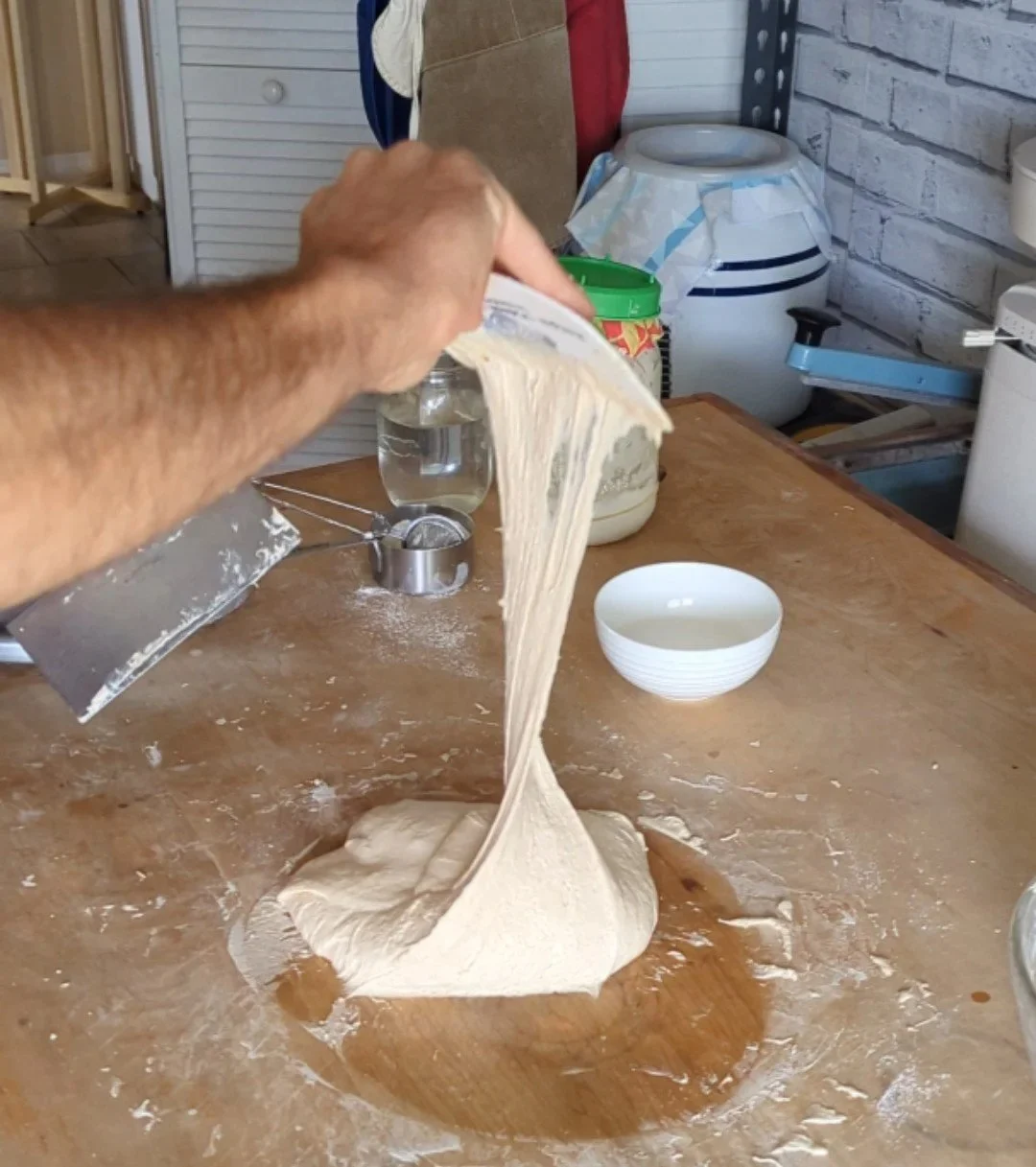
A recent experimental baking endeavor by Austin Durant, the esteemed founder of Fermenters Club and author of "Fearless Fermenting," culminated not in the anticipated artisanal sourdough loaf, but rather in an unexpected yet equally delightful culinary creation: a substantial batch of sourdough pancakes. The incident, which occurred during an overnight proofing cycle of a new "Lazy Loaf Sourdough bread technique," serves as a compelling case study in the unpredictable nature of natural fermentation and the invaluable art of culinary improvisation. What began as a promising attempt at a complex bread recipe quickly transitioned into a "soupy mess" due to environmental factors, prompting Durant to ingeniously repurpose the unworkable dough into two dozen "unabashedly sour" pancakes, served with unique accompaniments including strawberry sauerkraut.
The Intricacies of Sourdough: A Delicate Balance
Sourdough baking, a practice revered for its deep flavors, complex textures, and reliance on natural leavening, stands as both an art and a science. Unlike commercial yeast breads, sourdough utilizes a "starter"—a symbiotic culture of wild yeasts and lactic acid bacteria—to ferment the dough. This process breaks down starches, produces gases that create the bread’s airy structure, and contributes to its characteristic tang. The success of a sourdough loaf hinges on a delicate interplay of factors: the vitality of the starter, the quality of the flour, the hydration level of the dough, and critically, the ambient temperature and duration of the proofing stages.
Austin Durant, with 16 years of experience in fermenting food and a published authority in the field, regularly explores new techniques and recipes through Fermenters Club, a platform dedicated to fostering a community around fermentation. His work, including his recent book "Fearless Fermenting," emphasizes understanding the underlying principles of fermentation to empower home cooks. The "Lazy Loaf Sourdough bread technique" represents one such exploration, likely designed to simplify or optimize certain aspects of the sourdough process, potentially involving extended proofing periods. However, even seasoned experts like Durant encounter variables that can derail the most meticulously planned baking projects.
Chronology of a Culinary Pivot
The recent incident unfolded over a critical overnight period, highlighting how rapidly environmental conditions can impact delicate fermentation processes.
Initial Preparation (Evening): Durant initiated his "Lazy Loaf Sourdough bread technique," a method he was actively developing and testing. The dough was prepared according to the specific instructions of this new technique, incorporating his active sourdough starter, flour, water, and salt. The expectation was for a slow, controlled fermentation overnight, leading to a perfectly proofed dough by morning.
Overnight Proofing and Unforeseen Temperature Spike: The prepared dough was left to proof overnight, a standard practice for many sourdough recipes that allows for flavor development and structural integrity. However, this particular night saw an unexpected and significant rise in indoor ambient temperature, estimated by Durant to be around 80°F (approximately 26.7°C). This elevated temperature proved to be the pivotal factor in the dough’s fate. Yeast and bacteria in sourdough starters thrive in warmth, and while warmth can accelerate fermentation, excessive heat can lead to over-proofing.
Morning Assessment: The "Soupy Mess": Upon inspecting the dough the following morning, Durant observed that it had significantly over-proofed. Instead of the resilient, airy, and structured dough suitable for shaping and baking, he found a "soupy mess"—a dough that had lost its structural integrity, exhibiting an overly relaxed and liquid-like consistency. This state indicated that the gluten network, essential for trapping gas and providing structure to the bread, had largely broken down.
Attempted Salvage and Strategic Decision: Faced with the unworkable dough, Durant made a brief attempt to salvage it. He added a small amount of flour to the bench, hoping to incorporate it and regain some form of structure for shaping. However, the dough’s extreme fluidity quickly revealed that it was beyond traditional shaping methods. Realizing that attempting to wrangle the "soupy mess" into a proofing basket and then into an oven for baking would likely result in a very flat, dense, and unsatisfying loaf, Durant made a decisive pivot. Rather than discard the significant amount of ingredients or force a suboptimal bread, he chose to transform it into sourdough pancakes.
Pancake Transformation: A Triple Batch: The decision to convert the dough into pancakes was not merely a last-resort measure but a creative adaptation. The original bread dough represented a triple batch of a standard sourdough recipe. Durant adjusted the supplementary ingredients (such as eggs, milk, and sweetener) to accommodate this larger volume, preparing for a substantial yield of pancakes.
The Omission of Baking Soda: In a key procedural detail, Durant initially omitted baking soda from the pancake recipe. This decision was based on the premise that the over-proofed sourdough dough already contained significant leavening activity, even if its structure was compromised. However, in hindsight, he noted that adding baking soda would have been beneficial. Baking soda reacts with the acids in sourdough to produce carbon dioxide, providing an additional lift that was evidently needed for a fluffier pancake texture, especially given the weakened gluten structure of the over-proofed dough.
Culinary Outcome: Sour, Flat, but Delicious: The transformed dough yielded approximately two dozen pancakes. Despite being described as "unabashedly sour" (a characteristic of well-fermented sourdough, amplified by over-proofing) and "perhaps a bit flat" (likely due to the absence of baking soda and the weakened gluten), they were deemed "otherwise delicious." This outcome underscores the versatility of sourdough discard and the inherent flavors developed during fermentation, even when the primary baking goal is not achieved.
Serving and Unique Accompaniments: The pancakes were served with a unique combination of accompaniments: strawberry sauerkraut, grass-fed butter, and maple syrup. The inclusion of strawberry sauerkraut is particularly noteworthy, aligning with Fermenters Club’s ethos of exploring diverse fermented foods and adding an unexpected, tangy counterpoint to the sweet and savory elements of the pancakes.
Supporting Data and Technical Analysis of Sourdough Failures
The incident provides a practical illustration of critical principles in sourdough baking:
Temperature as a Catalyst: The primary culprit in Durant’s sourdough setback was the elevated ambient temperature. Yeast activity doubles with every 10°C (18°F) increase in temperature within its optimal range. At 80°F (26.7°C), the metabolic rate of the wild yeasts and lactic acid bacteria in the starter would have been significantly accelerated. This rapid fermentation leads to:
- Rapid Gas Production: The dough produces carbon dioxide much faster than the gluten network can mature and strengthen to trap it effectively.
- Accelerated Proteolysis: Lactic acid bacteria produce enzymes (proteases) that break down proteins, including gluten. While some proteolysis is desirable for dough extensibility, excessive activity, driven by high temperatures, can severely degrade the gluten structure, leading to a "soupy" or "slack" dough that cannot hold its shape.
- Over-acidification: Rapid fermentation also leads to a quicker accumulation of organic acids (lactic and acetic acid), which contribute to the characteristic sourness. While desirable in moderation, excessive acidity can further weaken the gluten structure and impact the dough’s ability to rise.
The Phenomenon of Over-Proofing: Over-proofing occurs when the dough is allowed to ferment for too long, or at too high a temperature, or both. The signs are typically a very slack, sticky, and often overly acidic dough that collapses easily. The gluten strands, which are essentially elastic protein networks, stretch to their maximum capacity and then begin to break down under the sustained pressure of gas production and enzymatic activity. Once the gluten network is compromised, the dough loses its ability to trap gas, leading to a dense, flat bread. This is precisely what Durant encountered, rendering the dough unsuitable for a well-structured loaf.
Hydration Levels and Their Impact: While not explicitly stated, the "Lazy Loaf" technique might involve higher hydration levels, a common characteristic of artisanal sourdough for a more open crumb. High-hydration doughs are inherently more challenging to handle and more susceptible to the effects of over-proofing, as their weaker gluten structure breaks down faster under adverse conditions.
The Role of Leavening in Pancakes: Durant’s observation regarding the omission of baking soda is astute. Sourdough pancakes often benefit from additional leavening agents like baking soda (and sometimes baking powder). Baking soda (sodium bicarbonate) is an alkaline compound that reacts with acids to produce carbon dioxide gas. Sourdough discard is naturally acidic, making it an ideal partner for baking soda. The reaction creates bubbles, contributing to a lighter, fluffier pancake. Without this chemical leavening, especially in dough already compromised by over-proofing and weakened gluten, the pancakes would indeed be flatter, relying primarily on any residual gas trapped in the dough and steam during cooking. The "unabashedly sour" flavor further confirms the high acidity of the over-proofed dough, making the omission of baking soda even more impactful on texture.
Expert Insights and Best Practices
Durant’s experience, while a setback for a specific loaf, offers valuable lessons for the wider sourdough community, echoing principles often shared by Fermenters Club.
Mastering Temperature Control: The incident underscores that consistent temperature is paramount in sourdough baking. Bakers often utilize various strategies to manage dough temperature, especially during long proofing cycles:
- Cooler Environments: Placing dough in cooler parts of the house, a wine cellar, or even a refrigerator (for extended cold proofing) can slow down fermentation significantly.
- Proofing Boxes: Specialized proofing boxes offer precise temperature and humidity control, eliminating environmental variability.
- Water Temperature Adjustment: Adjusting the temperature of the water used in the dough mixture can help hit a target dough temperature, though this is less effective for long overnight proofs in fluctuating ambient conditions.
- Visual and Tactile Cues: Relying on visual and tactile cues of the dough’s readiness rather than strict adherence to time schedules is crucial, as environmental factors can drastically alter fermentation speed.
Flexibility and Adaptability: Durant’s swift decision to pivot from bread to pancakes exemplifies a key attribute of successful home bakers: adaptability. Instead of viewing the "failed" dough as waste, he saw an opportunity for a different, equally delicious product. This resourcefulness aligns with the broader ethos of sustainable cooking and minimizing food waste, a philosophy often promoted by communities like Fermenters Club and permaculture gardening enthusiasts like Durant himself.
Learning from "Failures": Every "failure" in baking is a learning opportunity. Durant’s candid sharing of his experience, including the reflection on the baking soda omission, serves as an educational tool. It normalizes setbacks and encourages a growth mindset among bakers, reinforcing that even experts encounter challenges. This transparent approach fosters a supportive community where knowledge is shared, and common pitfalls are demystified.
Broader Impact and Implications
The narrative of Durant’s sourdough pivot resonates beyond a single kitchen, touching upon several broader trends and implications within the culinary world and home baking community.
The Sourdough Renaissance and Its Challenges: The past few years have witnessed a significant surge in home baking, with sourdough experiencing a particular renaissance. Driven by a desire for healthier, more artisanal foods, and the meditative process of baking, countless individuals have embarked on their sourdough journeys. However, this journey is often fraught with challenges. Beginners frequently grapple with issues like inactive starters, dense loaves, and indeed, over-proofing or under-proofing. Durant’s experience provides a relatable narrative for these home bakers, reassuring them that such setbacks are part of the learning curve, even for seasoned professionals. It demystifies the perceived perfection of expert bakers and encourages perseverance.
Sustainability and Food Waste Reduction: In an era increasingly focused on environmental consciousness and reducing food waste, Durant’s decision to repurpose the dough into pancakes offers a tangible example of sustainable kitchen practices. Food waste is a significant global issue, and finding creative uses for ingredients that don’t meet their initial purpose is a powerful message. Sourdough discard, whether from routine starter maintenance or an unexpected baking mishap, is a versatile ingredient that can be transformed into a myriad of delicious items, from crackers and waffles to savory fritters. This approach aligns with Fermenters Club’s broader commitment to mindful consumption and culinary resourcefulness.
The Educational Value of Shared Experiences: Platforms like Fermenters Club thrive on the sharing of knowledge and experiences. Durant’s open recounting of his sourdough setback, complete with analysis and reflection, enriches this communal learning environment. It provides practical insights into troubleshooting common sourdough problems and demonstrates the value of experimentation. The accompanying video further enhances this educational aspect, offering a visual narrative that complements the written account. This fosters a sense of community among bakers, where challenges are openly discussed, and collective wisdom is built.
Embracing the "Fearless Fermenting" Philosophy: The incident perfectly encapsulates the spirit of Durant’s book, "Fearless Fermenting." The book’s title itself suggests an approach to fermentation that embraces experimentation, learning from mistakes, and not being intimidated by the process. Durant’s practical demonstration of turning a potential "failure" into a success story reinforces this philosophy. It encourages individuals to be bold in their culinary explorations, understanding that even when the initial outcome isn’t as planned, there’s often an opportunity for creative redirection and a delicious result. This mindset extends beyond baking, touching upon broader themes of resilience and ingenuity in various aspects of life, including permaculture gardening and other forms of self-sufficiency that Durant explores.
The Allure of Artisanal Innovation: The choice to serve the sourdough pancakes with strawberry sauerkraut, grass-fed butter, and maple syrup highlights an adventurous and gourmet approach to everyday meals. This combination reflects a trend toward incorporating fermented foods for their health benefits and complex flavors, even in unexpected pairings. The Fermenters Club continues to push boundaries, demonstrating how fermentation can elevate simple dishes into unique culinary experiences.
Conclusion
Austin Durant’s recent sourdough baking experience, while initially a deviation from its intended outcome, stands as a testament to the dynamic nature of fermentation and the boundless potential of culinary creativity. What began as an over-proofed "Lazy Loaf" dough, compromised by unforeseen environmental heat, was skillfully transformed into two dozen "unabashedly sour" and delicious sourdough pancakes. This incident not only provides valuable technical insights into the critical role of temperature control and timing in sourdough proofing but also serves as an inspiring example of adaptability, waste reduction, and the continuous learning inherent in the art of baking. For both seasoned bakers and novice enthusiasts, it reinforces the enduring message that even when the primary goal is not met, a resourceful spirit can always yield a delightful and educational culinary adventure.


