
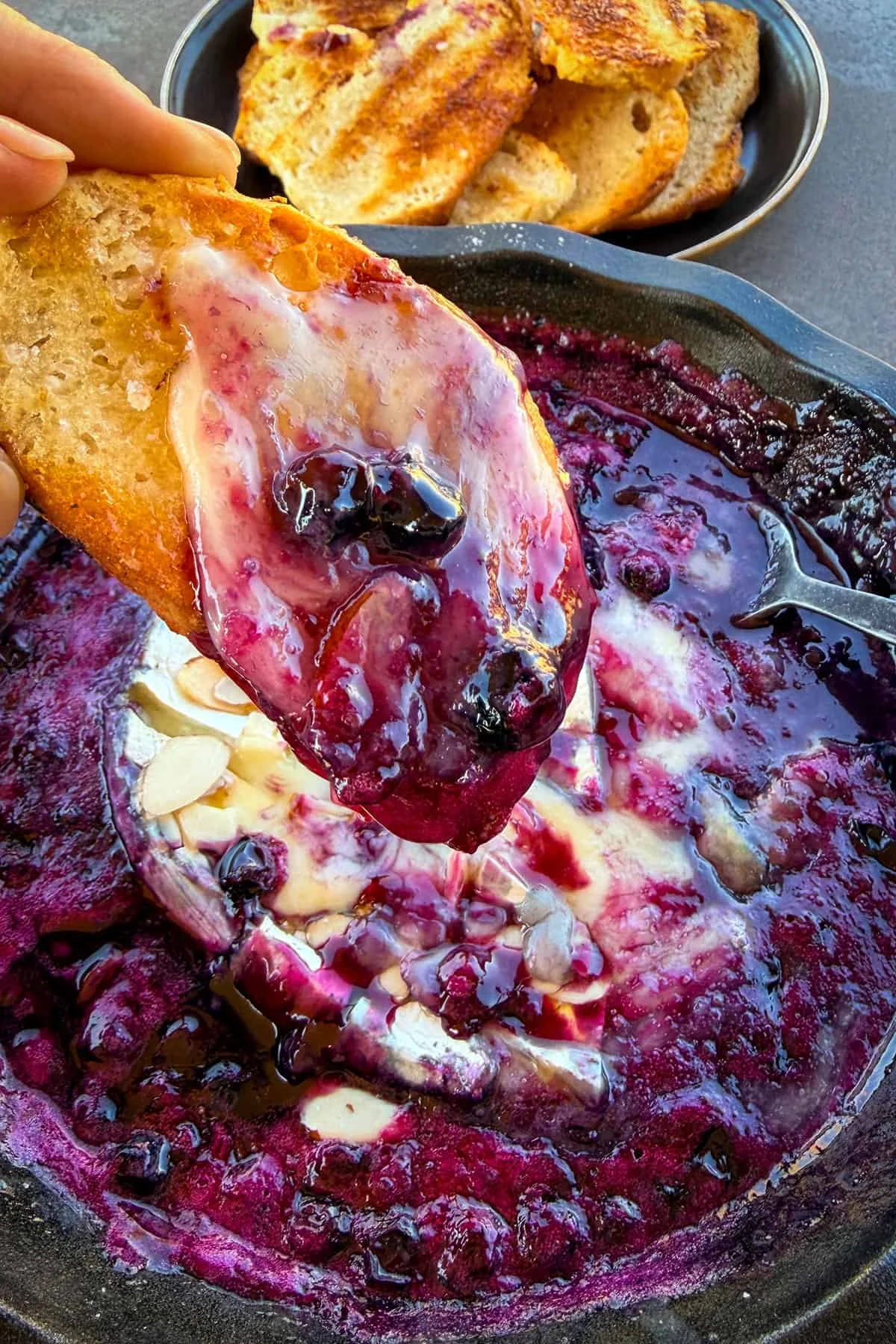
Grilled Camembert with Lemon Curd, Blueberries, and Honey offers a sophisticated yet accessible appetizer that masterfully balances sweet, smoky, and tangy notes. This dish, centered around a whole wheel of camembert cheese melted directly over live fire, transforms a simple concept into an unforgettable culinary experience. The preparation, though seemingly straightforward, relies on precise technique to achieve its signature gooey texture and harmonious flavor profile.
The Art of Skillet Cheese on Live Fire
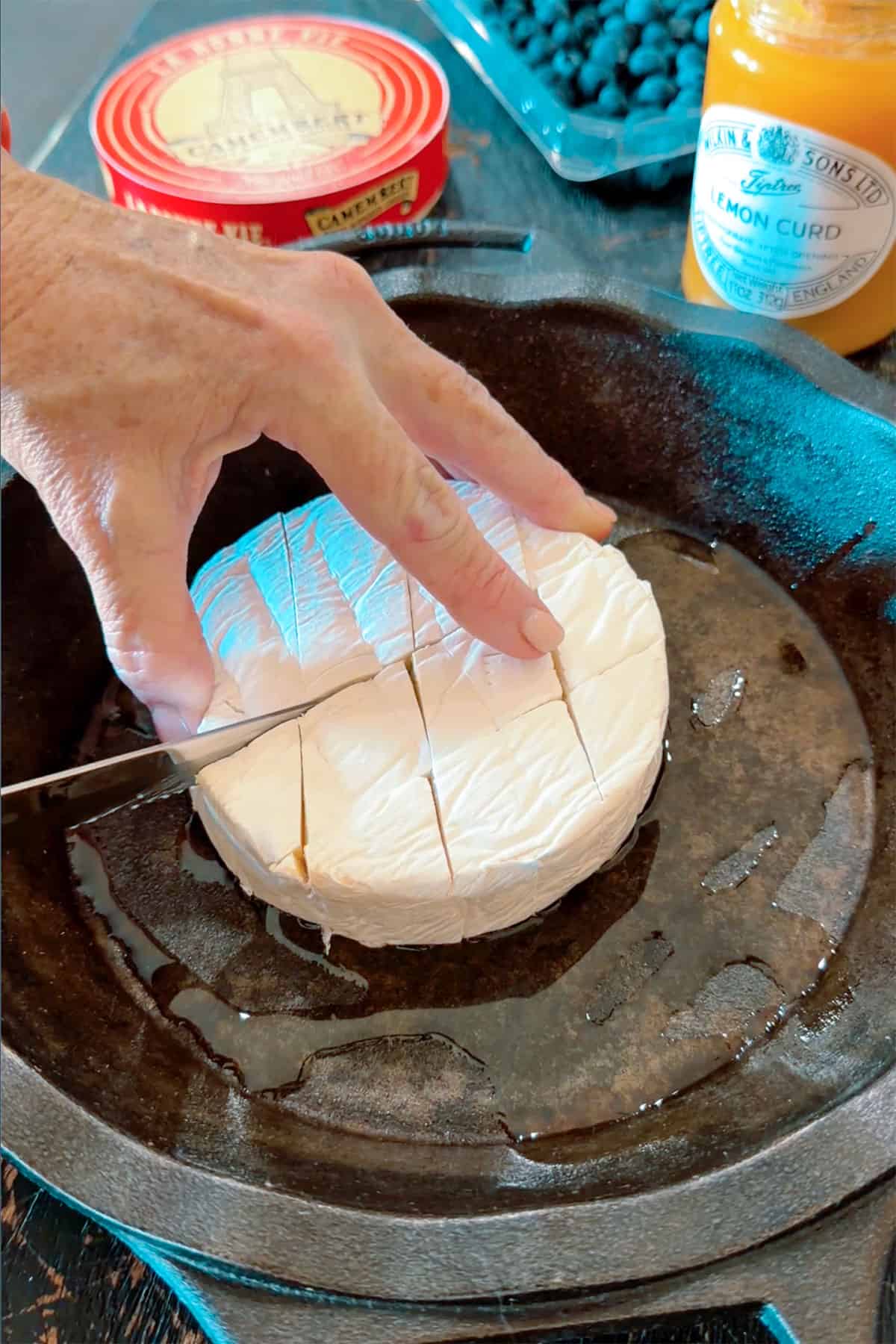
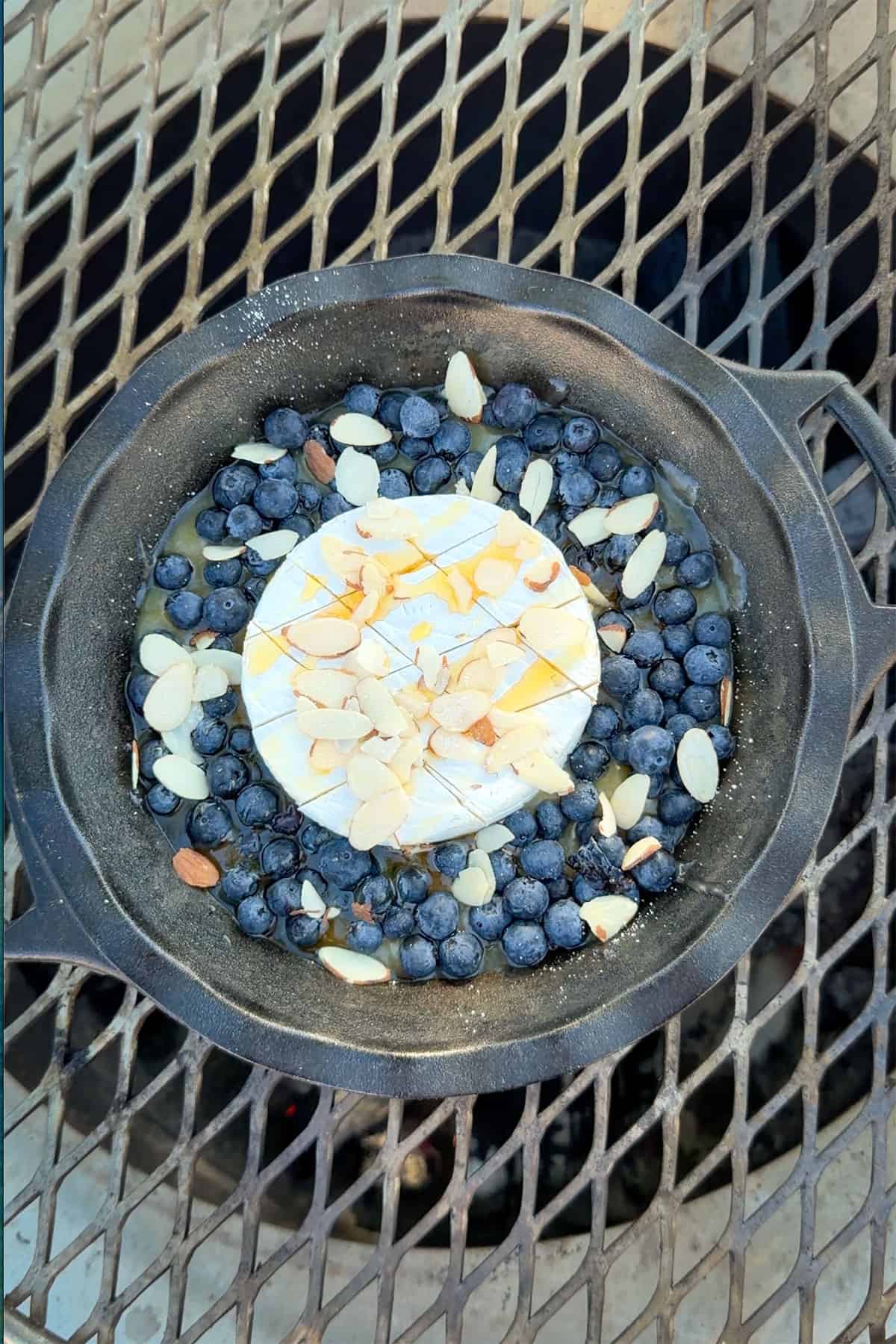
The foundation of this recipe is a whole wheel of camembert cheese, carefully scored deep into its rind. This critical step ensures that as the cheese heats, it doesn’t remain trapped within its casing but rather oozes open, creating a luscious, molten interior. The scoring technique, which involves cutting a deep diamond pattern, is essential for maximizing the cheese’s spreadability and visual appeal. This method is part of a broader culinary approach that centers on utilizing a wheel of cheese, a cast-iron skillet, and the intense heat of live fire. The beauty of this technique lies in its versatility, allowing for a myriad of cheese and topping combinations, all following the same fundamental principle: score, top, and let the fire work its magic.
A Symphony of Flavors: Lemon, Blueberry, and Honey
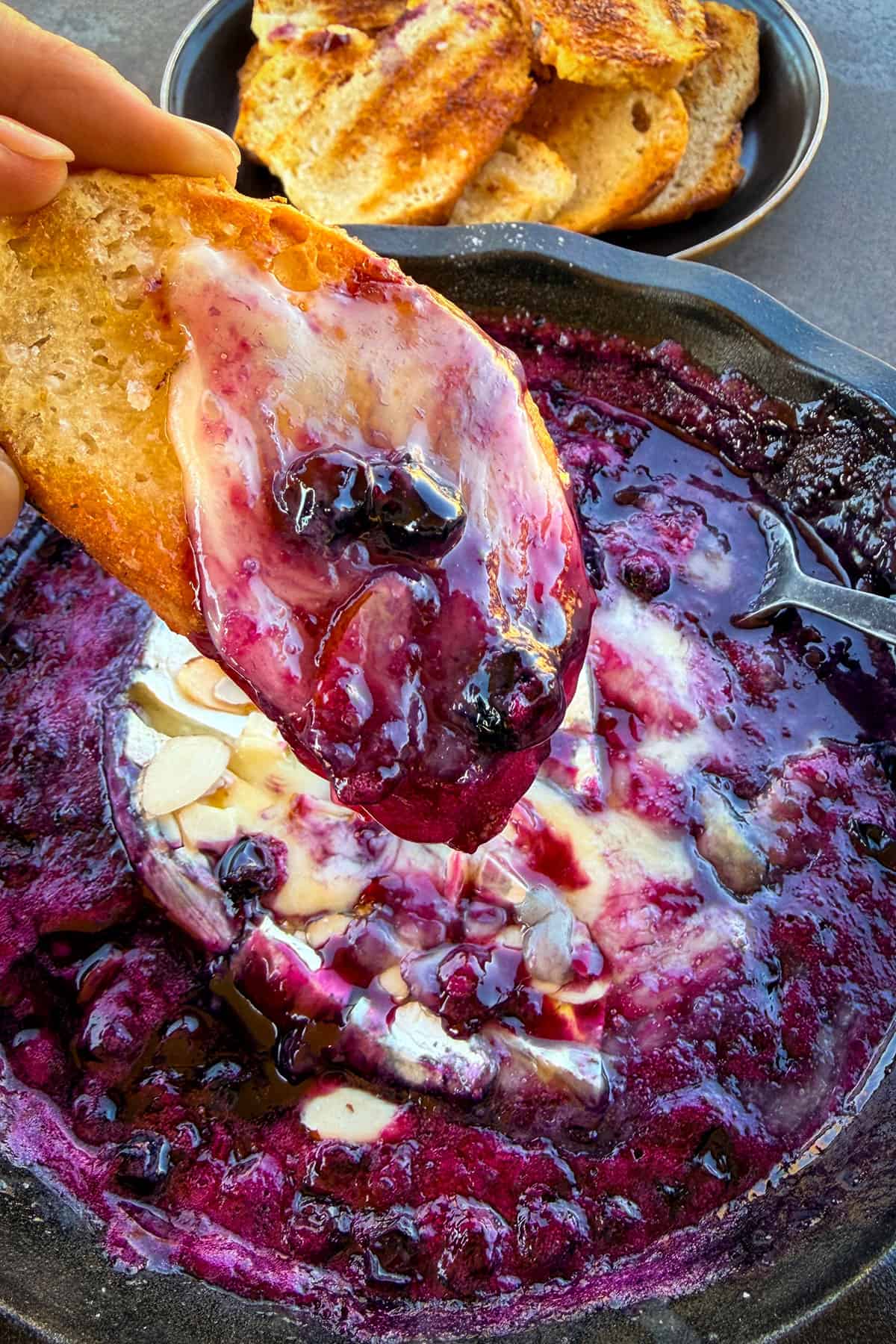
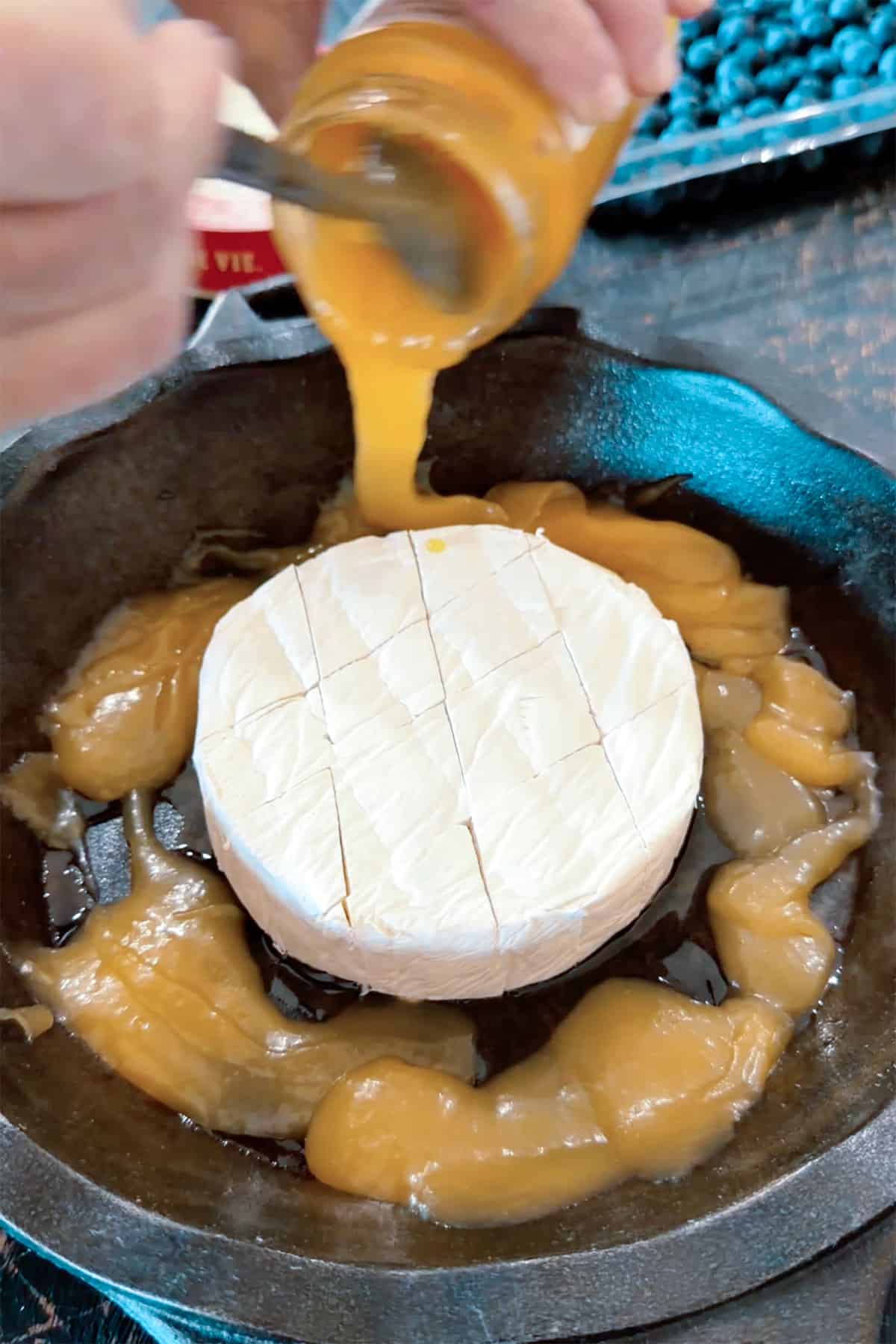
Complementing the rich, creamy camembert are the bright, zesty notes of lemon curd and the sweet burst of fresh blueberries. These ingredients are artfully arranged around the scored cheese wheel within the cast-iron skillet. As the cheese melts, the lemon curd softens and mingles, its tartness cutting through the richness of the camembert. The blueberries, too, soften and release their juices, adding pockets of sweetness and a vibrant visual contrast. A drizzle of honey further enhances the sweetness, while a scattering of sliced almonds provides a delightful textural crunch. This combination creates a flavor profile that is both complex and incredibly addictive, making it difficult to resist a second, or even third, helping.

Culinary Genesis: A Focus on Live Fire Cooking
The genesis of this recipe lies in the growing trend of elevated outdoor cooking, where simple ingredients are transformed through the elemental power of fire. The use of live fire, rather than a conventional oven, imparts a unique smoky character to the dish that is difficult to replicate indoors. This method is not just about cooking; it’s about engaging with the cooking process in a more primal and sensory way. The sizzle of the cheese, the aroma of the melting dairy, and the char from the grill all contribute to the overall experience. This approach is particularly popular among grill enthusiasts and pitmasters who seek to push the boundaries of what can be achieved on an open flame.
The "At a Glance" Guide: Preparing for the Grill
For those eager to replicate this culinary delight, a few key considerations are paramount. The recipe emphasizes the importance of preparing the grill for medium heat, a crucial stage where the charcoal has fully ashed over and begun to burn consistently. This ensures an even cooking temperature, vital for melting the cheese without scorching it. The choice of cookware is also significant, with a 9 or 10-inch cast-iron skillet recommended. Lodge Cast Iron Pie Pans, specifically, are highlighted for their suitability for sweeter skillet cheese dips, offering excellent heat retention and distribution.
Key Preparation Steps:
- Grill Preparation: Ignite charcoal and allow it to reach a medium heat with fully ashed-over coals.
- Skillet Choice: Utilize a 9 or 10-inch cast-iron skillet, such as a Lodge Cast Iron Pie Pan.
- Cheese Scoring: Deeply score the camembert rind in a diamond pattern to facilitate melting and oozing.
- Ingredient Assembly: Arrange lemon curd around the cheese, followed by blueberries, honey, and almonds.
- Grilling: Place the skillet uncovered on the grill grate over coals for 15-20 minutes, or until the cheese is glossy and soft.
Substitutions and Variations
The recipe also offers flexibility for home cooks. Brie, a milder and creamier cheese, can be substituted for camembert, resulting in a gentler flavor profile while maintaining the same cooking technique. For those seeking convenience, frozen blueberries can be used, though fresh berries often offer a more vibrant flavor and texture. The recipe card provides a comprehensive list of ingredients and servings, allowing for precise replication.
Nutritional Snapshot
The Lemon Blueberry Camembert Skillet Dip, while indulgent, offers a nutritional profile that balances its richness. A typical serving (based on four servings) contains approximately 369 calories, 31g of carbohydrates, 14g of protein, and 22g of fat. Notably, it contains 11g of saturated fat and 27g of sugar, reflecting the inherent nature of the ingredients. It also provides a modest amount of fiber (2g) and essential minerals like calcium (242mg) and potassium (201mg). This information, automatically calculated, serves as a useful approximation for dietary considerations.
Serving and Storage Recommendations
The ultimate presentation of this dish involves bringing the hot skillet directly to the table, allowing guests to scoop the molten cheese with accompaniments like crusty bread, baguette slices, or specialized items such as buttercream bread. The ideal consumption time is immediately after cooking, as the cheese will firm up upon cooling. For leftovers, an airtight container in the refrigerator is recommended for up to four days, with gentle reheating in a low oven or microwave advised to restore its creamy consistency.
Expert Insights and Frequently Asked Questions
To further enhance the user’s experience, the article includes "GCG Pro Pitmaster Tips" and a "Frequently Asked Questions" section. These resources address common queries and offer practical advice. For instance, the FAQs clarify that brie is a suitable substitute, the dish can be prepared in a conventional oven at 375°F (190°C) for 15-18 minutes, and that ensuring deep scores is crucial for proper cheese oozing. The advice on prepping ahead of time, layering ingredients in the skillet and refrigerating, further adds to the recipe’s practicality.
Broader Context and Culinary Trends
The popularity of this type of dish can be seen as part of a broader culinary trend that emphasizes interactive dining experiences and the celebration of high-quality ingredients. Skillet cheese dips, particularly those prepared with artisanal cheeses and fresh, seasonal toppings, have become a staple at gatherings and special occasions. The live-fire cooking aspect further aligns with the resurgence of outdoor cooking and the desire for authentic, flavorful food. Websites and publications dedicated to grilling and barbecue, such as Girls Can Grill, play a significant role in popularizing these techniques and recipes, fostering a community of passionate home cooks and pitmasters. The emphasis on visually appealing and shareable dishes also reflects the influence of social media on culinary trends, where vibrant and delicious food photography encourages wider adoption.


