
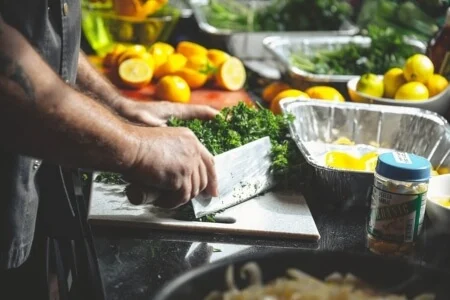
Over millennia, the design and material composition of knives underwent profound transformations, reflecting advancements in metallurgy and craftsmanship. From the earliest chipped flint tools, humanity progressed through the Bronze Age, Iron Age, and eventually to modern materials like high-carbon steel, stainless steel, ceramic, and titanium. Each evolutionary step enhanced a knife’s durability, sharpness retention, and specific utility. Today, knives are not merely utilitarian objects but have evolved into highly specialized instruments, particularly within the culinary world, where their diverse designs dictate precise applications for various food preparations and dining experiences. Beyond their practical use, certain knives, such as those featured in a web blog review of Schmidt Brothers cutlery, have become symbols of sophistication and refinement in fine dining and professional kitchens, embodying both form and function. These timeless tools, despite their advanced engineering and elegant aesthetics, share a common vulnerability with their ancient ancestors: their cutting edges inevitably dull with repeated use.
The degradation of a knife’s edge is a microscopic phenomenon driven by various factors. A sharp blade possesses a finely honed apex, a symmetrical ‘V’ or ‘U’ shape at its very tip, allowing it to cleave through materials with minimal resistance. Over time, this delicate apex can roll over, chip, or abrade, leading to a blunted edge that requires greater force to cut, increasing the risk of slippage and injury. Metallurgically, the microscopic grain structure of the blade’s steel can also deform under stress, contributing to dullness. While traditional sharpening methods, such as using whetstones, sharpening steels, or electric sharpeners, are designed to restore this critical edge geometry, these specialized tools are not always readily accessible. This article delves into a series of practical, unconventional methods for restoring a knife’s cutting edge when a dedicated sharpener is out of reach, providing historical context, detailed techniques, and crucial safety considerations.
The Genesis of Sharpness: A Brief Chronology
The history of sharpening is as ancient as the knife itself. Early hominids likely discovered that rubbing a dull stone tool against a rougher, fixed stone could restore some of its cutting efficacy. This rudimentary process formed the basis of all subsequent sharpening techniques.
- Stone Age (2.5 million years ago – 3,000 BCE): Knives, primarily flint, obsidian, or chert, were sharpened by flaking or grinding against other hard, naturally abrasive stones. This was a critical skill for tool maintenance.
- Bronze Age (3,000 BCE – 1,200 BCE): The advent of metal tools brought new challenges and opportunities for sharpening. Bronze knives could be hammered and ground to an edge. Natural abrasive stones remained the primary sharpening medium.
- Iron Age (1,200 BCE – 600 CE): Iron and later steel tools required more robust sharpening. The concept of dedicated grinding stones began to emerge, often natural sandstone or schist, used with water to create a slurry that aided abrasion.
- Medieval Period to Industrial Revolution (600 CE – 1800s): Sharpening stones became more refined, with specific types sourced for their abrasive qualities. The trade of the "knife grinder" emerged, specializing in sharpening tools on large, often water-powered, grinding wheels.
- Modern Era (19th Century – Present): Mass production of synthetic sharpening stones (whetstones), ceramic rods, diamond-impregnated sharpeners, and electric sharpeners made tool maintenance more accessible. However, the fundamental principle of abrasive material removing minute particles from the blade to reform an edge remains constant.
Despite these advancements, the spontaneous need for a sharp knife in the absence of conventional tools persists, making improvised solutions invaluable.
The Science of a Sharp Edge: Why it Matters
A sharp knife is not merely a convenience; it is a critical safety feature and a cornerstone of culinary efficiency. Studies in professional kitchens and home environments consistently indicate that dull knives are responsible for a disproportionately high number of cutting injuries. This paradox arises because a dull blade requires significantly more force to cut through food, increasing the likelihood of the blade slipping off the intended target and onto the user’s hand or fingers. A sharp knife, conversely, glides through ingredients with minimal effort, offering greater control and reducing the risk of accidents.
Moreover, a precisely sharpened edge preserves the integrity of food. A sharp blade makes clean cuts, preventing cellular damage to delicate ingredients like herbs and vegetables, which can lead to faster oxidation and nutrient loss. This translates to better flavor, texture, and visual appeal in prepared dishes. For chefs and home cooks alike, the tactile feedback of a perfectly sharp knife enhances the cooking experience, transforming a laborious task into a fluid, enjoyable process.
Unconventional Sharpening Techniques: A Detailed Exploration
When traditional sharpeners are unavailable, several improvised methods can restore a functional edge. These techniques leverage abrasive surfaces or materials found in common environments, but require careful execution and a thorough understanding of their limitations and associated risks.
1. The Edge of Another Knife: The "Chefs’ Honing Trick"

This method, often observed in professional kitchens for quick touch-ups, involves using the spine or even the very edge of one knife to abrade the dull blade of another. While it can quickly improve an edge, it is primarily a honing technique rather than a true sharpening method for severely dull knives.
- Mechanism: When two hardened steel edges or a blade and a hardened spine are rubbed together, the harder material abrades the softer one, or both abrade each other. This action effectively realigns a rolled edge or removes minuscule imperfections, leading to a temporary improvement in sharpness.
- Technique: Select two knives of similar size; larger knives generally provide more leverage and surface area. Hold the "sharpening" knife firmly, ideally by its handle, with its thick, unsharpened spine facing upwards or its cutting edge angled away from you. Take the dull knife and, maintaining a consistent angle (typically between 15-20 degrees per side for Western knives, or 10-15 degrees for Japanese knives), slide its dull edge along the spine or cutting edge of the sharpening knife. Apply moderate, even pressure and perform swift, controlled strokes, moving from the heel to the tip of the blade. Repeat this motion on both sides of the dull knife, alternating strokes. Aim for approximately 10-15 strokes per side initially, then check for improvement.
- Safety Protocols: This method carries significant risk. The rapid motion and close proximity of two sharp objects demand extreme caution. Always direct the sharpening motion away from your body. Ensure a stable grip on both knives. Perform this in an open area, well away from other individuals, to prevent accidental injury from flying debris or errant movements. Avoid excessive force, which can damage the blade or lead to loss of control. Culinary experts typically advise against this as a routine sharpening method, citing the potential for inconsistent angles and micro-damage to both blades, but acknowledge its efficacy in urgent scenarios.
2. Smooth Stone: Nature’s Abrasive
Drawing directly from ancient practices, a smooth, dense stone can serve as an effective abrasive when a whetstone is unavailable. This method is particularly useful in outdoor settings like camping, provided the correct type of stone is selected.
- Connection to History: This technique is a direct descendant of the earliest sharpening methods, where natural stones were the only available abrasives.
- Ideal Stone Characteristics: The key is to find a stone that is genuinely smooth and fine-grained, not just smooth to the touch but uniform in texture. River stones, particularly those with a fine grit, or pieces of slate or granite can be suitable. Avoid rough, porous, or crumbly stones, as these can severely damage the knife’s edge by creating uneven abrasion, chips, or a jagged finish. The effectiveness of the stone depends on the consistency of its mineral composition.
- Technique Deep Dive: Stabilize the chosen stone on a flat, secure surface. The critical step is to maintain a consistent sharpening angle against the blade’s cutting edge, not the flat side of the blade as this would dull it further. Place the blade’s edge against the stone at the desired angle (e.g., 20 degrees). Using light to moderate pressure, push the blade forward as if trying to shave a thin layer off the stone, moving from the heel to the tip. Then, on the return stroke, pull the blade backward across the stone, maintaining the same angle. Alternate sides every few strokes, ensuring an even abrasion.
- Wetting the Stone: It is highly recommended to wet the stone and the blade with water before and during sharpening, or even to submerge both underwater if feasible. Water acts as a lubricant, reducing friction and heat buildup, and helps to carry away the microscopic metal particles (swarf) generated during sharpening. This prevents the stone from becoming clogged and ensures a smoother, more effective abrasive action, much like how traditional whetstones are used.
- Safety and Environmental Considerations: Ensure the stone is stable and will not move during sharpening. Exercise caution to avoid cutting yourself on the stone or the blade. If collecting stones from nature, adhere to principles of minimal impact and leave no trace.
3. Sandpaper: The Improvised Whetstone
Sandpaper, a common household item often found in hardware stores, can be an excellent substitute for a whetstone due to its abrasive grit. It offers a versatile and inexpensive solution for knife sharpening.
- Comparison to Whetstones: Sandpaper works on the same principle as a whetstone, using abrasive particles (grit) bonded to a backing material to remove metal from the blade’s edge.
- Grit Selection and Progression: Sandpaper is available in various grits, indicated by numbers. Lower numbers (e.g., 100-200) signify coarser grit, suitable for very dull or damaged blades. Medium grits (e.g., 400-600) are good for general sharpening, while finer grits (e.g., 800-1500 or higher) are used for refining the edge and achieving a razor-sharp finish. For optimal results, start with a coarser grit to establish a new edge, then progressively move to finer grits to polish and refine it.
- Application Methods: To use sandpaper effectively, it must be stabilized on a perfectly flat, firm surface. A block of wood, a piece of glass, a countertop, or even a thick book can serve this purpose. Secure the sandpaper to the surface using tape or a non-slip mat to prevent it from shifting during sharpening.
- Technique: As with stone sharpening, maintaining a consistent angle is paramount. Place the knife’s edge against the sandpaper at the desired angle. Apply light, even pressure and move the blade across the sandpaper, ensuring that the entire edge from heel to tip makes contact. Perform strokes in one direction (pushing into the grit) for a few passes, then flip the knife and repeat on the other side. Alternate sides until a burr (a tiny wire-edge) forms along the opposite side of the blade, indicating that you’ve reached the edge. Then, switch to a finer grit and repeat the process to refine the burr and ultimately remove it.
- Durability and Disposal: Sandpaper wears out relatively quickly as the abrasive particles dull or detach. Discard it once its grittiness diminishes or it becomes torn.
4. Concrete or Cement: The Emergency Abrasive
In truly extreme circumstances, when no other options are available, a clean, flat concrete or cement surface can be used as a last-resort abrasive. This method is highly aggressive and should be employed with extreme caution due to its potential for blade damage and personal injury.
- Mechanism: Concrete and cement contain hard, abrasive aggregates like sand and gravel, which can effectively abrade steel.
- Surface Considerations: The ideal surface would be a very smooth, unpainted concrete finish, such as a well-worn concrete patio or an unsealed concrete slab. Avoid rough, uneven, or painted surfaces. Paint can transfer to the blade, create an uneven abrasive action, and potentially contain chemicals that could react with the steel. The edge of a pavement or a concrete block can also be used, but these typically offer less control and a coarser finish.
- Technique and Risks: Hold the knife firmly and place its edge against the concrete surface at a consistent, shallow angle (e.g., 20-25 degrees). Use swift, controlled strokes, pushing the blade forward across the concrete, ensuring the entire edge makes contact. Alternate sides every few strokes. Due to the very coarse and uncontrolled nature of concrete, this method is likely to create a very rough, "toothy" edge rather than a refined, razor-sharp one. It also carries a high risk of scratching the blade’s finish, creating micro-chips, or even deforming the edge if too much pressure is applied or the angle is inconsistent.
- Public Perception and Safety: Using a knife on public concrete surfaces can be misinterpreted and cause alarm. Exercise discretion and perform this only when absolutely necessary and in a secluded area. Crucially, the risks of slipping, losing grip, or severely cutting oneself on the rough surface are exceptionally high. Metallurgists and knife experts universally advise against concrete for anything but dire emergency situations, noting its potential to degrade blade integrity significantly.
Safety Protocols and Best Practices in Knife Care
Regardless of the sharpening method employed, universal safety principles must always be observed when handling knives:
- Maintain Control: Always hold the knife firmly and with a secure grip.
- Cut Away from Your Body: Direct the blade’s movement away from yourself and others.
- Stable Surface: Ensure your cutting and sharpening surfaces are stable and non-slip.
- Awareness of Surroundings: Be mindful of people and objects in your immediate vicinity.
- Never Test Sharpness with a Finger: Use a piece of paper or a soft vegetable to gauge sharpness.
- Cleanliness: Always clean knives thoroughly after use to prevent corrosion and bacterial growth.
- Proper Storage: Store knives in a block, on a magnetic strip, or in individual sheaths to protect the blade and prevent accidental contact. Avoid throwing knives into a drawer where edges can collide and dull.
- Avoid Dishwashers: The harsh detergents and high heat of dishwashers can dull edges and damage handles. Hand washing is always recommended.
- Professional Services: For expensive knives, complex blade geometries (e.g., serrated edges), or significant damage (e.g., chips), consider seeking professional sharpening services.
The Broader Implications of Knife Care
The ability to maintain a sharp knife extends beyond immediate utility, touching upon broader economic, environmental, and cultural aspects. Economically, extending the life of a knife through proper care and sharpening reduces the need for frequent replacements, offering significant savings over time. Environmentally, a well-maintained knife contributes to less waste, as tools are used for their maximum lifespan rather than being discarded prematurely due to dullness.
Culturally, the care given to a knife reflects a chef’s or cook’s respect for their craft and ingredients. A sharp knife is an extension of the hand, facilitating precision and artistry in culinary endeavors. From a survivalist perspective, the ability to improvise and maintain essential tools like knives harks back to humanity’s earliest days, underscoring the enduring importance of practical skills. In an increasingly disposable society, the act of sharpening a knife is a reaffirmation of craftsmanship, resourcefulness, and a connection to ancient traditions. While specialized sharpeners offer convenience, understanding these unconventional methods provides a valuable skillset for anyone who relies on the fundamental utility of a sharp blade.


