
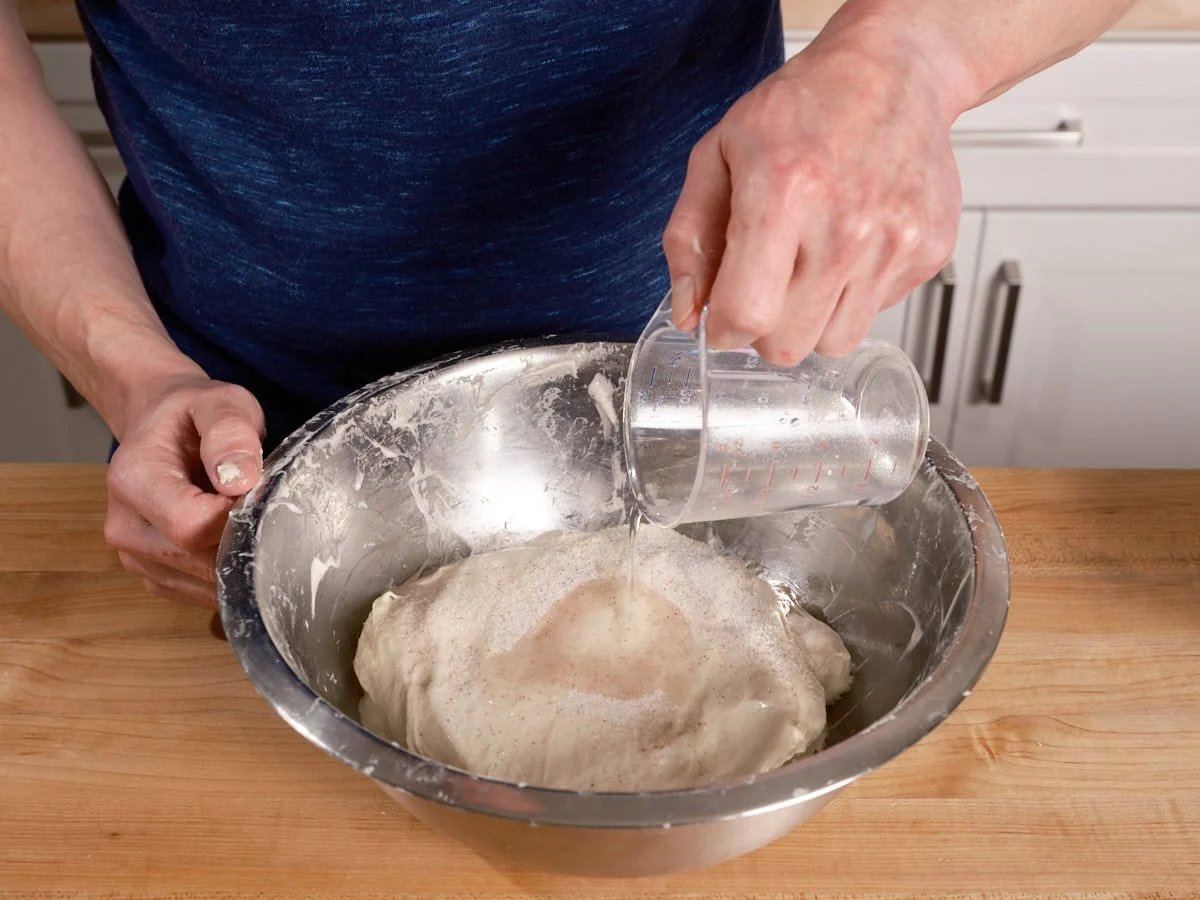
Dough hydration, the precise ratio of water to flour in a recipe, stands as a foundational yet often underestimated pillar in the craft of sourdough bread baking. Far from a mere numerical instruction, it is a dynamic variable profoundly influencing the final texture, crust, and overall quality of a loaf. Experienced bakers recognize that hydration is not a static figure but a nuanced conversation between the ingredients, ambient conditions, and the baker’s intuitive feel. This guide delves into the science, practical application, and critical importance of understanding and mastering dough hydration for superior sourdough results.
Defining Dough Hydration: The Baker’s Percentage
At its core, dough hydration represents the total amount of water in a recipe, expressed as a percentage of the total flour weight. This calculation provides bakers with a universal language to discuss and compare dough characteristics. The formula is straightforward: divide the weight of the water by the total weight of the flour, then multiply by 100. For instance, a recipe calling for 1,000 grams of flour and 700 grams of water yields a 70% hydration dough (700 ÷ 1,000 × 100 = 70%). This percentage serves as an invaluable initial indicator of a dough’s expected consistency and handling properties before the mixing process even begins.
However, the numerical percentage, while crucial, serves more as a guideline than an immutable law. Flour itself is not a homogenous, static ingredient. Its properties vary significantly by type, mill, and even batch. Environmental factors, such as daily weather patterns and kitchen humidity, also play a subtle yet impactful role. A dough mixed to a smooth, elastic consistency at 70% hydration on a dry day might require slight adjustments on a particularly humid or rainy day, as the flour may have absorbed additional moisture from the air.
The Fundamental Role of Water in Bread Structure
Water is the essential catalyst that transforms dry flour into a viscoelastic dough matrix capable of trapping the carbon dioxide gases produced during fermentation. This process is fundamental to achieving the desired open crumb structure and airy texture characteristic of artisan sourdough. Insufficient water results in a tight, dense, and resistant dough that struggles to expand, leading to a compact loaf. Conversely, an excessive amount of water can render the dough overly slack and soupy, unable to retain its shape or structure during proofing and baking, often resulting in a collapsed or gummy interior.
Between these two extremes lies a spectrum of bread styles, each optimized by a specific hydration range. Lower-hydration loaves (typically 60-68%) are generally easier to handle, produce a substantial, often thicker crust, and exhibit a chewy texture. They are ideal for applications like bagels, pretzels, and some pan loaves. At the other end, higher-hydration loaves (75-85% or more) demand greater skill and experience in handling but reward the baker with a brittle, often thin crust and a tender, custardy interior with a very open crumb structure, exemplified by many classic country loaves, ciabatta, and focaccia.
For many artisan sourdough bakers, the preference leans towards the higher end of the hydration spectrum, valuing the resulting thin crust, tender crumb, and melt-in-your-mouth quality that sufficient hydration and full fermentation impart. However, pushing hydration too far can be detrimental, leading to an excessively soft texture that lacks structural integrity post-baking and may stale more rapidly. The objective is to find a hydration level that optimizes the desired characteristics for a given flour and recipe without compromising volume, texture, or the overall eating experience.
The "High Hydration" Misconception
A prevalent misconception in baking circles, particularly among new enthusiasts, is that higher hydration inherently equates to "better" bread. This often leads to bakers chasing stratospheric hydration percentages without regard for the flour’s capabilities or the desired end product. It is crucial to understand that simply increasing the water content does not guarantee an improved loaf. The optimal hydration is intrinsically linked to the specific flour being used. For instance, high-extraction flours or those with significant whole-grain content often demand higher hydration due to the increased absorption capacity of bran and germ particles. If the flour is known to benefit from more water to achieve a desirable end texture, then increasing hydration is a logical step. However, an overly hydrated dough, especially with unsuitable flour, can lead to a gummy crumb or a loaf that collapses post-baking, negating any perceived benefit.
Reading the Dough: A Visual and Tactile Guide
One of the most valuable skills a baker cultivates is the ability to "read" the dough through visual and tactile cues, rather than solely relying on numerical percentages. A 70% hydration dough might feel wet and soupy with one type of flour, yet stiff with another. This highlights the importance of sensory evaluation during the mixing process.
- Under-Hydrated Dough (~62% or less): This dough typically feels stiff, resistant, and lacks extensibility. It may appear shaggy or dry, refusing to come together smoothly. When handled, it offers significant resistance, making stretching and folding challenging. The resulting bread is often dense, tight-crumbed, and may have a thick, chewy crust.
- Properly Hydrated Dough (~68-75%): A correctly hydrated dough feels pliable, smooth, and extensible. It exhibits a pleasant elasticity, stretching without tearing easily. It maintains its shape reasonably well while still being somewhat sticky. This dough typically allows for good gluten development, leading to a balanced crumb and crust.
- Over-Hydrated Dough (~75%+): This dough presents as excessively slack, sticky, and difficult to handle. It may spread rapidly, lack structural integrity, and stick persistently to surfaces. During fermentation, it may struggle to hold its shape, indicating a weakened gluten network. Over-hydration can result in a flat, dense loaf with an overly soft or gummy crumb.
Bassinage: A Strategic Approach to Hydration Control
A technique that has revolutionized many bakers’ approach to high-hydration doughs is bassinage, sometimes referred to as "double hydration." Instead of incorporating all the water at the initial mixing stage, a portion is reserved and gradually added later in the mixing process, after the flour’s starches have begun to absorb water and the gluten matrix has started to form.
This phased approach offers significant advantages:
- Facilitated Gluten Development: When all the water is added upfront, especially in higher-hydration recipes, it can be challenging to achieve sufficient friction for efficient gluten development. The dough’s excessive fluidity hinders the formation of a robust gluten network. By starting with 80-90% of the total water, allowing initial gluten development, and then slowly incorporating the remainder, bakers can achieve higher hydration levels without excessively long mixing times or the risk of under-developed dough.
- Real-Time Dough Assessment: Reserving a portion of the water provides a critical opportunity for the baker to assess the dough’s strength and consistency during mixing. If the dough feels particularly wet, slack, or unmanageable after the initial water addition, the reserved portion can be reduced or omitted entirely. Conversely, if the dough feels strong and capable of absorbing more liquid, the remaining water can be incorporated slowly until the desired consistency is achieved. This adaptability is paramount in navigating the variable nature of flour and environmental conditions.
Key Factors Influencing Water Absorption
Several factors dictate how much water a particular dough will require:
- Flour Type and Protein Content: Higher-protein flours (e.g., strong bread flour, typically 12-14% protein) generally possess a greater capacity to absorb and retain water due to their higher gluten-forming protein content. These flours often require increased hydration to prevent a gummy texture in the final loaf. Conversely, softer, lower-protein flours (common in many European countries) absorb less water, and an equivalent hydration percentage would likely result in an unmanageably sticky dough.
- Whole Grain Flours: Flours containing a higher percentage of whole wheat, rye, or other whole grains demand significantly more water. The bran and germ particles, rich in fiber, absorb a substantial amount of moisture, effectively "tying up" water that would otherwise contribute to dough extensibility. For example, a dough with 50% whole wheat might comfortably handle 82% hydration, a level that would be exceedingly difficult to manage with 100% white flour. The bassinage technique is particularly beneficial when working with high percentages of whole grains.
- Freshly Milled Flour: Freshly milled flour typically exhibits higher water absorption than aged flour, even after sifting. This is attributed to the immediate availability of freshly exposed starch and protein structures. Bakers using freshly milled flour often find it necessary to increase hydration to achieve the desired dough consistency and prevent a dry, tight crumb.
- Climate and Environment: Ambient humidity significantly influences flour’s inherent moisture content. In arid climates or high altitudes, bakers often need to increase hydration percentages to compensate for the drier air. Conversely, in highly humid environments, flour may have already absorbed some moisture from the atmosphere, necessitating a slight reduction in added water. While often a subtle effect, experienced bakers account for dramatic shifts in weather patterns.
Addressing the Challenge of Sticky Dough
Sticky dough is a common source of frustration for many bakers and is frequently linked to hydration levels, dough strength, or a combination of both. Primary causes include:
- Over-Hydration: The most direct cause, where simply too much water has been added for the flour’s absorption capacity or the baker’s handling skill.
- Under-Development of Gluten: If the gluten network has not been sufficiently developed through mixing and folding, it cannot effectively hold the water, leading to a slack and sticky consistency.
- Flour Type: Certain flours, particularly those lower in protein or freshly milled, may naturally produce a stickier dough at what would be considered moderate hydration for other flours.
- Improper Handling: Over-handling or using excessive flour on the work surface can also contribute to stickiness by disrupting the dough’s surface tension.
Techniques for Managing High-Hydration Doughs
As dough hydration increases, its inherent stability decreases, pushing the gluten matrix to its structural limits. Managing these challenging doughs requires specific techniques:
- Develop Strong Gluten: Longer, more gentle mixing, coupled with consistent stretching and folding during bulk fermentation, is crucial for building a robust gluten network capable of supporting the high water content.
- Use the Bassinage Technique: As discussed, adding water in stages allows for controlled hydration and better gluten development.
- Wet Hands and Tools: To prevent sticking, keep hands and tools lightly moistened with water rather than dusting with excess flour, which can alter the dough’s overall hydration.
- Minimal Handling: Work quickly and efficiently, minimizing contact with the dough during shaping to preserve its delicate structure and avoid tearing the gluten network.
- Proper Surface Tension: Focus on building good surface tension during shaping, which helps the dough hold its form during proofing and baking.
- Cold Proofing: Refrigerating high-hydration doughs during the final proof slows fermentation and stiffens the dough, making it easier to handle and score.
The Evolving Art of Baker’s Intuition
Ultimately, understanding dough hydration transcends rote adherence to recipes; it is about cultivating "baker’s intuition." This involves developing a heightened sensitivity to the dough’s visual and tactile cues, learning to interpret what it "tells" you, rather than rigidly following numerical instructions. Each bag of flour possesses unique characteristics, and daily kitchen conditions are never precisely identical. The most accomplished bakers treat recipes as dynamic starting points for an ongoing dialogue with their ingredients.
To foster this intuition, meticulous record-keeping is invaluable. Documenting the hydration used, the dough’s feel at various stages, prevailing weather conditions, and the final loaf’s characteristics provides a personalized database for learning. Over time, this empirical approach builds an intuitive understanding of hydration that no static guide can fully impart. By embracing this adaptive mindset, bakers can unlock the full potential of their ingredients and consistently produce exceptional sourdough bread.
Related Guides:
- Introduction to Baker’s Percentages
- The Science of Gluten Development
- Troubleshooting Common Sourdough Problems
- Optimizing Fermentation for Crumb Structure


