
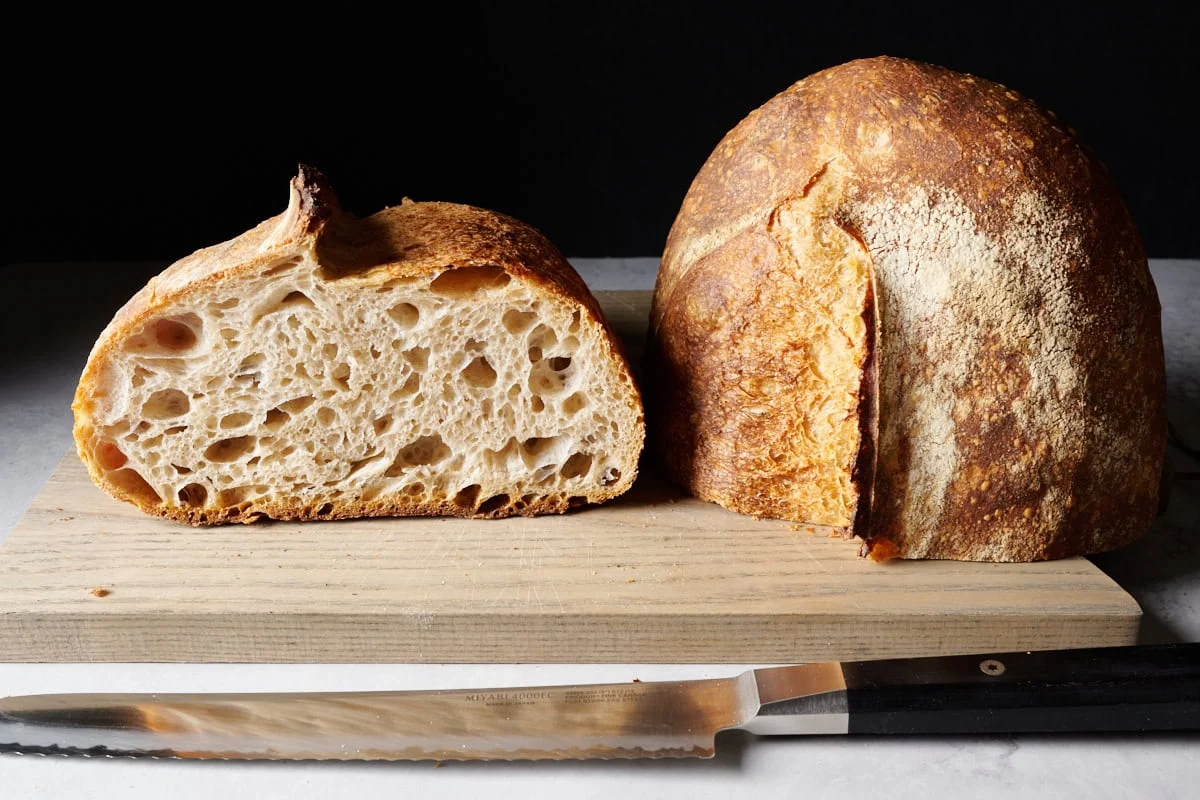
The quest for the perfect sourdough loaf often culminates in a nuanced understanding of its characteristic tang. Bakers worldwide, from home enthusiasts to artisan professionals, constantly seek to calibrate the sourness of their bread, a flavor profile shaped by the intricate interplay of time, temperature, and microbial activity. This guide delves into the scientific principles and practical techniques that empower bakers to precisely adjust the acidity of their sourdough, ensuring each loaf meets their desired taste specifications.
The Scientific Underpinnings of Sourdough’s Distinctive Flavor
The unique tang of sourdough bread primarily arises from two organic acids produced during the fermentation process: lactic acid and acetic acid. These acids are the metabolic byproducts of lactic acid bacteria (LAB) and yeasts, the symbiotic microbial communities residing within a sourdough starter. Understanding their individual contributions and the factors influencing their production is crucial for flavor control.
Lactic Acid, often described as having a smooth, mild, or yogurt-like sourness, contributes to the creamy mouthfeel and gentle acidity found in well-crafted sourdough. It is generally considered the more prevalent acid under standard fermentation conditions.
Acetic Acid, in contrast, delivers a sharper, more pungent, and vinegar-like tang. This acid is notable for its higher vapor pressure, making it the primary aromatic compound responsible for the distinctive sharp, vinegary smell often associated with a very active or over-ripe starter.
The ratio and total concentration of these acids are dictated by the environmental conditions within the dough. Lactic acid bacteria, the primary producers, adjust their metabolic pathways in response to factors such as temperature, hydration, and nutrient availability. A critical determinant is the pH level of the dough. As bacteria produce acids, the pH drops, eventually reaching a point where bacterial activity significantly slows, a self-limiting mechanism that governs the total acid accumulation. Flour type also plays a role, with minerals in whole grains providing a buffering capacity that allows for greater acid accumulation before the pH reaches inhibitory levels.
Strategic Control Points: Influencing Acidity Throughout the Baking Process
Controlling sourdough sourness is an iterative process, with decisions at each stage of bread making contributing to the final flavor profile. Experienced bakers manipulate several key variables to achieve their desired level of tang.
Starter and Levain Management
The health and ripeness of the sourdough starter, and subsequently the levain (the active preferment built from the starter), are paramount.
-
Ripeness of Starter/Levain: Using a starter past its peak ripeness—characterized by a collapsed structure, strong sour aroma, loose consistency, and frothy surface—will introduce a higher concentration of pre-formed acids into the dough, leading to a more sour final product. Conversely, using a starter or levain at its peak ripeness (fully risen, bubbly, with a mild, pleasant aroma) or even a young levain (one that has risen but not yet reached its peak) will result in a milder bread, as less acid has accumulated. For instance, a young levain, often fed at a 1:1:1 ratio of starter, flour, and water and fermented warm for 3-4 hours, prioritizes yeast activity for lift with minimal acid development, a technique favored for applications like sourdough pizza where robust tang is undesirable.
-
Levain Hydration: The hydration level of the levain significantly influences the acid balance. A stiffer levain (typically 50-65% hydration) tends to favor the production of acetic acid. Lower hydration environments slow bacterial activity more than yeast activity, shifting the microbial balance and encouraging the sharper tang. However, stiffness alone does not guarantee sourness; sufficient time for acid accumulation is also necessary. In contrast, a liquid levain (100% hydration or higher) promotes lactic acid production, yielding a smoother, less aggressive sourness. Many mainstream sourdough recipes employ liquid levains to achieve a balanced flavor profile.
-
Levain Percentage: Counter-intuitively, using a smaller levain percentage (e.g., 10-15% of total flour) can sometimes lead to a more sour loaf over an extended fermentation period. A smaller inoculum results in a higher initial pH in the dough, providing a longer "runway" for bacteria to produce a greater total amount of acid before the pH drops to inhibitory levels. Conversely, a larger levain percentage (e.g., 25-35%) introduces more acid initially, rapidly lowering the dough’s pH. While this accelerates fermentation, the quicker pH drop can prematurely slow bacterial acid production, potentially leading to a less sour loaf overall if fermentation times are not carefully managed. This nuanced relationship underscores the complexity of microbial dynamics in dough.
Fermentation Environment and Duration
The ambient conditions and duration of fermentation stages are powerful levers for flavor adjustment.
-
Temperature during Bulk Fermentation: Temperature profoundly impacts both the rate and type of acid production. Warmer dough temperatures (e.g., 78-82°F / 25-28°C) generally accelerate overall bacterial activity, promoting greater total acid production, often favoring lactic acid. Most sourdough bacteria thrive in a warmer range, allowing them to metabolize sugars more efficiently. However, if fermentation proceeds too rapidly in a very warm environment, the dough may fully proof before sufficient acid has accumulated for a noticeable tang. Conversely, cooler temperatures during bulk fermentation, while slowing overall acid production, can shift the ratio towards acetic acid, contributing a sharper tang. This is because cooler conditions tend to slow bacteria more than yeast, altering the substrate availability for acetic acid synthesis.
-
Cold Proof (Retardation) Duration: This is widely recognized as one of the most reliable methods to modulate sourness. Extending the cold proof (e.g., 24-48+ hours in the refrigerator) significantly increases sourness. While cold temperatures slow microbial activity, they do not halt it. Crucially, yeast activity is often less inhibited by cold than bacterial activity, leading to a continuous supply of sugars that can be preferentially converted into acetic acid by the slowed bacteria. This extended period allows for a substantial accumulation of both total acid and a higher proportion of acetic acid, imparting a distinct, assertive tang. The trade-off, however, can be a reduction in oven spring due to prolonged enzymatic degradation of gluten structure. Shortening the cold proof to 10-12 hours or skipping it entirely by proofing at room temperature will result in a milder loaf, as less time is available for acid development.
Ingredient Choices: Flour Composition
The type of flour used directly influences the buffering capacity and nutrient profile of the dough, thereby affecting acid production.
- Whole Grain Percentage (Especially Rye): Incorporating whole grain flours, particularly rye, significantly increases the potential for sourness. This is primarily due to their higher ash content, which refers to the mineral content of the flour. These minerals act as natural buffers, allowing the dough to absorb more acid before its pH drops to levels that inhibit bacterial activity. In essence, whole grains raise the ceiling on how much acid can accumulate. For example, a 100% whole wheat loaf typically exhibits a much more pronounced tang than a white flour loaf, even with identical fermentation timelines. Rye flour is particularly potent in this regard, with even small percentages in the levain or main dough imparting a noticeable increase in tang. Conversely, using primarily refined white flour, which has low ash content, will naturally lead to a milder-flavored bread as its buffering capacity is limited.
Cultivating an Assertive Sourdough Tang
For bakers who desire a truly assertive, mouth-puckering tang, a combination of specific techniques can be employed:
- Use an Over-Ripe Starter/Levain: Allow the starter or levain to ferment past its peak, displaying signs of collapse, a strong pungent aroma, and a loose consistency.
- Extend Cold Proof: Implement a prolonged cold proof in the refrigerator, ideally for 24-48 hours, or even up to 72 hours, to maximize acetic acid development.
- Utilize a Stiffer Levain: Prepare a levain at 50-65% hydration and ensure it ripens sufficiently to promote acetic acid production.
- Increase Whole Grain Flour: Incorporate a higher percentage of whole wheat or, for maximum effect, rye flour, to leverage their buffering capacity.
- Ferment Warmer (Bulk): Maintain a bulk fermentation temperature around 78-82°F (25-28°C) to encourage robust overall acid production, primarily lactic, which can then be complemented by acetic acid from a long cold proof.
- Employ a Smaller Levain Percentage: Start with a lower levain percentage (e.g., 10-15%) to allow a longer period for gradual acid accumulation during bulk fermentation.
Achieving a Subtly Nuanced Flavor Profile
Many bakers, and a growing segment of consumers, prefer a sourdough with a milder, more nuanced acidity that provides depth without overwhelming the palate. To dial back the sourness:
- Maintain a Well-Fed Starter: Regularly feed the starter to dilute accumulated acids and ensure a vigorous, balanced microbial population.
- Use a Young Levain: Incorporate the levain into the dough when it has just reached its peak ripeness, or slightly before, when yeast activity is high and acid accumulation is minimal.
- Shorten or Skip Cold Proof: Limit refrigeration time to 10-12 hours or opt for a room-temperature proof (2-4 hours) to minimize extended acid development.
- Utilize a Liquid Levain: Employ a 100% (or higher) hydration levain to encourage lactic acid production over sharper acetic acid.
- Ferment Cooler (Bulk): While cooler temperatures can favor acetic acid ratio, they significantly slow total acid production. A cooler, shorter bulk fermentation can yield a less sour loaf overall.
- Increase White Flour Content: Predominantly use refined white flour, which has lower buffering capacity, naturally limiting total acid accumulation.
- Use a Larger Levain Percentage: A larger levain can lead to a quicker pH drop and faster fermentation, potentially resulting in less total acid accumulation before the dough is ready for baking.
Troubleshooting: When Sourdough Lacks Its Signature Tang
A common frustration for new sourdough bakers is producing a loaf that lacks any discernible tang. Several factors can contribute to this "bland bread" phenomenon:
- Immature Starter: A new starter (less than 2-3 weeks old) often hasn’t developed a stable, robust population of acid-producing bacteria. Patience and consistent feeding are key to developing a mature, flavor-contributing starter.
- Under-Ripe Levain: Using a levain too early, before it has fully ripened and accumulated sufficient acids, will result in a milder dough. Ensure the levain has at least doubled in volume, shows ample bubbles, and possesses a subtle sweet-sour aroma.
- Insufficient Fermentation Time: Both bulk fermentation and final proofing contribute significantly to flavor. Rushing these stages, or experiencing very rapid fermentation due to high ambient temperatures, can prevent adequate acid development. Extending bulk fermentation by 30-60 minutes or incorporating an overnight cold proof can rectify this.
- Excessively Warm Kitchen: In very warm environments (above 80°F / 27°C), fermentation can proceed so quickly that the dough reaches full proof before enough acid has time to develop. The loaf may be well-leavened but lack flavor depth. Strategies include using cooler mixing water to lower the dough’s initial temperature (DDT) or transitioning to an extended cold proof earlier.
- Predominantly Refined White Flour: As discussed, low-ash white flours have less buffering capacity, inherently limiting the amount of acid that can accumulate. Incorporating even a small percentage of whole wheat or rye can significantly enhance tang.
The Broader Implications for Artisan Baking and Consumer Choice
The ability to precisely control sourdough sourness has significant implications across the baking industry. For artisan bakeries, it allows for product differentiation and the creation of specific regional styles, such as the famously assertive San Francisco sourdough or the milder European country loaves. It enables bakers to cater to diverse consumer preferences, offering a range from robustly tangy to delicately nuanced loaves.
For home bakers, this level of control transforms sourdough from a mere recipe into a deeply personal culinary art form. It fosters experimentation and a deeper understanding of microbial science, allowing individuals to tailor their bread to their exact palate, whether for a sharp accompaniment to cheese or a mild base for sandwiches. The continuous evolution of sourdough techniques and recipes reflects this ongoing pursuit of flavor perfection, driven by both scientific understanding and sensory exploration.
Conclusion: The Art of Deliberate Experimentation
Sourdough baking stands as a testament to the endless adjustability of naturally leavened bread. Unlike commercial yeast breads with relatively fixed flavor profiles, sourdough offers a multitude of pathways to shape the final result. Sourness, while just one dimension of flavor, is an area where bakers wield tremendous control.
The recommended approach for mastery is deliberate experimentation. By altering one variable at a time—perhaps adjusting the cold proof duration, using a levain at a different stage of ripeness, or incorporating a new flour type—bakers can meticulously observe and document the effects on their bread. This systematic approach builds intuition and knowledge over time, leading to predictable and desired flavor outcomes.
Ultimately, there is no universally "correct" level of sourness. The ideal tang is subjective, varying from individual to individual and culture to culture. The beauty of sourdough lies in its adaptability, empowering every baker to craft a loaf that perfectly satisfies their own taste and that of those they share it with. Happy baking!


