Dough hydration stands as one of the most critical yet frequently misunderstood variables in the intricate art of sourdough bread baking. What appears as a simple numerical ratio at first glance quickly reveals itself as a dynamic interplay of scientific principles, environmental conditions, and the unique characteristics of flour, fundamentally shaping the texture, crumb, and crust of the final product. For both novice and seasoned bakers, a deep understanding of hydration is often the key to unlocking consistent success and achieving truly exceptional bread. This guide delves into the science, practical application, and nuanced adjustments necessary to master this fundamental aspect of the baker’s craft, transforming an often-frustrating element into a powerful tool for culinary excellence.
Defining Dough Hydration: The Scientific Basis
At its core, dough hydration quantifies the total amount of water in a bread recipe as a percentage of the total flour weight. The calculation is straightforward: divide the weight of the water by the total weight of the flour, then multiply by 100. For instance, a recipe calling for 1,000 grams of flour and 700 grams of water results in a 70% hydration dough (700 ÷ 1,000 × 100 = 70%). This percentage provides bakers with a standardized metric to anticipate dough behavior and adjust accordingly, offering a predictive insight into the dough’s potential before the mixing process even begins.
The scientific significance of water in dough cannot be overstated. Water acts as a solvent, hydrating the flour’s proteins—glutenin and gliadin—which then combine to form gluten. This elastic protein network is crucial for trapping the carbon dioxide gases produced during fermentation, giving bread its characteristic rise and open crumb structure. Additionally, water gelatinizes starch granules during baking, contributing to the bread’s internal structure and moisture retention. The precise balance of water directly impacts the dough’s viscoelastic properties, influencing its extensibility (stretchiness) and elasticity (ability to spring back). Too little water hinders gluten development and results in a stiff, dense dough, while too much can create a slack, unmanageable mass that struggles to hold its shape.
The Dynamic Nature of Hydration: Beyond the Recipe
While a recipe’s hydration percentage serves as a crucial starting point, it is imperative to recognize it as a guideline rather than an immutable rule. The actual water absorption capacity of flour is highly variable, influenced by several factors that necessitate on-the-fly adjustments. This variability is a testament to the living nature of baking and the need for a baker’s intuitive touch.
Flour Type and Protein Content: The most significant determinant of a flour’s water absorption capacity is its protein content. Higher-protein flours, such as those typically marketed as "bread flour" in North America (often 12-14% protein), possess a greater capacity to absorb and retain water. This higher protein content forms a more robust gluten network, capable of holding more moisture without becoming excessively sticky. Conversely, lower-protein or "softer" flours, common in many European countries (often 9-11% protein), absorb less water and may become unmanageably slack at hydrations suitable for stronger flours. Using American bread flour at a hydration level intended for a lower-protein European flour, for instance, would likely result in a very stiff and resistant dough that yields a dense loaf.
Whole Grain Flours: The inclusion of whole grains like whole wheat, rye, or spelt significantly increases the dough’s water requirements. The bran and germ particles present in whole grain flours are highly hygroscopic, meaning they absorb a considerable amount of water. This additional absorption is essential to prevent the bran from creating sharp edges that can sever the developing gluten strands, leading to a weaker dough and a tighter crumb. Recipes featuring substantial whole grain percentages, such as a 50% whole wheat sourdough, may easily achieve hydrations of 80% or more, a level that would be exceptionally challenging with 100% white flour.
Freshly Milled Flour: Flour that has been freshly milled tends to require more water than commercially aged flour. During aging, flour undergoes oxidative processes that subtly alter its protein structure, enhancing its ability to absorb water and strengthen gluten. Freshly milled flour, lacking this aging, may initially feel drier and need additional hydration to achieve the desired consistency.
Environmental Conditions: The ambient climate, particularly temperature and humidity, plays a subtle yet perceptible role in dough hydration. In arid, high-altitude environments, such as New Mexico, bakers often find it necessary to increase hydration percentages to compensate for the drier air, which can lead to increased evaporation from the dough. Conversely, in humid climates, flour may absorb some moisture from the air before mixing, potentially requiring a slight reduction in added water to avoid an overly slack dough. While not as impactful as flour type, these atmospheric variations contribute to the nuanced "conversation" a baker has with their dough.
The Spectrum of Bread: Low vs. High Hydration
The hydration percentage fundamentally dictates the ultimate characteristics of the baked loaf, influencing its internal structure, crust development, and overall mouthfeel. Understanding these distinctions allows bakers to tailor their approach to achieve specific outcomes.
Lower-Hydration Breads (60-68%):
- Dough Handling: Typically stiffer, easier to handle, shape, and score. Ideal for beginners.
- Crust: Tends to develop a thicker, chewier, and more substantial crust.
- Crumb: Results in a denser, tighter crumb structure, often with smaller, more uniform air pockets.
- Flavor Development: Can sometimes lead to a slightly less complex flavor profile due to reduced fermentation activity in a drier environment, though this is highly dependent on starter activity and fermentation duration.
- Applications: Excellent for bagels, pretzels, pizza dough, pan loaves, and traditional European breads like certain rustic country loaves or baguettes where a robust structure is desired.
- Shelf Life: Often exhibits a longer shelf life due to less moisture, although this can be offset by a less tender crumb.
Higher-Hydration Breads (75-85%+):
- Dough Handling: Significantly wetter, stickier, and more challenging to handle, requiring advanced techniques and experience.
- Crust: Develops a thinner, more delicate, and often brittle crust that shatters beautifully.
- Crumb: Characterized by a very open, airy, and irregular crumb structure, often described as "custardy" or "melt-in-your-mouth" due to its tenderness.
- Flavor Development: The increased water content facilitates greater enzymatic activity and fermentation, often leading to a more complex, nuanced flavor profile.
- Applications: Favored for modern artisan sourdoughs, ciabatta, focaccia, and loaves designed for maximum open crumb.
- Shelf Life: Can stale faster if not properly stored, as the high moisture content can lead to quicker degradation of the starches, though the initial tenderness is paramount.
It’s important to note that higher hydration does not automatically equate to "better" bread. While the pursuit of an open crumb has been a significant trend in artisan baking, pushing hydration to extreme levels without adequate flour strength or proper technique can lead to several undesirable outcomes: an excessively soft, gummy crumb; a loaf that struggles to retain its structure post-baking; and accelerated staling. The ultimate goal is to find the optimal hydration that maximizes the desired characteristics of the bread given the specific flour and baking conditions, without compromising volume, texture, or eating quality.
Techniques for Mastering Hydration: Bassinage and Reading the Dough
Developing "baker’s intuition"—the ability to sense what the dough needs—is paramount in mastering hydration. This intuition is honed through experience and by actively observing the dough’s visual and tactile cues.
Bassinage: Phased Water Addition:
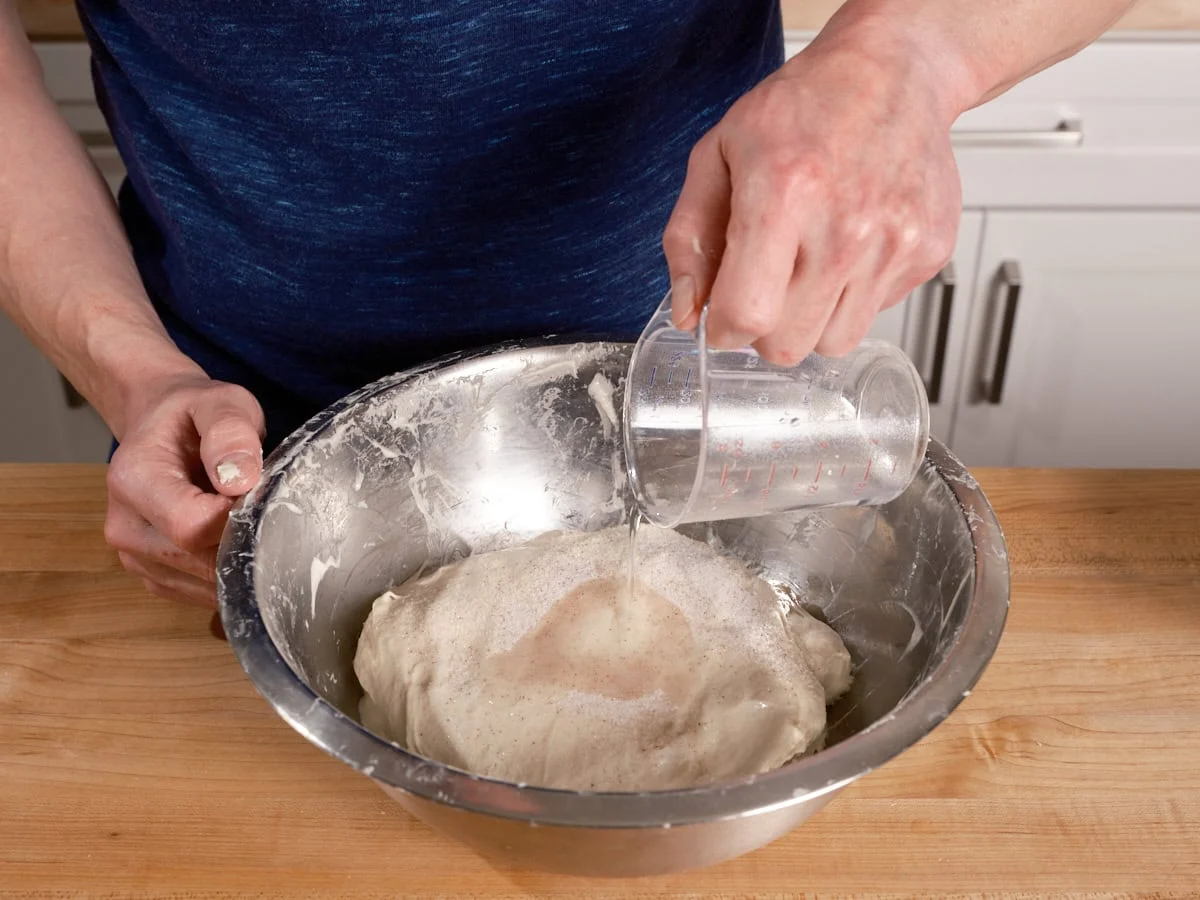
A technique that has revolutionized handling high-hydration doughs is bassinage, or "double hydration." Instead of incorporating all the water at the outset, a portion (typically 10-20%) is reserved and added incrementally during the later stages of mixing, after the initial gluten network has begun to form.
The benefits of bassinage are significant:
- Enhanced Gluten Development: Starting with a slightly lower hydration allows the flour and water to come together more easily, facilitating efficient gluten development through friction and manipulation. Attempting to develop gluten in an excessively wet dough from the start can be incredibly difficult, as the high water content reduces the friction needed for the gluten strands to align and strengthen.
- Dough Strength Assessment: Holding back water provides a critical opportunity to assess the dough’s strength and absorption capacity in real-time. If the dough feels slack and weak after the initial water incorporation, the reserved water can be partially or entirely withheld. Conversely, if the dough is strong and tight, the remaining water can be added slowly, allowing the baker to push hydration to its optimal limit without overshooting. This adaptive approach is especially valuable when working with new flours or fluctuating environmental conditions. The technique, originating from traditional French baking, highlights the historical understanding of dough dynamics.
Reading the Dough: Visual and Tactile Cues:
The ability to "read your dough" is more valuable than any fixed percentage. The way the dough looks and feels in the mixing bowl and throughout bulk fermentation provides continuous feedback.
-
Under-Hydrated Dough (~62% or less):
- Visual Cues: Appears stiff, dense, and potentially crumbly. It may resist mixing and struggle to form a cohesive mass. Tears easily during stretching.
- Tactile Cues: Feels dry, resistant, and lacks extensibility. It will not stick readily to hands or the mixing bowl.
- Consequences: A tight, resistant dough that inhibits proper gas expansion, resulting in a dense, heavy loaf with a very tight crumb and a thick, potentially tough crust.
-
Properly Hydrated Dough (~68-75% for white flour):
- Visual Cues: Smooth, pliable, and elastic. It stretches without tearing excessively, forming a thin membrane (the "windowpane test"). Shows good extensibility and elasticity.
- Tactile Cues: Feels tacky but not excessively sticky, releasing from the hands and bowl with a gentle pull. It has a lively, springy quality.
- Consequences: Achieves a balanced structure, allowing for good gas retention and a moderately open crumb with a pleasing texture and crust.
-
Over-Hydrated Dough (~75%+ for white flour):
- Visual Cues: Appears very slack, soupy, and spreads excessively. It struggles to hold its shape and may collapse during handling. The surface might look shiny and wet.
- Tactile Cues: Extremely sticky, adhering stubbornly to hands and surfaces. Lacks resistance and feels like a heavy liquid rather than a cohesive mass.
- Consequences: While potentially leading to a very open crumb, it risks a gummy texture, poor structural integrity (collapsing during baking or cooling), and an inability to be properly shaped, often resulting in a flat, dense disc rather than a well-risen loaf.
Addressing Sticky Dough:
Sticky dough is a common frustration, often stemming from issues beyond just excess water. Key causes include:
- Insufficient Gluten Development: The gluten network hasn’t been adequately formed or strengthened to contain the water.
- Wrong Flour Type: Using a lower-protein flour at a high hydration level.
- Inadequate Mixing: Not mixing long enough or vigorously enough to build sufficient strength.
- Improper Fermentation: Over-fermentation can lead to gluten degradation, making the dough slack and sticky. Under-fermentation can also result in a dough that hasn’t fully developed its strength.
- Temperature: Warmer doughs tend to be stickier.
Tips for working with sticky, high-hydration doughs include:
- Wet Hands/Scraper: Keep hands and tools lightly moistened with water to prevent sticking.
- Gentle Handling: Use light, quick movements rather than aggressive kneading.
- Fold, Don’t Knead: Rely on stretch-and-fold techniques during bulk fermentation to build strength without excessive handling.
- Minimal Flour Dusting: Use the absolute minimum amount of flour on the work surface, if any, to prevent drying out the surface and altering hydration.
- Cold Proofing: A longer cold proof can firm up the dough, making it easier to score and transfer to the oven.
Expert Perspectives and Broader Implications
Leading food scientists and artisan bakers universally emphasize the critical role of hydration. Research from institutions like the American Institute of Baking highlights that optimal water-protein interaction is foundational for viscoelasticity, directly impacting bread quality and consistency. Renowned artisan bakers, while often celebrated for high-hydration loaves, consistently advocate for a sensory-driven approach, prioritizing the dough’s feel over rigid adherence to percentages. They frequently conduct small-batch tests with new flour shipments to determine optimal hydration before scaling up.
The implications of mastering hydration extend beyond individual baking success. For commercial bakeries, consistent hydration control is vital for product uniformity, waste reduction, and maintaining brand reputation. Innovations in milling technology and flour blending often aim to provide bakers with more consistent flour performance, thereby simplifying hydration management. Consumer trends, too, are influenced; the demand for open-crumb, artisanal sourdough reflects a growing appreciation for the delicate textures achievable through skillful hydration.
Final Thoughts and Practical Recommendations
Understanding dough hydration is ultimately about developing a profound sensitivity to your ingredients. It’s about shifting from a rigid adherence to numbers to an intuitive dialogue with your dough. Every bag of flour, every kitchen environment, and even the baker’s technique on a given day will introduce subtle variations that demand adaptability.
For beginners, a recommended starting point is a moderate hydration of 68-70% using a quality bread flour. This range offers a forgiving dough that is manageable to handle while still producing a beautiful, well-structured loaf. As confidence grows and the baker develops a tactile understanding of dough strength, hydration can be gradually increased.
Crucially, aspiring bakers should embrace detailed record-keeping. Documenting the hydration used, the dough’s feel throughout mixing and fermentation, ambient conditions, and the final loaf’s characteristics (crumb, crust, flavor) will build an invaluable personal database. Over time, this meticulous observation and documentation will cultivate the "baker’s intuition" that no static guide can fully impart, transforming the baking process into a truly responsive and rewarding craft.