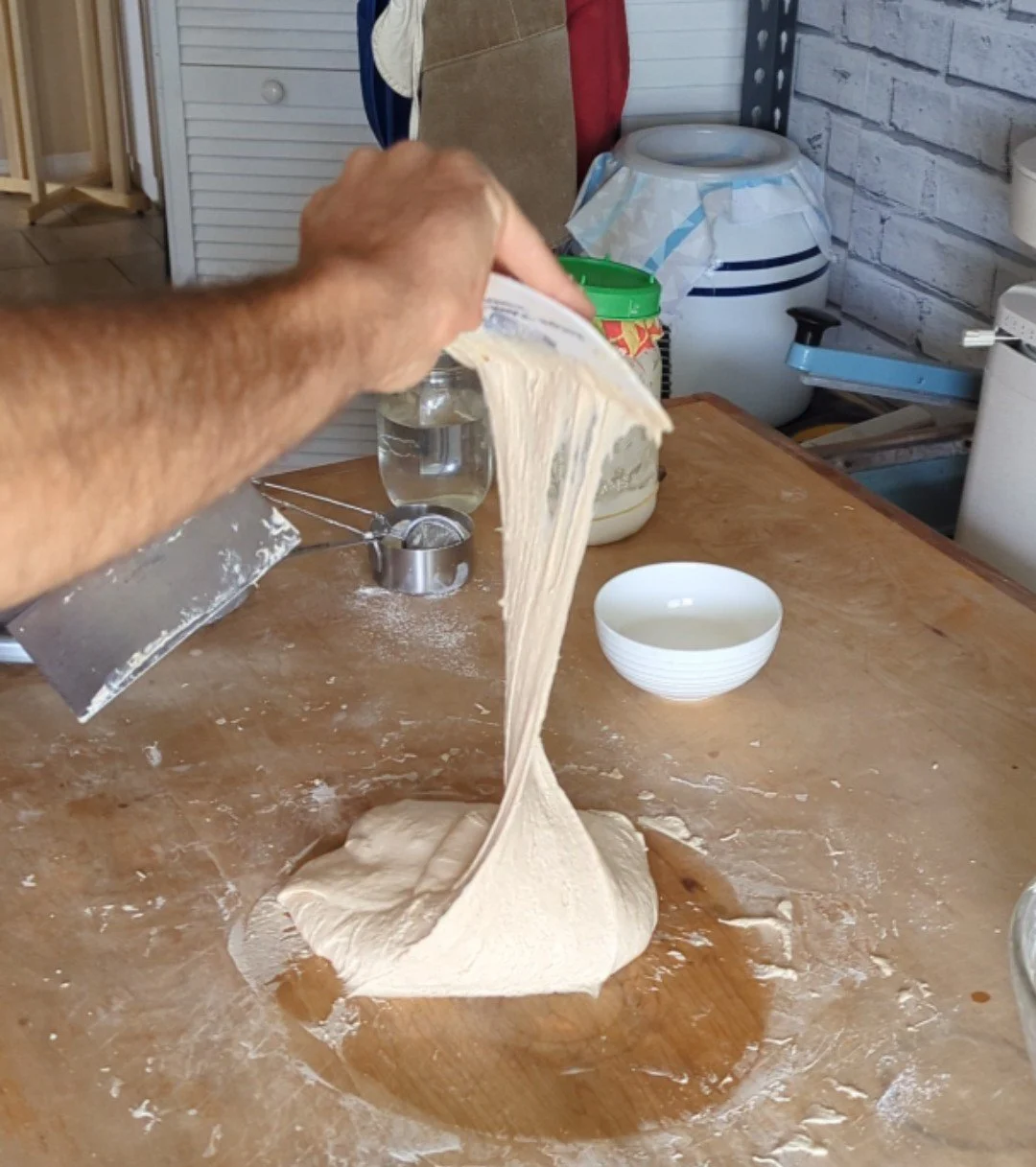
San Diego, CA – What began as an ambitious attempt at crafting a perfect sourdough loaf, using an innovative "Lazy Loaf" technique, culminated in an unforeseen culinary pivot: a batch of "unabashedly sour" yet delicious sourdough pancakes. This incident, documented by Austin Durant, founder of Fermenters Club and author of "Fearless Fermenting," highlights the unpredictable nature of live-culture baking and the ingenuity required to navigate its challenges, transforming potential waste into a palatable success. The event underscores common pitfalls faced by even experienced bakers and offers a compelling example of culinary adaptability and food waste reduction.
The Genesis of a Sourdough Setback
The incident unfolded recently when a sourdough dough, prepared using the Fermenters Club’s proprietary "Lazy Loaf" technique, failed to proof correctly overnight. The intended outcome was a well-risen, airy loaf of sourdough bread, a staple for many home bakers and a testament to the ancient art of fermentation. However, environmental factors intervened, dramatically altering the dough’s trajectory.
The primary culprits identified by Durant were an unusually warm overnight ambient temperature, estimated at around 80°F (approximately 26.7°C) indoors, coupled with an extended proofing duration. These conditions accelerated the metabolic activity of the wild yeasts and lactic acid bacteria within the sourdough starter, leading to an over-proofed state. Over-proofing occurs when the yeast consumes too much of the available sugars, exhausting its leavening power before baking. This results in a dough that collapses, becomes overly acidic, and loses its structural integrity, making it impossible to shape into a traditional loaf.
Understanding the Sourdough Ecosystem: Temperature and Time
Sourdough baking is a delicate dance between microbial activity, temperature, and time. A sourdough starter, often referred to as a "mother" or "levain," is a living ecosystem comprising wild yeasts (primarily Saccharomyces cerevisiae, among others) and various species of lactic acid bacteria (LAB), such as Lactobacillus sanfranciscensis. These microorganisms work in synergy: yeasts produce carbon dioxide, which leavens the dough, while LAB produce lactic and acetic acids, contributing to sourdough’s characteristic flavor profile and acting as natural preservatives.
Optimal Fermentation Conditions:
For most sourdoughs, an optimal bulk fermentation (the first rise) and proofing temperature range from 70-78°F (21-25.5°C). Within this range, yeast activity is robust but controlled, allowing for sufficient gas production to develop the dough’s structure without exhausting the yeast too quickly. Higher temperatures, such as the 80°F experienced in this instance, significantly accelerate this process. For every 10°F (5.5°C) increase above the optimal, microbial activity can double, drastically reducing the required proofing time.
The Perils of Over-Proofing:
When dough over-proofs, several undesirable outcomes occur:
- Exhausted Yeast: The yeast consumes all available fermentable sugars, leading to a loss of leavening power. There’s no "food" left for the yeast to produce gas during the oven spring.
- Weakened Gluten Structure: Prolonged enzymatic activity, particularly from proteases, can degrade the gluten network, turning the dough into a "soupy mess" that cannot hold its shape.
- Excessive Acidity: The LAB continue to produce acids, leading to an overly sour flavor and potentially impacting the dough’s elasticity.
- Poor Oven Spring: With no gas production and a weakened structure, the bread will not rise properly in the oven, resulting in a dense, flat crumb.
The "Lazy Loaf" technique, while designed for simplicity, still relies on these fundamental principles. It aims to minimize hands-on time but necessitates an understanding of how environmental factors can influence the dough’s development. In this particular scenario, the combination of elevated temperature and an extended overnight proof proved to be an insurmountable challenge for the dough’s structural integrity.
The Moment of Decision: Salvage or Discard?
Upon inspection, the dough was visibly problematic. Instead of a cohesive, elastic mass ready for shaping, it presented as a "soupy mess." An attempt to incorporate additional flour on the bench to salvage its texture quickly revealed the futility of trying to wrestle it into a proofing basket for a traditional bake. The gluten structure was too compromised to hold any form, making a successful oven spring highly improbable.
This juncture often presents a dilemma for home bakers: admit defeat and discard the dough, or find an alternative use. Given the significant investment of time and ingredients (flour, water, and precious sourdough starter), discarding the entire batch is an unappealing option for many, especially those conscious of food waste. This is where culinary improvisation and a deep understanding of sourdough’s versatility come into play.
Durant’s immediate decision to transform the failed bread dough into sourdough pancakes exemplifies a resourceful approach. This strategy is not uncommon among sourdough enthusiasts, who frequently repurpose "sourdough discard" – the portion of the starter that is removed before feeding to maintain its optimal activity – into a myriad of recipes. While this dough was not technically "discard" in the traditional sense, its unsuitability for bread made it functionally equivalent, ripe for a second life.
The Transformation: From Loaf to Pancake Perfection
The transition from a bread recipe to a pancake recipe required adjustments, particularly given the substantial volume of the dough – approximately a triple batch compared to a standard pancake recipe. The core components of sourdough discard pancakes typically involve integrating the starter with additional flour, milk or buttermilk, eggs, sweetener, and leavening agents like baking soda.
In this case, Durant opted to omit baking soda from the pancake recipe. This decision was based on the observation that the dough still possessed "a little lift," indicating some residual yeast activity and gas production. However, in hindsight, he noted that adding baking soda would have been beneficial. Baking soda (sodium bicarbonate) reacts with the acidic components of sourdough to produce carbon dioxide, providing an additional leavening boost. This chemical leavening would have counteracted the flatness resulting from the exhausted yeast in the over-proofed dough, leading to fluffier pancakes.
Despite the omission of baking soda, the resulting pancakes were described as "unabashedly sour, and perhaps a bit flat, but otherwise delicious!" This flavor profile is a hallmark of good sourdough, where the lactic and acetic acids contribute a complex tang that distinguishes it from commercially leavened products. The flatness, as anticipated, was a direct consequence of the compromised leavening power.
The author prepared three variations of these pancakes, showcasing the flexibility of the base recipe. While specific details on the variations were not provided in the original content, common additions to sourdough pancakes include berries, chocolate chips, nuts, or spices. The pancakes were served with a thoughtful accompaniment: strawberry sauerkraut, grass-fed butter, and maple syrup. The strawberry sauerkraut adds another layer of fermented flavor and a burst of fruity acidity, complementing the sourness of the pancakes and creating a harmonious breakfast experience.
The Broader Implications: Food Waste, Resilience, and Culinary Education
This anecdote from Fermenters Club resonates deeply within the broader context of modern culinary practices, touching upon themes of food waste reduction, the psychological resilience of home cooks, and the educational value of shared experiences.
Addressing Food Waste
Food waste is a significant global issue, with an estimated one-third of all food produced for human consumption being lost or wasted. In the United States alone, approximately 30-40% of the food supply goes to waste. Home kitchens contribute substantially to this problem. Incidents like a failed sourdough bake represent a micro-level opportunity to mitigate waste. By repurposing the dough, Durant prevented a significant quantity of flour and other ingredients from ending up in the bin. This exemplifies a crucial principle of sustainable cooking: maximizing the utility of ingredients and minimizing discards. The versatility of sourdough discard for various applications – from crackers and crumpets to muffins and, as demonstrated, pancakes – makes it an excellent candidate for zero-waste kitchen practices.
Fostering Culinary Resilience and Creativity
Baking, especially with live cultures, is an exercise in patience and problem-solving. Failures are an inevitable part of the learning curve. An overly sticky dough, a dense crumb, or a flat loaf can be disheartening. However, stories like this one illustrate the importance of culinary resilience. Instead of viewing the over-proofed dough as a total loss, it was reframed as an ingredient for a different, equally delightful creation. This mindset encourages experimentation and fosters creativity in the kitchen, transforming perceived mistakes into opportunities for innovation. It reminds bakers that the journey of learning is continuous and often yields unexpected rewards.
Educational Value and Community Building
Sharing experiences, both successes and failures, is a cornerstone of the home baking community. Online forums, blogs, and social media platforms are replete with bakers seeking advice on troubleshooting common sourdough issues. Durant’s candid account, complete with images and a video, serves as a valuable educational resource. It demystifies the baking process, demonstrating that even experienced fermenters encounter challenges, and more importantly, how to overcome them creatively. This transparency builds trust and fosters a sense of community among bakers, encouraging them to learn from each other’s journeys. The Fermenters Club, through its various resources and publications like "Fearless Fermenting," actively promotes this culture of shared knowledge and practical application.
Expert Perspectives on Sourdough Troubleshooting
Culinary experts and professional bakers consistently emphasize several key strategies for managing sourdough and preventing common issues:
- Temperature Control is Paramount: Monitoring ambient temperature is critical. For overnight proofs in warmer climates or during summer months, refrigerating the dough can slow down fermentation significantly. Alternatively, a proofing box with controlled temperature and humidity can provide a consistent environment.
- Know Your Starter: A healthy, active starter is the foundation of good sourdough. Understanding its feeding cycle, its response to different flours, and its visual cues (bubbles, aroma, rise and fall) is essential.
- Observe the Dough, Not Just the Clock: While recipes provide guidelines, dough development is dynamic. Bakers should learn to "read" their dough by feel, sight, and smell. A properly proofed dough will be jiggly, airy, and slightly domed, passing the "poke test" (a gentle poke leaves a slow rebound).
- Hydration Matters: The water content of the dough (hydration level) significantly impacts its texture and handling. Higher hydration doughs are often more challenging to work with but can yield a more open crumb. Adjustments may be necessary based on flour type and environmental humidity.
- Embrace Discard Recipes: Having a repertoire of sourdough discard recipes is a practical solution for managing excess starter or repurposing failed doughs. This proactive approach ensures that ingredients are not wasted and offers an opportunity to explore new culinary avenues.
Conclusion
The transformation of a failed sourdough loaf into a generous batch of delicious pancakes is more than just a culinary anecdote; it’s a testament to the principles of adaptability, resourcefulness, and learning within the realm of home baking. The incident, stemming from an over-proofed dough due to elevated temperatures and extended proofing time, provides a tangible lesson in the delicate science of sourdough fermentation. It highlights the importance of environmental control, keen observation, and the willingness to pivot when plans go awry.
In a world increasingly focused on sustainability and mindful consumption, stories like this reinforce the value of minimizing food waste and embracing culinary creativity. Austin Durant’s experience serves as an encouraging reminder to bakers everywhere: even when a loaf doesn’t rise as expected, the journey of fermentation often yields unexpected and delicious outcomes, proving that sometimes, the best recipes are born from improvisation. The "unabashedly sour" pancakes, served with a side of strawberry sauerkraut, stand as a flavorful monument to a baker’s resilience and ingenuity.