
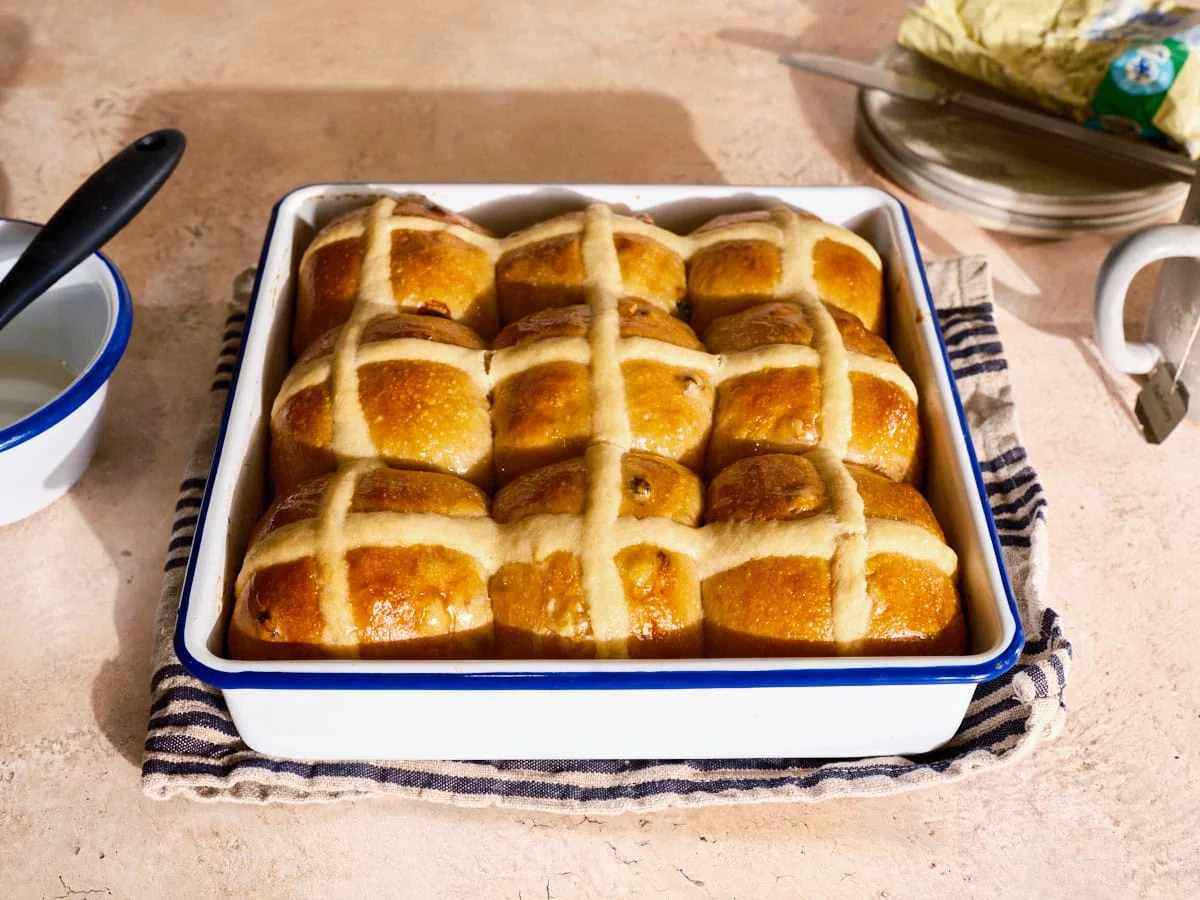
The culinary landscape for home bakers is experiencing a resurgence of artisanal techniques, with sourdough at the forefront. In anticipation of the spring season and the traditional observance of Easter, "The Perfect Loaf," a renowned authority in sourdough baking, has announced an updated and enriched recipe for Sourdough Hot Cross Buns. This new iteration, adapted from the acclaimed cookbook The Perfect Loaf, introduces the Japanese tangzhong method, promising an unparalleled level of softness and tenderness, elevating a beloved seasonal classic.
A Modern Twist on a Timeless Classic
Hot Cross Buns have long been a symbol of spring and Easter, particularly Good Friday, their warm spices, dried fruits, and distinctive cross marking them as a cherished seasonal treat. Traditionally, these enriched buns are made with commercial yeast. However, "The Perfect Loaf’s" revised approach integrates the nuanced complexity of sourdough, offering a more profound flavor profile and a superior texture. This recipe represents a thoughtful fusion of ancient fermentation practices with a contemporary technique to enhance moisture and mouthfeel, catering to a growing demographic of bakers seeking both tradition and innovation. The author notes that the combination of warm spices, citrus zest, plump dried fruit, and candied peel, folded into an enriched dough, serves as a perfect culinary bridge between the hearty bakes of winter and the lighter fare of spring.
The Tangzhong Advantage: A Scientific Approach to Softness
Central to the enhancement of this updated recipe is the incorporation of tangzhong, a cooked flour paste. This technique, originating from Asian baking, involves cooking a small portion of flour with liquid (in this case, milk) until it forms a thick, gelatinous paste. Scientifically, tangzhong works by pre-gelatinizing the starches in the flour. This process allows the flour to absorb and retain significantly more moisture than it would in its raw state. When this paste is incorporated into the main dough, it traps extra moisture, resulting in buns that are exceptionally soft, tender, and possess a desirable "pull-apart" texture. Crucially, this moisture retention also extends the freshness and softness of the baked goods, a significant improvement over traditional enriched buns that can dry out more quickly. The author emphasizes that this inclusion makes the buns "even softer and more tender," maintaining their pillowy quality for an extended period.
Sourdough: Beyond Just Leavening
While commercial yeast offers speed and predictability, sourdough fermentation brings a depth of flavor that is difficult to replicate. The use of a sweet levain in this recipe is specifically designed to cultivate a more complex, rounded flavor with a subtle, gentle acidity. This delicate tang masterfully balances the sweetness derived from the sugar, dried fruits, and the final glaze. Unlike the rapid rise offered by commercial yeast, sourdough fermentation, particularly in an enriched dough containing milk, egg, butter, cinnamon, and sugar, demands patience. However, this extended fermentation contributes to the development of a richer, more nuanced flavor and can also aid in the digestibility of the bread. The recipe specifies a pre-fermented flour ratio of 15.5% and a levain in the final dough of 48.6%, indicative of a meticulously balanced approach to sourdough leavening.
A Meticulous Baking Schedule for Optimal Results
"The Perfect Loaf" provides a detailed baking schedule, underscoring the methodical approach required for these enriched buns. This is primarily a same-day bake, with the exception of the levain preparation, which is initiated overnight. The schedule is structured as follows:
- Evening (e.g., 9:00 p.m.): Prepare the Sweet Levain and Optional Fruit Soaker. The sweet levain, a blend of high-protein white flour, superfine sugar, water, and ripe sourdough starter, ferments overnight for approximately 12 hours. The sugar in the levain assists yeast activity in the enriched dough and helps mitigate excessive sourness in the final product. Concurrently, an optional fruit soaker, consisting of Thompson raisins or candied orange peel and dried currants, is prepared if the fruits are deemed too dry, though the author notes this step can be skipped for naturally moist inclusions.
- Morning (e.g., 8:00 a.m.): Make the Tangzhong and Prepare Butter. Room-temperature butter is prepared, and the tangzhong, a mixture of high-protein white flour and whole milk, is cooked until it forms a cohesive paste, then cooled to expedite its integration into the dough.
- Late Morning (e.g., 8:30 a.m.): Mix the Dough. All main dough ingredients, including the cooled tangzhong, flour, egg, sugar, spices, citrus zests, water, salt, and the ripe levain, are combined. The author strongly recommends a stand mixer for this enriched dough, detailing a precise mixing process that involves initial low-speed mixing, followed by medium-speed development to achieve a smooth, strong dough, with butter added gradually. The inclusions are folded in at the very end. The desired dough temperature is maintained at 78°F (25°C) to ensure consistent fermentation.
- Mid-Morning to Early Afternoon (e.g., 9:00 a.m. to 1:00 p.m.): Bulk Fermentation. The dough undergoes approximately 4 hours of bulk fermentation at a warm room temperature (74–76°F or 23–24°C), including two sets of stretches and folds at 30-minute intervals. The author stresses the importance of adequate dough development, looking for puffiness and elasticity.
- Early Afternoon (e.g., 1:00 p.m.): Divide and Shape. The dough is divided into nine 115g pieces, shaped into tight rounds, and placed in a liberally buttered 9-inch square baking pan for a "super soft, pull-apart" result, or on a sheet pan for a firmer crust.
- Mid-Afternoon to Early Evening (e.g., 1:30 p.m. to 5:30 p.m.): Proof. The shaped buns undergo a final proofing for about 4 to 5 hours at warm room temperature. Due to the rich ingredients, this is a slow process, and the author cautions against rushing it, emphasizing that the dough should be very soft, well-risen, and puffy.
- Evening (e.g., 5:30 p.m.): Prepare Glaze, Cross Mixture, and Bake. A simple syrup glaze (water and sugar) and a cross mixture (white flour, water, orange juice, oil, and salt) are prepared. An egg wash is applied to the buns, followed by piping the cross mixture. The buns are baked at 400°F (200°C) for 15 minutes, then at 350°F (175°C) for another 10 to 15 minutes until golden brown and reaching an internal temperature of 195°F (90°C).
- Finishing: Post-baking, a layer of simple syrup is brushed onto the hot buns, which are then cooled before serving, ideally with high-quality salted butter.
Yield and Equipment
This comprehensive recipe yields nine hot cross buns, each weighing approximately 115 grams, with a total dough weight of 1,150 grams. Key equipment recommended includes a stand mixer or spiral mixer for optimal dough development, a 9-inch square baking pan for achieving soft, pull-apart buns, and a pastry bag for piping the crosses. The author also provides alternative pan options, such as a 13×18-inch sheet pan, for those preferring a crisper crust.
Broader Implications for Home Baking
The release of this updated recipe by "The Perfect Loaf" is indicative of several wider trends in home baking. Firstly, it highlights the increasing sophistication of home bakers, many of whom are now comfortable with complex techniques like sourdough fermentation and specialized methods such as tangzhong. Secondly, it underscores a desire for higher quality, artisanal results in the home kitchen, moving beyond simple, quick-fix recipes. Thirdly, it demonstrates how traditional seasonal foods can be reinterpreted and improved through a deeper understanding of baking science and ingredient interaction. This recipe serves as a guide for those looking to create truly exceptional hot cross buns, merging a rich historical legacy with modern baking innovation to produce a product that is both deeply flavorful and exquisitely textured. The detailed instructions and scientific explanations provided empower bakers to achieve professional-level results at home, solidifying sourdough’s place as a cornerstone of contemporary home baking.


