
The fight against global food waste has reached a critical juncture as digital platforms and local retailers synchronize efforts to mitigate the environmental impact of surplus inventory. A recent strategic collaboration with Too Good To Go, a social impact company and B-Corp, highlights a growing movement toward circular consumption patterns. By connecting consumers with local restaurants and grocery stores that possess unsold, surplus food, the platform seeks to address a systemic inefficiency that contributes to approximately 10% of all global greenhouse gas emissions. This partnership emphasizes the practical application of "Surprise Bags"—curated selections of high-quality food items sold at a fraction of their retail value—as a viable solution for both waste reduction and consumer cost savings.
The Scale of the Global Food Waste Crisis
To understand the significance of partnerships like those facilitated by Too Good To Go, it is necessary to examine the broader context of the global food system. According to the United Nations Food and Agriculture Organization (FAO), roughly one-third of all food produced for human consumption is lost or wasted globally. This translates to approximately 1.3 billion tons of food annually, valued at nearly $1 trillion.

The environmental ramifications are equally staggering. When food is discarded, the resources used in its production—including water, land, energy, labor, and capital—are also wasted. Furthermore, food that ends up in landfills decomposes anaerobically, releasing methane, a greenhouse gas significantly more potent than carbon dioxide in the short term. If food waste were a country, it would be the third-largest emitter of greenhouse gases in the world, trailing only the United States and China. The 10% figure cited by climate researchers underscores the urgency of integrating technology-driven solutions into the daily habits of the general public.
The Surprise Bag Model: A Chronological Approach to Redistribution
The operational framework of Too Good To Go centers on the "Surprise Bag" concept, a method designed to manage the unpredictability of daily retail inventory. Unlike traditional grocery shopping, where consumers select specific items, the Surprise Bag model allows vendors to bundle whatever remains unsold at the end of a shift or business day.
In a recent demonstration of this model’s efficacy, participants engaged with a gourmet grocery store and a specialized juice boutique via the mobile application. The process follows a specific chronological sequence:

- Digital Discovery: Users open the application to view a map of nearby participating vendors. Real-time data indicates which stores have surplus inventory available for reservation.
- Reservation and Payment: The user selects a "Surprise Bag" and pays a discounted rate—typically one-third of the original retail price—directly through the app.
- Scheduled Collection: During a designated window, usually near the store’s closing time, the consumer picks up the bag. This timing ensures that the store has a clear picture of its remaining surplus.
- Content Revelation: The consumer receives the bag, the contents of which remain a surprise until pickup. This element of the model allows retailers maximum flexibility to include perishable items like artisanal breads, prepared salads, or cold-pressed juices that would otherwise be discarded.
In the aforementioned case study, the gourmet grocery bag yielded a variety of high-end staples, while the juice store provided nutrient-dense beverages. The total cost to the consumer represented a 66% discount from market value, illustrating the economic incentive that drives participation in the sustainability movement.
Supporting Data: Economic and Environmental Metrics
The growth of "food-tech" for sustainability is supported by robust market data. As of 2023, Too Good To Go has saved over 200 million meals globally since its inception. Each meal saved is equivalent to avoiding the CO2 emissions produced by charging a smartphone 442 times.
From a retail perspective, the partnership offers a "win-win-win" scenario. Retailers recoup a portion of their CO2 and financial investment on items that would have yielded zero revenue. Consumers receive high-quality food at an accessible price point. Most importantly, the planet benefits from reduced landfill pressure. Data from the retail sector suggests that "shrinkage"—the industry term for inventory loss—can account for up to 2-3% of a grocery store’s total sales. By converting this loss into a discounted sale, stores can significantly improve their bottom lines while fulfilling Corporate Social Responsibility (CSR) mandates.

Culinary Innovation: Transforming Surplus into Gastronomy
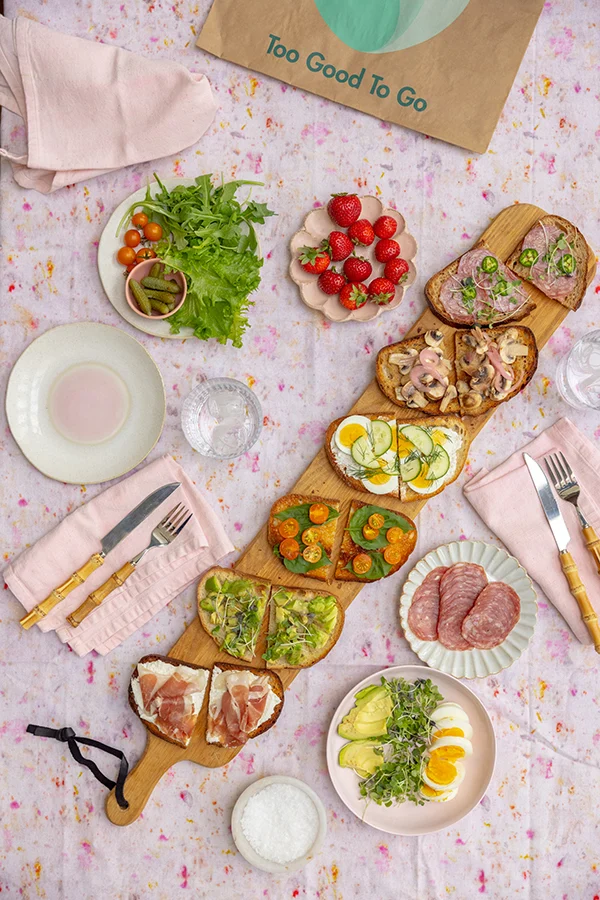
One of the primary challenges of the Surprise Bag model is the requirement for consumer creativity. Because the contents are unknown, the user must be prepared to integrate diverse ingredients into their meal planning. A recent showcase of this "zero-waste" philosophy demonstrated how surplus artisanal bread and gourmet condiments could be transformed into a sophisticated spread for social gatherings.
The centerpiece of this approach involved toasting an array of surplus breads simultaneously in a commercial-style oven to ensure uniform texture. By utilizing the Surprise Bag items alongside "fridge staples" and home-grown produce—such as basil and tomatoes—the participants created a series of gourmet toppings. This "make-your-own" crostini station serves as a template for sustainable hosting.
Identified High-Value Topping Combinations:
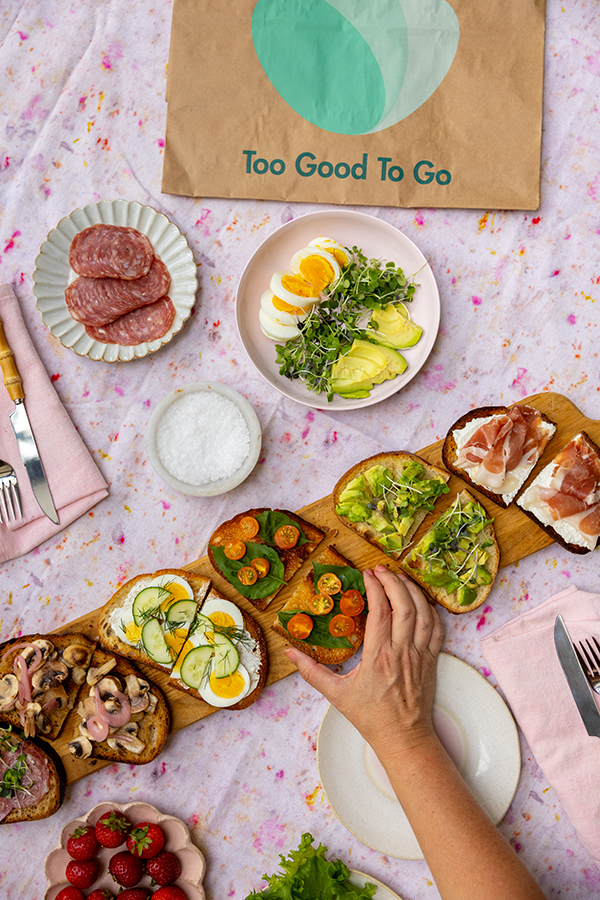
- The Savory-Sweet Balance: Ricotta cheese paired with thin-sliced prosciutto and a drizzle of hot honey.
- The Nutrient-Dense Option: Smashed avocado with lemon zest, sea salt, and fresh sprouts.
- The Garden Classic: Vine-ripened tomatoes and fresh basil with extra virgin olive oil.
- The European Deli Style: Sliced hard-boiled eggs with mayonnaise, cucumbers, and fresh dill.
- The Umami Melt: Sautéed mushrooms over melted artisanal cheese.
- The Spicy Charcuterie: Soppressata paired with fresh jalapeño rounds.
This culinary strategy emphasizes that surplus food is not "expired" or "low quality," but rather "excess" that retains its full gastronomic potential.
Industry Reactions and the Regulatory Landscape
The shift toward waste-reduction apps is occurring alongside significant regulatory changes. In the European Union, the "Farm to Fork" strategy aims to halve per capita food waste at the retail and consumer levels by 2030. In the United States, the USDA and EPA have set similar goals.
Industry analysts suggest that the success of Too Good To Go and its peers is forcing traditional retailers to rethink their supply chain management. "The integration of third-party redistribution platforms is no longer a niche trend; it is becoming a standard operational procedure for modern grocers," states a report from a leading food industry consultancy. "Consumers, particularly Gen Z and Millennials, are increasingly making purchasing decisions based on a brand’s environmental footprint. Providing a pathway for surplus food is a visible, measurable way to demonstrate commitment to the planet."

Retailers who have joined the platform report not only a reduction in waste disposal costs but also an increase in "foot traffic." New customers who discover a store through the app often return for full-price purchases, effectively turning a waste-management tool into a marketing channel.
Strategic Tips for Waste-Free Hosting
As the "zero-waste" movement moves from the industrial sector to the domestic sphere, experts recommend several strategies for consumers looking to host gatherings with a minimal environmental footprint:
- Inventory Auditing: Before purchasing new ingredients, hosts should perform a "fridge audit" to identify items that need to be used.
- Strategic Sourcing: Utilizing apps like Too Good To Go for party staples like bread, cheeses, and appetizers can reduce the overall carbon footprint of the event.
- Portion Control: Planning menus based on the number of guests rather than "over-catering" prevents the creation of new waste.
- Creative Repurposing: Encouraging guests to take home leftovers in reusable containers ensures that the "surplus" from the party does not end up in the bin.
Broader Implications for the Future of Food
The partnership between consumers, digital platforms, and local vendors represents a micro-solution to a macro-problem. While technology alone cannot solve the global food crisis, it provides the infrastructure necessary for a more efficient distribution of resources.

The success of these initiatives indicates a shift in the "value" of food. In a traditional capitalist model, food that is not sold by a certain hour is deemed worthless. In the circular economy model championed by Too Good To Go, that food retains its value as a source of nutrition and enjoyment.
As more gourmet grocery stores, juice bars, and bakeries join the network, the stigma associated with "leftover" food continues to diminish. The goal of reaching a 10% reduction in global emissions via food waste management is ambitious, but through the combination of consumer education, retail participation, and innovative technology, it remains a mathematically possible objective. The "Surprise Bag" is more than a discounted meal; it is a tool for environmental advocacy, one gourmet toast at a time.


